

Introduction: The Dawn of a New Era for Kia India
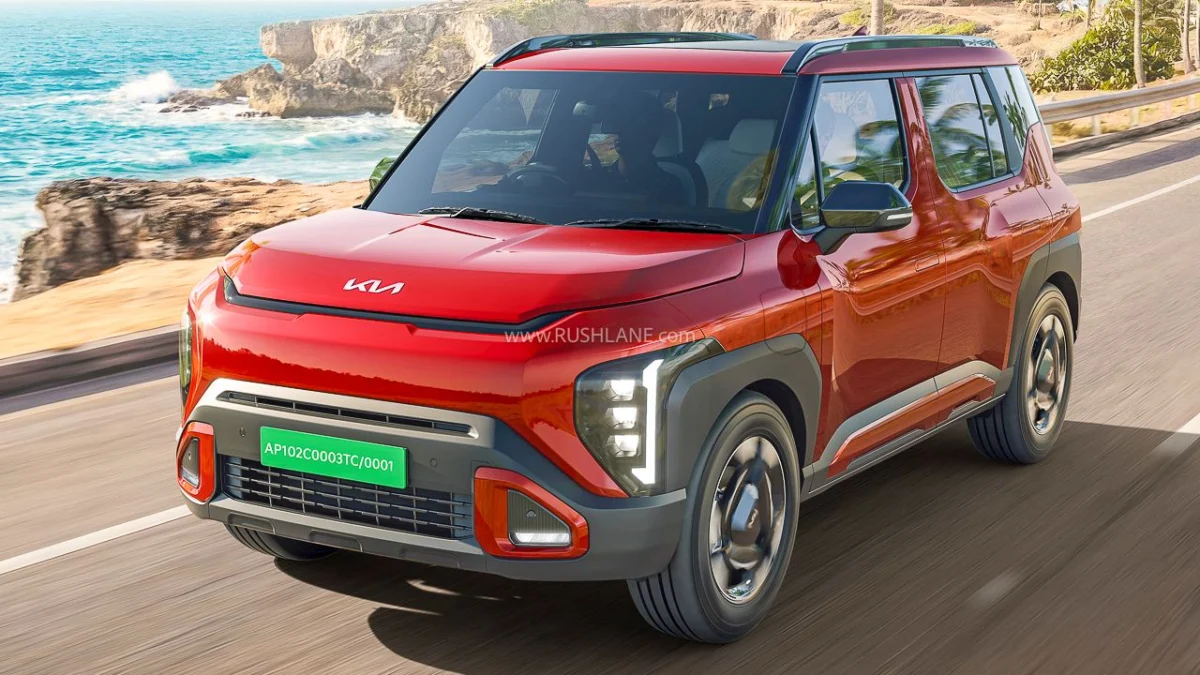
In a move that signals a significant shift in the competitive landscape of India’s electric vehicle (EV) market, Kia has officially unveiled the Syros EV. Making its global debut today, the Syros EV represents Kia India’s second major foray into the mass-market electric SUV segment, following the successful trajectory of its premium offerings. Positioned to bridge the gap between luxury electric mobility and everyday practicality, the Syros EV is not merely a new model but a statement of intent from the South Korean automaker to dominate the burgeoning zero-emission space in the Indian subcontinent.
The Syros EV enters a high-stakes arena, aiming to challenge established players like the Tata Nexon EV and the Mahindra XUV 400 (and the upcoming XUV 3XO EV). With a blend of futuristic design, sophisticated battery technology, and a suite of first-in-segment features, the Syros EV is engineered to appeal to the modern, tech-savvy Indian consumer who refuses to compromise on range, safety, or style.
Pre-Bookings and Ownership Ecosystem: Lowering the Barrier to Entry
Kia India has simultaneously announced the commencement of pre-bookings for the Syros EV across its extensive dealership network and through its official digital platform. Potential owners can reserve their vehicle with a booking amount of Rs 25,000. However, the most striking aspect of the Syros EV’s market entry is not just the car itself, but the comprehensive ownership ecosystem Kia is introducing alongside it.

Recognizing that high upfront costs remain a primary hurdle for EV adoption, Kia has introduced "Battery-as-a-Service" (BaaS). This innovative model allows customers to pay for the vehicle and the battery separately, significantly reducing the initial acquisition cost. Complementing this is an Assured Buyback programme and flexible financing options designed to safeguard the vehicle’s resale value—a common concern among first-time EV buyers. By addressing the "long-tail" of ownership, Kia is attempting to build a sustainable value proposition that extends far beyond the showroom floor.
Chronology of Development: From the K1 Platform to Global Debut
The development of the Kia Syros EV is rooted in the reinforced K1 platform, a versatile architecture optimized for the rigors of Indian road conditions while maintaining the structural integrity required for high-performance electric drivetrains. The journey to today’s debut involved extensive testing across diverse climates, ensuring that the battery chemistry and thermal management systems could withstand the extreme temperatures often found in the region.
The Syros EV shares its powertrain DNA with the Carens Clavis, suggesting a modular approach to Kia’s EV strategy that prioritizes reliability and parts availability. By leveraging a proven platform, Kia has been able to accelerate the Syros’s time-to-market while ensuring that the vehicle meets international standards for safety and efficiency.
Supporting Data: Battery Technology, Range, and Performance
At the heart of the Kia Syros EV lies a sophisticated energy storage system. Kia offers buyers a choice between two distinct battery configurations to suit different driving needs:

- Standard Range: A 42 kWh battery pack.
- Extended Range (ER): A 51.4 kWh battery pack.
Both versions utilize Nickel Manganese Cobalt (NMC) chemistry, chosen for its superior energy density and thermal stability compared to older lithium-ion formulations. The battery packs are IP67 certified, ensuring protection against dust and water ingress—a critical feature for navigating Indian monsoons. In a bold show of confidence, Kia is providing a Lifetime High Voltage Battery Warranty, covering the vehicle for 15 years, effectively the anticipated life of the car.
Range and Efficiency Metrics
The Syros EV’s efficiency figures are competitive within the global compact SUV space. According to ARAI-certified MIDC (Modified Indian Driving Cycle) Full Cycle tests:
- The Extended Range version delivers an impressive 526 km on a single charge.
- The Standard 42 kWh version offers a robust 443 km.
Charging Infrastructure Compatibility
To mitigate "range anxiety," Kia has equipped the Syros EV with high-speed charging capabilities. Using a 100 kW DC fast charger, the vehicle can replenish its battery from 10 percent to 80 percent in just 39 minutes. For home and office environments, a 10.8 kW onboard AC charger comes standard, offering a significantly faster charging rate than the 7.2 kW chargers typically found in this segment. Furthermore, an Integrated Route Planner is embedded in the navigation system, automatically identifying charging stations along a journey based on real-time battery data.
Power and Drivetrain Dynamics
The Syros EV is powered by a front-mounted electric motor producing 171 PS of peak power. This translates to brisk performance, with the 51.4 kWh version capable of sprinting from 0 to 100 kmph in 8.1 seconds. To maximize efficiency, the vehicle employs an advanced Regenerative Braking system. Drivers can modulate the intensity of energy recovery via steering-mounted paddle shifters. The system includes an "i-Pedal" mode, allowing for true one-pedal driving, which is particularly effective in heavy stop-and-go urban traffic.

Technological Prowess: Kia Connect 2.0 and the Trinity Display
The interior of the Syros EV is a masterclass in digital integration. The centerpiece is the 30-inch Trinity Panoramic Display Panel. This massive glass housing integrates:
- A 12.3-inch digital instrument cluster.
- A 12.3-inch touchscreen infotainment system.
- A 5-inch dedicated interface for climate control.
This setup ensures that all critical information is within the driver’s line of sight while reducing cabin clutter. The vehicle debuts Kia Connect 2.0, which offers over 95 connected car functions, including remote climate control, geofencing, and vehicle health reports. Notably, the system supports Over-the-Air (OTA) updates, allowing the vehicle’s software to evolve and improve without requiring a visit to the service center.
Other high-tech additions include:
- Vehicle-to-Load (V2L): Allowing the car to act as a giant power bank to run external electrical appliances.
- Digital Key: Enabling owners to unlock and start the car using a smartphone.
- Virtual Engine Sound System (VESS): An acoustic safety measure that emits a sound at low speeds to alert pedestrians of the silent vehicle’s presence.
- Shift-by-Wire: A column-mounted electronic gear selector that frees up space in the center console.
Interior Comfort and Utility: Redefining the Compact SUV Space
Kia has not ignored the physical comfort of the passengers in its pursuit of digital excellence. The Syros EV features a thoughtfully designed cabin with several "big-car" amenities:

- Seating: Front and rear ventilated seats (a rarity in this segment), along with a four-way power-adjustable driver’s seat. The rear seats offer sliding and reclining functions with a 60:40 split for cargo flexibility.
- Storage: In addition to the traditional trunk, the Syros EV features a 16-litre "frunk" (front trunk), ideal for storing charging cables or small valuables.
- Ambiance: A dual-pane panoramic sunroof floods the cabin with light, complemented by 64-colour ambient lighting and LED footwell lamps.
- Audio: A premium Harman Kardon eight-speaker system provides an immersive acoustic experience.
Safety Architecture: Level 2 ADAS and Structural Reinforcement
Safety is a cornerstone of the Syros EV’s design. The vehicle is equipped with a comprehensive Level 2 Advanced Driver Assistance System (ADAS) suite, comprising 16 distinct functions, including autonomous emergency braking, lane-keep assist, and adaptive cruise control.
Passive safety features are equally robust, with six airbags, Electronic Stability Control (ESC), and Vehicle Stability Management (VSM) included as standard. The inclusion of all-wheel disc brakes, a Highline Tyre Pressure Monitoring System (TPMS), and an Electric Parking Brake with Auto Hold ensures that the Syros EV remains composed under all driving conditions.
Official Responses and Market Positioning
While official pricing will be revealed at the formal launch event in the coming days, Kia officials have hinted that the Syros EV is positioned to be a "disruptor" in the mass-market segment. By offering seven distinct trims—HTK, HTK+, HTX, HTK+ ER, HTX ER, HTX+ ER, and X-Line ER—Kia is ensuring a wide price bracket that can cater to both budget-conscious buyers and those seeking a flagship electric experience.
The color palette is equally diverse, featuring sophisticated options like Ivory Silver Matte and Xclusive Matte Graphite, paired with three distinct interior themes (Cloud Blue/Grey, Onyx Black/Off-White, and Onyx Black/Hunter Green). This level of customization is typically reserved for higher-end luxury vehicles, further distinguishing the Syros from its immediate competitors.

Implications: A Catalyst for India’s EV Transition
The launch of the Kia Syros EV carries significant implications for the Indian automotive industry. Firstly, it intensifies the competition in the sub-4 meter and compact SUV segments, forcing rivals to accelerate their own EV roadmaps and potentially leading to more competitive pricing across the board.
Secondly, Kia’s emphasis on the Battery-as-a-Service model could serve as a litmus test for the Indian market. If successful, it may become the standard operating procedure for electric car sales in the country, effectively decoupling the cost of the "fuel tank" (the battery) from the vehicle itself.
Finally, the Syros EV reinforces India’s position as a global hub for EV manufacturing and debut. By choosing India for the global premiere of the Syros, Kia is acknowledging the strategic importance of the Indian consumer in the global transition to sustainable mobility.
Conclusion

The Kia Syros EV is more than just an addition to the company’s portfolio; it is a meticulously engineered response to the specific demands of the Indian market. With its long-range capabilities, rapid charging, and an exhaustive list of safety and luxury features, it sets a new benchmark for what a mass-market electric SUV can be. As the automotive world waits for the final price announcement, one thing is clear: the race for electric supremacy in India has just entered its most exciting lap yet.
