

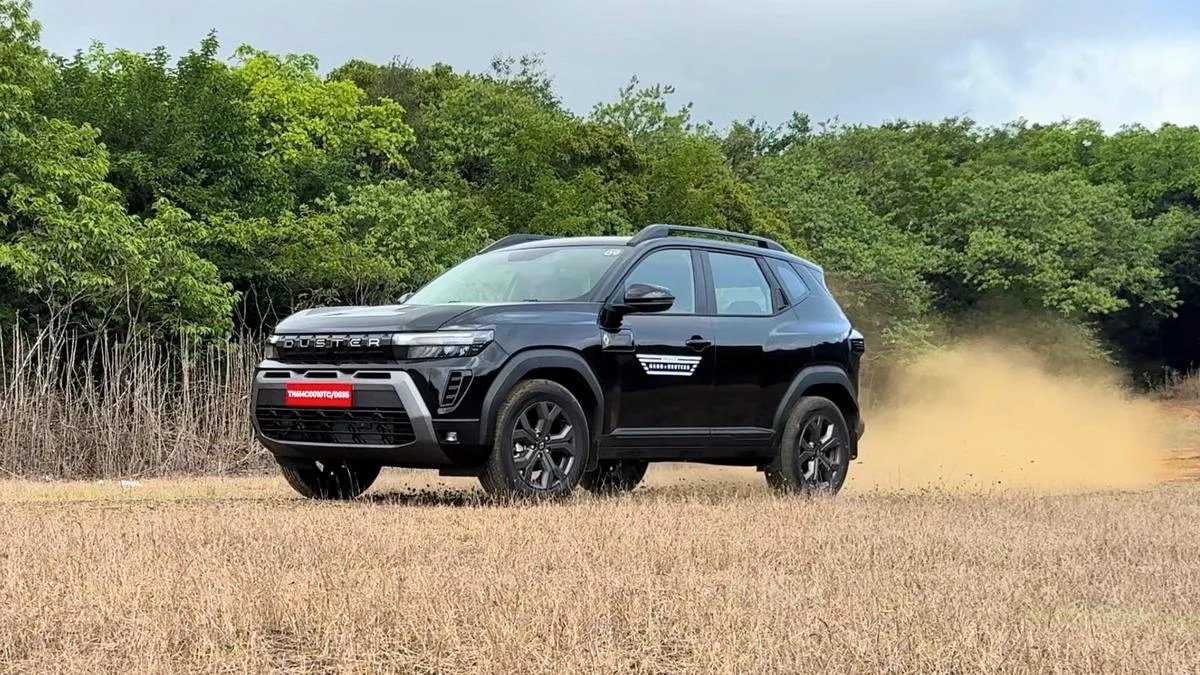
In the high-stakes arena of the mid-sized SUV market, there exists a persistent psychological barrier among buyers: the "displacement myth." For decades, the prevailing wisdom has dictated that a larger engine is inherently superior—more effortless, more durable, and better equipped to handle the bulk of a family-oriented vehicle. However, as global emission norms tighten and turbocharging technology reaches new heights of sophistication, Renault is seeking to dismantle this prejudice with its latest offering.
The Renault Duster TCe 100 arrives at a critical juncture for the brand. It is a vehicle that carries the heavy burden of a legendary nameplate while sporting a powertrain that, on paper, might seem modest to the uninitiated. Yet, beneath the hood of this European-styled SUV lies a 999cc three-cylinder turbocharged petrol engine that challenges the very definition of "entry-level" performance.
Main Facts: Defying the Displacement Narrative
The heart of the Renault Duster TCe 100 is a compact 1.0-litre turbocharged unit. While a 999cc displacement might sound diminutive for a vehicle of the Duster’s stature, the output figures tell a more nuanced story. Producing 100PS of power and 166Nm of peak torque, the TCe 100 engine is designed not for raw top-end speed, but for usable, everyday tractability.
The vehicle enters the market with a price range of ₹10.49 lakh to ₹13.49 lakh, positioning it aggressively against both sub-compact SUVs and the lower trims of mid-sized rivals. Its primary objective is clear: to offer a "European-flavoured" driving experience—characterized by superior ride quality and handling—at a price point that undercuts the premium German and Czech alternatives.
Key specifications of the TCe 100 variant include:

- Engine: 1.0-litre, 3-cylinder Turbocharged Petrol
- Transmission: 6-speed Manual
- Torque: 166Nm @ 2,000rpm
- Safety/Mechanicals: All-wheel disc brakes, 17-inch alloy wheels, and a recalibrated suspension system.
Chronology: The Evolution of an SUV Icon
To understand the significance of the TCe 100, one must look at the Duster’s lineage. When Renault first introduced the Duster to the Indian market over a decade ago, it single-handedly created the mid-sized SUV segment. It was celebrated for its "unbreakable" suspension and a ruggedness that its Japanese and Korean rivals struggled to replicate.
However, as the market evolved, the Duster faced stiff competition. The second generation and subsequent facelifts saw the introduction of various powertrains, including the much-loved 1.5-litre K9K diesel and the potent 1.3-litre turbo-petrol. The TCe 100 represents the latest chapter in this evolution—a move toward "downsizing" that does not equate to "downgrading."
Renault engineers did not simply transplant the 1.0-litre motor from the smaller Kiger. Instead, the powertrain underwent a period of substantial re-engineering. The goal was to adapt the engine’s delivery to the Duster’s heavier chassis and its role as a more mature, highway-capable cruiser. This development cycle focused on smoothing out the inherent vibrations of a three-cylinder layout and optimizing the torque curve for mid-range punch rather than just off-the-line sprint times.
Supporting Data: Performance and Engineering Analysis
The true measure of the Duster TCe 100 is found in its driving dynamics, which often contradict its technical specifications.
1. The Torque Curve and Tractability
Small-capacity turbocharged engines are frequently criticized for "turbo lag"—the momentary delay before the power kicks in. In the TCe 100, this has been minimized through clever wastegate management and gear ratio selection. With 166Nm available from as low as 2,000rpm, the Duster exhibits a "strong and accessible mid-range." In city traffic, the vehicle can pull cleanly from 25-30km/h in third gear, reducing the need for constant downshifting.

2. Highway and Mountain Performance
On the open road, the Duster maintains 100km/h with surprising ease. The sixth gear in the manual transmission acts as a tall overdrive, keeping engine revs low and fuel efficiency high. During testing on steep mountain inclines—a traditional graveyard for small engines—the Duster remained composed. The generous spread of torque allowed it to tackle gradients without the engine feeling "short of breath."
3. NVH (Noise, Vibration, and Harshness)
Three-cylinder engines are naturally unbalanced, often leading to a "thrum" felt through the pedals and steering wheel. Renault has employed extensive insulation and dampened engine mounts to counteract this. While a faint idle vibration is present, it disappears almost entirely once the vehicle is in motion, resulting in a cabin experience that feels mature and well-insulated.
4. Chassis and Steering Dynamics
Perhaps the Duster’s greatest asset remains its chassis. While many modern SUVs have moved toward light, disconnected steering for ease of parking, Renault has retained a communicative steering setup. It is naturally weighted and provides genuine feedback from the road surface. Coupled with a suspension that leans toward the firmer side for better body control, the Duster remains one of the most engaging SUVs to drive in its class.
Official Responses and Market Positioning
Renault’s strategic positioning for the TCe 100 is one of "balanced value." While the 1.3-litre turbo remains the flagship for enthusiasts seeking outright performance, the 1.0-litre TCe 100 is positioned as the volume driver.
Industry analysts note that Renault is targeting a specific demographic: the "rational enthusiast." These are buyers who appreciate the driving purity and ruggedness of European engineering (similar to the Volkswagen Taigun or Skoda Kushaq) but are working within a tighter budget. By offering features like all-wheel disc brakes and a sophisticated 6-speed gearbox in a 1.0-litre package, Renault is signaling that "entry-level" does not have to mean "basic."

Internally, Renault’s engineering team has emphasized that the Duster’s ability to "punch above its weight" is a result of weight optimization. By keeping the vehicle relatively light compared to some of its bulkier competitors, the 100PS engine doesn’t have to work as hard, which preserves both performance and longevity.
Implications: The Future of the Mid-Size Segment
The success of the Renault Duster TCe 100 carries several broader implications for the automotive industry and consumers alike.
The Normalization of Downsizing
The Duster proves that for the majority of SUV buyers, displacement is becoming an irrelevant metric. As turbocharging technology matures, the "sweet spot" for family vehicles is shifting toward smaller, more efficient engines that offer high torque at low RPMs. This shift is essential for manufacturers to meet increasingly stringent Corporate Average Fuel Efficiency (CAFE) norms without sacrificing the utility of the SUV form factor.
The Value-to-Character Ratio
In a market saturated with "feature-rich" SUVs that often feel sterile to drive, the Duster TCe 100 reinforces the importance of mechanical soul. Its communicative steering and composed ride suggest that buyers are still willing to trade some high-tech "gimmicks" for a better fundamental driving experience. While the lack of ventilated seats or electric adjustments is a missed opportunity, the inclusion of a precise 6-speed manual and a well-sorted chassis provides a different kind of luxury: driver confidence.
Redefining the Competition
The Duster TCe 100 effectively bridges the gap between two segments. It offers the space and presence of a mid-sized SUV at the price of a premium sub-four-meter vehicle. This "value-plus" proposition is likely to force competitors to rethink their entry-level pricing strategies.

Conclusion
The Renault Duster TCe 100 is a testament to the fact that specifications only tell half the story. By focusing on torque delivery, gear calibration, and chassis dynamics, Renault has created a vehicle that feels significantly more capable than its 999cc displacement suggests. It retains the rugged, go-anywhere DNA that made the original Duster a household name, while introducing a level of refinement and sophistication that meets modern expectations.
For the buyer who values the "feel" of a car—the weight of the steering, the composure of the suspension over broken roads, and the eagerness of a well-tuned turbo—the TCe 100 is not just a compromise for the sake of price. It is a well-engineered, characterful SUV that proves, once and for all, that bigger isn’t always better. Sometimes, the most impressive machines are those that do the most with the least.
Model: Renault Duster TCe 100
Price Range: ₹10.49 lakh – ₹13.49 lakh (Ex-showroom)
Verdict: A masterclass in downsizing that preserves the legendary Duster toughness while adding modern-day refinement.
