

Bangalore International Centre Hosts "Atmageete," a Poetic Journey Through India’s Egalitarian Past
In a captivating evening that transcended linguistic barriers and historical epochs, the Bangalore International Centre (BIC) recently resonated with the profound verses of pre-modern Indian poets, brought to life through the exceptional artistry of M.D. Pallavi. The event, titled "Atmageete" (meaning "self-song" or "soul song"), was a meticulously curated exploration of equality as envisioned by diverse thinkers and poets across centuries. Spearheaded by Professor Chandan Gowda and generously supported by Vidyashilp University, this concert aimed to unearth and celebrate the enduring spirit of egalitarianism embedded within India’s rich literary heritage.
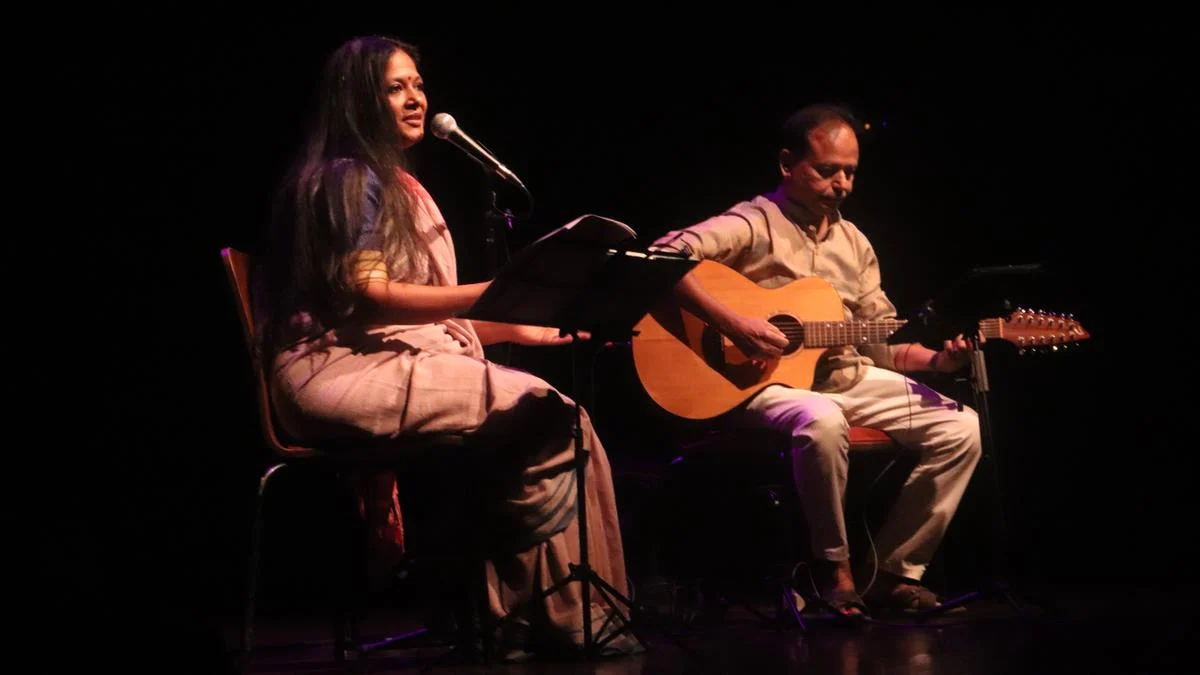
The performance, which took place earlier this month, showcased M.D. Pallavi’s remarkable vocal prowess and her innovative approach to musical interpretation. Accompanied by the skillful guitar artistry of Srinivas Achar, Pallavi navigated a complex repertoire of poems, seamlessly transitioning between languages and styles. The very essence of "Atmageete" lay in its ambitious endeavor to unite verses drawn from disparate poetic traditions under the unifying banner of equality, a concept that Professor Gowda aptly describes as a "common idea of equality." This ambitious undertaking not only highlighted the universality of this core human aspiration but also revealed its nuanced expressions across various cultural and linguistic landscapes of India.
The Art of Linguistic Alchemy: M.D. Pallavi’s Approach to "Atmageete"
M.D. Pallavi, a name synonymous with versatile artistic expression, shared her insights into the challenges and triumphs of bringing "Atmageete" to fruition. Speaking from her home, she articulated a deep appreciation for the sonic distinctiveness of each language. "Every language," she explained, "has its own set of sounds." This understanding formed the bedrock of her musical arrangements, which encompassed a wide spectrum of poetic voices, from the social reformer Narayan Guru to the celebrated Urdu poet Mir Taqi Mir.
The sheer breadth of languages and poetic traditions represented in "Atmageete" was a testament to Pallavi’s dedication. She confessed that setting these diverse poems to music was a significant undertaking, requiring not just musicality but also a profound linguistic sensitivity. Her ability to switch between languages with "great alacrity," as observed during the performance, was not an innate gift alone but a result of rigorous dedication and a deep respect for the source material.
A striking example of this linguistic mastery was evident in her rendition of Chaturvedi’s Pada 186. Pallavi’s performance imbued the poem with the vibrant intonations of its original language, breathing life into its folk roots and serving the poem’s inherent rhythm with remarkable vivacity. This was not merely a recitation; it was a reinterpretation, where the musicality of the language itself became an integral part of the performance.
Unraveling the Nuances: Research, Collaboration, and Historical Context
Pallavi’s meticulous preparation for "Atmageete" involved an intricate process of linguistic and historical immersion. When questioned about her ability to navigate such a diverse linguistic terrain, she revealed a proactive approach that prioritized authenticity. "I sought the help of native speakers," she stated, emphasizing her commitment to accurate pronunciation. "Asking them to send me ‘voice notes rendering the poem’ so I could ‘learn the pronunciation properly’" underscores her dedication to respecting the phonetic integrity of each language. This collaborative spirit extended beyond mere pronunciation; it involved an engagement with the cultural nuances embedded within the spoken word.
The historical context of each poem presented another layer of complexity and richness. Pallavi recognized that the style of the poet, the prevailing poetic tradition, and the specific historical period in which a poem was written all contributed significantly to its inherent rhythm and musicality. She explained, "the style of the poet, the poetic tradition, and the period the poem was written in all ‘lend their own rhythm and musicality to the language.’" This holistic understanding allowed her to create compositions that were not only musically engaging but also historically informed, offering listeners a deeper appreciation of the socio-cultural fabric from which these verses emerged.

Pallavi’s background provided a fertile ground for such an ambitious project. Hailing from a family deeply entrenched in Bengaluru’s vibrant theatre scene, she received professional training in Hindustani classical music. This rich artistic lineage, coupled with her innate inclination towards experimentation, made "Atmageete" a "welcome challenge." While she is accustomed to "thematic arrangements of songs," the opportunity to explore "various, not only poets, but also languages" that "Atmageete" afforded her was a particularly rewarding experience. It allowed her to expand her artistic horizons and delve into a less-explored facet of Indian literary history.
The Harmonious Union: Srinivas Achar’s Complementary Virtuosity
The success of "Atmageete" was significantly amplified by the insightful and evocative guitar accompaniment of Srinivas Achar. His collaboration with Pallavi proved to be one of the concert’s most memorable aspects, providing a crucial thread of musical continuity that held the diverse poetic tapestry together. His "connective guitar solos" masterfully punctuated the stanzas, offering moments of reflection and enhancing the emotional arc of each poem.
A native of Karnataka, Srinivas Achar brought a wealth of experience and an intuitive improvisational flair to the performance. His understanding of Indian musical sensibilities, honed over years of dedicated practice and performance, allowed him to engage with Pallavi’s vocal interpretations in a deeply resonant manner. "He understands Indian music very well," Pallavi remarked, her praise highlighting the synergistic nature of their collaboration. She further described Srinivas as a "wonderful collaborator," a sentiment that was clearly mirrored in the seamless interplay between voice and instrument throughout the evening.
The guitar, often perceived as an instrument rooted in Western traditions, found a new voice in Achar’s hands as he navigated the complexities of Indian melodic structures and rhythmic patterns. His solos were not mere embellishments but integral parts of the narrative, adding depth and texture to the sonic landscape of "Atmageete." This fusion of traditional Indian vocal artistry with a contemporary instrumental interpretation underscored the event’s overarching theme of bridging historical divides and creating new dialogues between past and present.
The Thematic Core: Unearthing the Egalitarian Spirit in Ancient Texts
The selection of poems for "Atmageete" was a deliberate act of scholarly curation, aiming to showcase the enduring presence of egalitarian ideals in pre-modern India. Professor Chandan Gowda, the driving force behind the event’s intellectual framework, emphasized that the concert sought to illuminate how the "common idea of equality" manifested in various forms and contexts across different eras and regions.
The poems featured spanned a wide temporal and geographical range, encompassing works from mystics, saints, reformers, and poets who, in their own unique ways, challenged existing social hierarchies and articulated visions of a more just and equitable society. These included, but were not limited to, the devotional verses of Bhakti saints who championed inclusivity, the philosophical inquiries of thinkers who questioned caste distinctions, and the reformist pronouncements of social reformers who advocated for the dignity and rights of all individuals.
By drawing from such a diverse pool of literary sources, "Atmageete" aimed to demonstrate that the aspiration for equality was not a modern construct but a deeply ingrained thread in the fabric of Indian thought and culture. The performance served as a powerful reminder that while societal structures may have evolved, the fundamental human desire for fairness, justice, and equal recognition has persisted throughout history.
Chronology of a Vision: The Evolution of "Atmageete"
The conceptualization and execution of "Atmageete" represent a significant artistic and academic endeavor. While the article does not provide a precise timeline for the project’s development, it implies a considerable period of research, selection, and musical arrangement.

- Conceptualization: The initial idea likely stemmed from Professor Chandan Gowda’s research into pre-modern Indian poetry and his recognition of the recurring theme of equality. This would have involved identifying key poets and texts that exemplify this concept.
- Artist Selection: The choice of M.D. Pallavi as the primary performer was crucial. Her established reputation for vocal versatility, her training in Hindustani music, and her known inclination towards experimental projects would have made her an ideal candidate. The selection of Srinivas Achar as the accompanying musician would have followed, focusing on an artist with a deep understanding of Indian music.
- Poem Selection and Musical Arrangement: This phase would have involved Pallavi and possibly Gowda meticulously choosing poems from various traditions and languages. Pallavi’s process of learning pronunciations from native speakers and understanding historical context suggests a lengthy period dedicated to each piece. The musical composition for each poem would have been a significant undertaking, ensuring that the melody and rhythm amplified the poem’s meaning and emotion.
- Collaboration and Rehearsals: Extensive collaboration between Pallavi and Achar would have been essential to achieve the seamless musical synergy observed during the performance. Rehearsals would have focused on fine-tuning the interplay between voice and guitar, ensuring that the solos complemented rather than overshadowed the vocal performance.
- Event Curation and Sponsorship: Professor Gowda’s role in curating the event and securing sponsorship from Vidyashilp University would have been critical in bringing the project to fruition. The Bangalore International Centre provided the esteemed venue for the public premiere.
- Performance: The event itself, held at the Bangalore International Centre, marked the culmination of this multi-faceted process, allowing audiences to experience the artistic and intellectual richness of "Atmageete."
Supporting Data: The Poetic Landscape of Equality
While specific poems and their authors are not exhaustively listed, the mention of Narayan Guru and Mir Taqi Mir provides significant pointers to the thematic breadth of "Atmageete."
- Narayan Guru (1856-1928): A social reformer and spiritual leader from Kerala, Narayan Guru was a staunch advocate for the eradication of caste discrimination and the promotion of universal brotherhood. His teachings and writings, often expressed in simple yet profound verse, challenged the oppressive social structures of his time. His emphasis on "one caste, one religion, one God for humanity" resonates strongly with the theme of equality.
- Mir Taqi Mir (1723-1810): A seminal figure in Urdu poetry, Mir Taqi Mir is renowned for his melancholic and introspective ghazals. While his work often delves into themes of love, loss, and the transient nature of life, his poetry also implicitly critiques social injustices and expresses a profound empathy for the downtrodden. His verses, infused with a deep humanism, can be interpreted as embodying a spirit of universal compassion and an implicit yearning for a more equitable world.
- Chaturvedi’s Pada 186: The specific reference to Chaturvedi and "Pada 186" suggests a delve into regional folk traditions. "Pada" is a form of devotional or narrative poetry often found in various Indian languages. The mention of its "folk roots" and "lively service of rhythm" indicates a focus on accessible and community-oriented poetic expressions that likely championed egalitarian values.
The inclusion of poets from different linguistic and cultural backgrounds – from the spiritual reformism of Narayan Guru to the lyrical introspection of Mir Taqi Mir and the folk traditions represented by Chaturvedi – underscores the pervasive nature of the egalitarian ideal across India.
Official Responses and Academic Endorsements
Professor Chandan Gowda’s role as the curator of "Atmageete" signifies the event’s academic grounding. His framing of the concert around the "common idea of equality" highlights the intellectual rigor behind the artistic presentation. Vidyashilp University’s sponsorship further validates the project’s significance, suggesting an institutional commitment to fostering cultural and intellectual endeavors that explore India’s rich heritage.
While direct quotes from university officials or academic critics are not provided, the act of sponsorship and the public presentation at a respected institution like the Bangalore International Centre serve as implicit endorsements of the project’s merit and relevance. The event itself acts as a platform for academic discourse, inviting audiences to engage with historical texts through a contemporary artistic lens.
Implications and Future Prospects: A Bridge to Understanding
"Atmageete" transcends the realm of a mere musical performance; it represents a powerful act of cultural retrieval and reinterpretation. By bringing ancient verses on equality to life, M.D. Pallavi and Srinivas Achar have not only showcased their artistic brilliance but have also offered a valuable service to society.
- Reviving Lost Voices: The concert has likely brought to the forefront poets and traditions that might have been overlooked or relegated to the margins of mainstream discourse. It serves as a reminder that the pursuit of equality has been a continuous thread throughout India’s history.
- Fostering Intercultural Dialogue: By weaving together poems from different languages and poetic traditions, "Atmageete" has created a powerful platform for intercultural understanding. It demonstrates how shared human aspirations can transcend linguistic and cultural boundaries.
- Inspiring Contemporary Relevance: In an era often marked by social divisions and inequalities, the performance of "Atmageete" offers a timely reminder of the enduring power of egalitarian ideals. It inspires reflection on the progress made and the challenges that still lie ahead in achieving a truly equitable society.
- Potential for Wider Dissemination: The success of this event suggests a significant potential for further exploration and dissemination. One can envision opportunities for "Atmageete" to be performed in other cities and for its repertoire to be expanded, reaching a broader audience and contributing to a more nuanced understanding of India’s philosophical and literary heritage. The initiative by Vidyashilp University could potentially pave the way for further academic and artistic collaborations of this nature.
In conclusion, "Atmageete" stands as a testament to the power of art to connect us with our past, illuminate our present, and inspire our future. M.D. Pallavi’s sublime vocalizations, complemented by Srinivas Achar’s sensitive guitar work, have transformed forgotten verses into a vibrant anthem of equality, reminding us that the seeds of a just society have been sown deep within the soil of India’s rich cultural history.
