

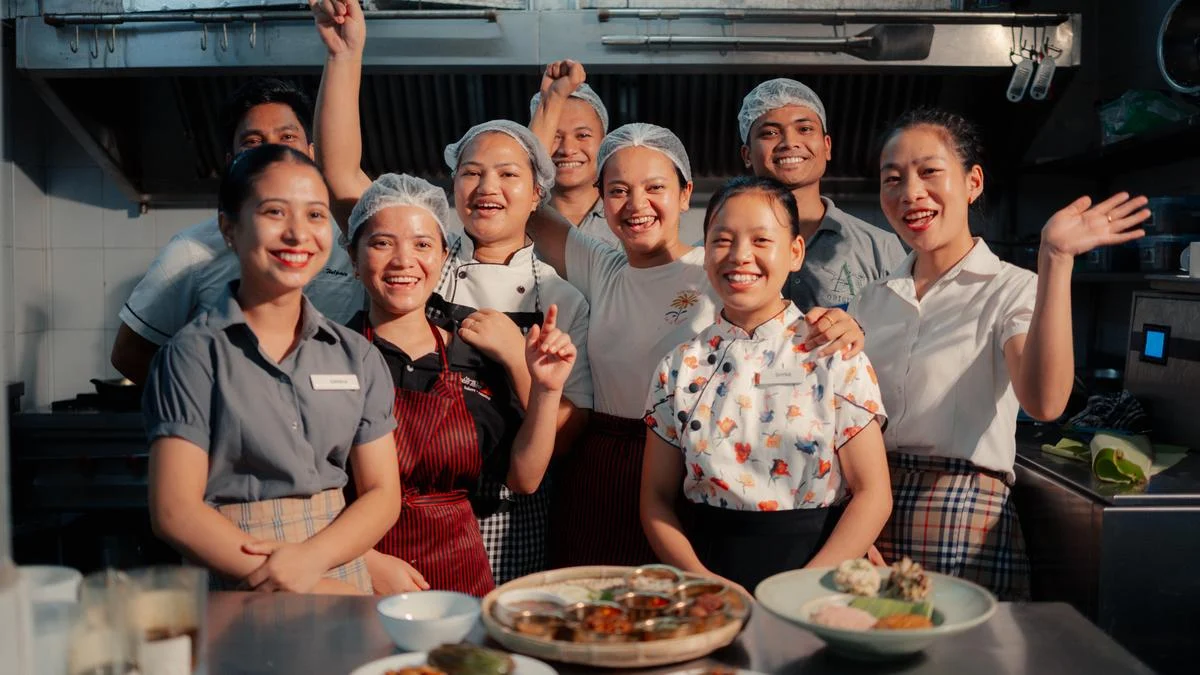
The aroma of fermented bamboo shoots and smoked fish, once a source of quiet anxiety for students from Northeast India living in the "mainland," has become the cornerstone of a sophisticated culinary revolution. In the misty hills of Shillong and across the international pop-up circuit, a new generation of chefs is reclaiming the narrative of Meghalayan cuisine, transforming "stigma" into a high-art form that challenges the monolithic perception of Indian food.
Main Facts: A Shift in the Gastronomic Tide
For decades, the culinary identity of Meghalaya was often reduced to a footnote in the broader, often misunderstood category of "Northeastern food." In metropolitan centers like Delhi, Bangalore, or Chennai, the region’s diverse offerings were frequently flattened into a simplified menu of "momo and chow." However, a significant shift is currently underway.
Led by professionally trained chefs and visionary entrepreneurs, the state is witnessing the birth of a "produce-forward" movement. Establishments like A’Origins, Rynsan, and Lady Aiko are not merely serving traditional meals; they are articulating a contemporary identity that bridges ancestral wisdom with modern technique. This movement is characterized by:

- The Reclamation of Identity: Moving away from the fear of being mocked for "stinky" or unconventional ingredients.
- Professionalization: Chefs returning from elite culinary schools and international kitchens to apply global standards to local ingredients.
- Government Synergy: A concerted effort by the state government to integrate food into the broader tourism experience.
- De-monolithing the Region: Educating diners on the distinct differences between Khasi, Jaintia, and Garo food traditions.
Chronology: From Culinary Exile to Homecoming
The evolution of Meghalaya’s food scene can be traced through the personal journeys of its most prominent figures.
The Era of Stigma (Pre-2010s)
A decade ago, the food scene in Shillong was vastly different. As chef Reuben Sooting, founder of Lady Aiko, recalls, the city lacked a diverse cafe culture, and there was little effort to elevate local influences in a commercial setting. For students like Ahmedaki Laloo, training at Manipal University during this period, the taste of home was something to be enjoyed in secret.
"I would tell my mom to send some pickles, fermented bamboo shoots, fish chutney, and condiments," recalls Laloo. Yet, this nostalgia was tempered by the fear of her peers’ reactions—the worry that her food would be labeled "stinky" or strange.

The Realization and Return (2010–2020)
The turning point for many chefs came from observing the pride other regional groups took in their heritage. Laloo noted that if her classmates could flaunt the use of ghee and curry leaves, there was no reason why the pungency of fermented bamboo or the complexity of local smoked meats should be hidden.
This realization coincided with a global trend toward hyper-localism. After working in various high-end kitchens across India, Laloo returned to Shillong in the winter of 2020—a pivotal year for many who sought to reconnect with their roots during the pandemic. She established A’Origins, a culinary enterprise designed to tell the stories of Meghalaya through food.
The Contemporary Boom (2021–Present)
The last four years have seen an explosion of "modern-local" dining. In 2023 and 2024, events like the Seeti Movement and the Zhouyu Hosts pop-up series in Chennai have brought these flavors to a national audience. Musicians and entrepreneurs like Hammarsing Kharhmar and his wife, Riyaki Jana, co-founded Rynsan in Shillong, signaling a move toward "storytelling through the plate."

Supporting Data: The Anatomy of a Produce-Forward Culture
To understand the magnitude of this revival, one must look at the specific culinary elements being "elevated." Unlike the heavy, spice-laden curries often associated with Indian cuisine, Meghalayan food is fundamentally defined by its proximity to the land and the preservation of its harvest.
The Holy Trinity of Techniques
The new wave of chefs focuses on three core pillars of traditional preservation:
- Fermentation: Using ingredients like tungrymbai (fermented soybeans) and bamboo shoots to create deep, umami-rich flavors.
- Smoking: A necessity in the humid hills, smoking fish and pork provides a preservation method that doubles as a complex flavor profile.
- Pickling: Utilizing indigenous citrus, chilies, and small fish to create condiments that act as the "soul" of the meal.
Breaking the Monolith
A critical part of this movement is educational. Food writer and co-founder of Delhi’s Indicā, Damini Ralleigh, points out that mainland India has long viewed the Northeast as a single culinary category.

"It flattens an entire region’s cultural and ecological history into a monolithic identity," Ralleigh says. "The Northeast comprises many tribes, languages, and food traditions." The current movement highlights the nuances between:
- Khasi & Jaintia Cuisine: Known for Jadoh (rice cooked with meat) and the heavy use of black sesame.
- Garo Cuisine: Distinctive for its use of khalchi (distilled ash water) to provide a unique alkaline flavor to stews.
The "Global Local" Comparison
Chef Reuben Sooting draws parallels between this movement and global culinary icons. He likens the current work in Meghalaya to what Virgilio Martínez did for Peruvian food or Massimo Bottura did for Italian cuisine—taking the "classic" and "elevated" to the next level. This involves not just cooking the food, but understanding the microbiology of fermentation and the aesthetics of plating.
Official Responses: Policy as a Catalyst
The resurgence of local cuisine is not happening in a vacuum; it is bolstered by strategic government intervention. The Meghalaya government has shifted its focus heavily toward experiential tourism, recognizing that food is a primary driver for modern travelers.

"I am truly grateful that the government has been focusing on this," says Ahmedaki Laloo. "We have been able to express ourselves better because the number of footfalls is increasing every year."
The government’s role has included:
- Tourism Integration: Marketing the state not just for its waterfalls and hills, but as a gastronomic destination.
- Support for Culinary Events: Facilitating movements like the Seeti Movement, which brings journalists and food critics to the heart of the state.
- Entrepreneurial Support: Creating an environment where young chefs feel confident returning to their hometowns to start businesses rather than staying in metropolitan hubs.
Hammarsing Kharhmar notes that this policy is working. "Tourists aren’t just coming to look at our beautiful hills… they’re saying ‘I want to eat your food.’ This is something that has changed significantly in the last five to ten years."

Implications: Reclaiming the Narrative
The broader implications of this culinary shift extend far beyond the kitchen. It is a form of cultural decolonization and reclamation.
1. Narrative Control
For decades, the story of Northeastern food was told through an "outsider’s lens," often focusing on the "exotic" or "bizarre" nature of certain ingredients. By opening their own restaurants and hosting pop-ups in cities like Chennai and Delhi, Meghalayan chefs are reclaiming their own story. As Damini Ralleigh notes, "It allows these communities to articulate their own identity and history."
2. Economic Empowerment
The shift from "momo-chow" stalls to high-end dining experiences like Rynsan and Lady Aiko creates a higher value chain for local farmers. When chefs prioritize indigenous produce, they create a market for local varieties of rice, turmeric, and wild greens that might otherwise be lost to industrial farming.

3. Breaking "Watertight" Borders
The movement is also challenging the idea of "zonal" cuisines. Ralleigh argues that cultural borders are porous. By bringing Meghalayan food to the rest of India, these chefs are fostering a more fluid understanding of Indian identity, where the "pungent" flavors of the East are given the same reverence as the "spicy" flavors of the North or the "tangy" flavors of the South.
4. A Responsibility to Ancestry
For the chefs themselves, there is a profound sense of duty. Ahmedaki Laloo views her work as a bridge between the past and the future. "We have always been under the shadow," she says, "and it is our responsibility to do justice to what our ancestors have been passing down."
Conclusion
The culinary landscape of Meghalaya is no longer defined by what it lacks, but by the richness of what it has always possessed. Through the lens of chefs like Ahmedaki Laloo and Reuben Sooting, the very ingredients that once caused social anxiety are now being celebrated as symbols of resilience and sophistication. As Shillong continues to evolve into a premier gastronomic hub, it serves as a blueprint for other regional cuisines across India: a reminder that the path to global recognition begins with a proud and unapologetic return to one’s roots.
