

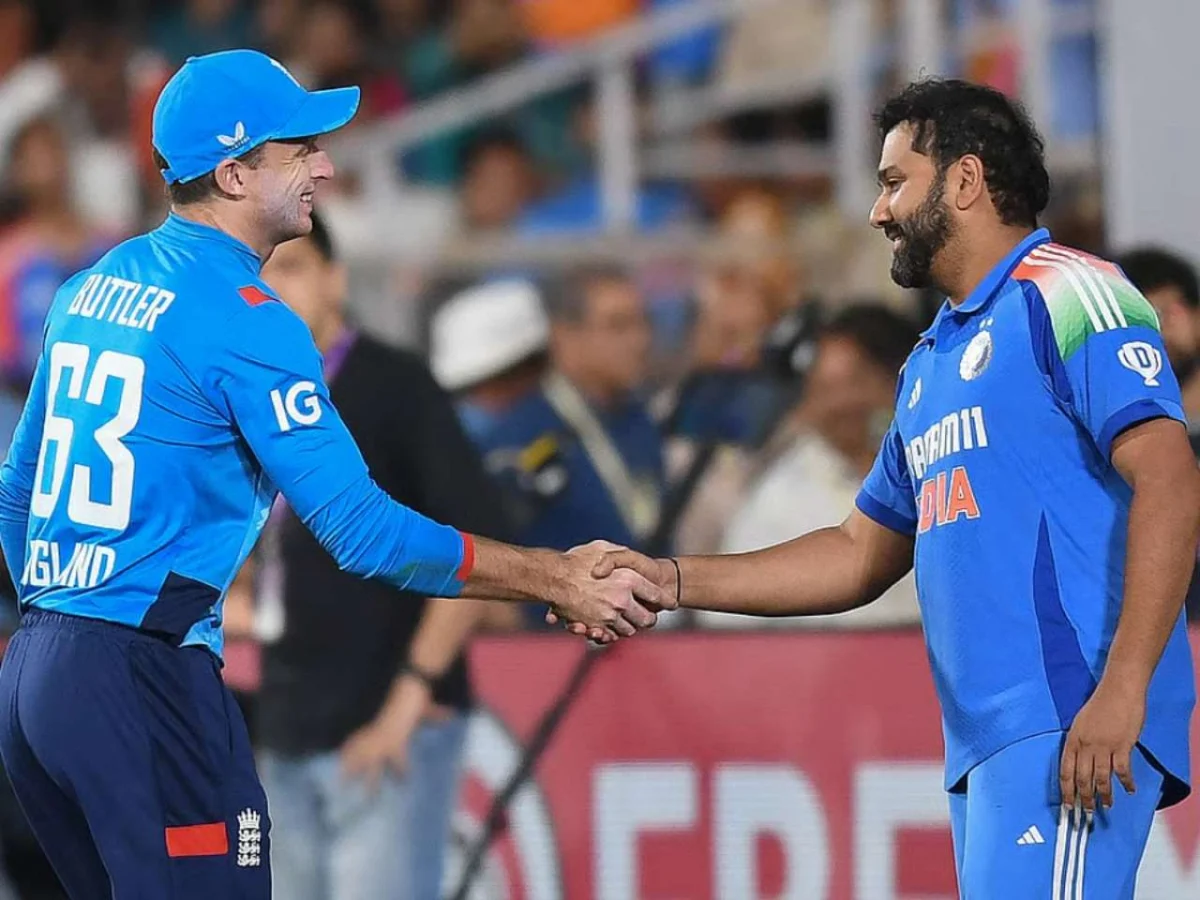
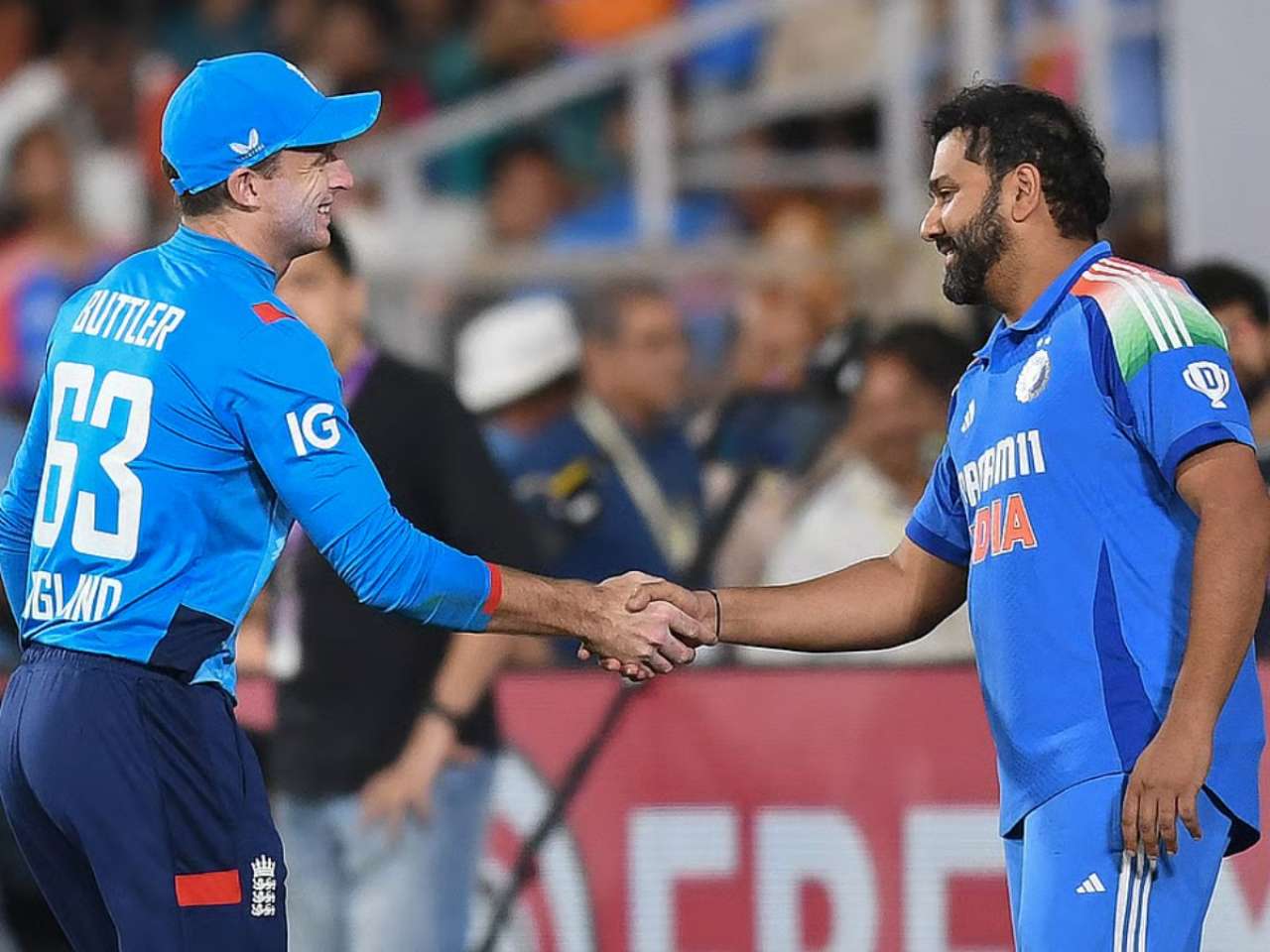
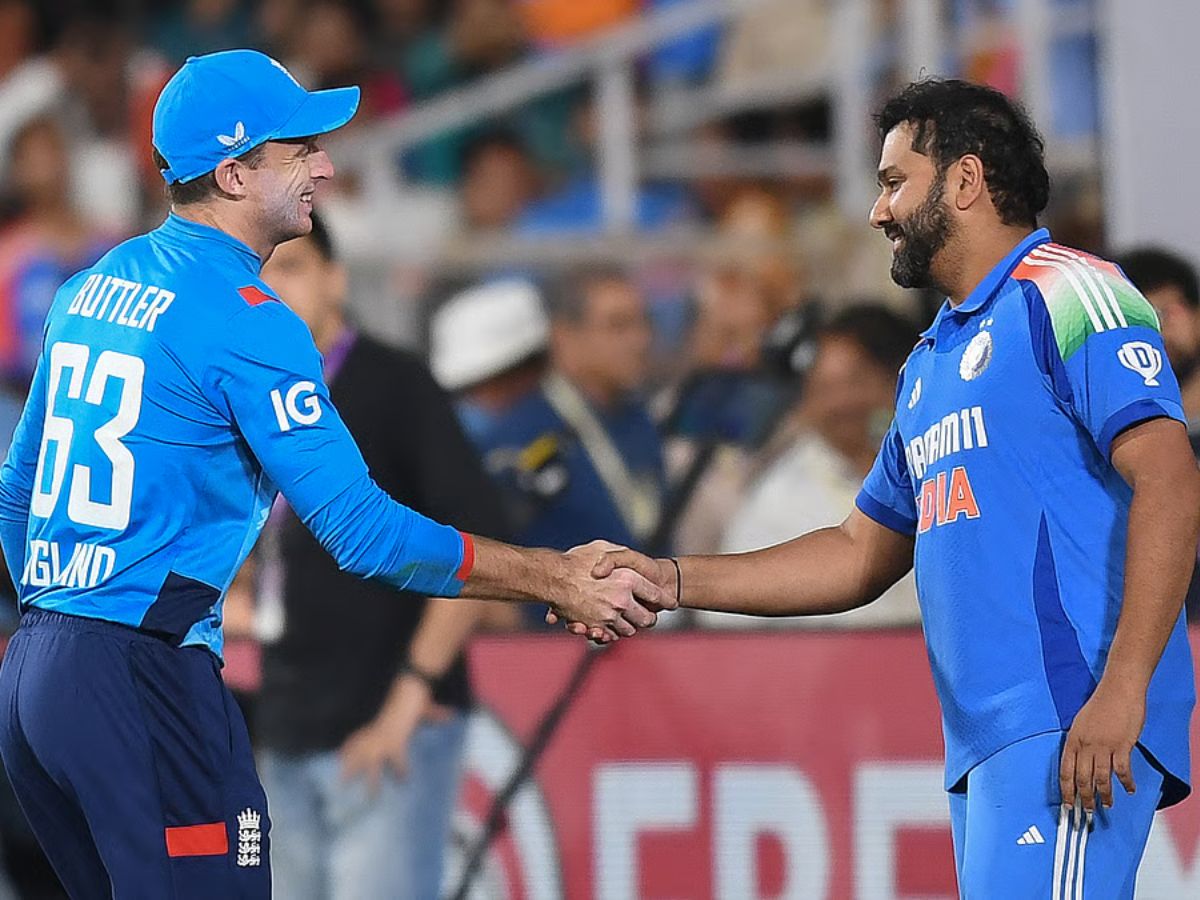
LONDON, July 24, 2026 – In a moment that transcended the fierce rivalry of international cricket, England’s white-ball captain and formidable batter, Jos Buttler, recently revealed a cherished gift from Indian stalwart Rohit Sharma: a signed India jersey, personally inscribed with a message of mutual admiration. The gesture, coming after a hard-fought One Day International (ODI) series between the two cricketing powerhouses, has resonated widely, underscoring the deep respect shared between elite athletes despite the competitive pressures of the sport. Buttler, visibly moved by the gesture, publicly hailed Sharma as his "all-time favourite" player, an endorsement that speaks volumes about the Indian opener’s global appeal and influence.
This exchange of sporting memorabilia is more than just a souvenir; it’s a testament to the camaraderie that often flourishes off the field, even as players battle intensely on it. The special gift arrived in the wake of England’s 2-1 ODI series victory over India, a series marked by captivating performances, including a brilliant century from Sharma himself, delivered amidst a swirling vortex of speculation regarding his international future. The entire episode paints a compelling picture of cricket’s enduring spirit, where personal connections and mutual respect can shine brightly even amidst the demanding glare of professional competition and the relentless churn of rumour mills.
Main Facts: A Pinnacle of Sportsmanship
The heart of this unfolding story lies in a simple yet profound act: Rohit Sharma, one of the most decorated batsmen of his generation and India’s former captain, presenting a signed national jersey to England’s dynamic wicketkeeper-batsman, Jos Buttler. This exchange was not a casual post-match formality but a carefully considered gesture, imbued with personal sentiment.
Buttler, clearly touched by the gift, wasted no time in sharing his appreciation with the world. Taking to his official Instagram account, he posted a photograph of the treasured Indian jersey, emblazoned with Sharma’s signature and a heartfelt message. His accompanying caption left no doubt about his reverence for the Indian star: "The one opposition player’s shirt I’ve always wanted, one of my all-time favourite players! Will treasure this, thank you." Such an emphatic declaration from a player of Buttler’s stature – a World Cup-winning captain and one of the most destructive limited-overs batsmen himself – immediately amplified the significance of the exchange.
Sharma’s inscription on the jersey further illuminated the depth of their bond. "Dear Jos, I loved my time playing with & against you," the note read, a succinct yet powerful acknowledgement of their shared journey in cricket, marked by numerous encounters both as opponents and, at times, as teammates in various T20 leagues. This private sentiment, now made public, encapsulates the essence of sportsmanship: a recognition of skill, character, and the shared passion for the game that transcends national colours.
The timing of this gesture adds another layer of intrigue and context. It occurred directly after England had clinched a hard-fought 2-1 victory over India in the recent ODI series. For India, the series loss followed a preceding defeat in the five-match T20 International series, where they were led by Shreyas Iyer. Despite the team’s series defeat, Sharma himself had delivered a stellar individual performance in the series decider at Lord’s, silencing doubters with a magnificent century. This context makes the exchange even more poignant, highlighting that even in defeat, and amid personal uncertainty, the spirit of the game and mutual respect prevail.
)
Chronology of Events: A Series Culminating in Respect
The narrative begins with a high-stakes encounter, the third and final ODI between England and India, played at the iconic Lord’s Cricket Ground. The series was poised at 1-1, making this match a winner-takes-all affair. The atmosphere was electric, with both teams vying for supremacy.
The Lord’s Decider and Rohit’s Masterclass
On that fateful day, India, batting first, found themselves under immense pressure. The English bowlers, riding on the momentum of their home crowd, were relentless. However, at the forefront of India’s innings stood Rohit Sharma. With whispers about his international future beginning to circulate in the media, Sharma responded in the most emphatic way possible: with the bat. He crafted a sublime innings of 138 runs off just 110 balls, an innings punctuated by 5 towering sixes and 17 exquisite fours. His strike rate of 125.45 showcased a perfect blend of aggression and control, demonstrating why he is revered as one of the game’s greatest white-ball exponents.
Sharma’s century was a masterclass in anchoring an innings, particularly vital given the context of the match and the weight of expectation. He battled hard, demonstrating exceptional resilience and skill to guide India to a competitive total. Despite his monumental effort, however, England ultimately emerged victorious by 27 runs, clinching the series 2-1. This outcome, while disappointing for India, did not diminish the individual brilliance of Sharma’s performance, which stood out as a highlight of the series.

The Post-Match Exchange and Buttler’s Public Gratitude
Following the conclusion of the series, with the tension of competition giving way to customary handshakes and congratulations, the private exchange between Sharma and Buttler took place. While the exact moment was not captured for public consumption at first, the significance of the gesture was soon made clear by Buttler himself.
Shortly after the series, Buttler utilized his influential platform on Instagram to share his delight. His post, featuring the signed jersey and the accompanying heartfelt message, quickly went viral across social media platforms. The image showcased the blue Indian jersey, bearing Sharma’s distinctive signature and the personal note, "Dear Jos, I loved my time playing with & against you." This public acknowledgement by Buttler not only amplified the story but also solidified the perception of a genuine friendship and deep professional respect between the two captains. The immediate reaction from fans and fellow cricketers highlighted the universal appeal of such sporting gestures, demonstrating how moments of camaraderie can transcend the outcome of a match or series.
Adding to the social media buzz, a tweet from cricket journalist Mufaddal Vohra on July 24, 2026, also showcased the jersey, further cementing the news of this heartwarming exchange in the public consciousness. The tweet, simply stating, "Rohit Sharma gifted his ODI jersey to Jos Buttler," accompanied by an image, served as a concise and widely shared confirmation of the event.
)
Preceding T20I Series Context
It’s important to note that the ODI series loss for India followed a challenging five-match T20 International series against England, which India also lost. In that preceding series, India was led by Shreyas Iyer, indicating a period of experimentation and leadership transition within the Indian white-ball setup. While Rohit Sharma was not captaining the T20I side, the collective performance of the Indian team against a strong English side provided the backdrop for the subsequent ODI contest, adding pressure and scrutiny to the team’s overall performance against one of their fiercest rivals. This context underlines the demanding schedule and high stakes involved in international cricket, even as individual acts of sportsmanship continue to shine through.
Supporting Data and Context: Weaving a Tapestry of Respect and Performance
The exchange between Rohit Sharma and Jos Buttler is not an isolated incident but rather a luminous example of a rich tradition of sportsmanship that frequently emerges at the highest echelons of cricket. Beyond the immediate news, delving into the profiles of these two cricketing giants and the broader context of their interaction enriches our understanding of this significant event.
The Enduring Spirit of Sportsmanship in Cricket
Cricket, often dubbed the ‘gentleman’s game,’ has a storied history of mutual respect between competitors. While rivalries can be intense, there are countless instances where admiration for an opponent’s skill and character takes precedence. From the legendary exchanges between Sachin Tendulkar and Shane Warne, Brian Lara and Glenn McGrath, or more recently, Virat Kohli and AB de Villiers, these moments serve as powerful reminders that sport, at its best, fosters camaraderie and mutual appreciation.
)
The gesture from Sharma to Buttler fits perfectly into this tradition. It transcends the scoreline and the series result, focusing instead on the shared journey and the battles fought. For Buttler to declare Sharma his "all-time favourite" speaks not just to Sharma’s statistical achievements but to his aesthetic appeal, his impact on the game, and perhaps even his personality off the field. Such an endorsement from a contemporary legend adds immense weight to Sharma’s legacy. It reinforces the idea that true greatness is acknowledged by peers, irrespective of national allegiance, and that the beauty of cricket lies not just in victory, but in the respect earned along the way.
Profiles in Excellence: Rohit Sharma and Jos Buttler
Rohit Sharma: The ‘Hitman’ and a Modern Icon
Rohit Sharma’s journey in international cricket has been nothing short of extraordinary. Affectionately known as the ‘Hitman’ for his effortless ability to clear boundaries, Sharma has redefined opening batting in limited-overs cricket. His record-breaking three double centuries in ODIs stand as a testament to his unique blend of elegant stroke play and brutal power. As India’s former captain, he has led the team with a calm demeanour, guiding them through numerous challenges. His leadership, while no longer at the helm of the ODI side, has been influential, particularly in the shorter formats where he has achieved significant success.
Sharma’s importance to Indian cricket extends beyond his runs; he is a strategic thinker, a calming presence, and an inspirational figure in the dressing room. His ability to perform under pressure, as demonstrated by his 138-run knock at Lord’s amidst retirement rumours, underscores his mental fortitude. He is a player whose impact reverberates far beyond the statistics, shaping the narrative of Indian cricket for over a decade.
)
Jos Buttler: England’s Dynamic Leader and Destructive Force
Jos Buttler is, without doubt, one of the most exciting and destructive white-ball cricketers of his generation. As England’s captain, he has inherited a formidable white-ball team and has continued to lead them with distinction, most notably securing the 2-1 ODI series win against India. His batting style is characterized by innovation, power, and an uncanny ability to accelerate scoring at will, making him a nightmare for opposition bowlers.
Buttler’s leadership has been instrumental in maintaining England’s aggressive and fearless approach to limited-overs cricket. He is a player who leads by example, consistently delivering match-winning performances with both bat and gloves. His acknowledgement of Sharma as his "all-time favourite" reveals a deep appreciation for classical batting elegance and consistent performance, characteristics that Sharma embodies. It also highlights the intellectual aspect of cricket, where players study and admire each other’s craft.
Statistical Overview of the ODI Series
The three-match ODI series between England and India was a tightly contested affair, ultimately decided in England’s favour with a 2-1 victory. While the team result was disappointing for India, several individual performances stood out, particularly from the Indian camp.
)
Rohit Sharma, despite playing only three innings, concluded the series as the fourth-highest run-scorer. His aggregate of 175 runs, scored at a commendable strike rate of 98.31, showcased his consistent ability to score impactful runs. His century at Lord’s was the highest individual score in the series, further cementing his personal triumph amidst the team’s defeat.
Notably, other Indian batsmen also featured prominently among the top run-scorers, indicating that India’s batting lineup was not entirely subdued. Shubman Gill emerged as the highest run-scorer in the series with 188 runs, demonstrating his burgeoning talent and consistency. Virat Kohli, another pillar of Indian batting, also contributed significantly with 144 runs, ranking among the top five. This data suggests that while India lost the series, their top order largely performed well, highlighting the fine margins that often separate victory from defeat in high-level international cricket. England’s victory, therefore, was a testament to their collective effort, particularly their bowling and middle-order contributions, which managed to contain India’s formidable batting lineup at crucial junctures.
Official Responses and Speculation: Navigating the Future of a Legend
The context of Rohit Sharma’s performance and the subsequent exchange of jerseys was deeply intertwined with a flurry of media speculation regarding his potential retirement from international cricket. These rumours, which surfaced prominently just before the series decider at Lord’s, cast a shadow of uncertainty over one of India’s most celebrated careers.
)
The Genesis of Retirement Rumours
Reports began circulating in the media suggesting that the third ODI against England at Lord’s might mark Rohit Sharma’s final appearance in international cricket. The exact origin of these rumours was unclear, but they quickly gained traction, fueling intense debate among fans and pundits alike. The article hinted at "discussions" between selectors and the "Hitman," where Sharma reportedly expressed "dissatisfaction with their decisions," implying a potential disagreement or frustration that might have led to such speculation. Such reports, even if unsubstantiated, can create immense pressure on a player, especially one of Sharma’s stature, who has dedicated years to the sport.
The notion of a senior player nearing the end of their career often triggers such discussions, particularly when a team is undergoing a transitional phase or experiencing mixed results. For a player who has been a consistent performer and leader for over a decade, any hint of a decline or a difference in opinion with the cricketing establishment can quickly escalate into widespread retirement speculation.
Rohit’s Clear Stance: Aiming for 2027
Crucially, the article provided a direct counter to these rumours: Rohit Sharma’s own ambition. It stated unequivocally that Sharma aims to continue playing until the 2027 ODI World Cup. This declaration from the player himself is a powerful statement of intent, indicating his commitment to the sport and his desire to contribute to India’s future cricketing endeavours on the global stage. For a player of his experience and fitness, extending his career to another World Cup cycle is a realistic, albeit challenging, goal, demonstrating his unwavering passion for the game. This personal ambition serves as the most direct rebuttal to any suggestions of imminent retirement.
)
BCCI’s Official Clarification: Dispelling Doubts
In response to the mounting speculation, the Board of Control for Cricket in India (BCCI) swiftly moved to quash the rumours, providing much-needed clarity and reassurance. Devajit Saikia, the BCCI Secretary, issued a categorical statement to the Press Trust of India (PTI), directly addressing the circulating reports.
"There are numerous rumors circulating in the media regarding Rohit Sharma’s future. I want to clearly emphasize that there has been no conversation indicating that Rohit will be playing his last match at Lord’s on Sunday," Saikia stated. His words were precise and left no room for ambiguity, directly refuting the premise of the retirement speculation.
Saikia further elaborated on Sharma’s standing within the national team: "Rohit is a consistent member of the Indian ODI team, and he will keep representing the country as long as he remains part of the plans. In other words, the ODI at Lord’s will not be his final match." This official endorsement from the BCCI is vital. It not only confirms Sharma’s immediate future but also implies that he remains an integral part of India’s long-term strategy for the 50-over format, potentially extending to the 2027 World Cup, aligning perfectly with the player’s own stated ambition.
)
This official response serves to stabilize the narrative, reassuring fans and providing a clear direction for Sharma’s ongoing international career. It highlights the importance of official channels in dispelling misinformation and managing public perception, especially concerning high-profile athletes.
The Impact of Rumours on Player Morale
Such intense media speculation can undoubtedly take a toll on a player’s morale and focus. The constant barrage of questions and the uncertainty surrounding one’s future can be a significant distraction, even for seasoned professionals. However, Rohit Sharma’s performance at Lord’s – a magnificent century – in the face of these rumours speaks volumes about his mental strength and ability to block out external noise. It reinforces his status not just as a gifted cricketer but as a mentally robust competitor who thrives under pressure. The official denial from the BCCI provides the necessary psychological reassurance, allowing Sharma to focus purely on his game without the added burden of retirement talks.
Implications and Future Outlook: A Legacy Cemented and a Path Forward
The exchange between Rohit Sharma and Jos Buttler, set against the backdrop of a competitive series and swirling retirement rumours, carries significant implications for the players, their respective teams, and the broader cricketing world. It underscores the enduring values of the sport while also shedding light on the future trajectories of two of its most prominent figures.
)
The Enduring Message of Sportsmanship
The primary implication of this jersey exchange is the powerful message of sportsmanship it conveys. In an era where rivalries can often be intensified by social media and aggressive narratives, moments like these serve as a vital reminder of the respect and camaraderie that underpin professional sport. For Buttler to publicly declare Sharma his "all-time favourite" and for Sharma to offer such a personal, heartfelt note, speaks to a bond forged through years of competition and mutual admiration. This gesture will undoubtedly resonate with young cricketers and fans, demonstrating that fierce competition can coexist with deep respect. It elevates the image of cricket, showcasing it as a game where character and integrity are as valued as skill and victory. Such exchanges contribute to the legacy of the game, cementing a narrative of friendly rivalry rather than bitter animosity.
Rohit Sharma’s Future: A Clear Path to 2027
The most significant implication for Rohit Sharma is the clear affirmation of his international future. The BCCI Secretary’s unequivocal statement, coupled with Sharma’s own stated ambition to play until the 2027 ODI World Cup, dispels all doubts surrounding his retirement. This means that Indian cricket fans can look forward to several more years of the ‘Hitman’ gracing the international stage.
This clarity is crucial for Sharma himself, allowing him to focus on his game without the distraction of external pressures. It also provides the Indian team management with a definitive plan regarding his role. As a senior player, his experience, leadership (even if not as captain), and prolific run-scoring ability will be invaluable as India builds towards the next World Cup cycle. His performance at Lord’s, despite the team’s loss, indicated that his powers are far from waning, suggesting he still has much to offer at the highest level. The focus will now shift from retirement speculation to his continued contribution and his pursuit of further milestones.
)
The India-England Rivalry: Respect Amidst Intensity
The recent ODI series between India and England, while decided in England’s favour, reaffirmed the intensity and quality of their rivalry. The jersey exchange, however, ensures that this rivalry remains fierce yet sporting. It’s a reminder that while national pride and winning are paramount, the human element of respect and friendship among competitors adds a vital layer to the narrative. This dynamic makes future encounters between these two cricketing giants even more compelling, as fans appreciate the personal connections that exist beyond the boundary rope. It fosters an environment where players can push each other to excel, knowing that mutual respect underpins their competitive drive.
Broader Message for Cricket
Ultimately, this episode sends a powerful message about the enduring spirit of cricket. It highlights that beyond the statistics, the victories, and the defeats, what truly lasts are the relationships forged, the respect earned, and the moments of pure sportsmanship. In a world increasingly fragmented, such gestures serve as unifying forces, celebrating the common humanity and shared passion that bind athletes and fans across borders. The legacy of players like Rohit Sharma and Jos Buttler will not only be defined by their runs or wickets but also by the grace, integrity, and camaraderie they brought to the game, ensuring that cricket continues to be cherished as the ‘gentleman’s game’ for generations to come. The future of cricket, as demonstrated by this heartfelt exchange, looks bright with such examples of genuine admiration at its core.
