

Updated: Jul 25, 2026 02:50 AM IST
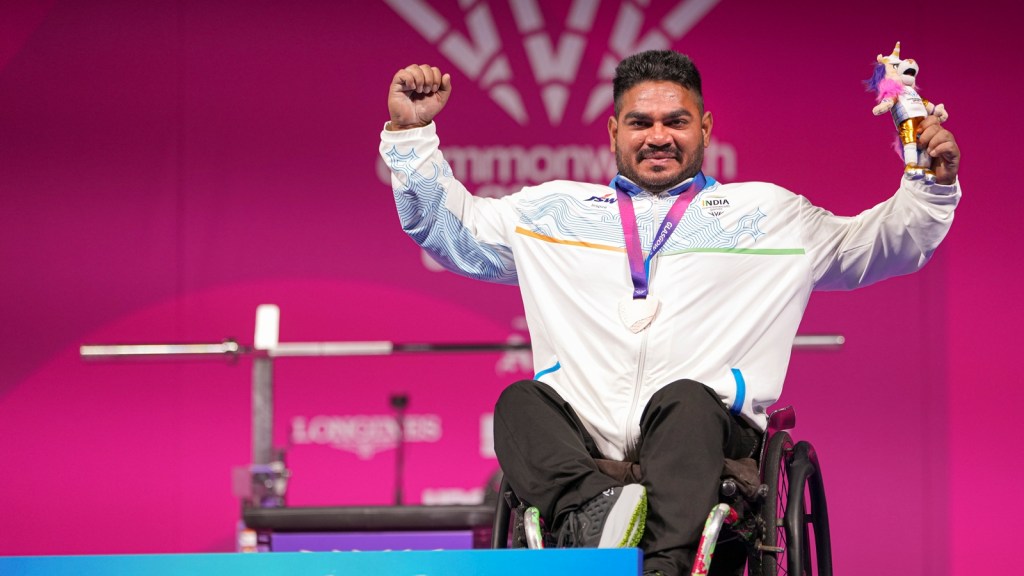
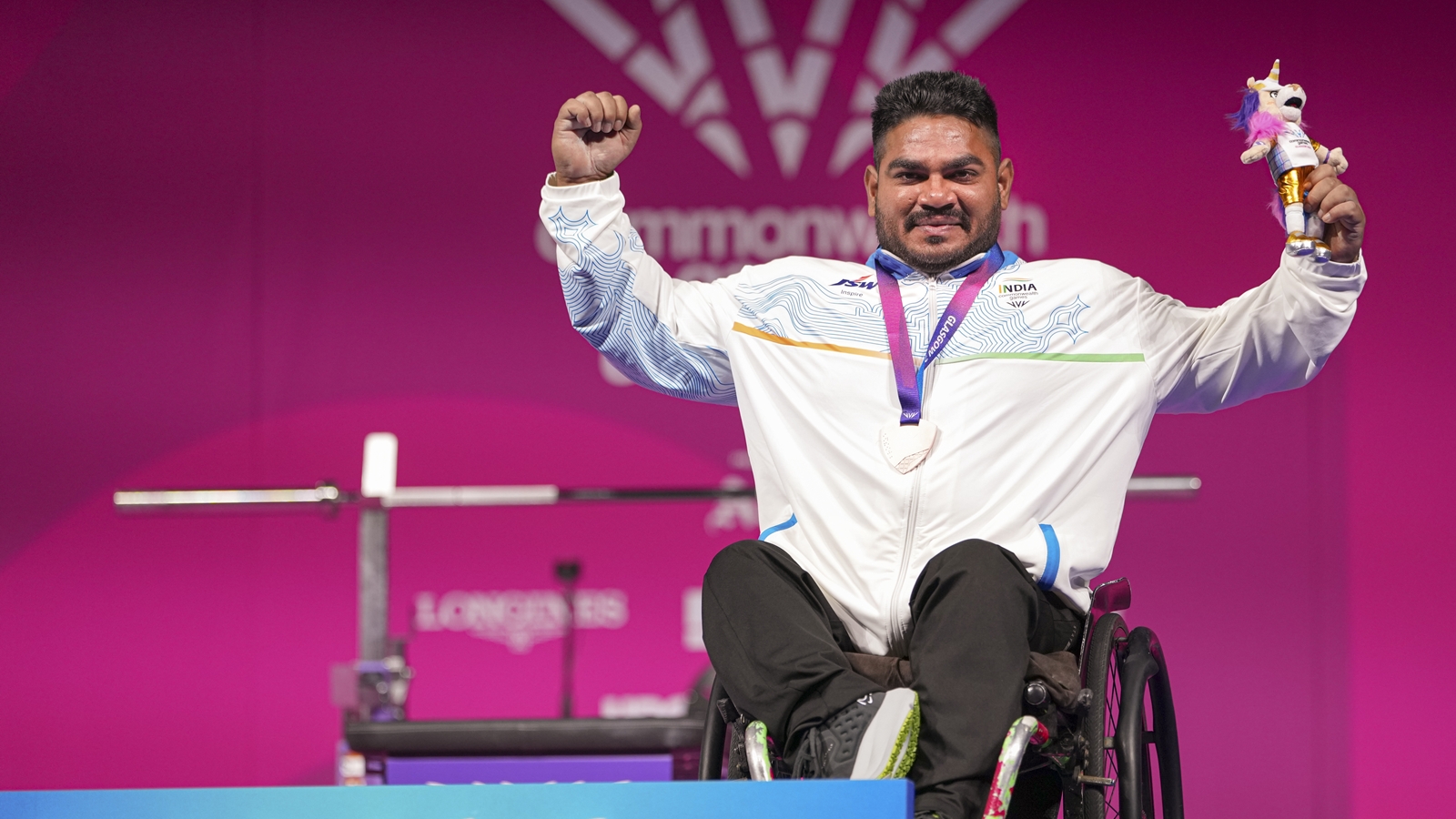
Jhandu Kumar celebrates after winning bronze during the medal ceremony for the men’s heavyweight para powerlifting event at the Commonwealth Games 2026 (PTI Photo)
The spirit of resilience and an unwavering will to succeed shone brightly on late Friday night as para powerlifter Jhandu Kumar etched his name into the annals of Indian sporting history, securing the nation’s inaugural medal at the Commonwealth Games 2026. In a compelling display of strength and determination, Kumar clinched the bronze medal in the Men’s Heavyweight Para Powerlifting category, igniting a wave of celebration and pride across the subcontinent. His remarkable achievement, coming from humble beginnings and overcoming immense personal challenges, has set an inspiring tone for India’s campaign at these prestigious Games.
Main Facts
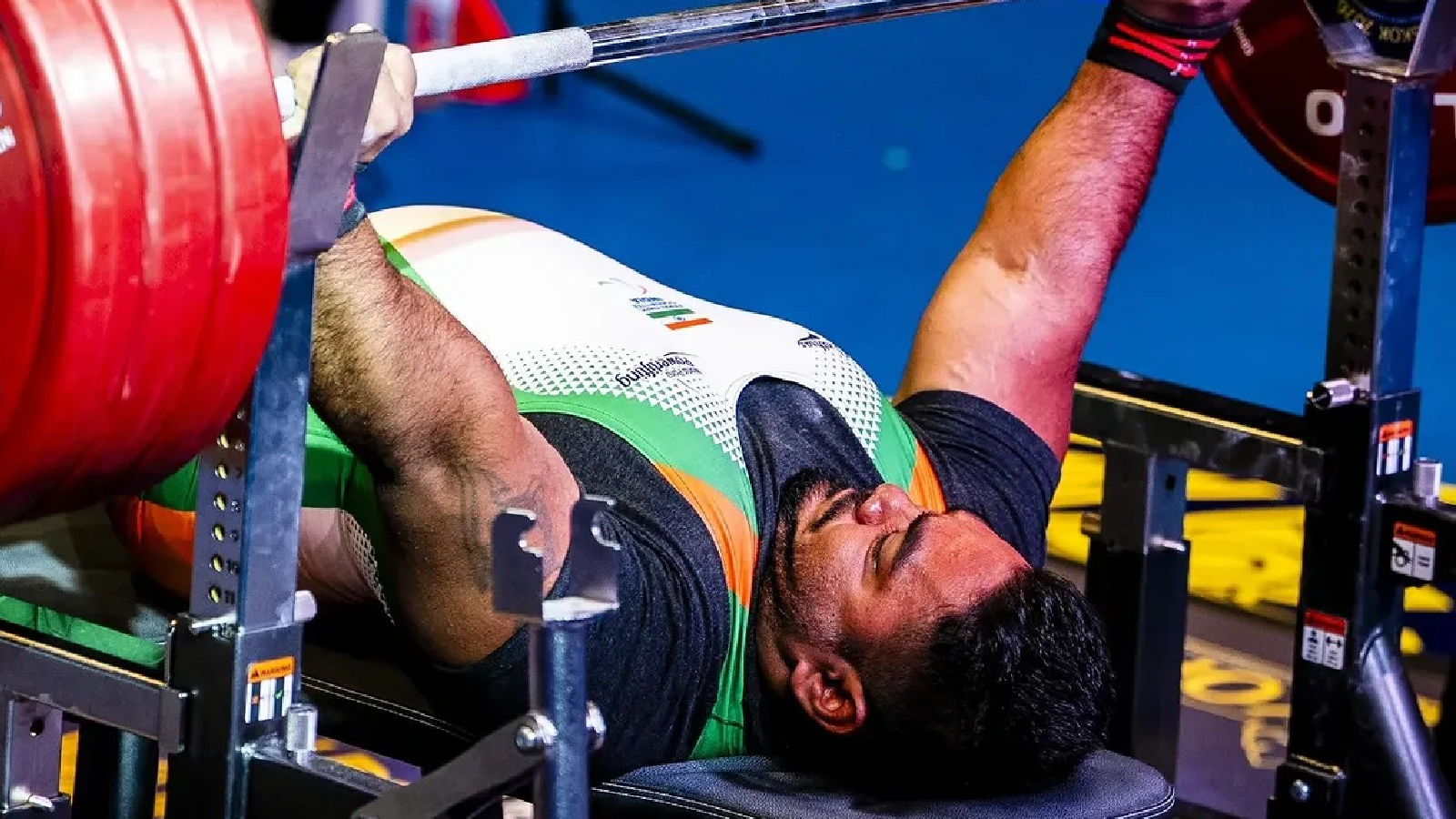
Jhandu Kumar, a name now synonymous with grit and triumph, delivered a stellar performance in the Men’s Heavyweight Para Powerlifting event, earning India its first medal of the Commonwealth Games 2026. Competing in Group B, Kumar commenced his medal quest with a powerful and successful lift of 181 kg. This initial success was swiftly followed by an even more impressive 190 kg lift, solidifying his position among the top contenders.
The para powerlifting event employs a sophisticated points system, factoring in an athlete’s body weight alongside the weight lifted, to ensure fair competition across different weight classes. Kumar’s combined efforts culminated in a total of 130.9 points, a score that saw him maintain a leading position for a significant portion of the competition. However, as the event progressed, he was ultimately surpassed by formidable rivals. Matthew Harding of Wales, with an exceptional display of strength, secured the silver medal, while Nigeria’s powerhouse Riluwan Idris, demonstrating sheer dominance, ultimately claimed the gold. Despite the formidable competition, Kumar’s bronze medal finish is a testament to his relentless training and strategic execution on the international stage.
The significance of this medal extends far beyond the individual achievement. It marks a historic moment for the Indian contingent at the Commonwealth Games 2026, opening the country’s medal account and setting an optimistic precedent for the events to follow. For Jhandu Kumar, it is the culmination of years of arduous effort, battling not just physical limitations but also socio-economic hurdles that would deter many. His journey from a small village in Bihar to the Commonwealth Games podium is a powerful narrative of perseverance, embodying the true spirit of sportsmanship and human endeavor.
A Journey Forged in Resilience: The Chronology of Jhandu Kumar’s Rise
Jhandu Kumar’s path to Commonwealth Games glory is a compelling saga of overcoming adversity, marked by unyielding determination and a profound belief in his own potential. His life story is a powerful reminder that true strength often lies in the ability to persevere against all odds.
Humble Beginnings in Harnaut
Born in Harnaut, a modest town nestled in the Nalanda district of Bihar, Jhandu Kumar’s life began with an inherent challenge. Struck by polio since birth, he navigated his early years with a physical disability that posed significant hurdles. His family background further compounded these difficulties; his father, a vegetable vendor, struggled to make ends meet, placing immense financial strain on the household. Growing up in such an environment meant that Jhandu was acutely aware of the economic limitations and the additional burden his condition placed on his family. Access to proper medical care, specialized rehabilitation, or even adequate nutrition was often a luxury they could ill afford.
Yet, from these humble beginnings, Jhandu began to cultivate an extraordinary spirit. The challenges of his physical condition and the daily grind of poverty did not diminish his spirit; instead, they seemed to fuel an internal fire. He learned early on that hard work and determination were not just virtues but necessities for survival and progress. This early conditioning, though harsh, laid the foundation for the mental fortitude that would later define his sporting career.
From Athletics to the Powerlifting Platform
Jhandu Kumar’s foray into the world of sports began in 2017, where he initially carved a niche for himself as a para-athletics athlete. Specializing in the F55 classification for shot put and discus throw events, he quickly demonstrated a natural aptitude for strength-based disciplines. His dedication to training and his innate power soon saw him achieving considerable success at the local level, winning numerous district and state-level medals. These early victories were crucial, not just for the recognition they brought but for instilling in Jhandu a sense of accomplishment and the realization of his athletic capabilities.
It was during this period of intensive strength training for shot put and discus that a new interest began to blossom. The rigorous gym sessions, focused on building core strength and explosive power, sparked a fascination with powerlifting. He found himself drawn to the raw, unadulterated challenge of lifting heavy weights, a discipline that seemed to resonate deeply with his inherent physical attributes and his desire to push boundaries. The transition was gradual but purposeful, as he began to dedicate more time and focus to the specific techniques and demands of powerlifting, sensing a true calling in this more specialized strength sport.
The Turning Point: Mentorship and SAI Gandhinagar
The shift to para powerlifting, while intuitive for Jhandu, was not without its initial setbacks. His first attempt at a National Championship in his new discipline proved challenging, as he unfortunately failed to register a successful lift. This moment, which could have been a crushing blow for many, instead became a pivotal turning point in Jhandu’s nascent career. It was a moment of introspection, a stark realization of the gap between potential and professional execution.
Crucially, this setback also brought a stroke of destiny. At a state championship, a recommendation from keen observers led to a life-changing encounter. Paralympic bronze medallist Rajinder Singh Rahelu, a revered figure in Indian para-powerlifting, recognized the raw talent and immense potential lurking beneath Jhandu’s initial struggles. Rahelu, a seasoned veteran who understood the nuances of the sport and the challenges faced by para-athletes, extended an invaluable invitation to Jhandu: to train at the prestigious Sports Authority of India (SAI) National Centre of Excellence (NCOE) in Gandhinagar.
This invitation was a game-changer. Moving to SAI Gandhinagar provided Jhandu with access to world-class coaching, state-of-the-art facilities, scientific training methodologies, and a supportive ecosystem of fellow elite athletes. Under Rahelu’s direct tutelage, Jhandu’s technical skills were honed, his training regimen became more structured and precise, and his mental game was fortified. Rahelu didn’t just teach him how to lift; he taught him how to compete, how to manage pressure, and how to harness his inner strength. This mentorship proved instrumental, transforming a promising athlete into a formidable competitor.
National Records and International Acclaim
Under the expert guidance of Rajinder Singh Rahelu at SAI Gandhinagar, Jhandu Kumar’s progression was nothing short of meteoric. He rapidly evolved into one of India’s leading para powerlifters, his dedication manifesting in a series of impressive performances and record-breaking achievements.
The year 2025 marked a significant milestone in his career. At the National Championships, Jhandu demonstrated his burgeoning power by setting a new National Record with an astounding 205 kg lift. This achievement was not merely a personal best but a clear statement of his dominance within the national circuit. Not content with this, he pushed his own boundaries further, improving his record to an even more remarkable 206 kg at the Khelo India Para Games, an event designed to promote grassroots sports and identify talent.
These outstanding national performances naturally propelled him onto the international stage. His global debut was met with immediate success, as he clinched a bronze medal at the Beijing World Cup 2025, proving his mettle against some of the world’s best. This was swiftly followed by another bronze medal at the Asian & Oceania Championships 2026, further solidifying his standing as a top-tier international para powerlifter. Each of these triumphs was a stepping stone, building his confidence and experience, and ultimately culminating in his well-deserved qualification for the Commonwealth Games 2026. His journey, from a polio-affected child in rural Bihar to a Commonwealth Games medallist, is a powerful testament to the transformative power of sport, mentorship, and unyielding human spirit.
Supporting Data and India’s CWG 2026 Campaign
Jhandu Kumar’s bronze medal not only marked India’s first medal but also underscored the nation’s growing prowess in para-sports. The Men’s Heavyweight Para Powerlifting event itself was a showcase of incredible human strength, while other Indian athletes demonstrated promising performances across various disciplines in the early days of the Commonwealth Games 2026.
The Men’s Heavyweight Para Powerlifting Event
The Men’s Heavyweight Para Powerlifting event at the Commonwealth Games 2026 was a fiercely contested affair, bringing together some of the strongest para-athletes from across the Commonwealth nations. The competition unfolded with palpable tension, each lifter’s attempt met with either a collective gasp or an encouraging roar from the spectators. The scoring system, which normalizes lifts based on an athlete’s body weight to produce a final ‘points’ score, adds an intricate layer of strategy to the raw power display.
Jhandu Kumar’s performance was characterized by a calm and calculated approach. His opening lift of 181 kg was executed with precision, immediately placing him in contention. Following up with a successful 190 kg lift on his second attempt further cemented his position, demonstrating consistent form and increasing his points tally. While the specific details of his third attempt (whether he went for a higher weight, or if it was deemed unsuccessful) are not fully detailed, his final score of 130.9 points was a formidable total, briefly holding the top spot. The eventual gold medallist, Riluwan Idris of Nigeria, and silver medallist, Matthew Harding of Wales, showcased exceptional strength and technique, ultimately pushing Kumar into the bronze medal position. This podium finish, however, speaks volumes about Jhandu’s competitive spirit and his ability to perform under immense pressure on a global stage.
Broader Strokes: India’s Performance in Early Events
Beyond Jhandu Kumar’s historic medal, the Indian contingent has shown encouraging signs across various disciplines in the initial phase of the Commonwealth Games 2026, indicating a strong start for the nation.
In Lawn Bowls, India registered significant victories. Putul Sonowal delivered a dominant performance, defeating Falkland Islands’ Cecil Alexander in a men’s singles sectional round 2 match. This win demonstrated strategic play and focus. In the women’s pairs event, the formidable duo of Rupa Rani Tirkey and Pinki Singh exhibited excellent teamwork and precision, beating their South African counterparts 2-0 (6-4, 7-5) in their second Section B match at the Scottish Event Campus (SEC) Hall 3. These early successes in Lawn Bowls highlight India’s growing presence in a sport often overlooked but requiring immense skill and concentration.
Boxing also saw a promising start for India, with Jadumani Singh securing a comfortable win in the men’s 55kg category. Singh registered a facile victory against local favourite Aaron Cullen, showcasing his superior technique and agility in the ring. Such a confident start in boxing bodes well for India’s medal prospects in a sport where the nation traditionally performs strongly.
In Para Swimming, Indian athletes demonstrated their competitive spirit. Ravi Veera Venkata Bhavani Karthik Budigina and Ali Imam both successfully qualified for the men’s 100m freestyle S13 final. While they ultimately finished 4th and 7th respectively, their qualification for the final heat against elite international competitors is a commendable achievement, reflecting the dedication and training invested.
The Swimming arena also witnessed an Indian presence, with Srihari Nataraj qualifying for the men’s 50m backstroke semifinal. Although he finished 7th in the semifinal and failed to reach the final, his participation at this level against strong global competition is a valuable experience and an indication of his consistent progress.
In Para Powerlifting, while Jhandu Kumar was the only medallist in the early events, other Indian athletes also put in commendable efforts. Ashok and Parmjeet Kumar finished 4th and 7th respectively in the men’s lightweight final, showing that India has a strong presence across different weight categories. In the women’s lightweight final, Jaspreet Kaur and Suman Devi secured 6th and 7th positions. Unfortunately, Kasthuri Rajamani faced a tough day, failing to register a successful lift in the heavyweights, and Sudhir finished sixth in the men’s heavyweight category. These results, while not yielding medals, highlight the depth of talent in Indian para powerlifting and the intense competition at the Commonwealth Games. Each performance, regardless of the final standing, contributes to the collective experience and determination of the Indian contingent.
The Landscape of Para-Sports in India
Jhandu Kumar’s medal is a powerful affirmation of the evolving landscape of para-sports in India. For decades, para-athletes faced significant challenges, including limited recognition, inadequate funding, and insufficient infrastructure. However, recent years have witnessed a paradigm shift, largely driven by increased awareness, government initiatives, and the inspiring performances of athletes like Jhandu.
Programs such as the Khelo India Para Games have been instrumental in identifying and nurturing talent at the grassroots level, providing a crucial platform for athletes with disabilities to showcase their abilities. The Sports Authority of India (SAI) has also played a pivotal role, establishing National Centres of Excellence and providing comprehensive support, including coaching, sports science, and medical facilities, as evidenced by Jhandu’s training at SAI Gandhinagar.
Despite these advancements, challenges persist. Para-athletes often contend with societal stigmas, difficulties in accessing specialized equipment, and the need for greater public and corporate sponsorship. Jhandu’s bronze medal serves as a potent reminder of the immense potential within the para-sports community and the critical importance of sustained investment and support to ensure that every deserving athlete gets the opportunity to represent India on the global stage. His achievement will undoubtedly galvanize further efforts to elevate India’s para-sports ecosystem, fostering an environment where talent can truly thrive regardless of physical challenges.
Voices of Triumph and Support: Official Responses
The news of Jhandu Kumar’s bronze medal sent ripples of joy and pride throughout India, prompting heartfelt reactions from the athlete himself, his mentors, and prominent sports authorities. Their words underscore the profound significance of this achievement.
Jhandu Kumar’s Emotional Reaction
Overwhelmed with emotion on the podium, Jhandu Kumar struggled to articulate the depth of his feelings, but his beaming smile and tear-filled eyes spoke volumes. "This is a dream come true, not just for me, but for my family and everyone who believed in me," Kumar stated, his voice thick with emotion during a post-event interview. "To stand here, representing India, and to win the first medal for my country at these Games… it’s an indescribable feeling. I remember the days when I struggled to even get proper nutrition, let alone training. This medal is for every child in India who thinks their dreams are too big because of their circumstances. Never give up." He expressed profound gratitude to his parents, his coaches, especially Rajinder Singh Rahelu, and the Sports Authority of India for their unwavering support. "Their faith in me, even when I doubted myself, is what carried me through," he added.
Coaches and Mentors Laud Dedication
Rajinder Singh Rahelu, Jhandu’s mentor and Paralympic bronze medallist, was ecstatic. "Jhandu’s dedication is unparalleled. I saw the spark in him from day one, even after his initial setback at the Nationals," Rahelu remarked. "He is not just a strong lifter; he possesses an incredible mental strength that allows him to push past pain and doubt. We worked meticulously on his technique and mental conditioning. This bronze medal is a testament to his relentless hard work and his ability to absorb coaching. He truly deserves this moment."
A senior coach from the Sports Authority of India (SAI), who preferred to remain unnamed, echoed Rahelu’s sentiments. "Jhandu has been a model athlete at the NCOE Gandhinagar. His journey from athletics to powerlifting, and then rapidly ascending to national and international prominence, is inspirational. His success here validates the structured training and support systems we are striving to provide for our para-athletes. He has shown immense potential, and this medal is just the beginning for him."
Government and Sports Bodies Express Pride
The Sports Authority of India (SAI) and the Paralympic Committee of India (PCI) were quick to extend their congratulations. In an official statement, a SAI spokesperson declared, "Jhandu Kumar’s bronze medal is a moment of immense pride for the entire nation and a historic start to India’s campaign at the Commonwealth Games 2026. His story is a powerful narrative of triumph over adversity, inspiring millions. This achievement underscores the growing strength of India’s para-sports movement and reaffirms our commitment to providing comprehensive support to our athletes."
The President of the Paralympic Committee of India, in a televised address, added, "Jhandu Kumar has not only won a medal but has also won the hearts of millions. His incredible journey from a polio-affected child in a humble family to a Commonwealth Games medallist is truly remarkable. This medal is a huge boost for para-sports in India and will undoubtedly encourage more individuals with disabilities to pursue their sporting dreams. We will ensure he receives all the necessary support to continue his journey towards even greater heights, including the upcoming Paralympics." Discussions about felicitations and special recognition for Jhandu Kumar are already underway, reflecting the national pride his achievement has ignited.
Implications and the Road Ahead
Jhandu Kumar’s bronze medal at the Commonwealth Games 2026 is far more than just a piece of hardware; it carries profound implications for India’s para-sports landscape, inspiring a new generation and reaffirming the nation’s commitment to inclusive athletic excellence.
A Beacon for Para-Athletes
Jhandu Kumar’s story is an incredibly powerful narrative that will serve as a beacon of hope and inspiration for countless individuals with disabilities across India. Growing up with polio and facing severe financial constraints, his journey to the Commonwealth Games podium shatters preconceived notions about limitations. It sends an unequivocal message: with determination, hard work, and the right support, physical challenges do not define one’s potential. His triumph will resonate deeply with young aspiring para-athletes, showing them that their dreams of representing India on the global stage are not only valid but achievable. His life is a testament to the fact that adversity can be a catalyst for extraordinary achievement, motivating many to step forward and pursue sports as a pathway to empowerment and recognition.
Elevating India’s Para-Sports Profile
This Commonwealth Games medal significantly elevates India’s profile in the international para-sports arena. For too long, India’s para-athletes have fought for recognition and resources, often in the shadow of their able-bodied counterparts. Jhandu’s bronze medal, especially as the nation’s first at these Games, brings much-needed attention to the capabilities and achievements of para-athletes. This increased visibility can lead to several positive outcomes: greater government funding for para-sports programs, enhanced corporate sponsorships, improved infrastructure for accessible training facilities, and increased public awareness and appreciation for the dedication of para-athletes. It reinforces the narrative that India is a serious contender in para-sports, capable of producing world-class talent, and encourages a more inclusive sports culture nationwide.
Future Aspirations for Jhandu Kumar
For Jhandu Kumar himself, this bronze medal is a monumental achievement but certainly not the culmination of his aspirations. At 2026, he is still relatively young in his powerlifting career, with immense potential for further growth and success. The immediate future will likely involve a focused training regimen aimed at improving his personal bests and refining his technique. His sights will undoubtedly be set on the ultimate prize in para-sports: the Paralympic Games. With the experience gained at the Commonwealth Games, he will be a stronger, more seasoned competitor, eyeing a medal at the next Paralympics. Furthermore, continued participation in World Championships and other international events will be crucial for maintaining his competitive edge and establishing himself as a consistent force in the men’s heavyweight para powerlifting category. His role as a national hero and a role model is now solidified, placing upon him a responsibility to inspire and guide future generations.
The Commonwealth Games 2026: A Promising Start for India
Jhandu Kumar’s historic bronze medal has injected a palpable sense of optimism and national pride into India’s campaign at the Commonwealth Games 2026. As the very first medal for the contingent, it sets an incredibly positive tone, suggesting that India is poised for a strong showing across various disciplines. This early success can act as a powerful motivator for other Indian athletes, instilling confidence and a collective drive to achieve excellence. It creates momentum, fosters team spirit, and raises the hopes of a nation eagerly following the Games. With this inspiring start, India looks forward to celebrating many more triumphs as its athletes continue to compete with courage, determination, and the unwavering spirit of sportsmanship on the global stage. The journey has just begun, and Jhandu Kumar has lit the torch with his remarkable strength and spirit.
