

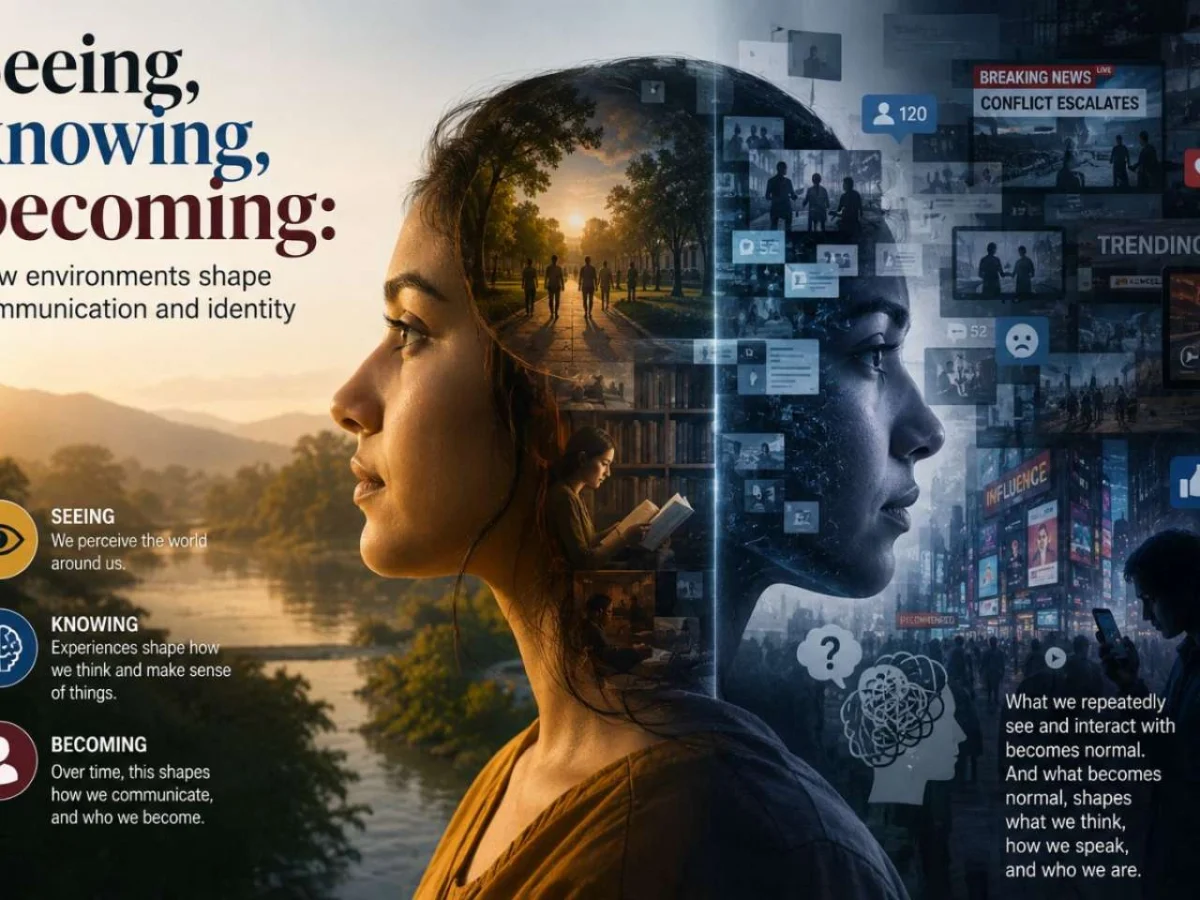
New Delhi, India – In an era defined by an incessant deluge of information, the very fabric of our communication and the essence of our identity are being subtly, yet profoundly, reshaped. Far from being solely internal constructs, our perceptions, our reasoning, and ultimately who we become are deeply intertwined with what we repeatedly see, hear, and experience. This ancient philosophical insight, recognized for millennia, has taken on an urgent new relevance in our media-saturated world, where constant exposure acts as an invisible sculptor of our inner landscapes.
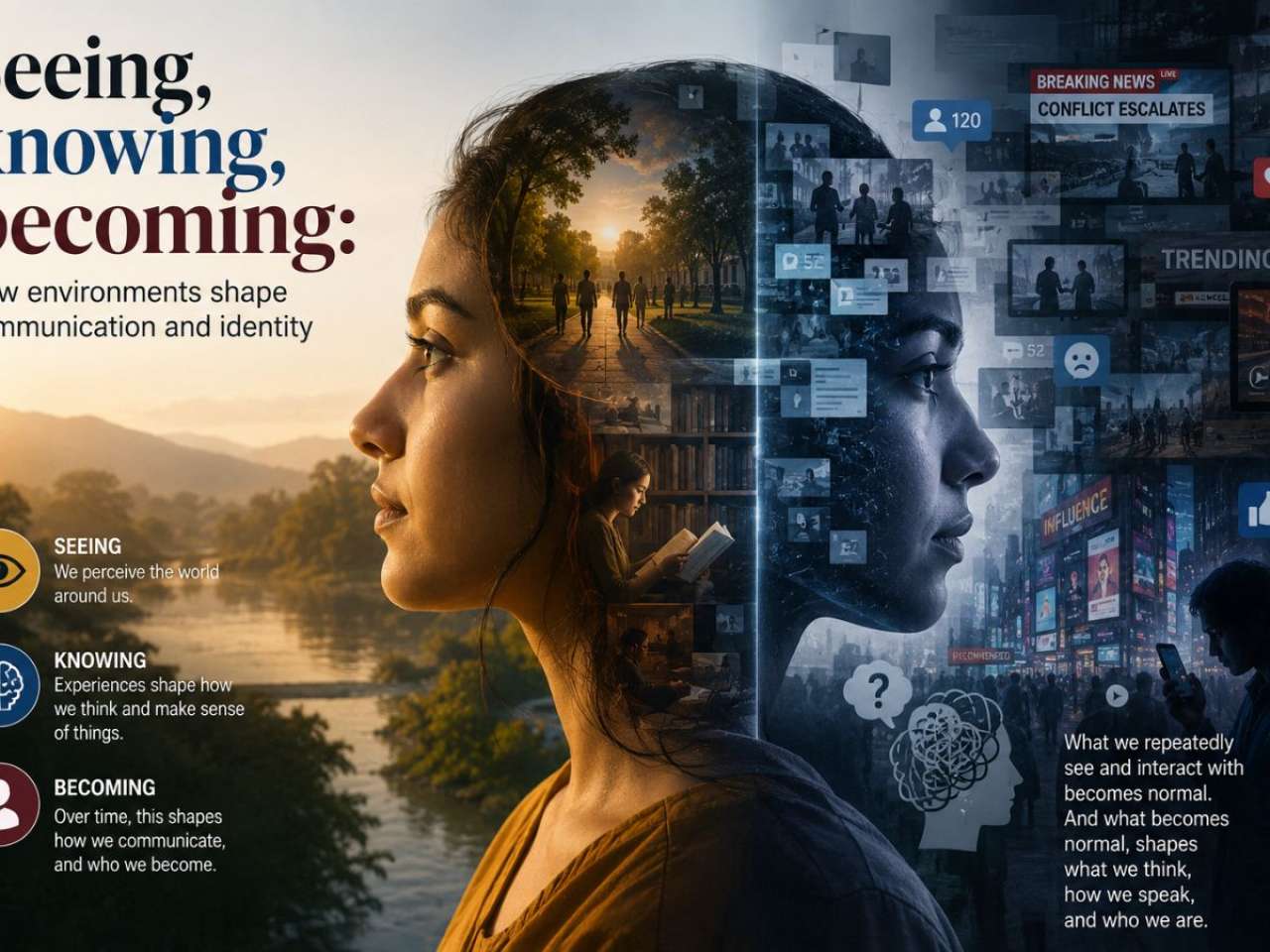
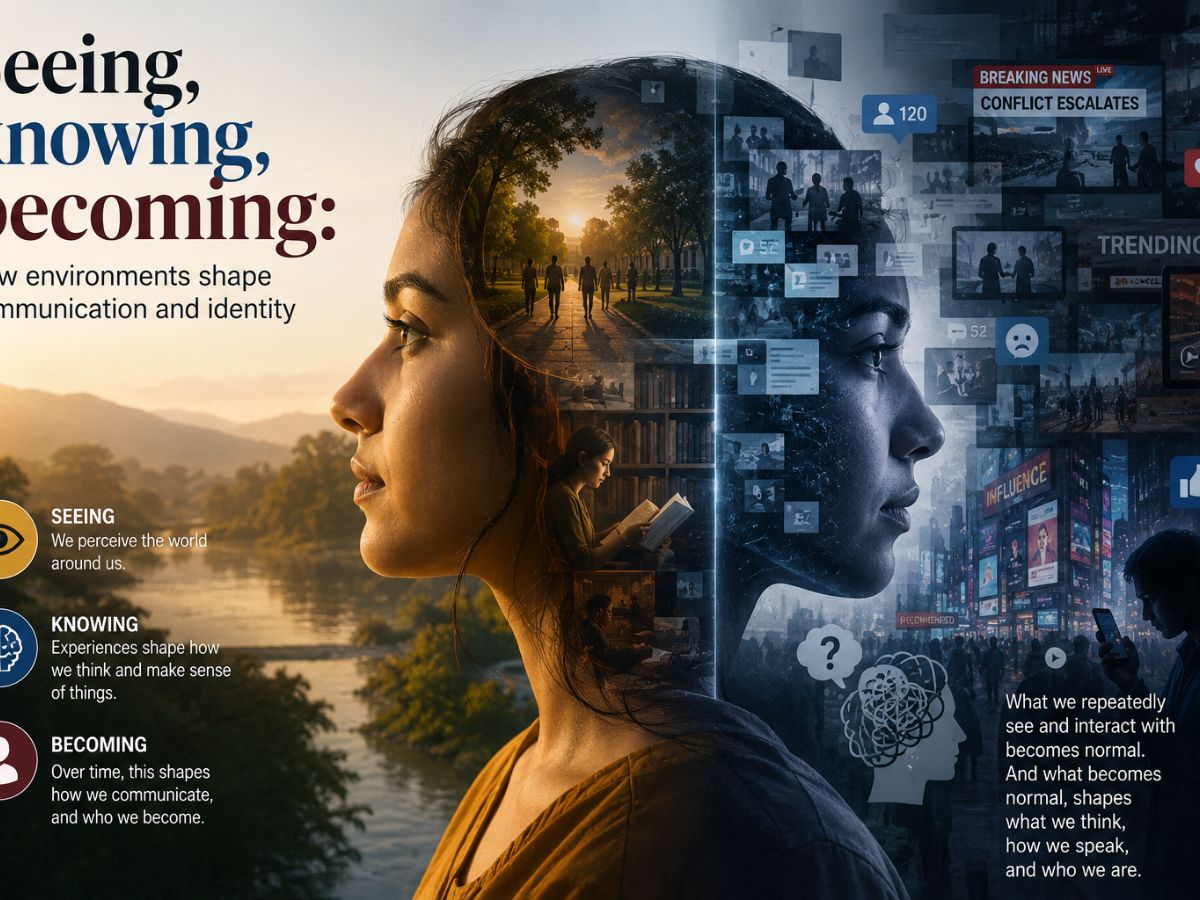
The prevailing narrative often treats communication as a simple act of expression and identity as an inherent, stable quality. However, a closer examination reveals a more nuanced reality. Both are far more malleable and contingent than commonly acknowledged, continuously shaped by the environments we inhabit. What we encounter, what we are exposed to, and what we gradually accept as the norm within our surroundings don’t just inform our knowledge; they actively structure our cognitive processes, our linguistic patterns, and our very sense of self. This profound interconnectedness, rooted in ancient philosophical traditions, is amplified and accelerated by the pervasive influence of contemporary media.
)
The Philosophical Bedrock: Perception as the Genesis of Knowledge
The idea that external environments profoundly influence our internal states is not a modern revelation. Ancient philosophical traditions, particularly in India, provided sophisticated frameworks for understanding this relationship. The Nyaya Sutra, a cornerstone of Indian logic and epistemology, identifies pratyaksha – perception – as the primary pathway to valid knowledge. This foundational text posits that all knowledge originates from the direct contact between our senses and the external world. What we perceive through sight, sound, and touch forms the bedrock upon which we build our inferences, judgments, and entire reasoning processes.

This philosophical perspective establishes a clear causal chain: sensory stimulus precedes cognitive processing, which in turn informs our articulation. The mind, often conceptualized as a dynamic entity, is seen as being shaped by vrittis, or mental fluctuations, as described in the Yoga Sutra. These fluctuations, the text elucidates, arise from impressions formed through our sensory engagements and lived experiences. Over time, the relentless repetition of these exposures engraves deeper imprints, known as samskaras. These imprints, in turn, cultivate our tendencies, preferences, and ingrained patterns of response. Identity, therefore, is not a fixed entity but rather an accumulated construct, continuously being refined by our interactions with the world.
)
The Digital Crucible: Amplifying Environmental Influence
The contemporary media landscape has dramatically intensified these age-old principles. We are now immersed in environments teeming with an unprecedented density of stimuli. Digital platforms, social media feeds, algorithmically curated content, and an unending stream of information bombard us daily. These environments are far from neutral. They actively promote certain forms of expression, amplify specific linguistic styles, and normalize particular ways of interpreting and framing the world.
)
The consequences of this constant exposure are far-reaching. Over time, these patterns begin to mold both how individuals communicate and how they perceive themselves. A striking example is the increasing standardization of language across digital platforms. Words, phrases, and expressions rapidly gain traction, acquiring shared meanings and serving as potent signals of belonging. What might begin as a descriptive term can quickly evolve into a marker of identity. Terms that once denoted a preference or an activity can now function as definitive self-definitions.
)
This linguistic evolution is not a mere coincidence; it reflects the pervasive influence of repeated exposure to particular linguistic patterns. These patterns, through constant reinforcement, begin to feel natural, expected, and even essential for effective participation in online discourse. The very act of communication becomes an internalized reflection of the dominant linguistic norms encountered.
)
The Shaping of Beliefs and the Contraction of Thought
The same phenomenon is observable in the formation of opinions and the development of ideological stances. Exposure to a limited spectrum of viewpoints can foster an illusion of consensus, while sustained engagement with particular narratives can powerfully shape what individuals deem credible or legitimate. The Nyaya emphasis on perception as the starting point of knowledge suggests a crucial implication: when the range of what is perceived narrows, the capacity for broad and nuanced reasoning can also contract. In essence, thought processes become tethered to the available exposure.
)
The Yoga Sutra’s concept of samskaras adds another layer to this analysis. Repetition is not just informative; it is formative. A single exposure might offer a fleeting insight, but sustained exposure leaves a lasting imprint. Over time, the cumulative effect of these interactions leaves behind cognitive and emotional residues that profoundly influence our behavior. Preferences that feel deeply intrinsic are, in many instances, the direct result of accumulated exposure to specific stimuli. Similarly, our sense of identity can appear remarkably stable, even as it is being continuously molded by our environmental interactions.
)
Implications for Education and Communication Institutions
This understanding of how environments shape cognition and expression carries significant implications for institutions, particularly those involved in education and communication. If thought and expression are indeed products of our surroundings, then the deliberate design and curation of these environments become paramount. What is made visible, what is emphasized, and what is repeatedly communicated will inevitably influence not only what individuals know but also how they think and articulate that knowledge.
)
Higher education institutions, for instance, often prioritize content delivery and skill development. However, less attention is frequently paid to the communicative environment within which learning transpires. If exposure fundamentally shapes cognition, then the quality of discourse, the diversity of perspectives presented, and the nature of intellectual engagement become central to the educational process. A rich and varied communicative environment fosters a more robust and adaptable cognitive landscape.
)
The same principles apply to media and public communication. The increasing compression of information into short, easily digestible formats, while potentially enhancing accessibility, also carries the risk of diminishing complexity. When exposure is confined to simplified representations, the capacity for nuanced thought can erode. Communication may become more efficient, but it may also lose its substantive depth. The challenge lies in striking a balance between accessibility and the preservation of intellectual rigor.
)
Navigating the Influence: Awareness as the Key
The pervasive influence of our environments on communication and identity is not something to be eradicated, but rather something to be understood and actively navigated. The crucial step is to cultivate awareness. We must recognize that repeated exposure to certain stimuli will invariably shape our thoughts, and these thoughts, in turn, will influence what we say. In a world where environments are increasingly mediated and curated, this awareness is not merely beneficial; it is essential for intellectual autonomy and genuine self-understanding.
)
Communication and identity do not emerge in a vacuum. They are forged at the complex intersection of exposure, interpretation, and repetition. The fundamental question is not whether we are influenced by what surrounds us. Rather, it is whether we are attentive to the mechanisms of that influence and whether we are deliberate in shaping the environments that, in turn, shape us. By understanding this dynamic, we can move from passive recipients of influence to active participants in the construction of our own cognitive and communicative realities.
