

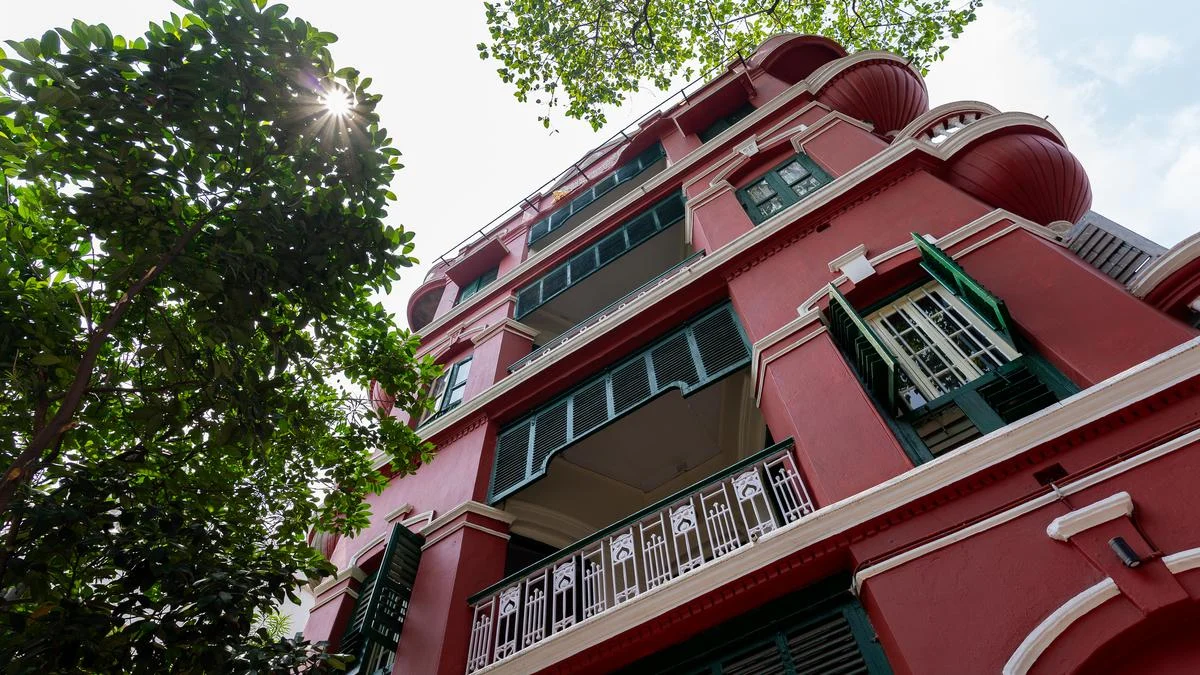
For over a century, the heritage buildings of Kolkata have stood as the silent sentinels of a bygone era, their silhouettes rising against the city’s skyline like the sturdy, weathered chords of an ancient chamber organ. These structures—a fusion of Gothic, Edwardian, and traditional Bengali styles—create a unique urban music: a composition woven from threads of memory, loss, and the urgent need for renewal. Today, a new movement is sweeping through the "City of Joy," one that rejects the notion of heritage as a dusty relic of the past and instead embraces it as a vibrant, economically viable stage for the future.
Through experiential tourism, innovative restoration, and "adaptive reuse," Kolkata is witnessing a paradigm shift. Old walls are finding new rhythms as jazz bars, cultural hubs, and performance spaces, sustained by a generation of owners and activists who see conservation not as an act of nostalgia, but as a vital form of urban continuity.

Main Facts: The Shift from Preservation to Animation
The central challenge facing Kolkata’s architectural heritage has long been financial. For decades, owners of aging properties lacked the incentive or the capital to maintain buildings that were often bogged down by bureaucratic lethargy or rent-control limitations. However, a series of recent initiatives has demonstrated that these buildings can be self-sustaining.
At the heart of this movement is Kolkata Unforgettable, an experiential tourism initiative led by Shailaja Mundra and her daughter Vasudha Pachisia. Their philosophy is built on the realization that heritage structures are "pre-made backdrops" for modern cultural experiences. By hosting fortnightly curated performances, they generate the public interest and revenue necessary for upkeep.

Similarly, private entrepreneurs are investing in "adaptive reuse"—the process of repurposing an old building for a use other than which it was originally designed. From the 109-year-old Royal Insurance Building in Dalhousie Square to the residential "Baris" of Kalighat, Kolkata’s historic fabric is being rewoven into the city’s commercial and social life.
Chronology of a Revival: From Bureaucracy to Performance
The timeline of this revival is marked by specific events that transformed public perception of what a "heritage building" could be:

- 2017: The Return of the Visionary: Munir Mohanty, having lived in the United States, returned to his home city of Kolkata. His search for a space to house his passion for jazz and vinyl led him to a 109-year-old late colonial building on Manoharpukur Road.
- 2019: The Shell Becomes a Stage: Mohanty acquired the building and began a grueling one-year restoration process. This involved stripping the structure to its brick shell to address deep-seated dampness and modernize the electrical and sewage systems while maintaining architectural integrity.
- October 2022: The Acquisition of The Red Bari: Avantika Jalan and John Grams acquired a 90-year-old traditional Bengali urban mansion in Kalighat from barrister Pareshnath Banerjee. Their goal was to preserve the "bones" of the building while converting it into a multi-use event space.
- March 27 (Recent): The Royal Insurance Building Transformation: The 109-year-old Royal Insurance Building, a landmark of Edwardian commercial architecture in Dalhousie Square, was illuminated with neon pink and blue lights. The event featured flamenco dancers and storytelling, marking a significant milestone for the "Kolkata Unforgettable" project.
Supporting Data: Case Studies in Adaptive Reuse
The Royal Insurance Building: Beyond the History Lesson
Located in the heart of the city’s administrative district, Dalhousie Square (B.B.D. Bagh) is often described as "dead" on weekends. The Royal Insurance Building, with its Classical influences and grand stairwells, was typically seen as a relic of colonial bureaucracy.
Vasudha Pachisia’s team reimagined the space. Instead of a traditional tour, they utilized the building’s levels as a vertical stage. Choreographer Soujit Das and the troupe Beatbusters turned the staircases into performance zones, forcing the audience to move through the architecture. Past events by the group have included:

- A theatrical production regarding the history of the General Post Office (GPO).
- A Dastangoi (storytelling) performance on Guru Dutt inside a North Kolkata rajbari.
- A pipe organ concert at St. John’s Church, utilizing an instrument rarely heard by the public.
Skinny Mo’s: Engineering a Jazz Sanctuary
Munir Mohanty’s restoration of the Manoharpukur Road property serves as a technical blueprint for adaptive reuse. To make the 109-year-old building suitable for Skinny Mo’s Jazz Bar and the cocktail parlor Nutcase, significant engineering was required:
- Structural Integrity: The building was stripped of all internal and external plaster to address "damp" issues common in Kolkata’s humid climate.
- Material Sourcing: To maintain the aesthetic, Mohanty used red oxide flooring and sourced specific tiles from Bikaner, a region where traditional palace craftsmanship still thrives.
- Modernization: Soundproofing was achieved using aluminum windows rather than traditional glass to ensure the jazz performances did not disturb the residential neighborhood.
The Red Bari: Preserving the "Bari" Soul
The Red Bari in Kalighat represents the "traditional Bengali urban mansion." Characterized by its curved balconies, khorkhori (slatted) windows, and central courtyards, these buildings were designed for natural light and air circulation.
Owners Avantika Jalan and John Grams faced unique challenges:

- Regulatory Compliance: They installed a fire escape and a lift, but to protect the structural load, these were built as external structures that do not lean on the original 90-year-old walls.
- Plumbing Sensitivity: To avoid damaging the thick, load-bearing walls, they replaced all water lines without altering their original placement, choosing to adapt the business to the building’s layout rather than the other way around.
Official Responses and Conservation Advocacy
While private initiatives are flourishing, the institutional landscape remains fraught with tension. GM Kapur, General Council Member and Convenor of INTACH (Indian National Trust for Art and Cultural Heritage) West Bengal, has been a vocal advocate for more robust legal protections.
Legal Battles and "Lost" Buildings
INTACH recently filed a petition before the Calcutta High Court, expressing grave concern over the weakening of heritage protections. The petition highlighted several significant losses and threats:

- The Barua Residence: The demolished home of legendary filmmaker Pramathesh Barua.
- Roxy Cinema: Uncertainties regarding the future of this landmark entertainment venue.
- Institutional Landmarks: Questions surrounding the redevelopment of the Alipore and Presidency jails.
Kapur argues that neglect and redevelopment pressures are often used as excuses to remove a building’s "protected" status. In response, INTACH is developing a platform to bridge the gap between heritage owners (sellers) and conservation-minded investors (buyers). The goal is to ensure that when a property changes hands, it is not "flattened" for a high-rise, but rather repurposed.
The Jugaadopolis Initiative
To democratize the restoration process, architect Aishwarya Tipnis and co-founder Hinna Devi Singh created Jugaadopolis. This open-source "restoration toolbox" is inspired by the circular economy. It provides heritage owners with the technical knowledge and sourcing information needed to maintain their properties without relying on expensive, large-scale firms. Tipnis notes that many owners are now well-traveled and appreciate the "vintage" value of their properties, citing high-end boutiques like Bombaim as examples of successful heritage-based commerce.

Implications: The Economic and Cultural Stakes
The success of adaptive reuse in Kolkata has implications that reach far beyond aesthetics.
Economic Viability
The shift toward experiential tourism and commercial repurposing proves that heritage can be a revenue generator. When a portion of the proceeds from a jazz concert or a flamenco performance goes back into the building’s maintenance, the cycle of decay is broken. This creates a self-sustaining ecosystem where the building "pays for itself."

Urban Identity and Tourism
Kolkata is increasingly competing with other Indian metros for "experiential" travelers. By moving away from "history lessons" and toward immersive cultural events, the city is positioning its architecture as a living asset. This attracts a younger demographic and international tourists who seek authenticity over sanitized modern luxury.
Preservation of Memory
The most profound implication, however, is the preservation of the city’s collective memory. As Avantika Jalan of The Red Bari notes, the "old home vibe" created by thick walls and traditional layouts provides a sense of grounding in a rapidly modernizing world.

Conclusion: A Symphony Continued
The restoration of Kolkata is not merely an act of fixing brick and lime; it is the restoration of the city’s soul. Through the efforts of initiatives like Kolkata Unforgettable, the technical rigor of owners like Munir Mohanty, and the advocacy of organizations like INTACH, the city is proving that its ancient "chamber organ" still has many songs to play.
By treating heritage buildings as dynamic stages rather than static monuments, Kolkata is ensuring that its skyline remains a composition of renewal. The neon lights washing over the Royal Insurance Building and the jazz notes echoing through the halls of Skinny Mo’s are more than just entertainment—they are the heartbeat of a city that refuses to let its past fade into silence. In the dance between the old and the new, Kolkata is finding a rhythm that is, quite literally, unforgettable.
