

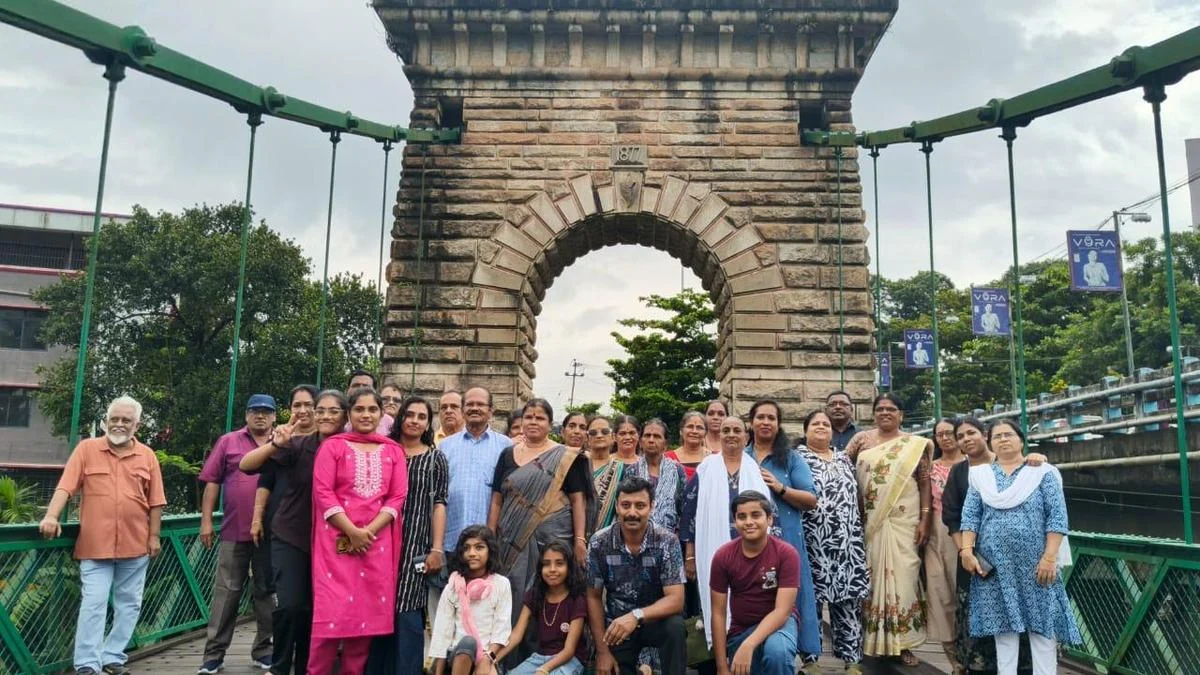
In the annals of public transport history, the Kerala State Road Transport Corporation (KSRTC) has long been regarded as the lifeline of the "God’s Own Country." However, in recent years, its role has pivoted from a mere commuter service to a catalyst for social cohesion. What began as a strategic move to boost revenue through the Budget Tourism Cell (BTC) has evolved into a grassroots social movement. This phenomenon is best exemplified by "Yathra Kudumbam" (The Travel Family), a unique collective of over 300 individuals who, once strangers on a public bus, have now formed an inseparable bond centered around the spirit of exploration.
Main Facts: The Genesis of a Social Collective
The story of Yathra Kudumbam is not just about tourism; it is about the transformation of public infrastructure into a community space. The group comprises regulars of the KSRTC Budget Tourism trips—a vertical launched to utilize idle buses for affordable leisure travel. While group tours often foster temporary friendships, the members of Yathra Kudumbam have transcended the typical "tourist" label to form a self-sustaining travel community.
Operating in close coordination with the BTC, the group has pioneered a "customized charter" model. Unlike standard tours where the itinerary is fixed by the corporation, Yathra Kudumbam identifies offbeat locations, often deep within forest reserves or culturally significant hamlets, and سپس (then) approaches the BTC to charter a bus specifically for their curated route. This symbiotic relationship allows the KSRTC to ensure guaranteed occupancy and revenue, while the travelers enjoy the safety and reliability of a state-run service tailored to their specific interests.
The group is anchored by two pivotal figures: Thomas TC, a Level 10 Google Local Guide whose expertise in geography and digital mapping provides the logistical backbone for their excursions, and Sajith S, a KSRTC conductor from the Thiruvananthapuram city depot. Sajith, a former coordinator for the BTC, represents the "human face" of the corporation, transitioning from a government employee to a trusted facilitator and member of the "family."

Chronology: From First Meeting to a 300-Member Strong Movement
The evolution of Yathra Kudumbam can be traced through a series of landmark expeditions that solidified their bond:
- The Incubation Phase (2021-2022): Following the pandemic, KSRTC launched the BTC to revive its finances. Senior citizens and solo travelers began frequenting these trips, meeting repeatedly on different circuits.
- The Formalization: Recognizing a shared desire for "slow travel" and off-the-beaten-path destinations, a core group decided to move beyond the standard BTC menu. They formed a WhatsApp-based collective to plan their own journeys.
- The Inaugural Trek (Bonacaud): Their first independent venture was to Bonacaud, the base camp for the legendary Agasthyarkoodam trek. This trip set the tone for the group, focusing on breathtaking greenery, waterfalls, and the colonial-era charm of tea estates.
- The Expansion Phase: Over the last year, the group has completed more than ten major trips. These ranged from the "Pink Lily" phenomenon in Malarikkal, Kottayam, to the rugged terrains of Kumbhavurutty and the serene heights of Ponmudi.
- Cultural Milestones: The group moved beyond sightseeing to cultural immersion, notably participating in the Aranmula Vallasadya, a ritualistic feast at the Sree Parthasarathy Temple, and celebrating Onam at the riverside destination of Mayamkadavu near Amboori.
Supporting Data: The Demographics and Logistics of the "Travel Family"
The success of Yathra Kudumbam is backed by compelling demographic and operational data. Of the 300+ members, a significant majority—estimated at 65%—are senior citizens. For many, these trips serve as a vital antidote to the "empty nest syndrome," providing a social safety net and a sense of purpose.
Operational Highlights:
- Cost-Efficiency: By chartering KSRTC buses as a group, the per-head cost remains significantly lower than private tour operators, often ranging between ₹600 to ₹1,500 for day trips, including transport and basic permits.
- Customized Itineraries: The group has successfully negotiated access to restricted forest areas, such as the Peppara Wildlife Sanctuary and the Braemore Estate, by leveraging KSRTC’s official standing with the Forest Department.
- Safety and Inclusion: The presence of a dedicated KSRTC conductor (Sajith S) ensures a high standard of safety, particularly for female solo travelers and elderly members who might otherwise hesitate to travel to remote locations.
The group also boasts high-profile members, such as Rosario, the former personal secretary to the late Indian President APJ Abdul Kalam. This diversity in membership—from retired bureaucrats to local guides and government employees—creates a rich tapestry of shared knowledge during their journeys.
Official Responses: KSRTC as a Stakeholder in Social Wellness
The KSRTC management has viewed the rise of Yathra Kudumbam as a resounding endorsement of the Budget Tourism Cell’s vision. While the corporation was initially focused on the bottom line, the "Yathra Kudumbam model" has highlighted a secondary benefit: brand loyalty.

"It is heartening to note how passengers have become close to each other," says Sajith S. "There came a point when they wanted to explore locations not in the standard BTC itinerary. Since I had been their coordinator on many trips, they wanted me to be part of this evolution. It shows that the public still trusts the ‘Anavandi’ (the colloquial name for KSRTC buses) not just for commuting, but for creating memories."
Officials from the BTC note that such groups reduce the marketing burden on the corporation. When a group like Yathra Kudumbam charters a bus, they handle the mobilization of passengers themselves, ensuring the bus operates at 100% capacity, which is the most profitable scenario for the debt-ridden corporation.
Implications: A New Blueprint for Public Tourism and Mental Health
The emergence of Yathra Kudumbam carries profound implications for several sectors:
1. Mental Health and Geriatric Care:
In a state like Kerala, which has a rapidly aging population and high rates of migration among the youth, social isolation among the elderly is a growing concern. Yathra Kudumbam provides a "chosen family" structure. The collective celebration of festivals like Onam, complete with traditional Sadyas (feasts) and campfires, acts as a form of community therapy.
2. Sustainable Tourism:
By using public transport for group excursions, the group significantly reduces the carbon footprint per traveler compared to individual car trips. Their focus on "hidden gems" also helps in de-congesting mainstream tourist hotspots like Munnar or Alappuzha, distributing tourism revenue to lesser-known local economies like Amboori and Podiyakkala.

3. Public Sector Innovation:
The Yathra Kudumbam model suggests that public sector units (PSUs) can thrive by fostering "user communities." If other state transport departments (like Karnataka’s KSRTC or Tamil Nadu’s TNSTC) were to adopt this "charter-on-demand" model for tourism, it could open a new revenue stream while providing a valuable social service.
The Road Ahead: Chasing the Neelakkurinji and Beyond
The group’s calendar remains packed with ambitious plans. On September 12, they are set to visit Podiyakkala, a scenic tribal hamlet within the Peppara Wildlife Sanctuary, followed by a visit to the historic 900-acre Braemore Estate.
Perhaps the most anticipated journey is scheduled for September 25—a two-day expedition to Chokramudi. The destination is currently witnessing the rare bloom of the Neelakkurinji (Strobilanthes kunthiana), a flower that carpets the hills in purple. For the members of Yathra Kudumbam, this trip is more than just a sightseeing opportunity; it is a celebration of a bond that, much like the flower, has bloomed beautifully and unexpectedly from the soil of shared experience.
As the iconic red-and-yellow KSRTC bus winds through the misty hairpins of the Western Ghats, it carries more than just passengers. It carries a "Travel Family" that has proven that in the age of digital isolation, a simple bus ride can still be the start of a lifelong journey together.
Contact Information for Inquiries:
For those interested in the initiatives of the Budget Tourism Cell or the activities of Yathra Kudumbam, the coordinators can be reached at:
- Phone: 9447148504, 9072727254
