

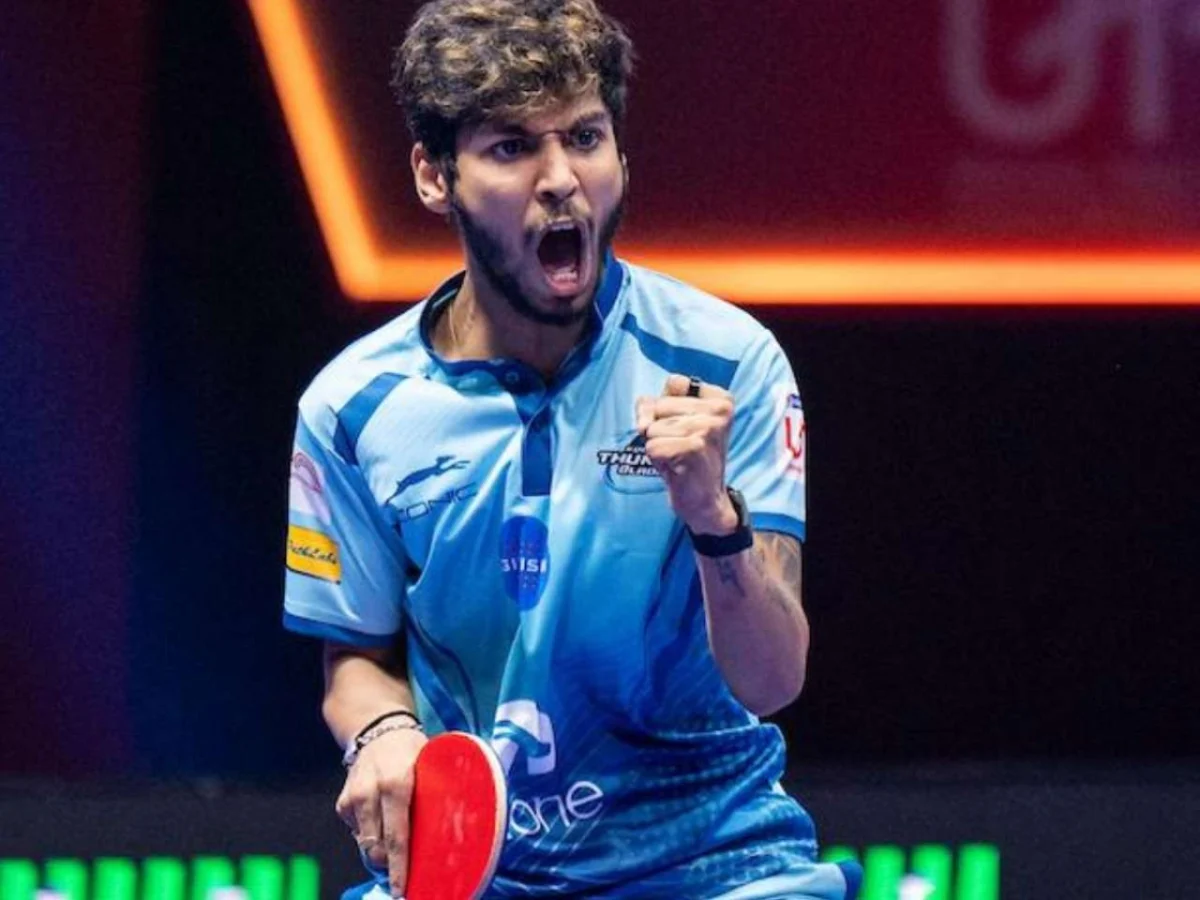
New Delhi, India – The 22nd Commonwealth Table Tennis Championships 2026 concluded with a resounding triumph for host nation India, as its paddlers delivered a spectacular performance, securing a significant haul of gold medals and reaffirming the country’s rising prominence in the sport. The capital city of New Delhi bore witness to a historic display of skill, determination, and national pride, culminating in individual gold medals for Ankur Bhattacharjee in the men’s singles and Yashaswini Ghorpade in the women’s singles, alongside a crucial mixed doubles gold.
The championships, held on home soil, provided an electric atmosphere that undeniably fueled the Indian contingent. The final day saw an outpouring of support from an enthusiastic crowd, creating an unforgettable backdrop for the medal matches. India’s final medal tally painted a picture of absolute dominance, with gold medals across key categories, showcasing both established talent and the emergence of promising young stars.
A Golden Homecoming: India’s Unforgettable Performance
The Commonwealth Table Tennis Championships 2026, hosted with immense fanfare in New Delhi, served as a powerful testament to India’s growing stature in international table tennis. From the outset, expectations were high for the home team, and they delivered beyond measure, culminating in a series of unforgettable victories. The tournament, spanning several days of intense competition, brought together the finest paddlers from across the Commonwealth, all vying for supremacy.
The final day of the championships, held at a packed Dr. S.P. Mukherjee Indoor Stadium, was a spectacle of high-octane table tennis. The roar of the crowd, adorned in national colours, was a constant presence, pushing the Indian players to achieve new heights. The culmination of this exhilarating journey was marked by a vibrant closing ceremony, graced by Delhi Chief Minister Rekha Gupta as the chief guest, who lauded the athletes for their exceptional performances and the organizing committee for a flawlessly executed event. Medals were presented to all deserving winners, cementing their places in the annals of Commonwealth table tennis history.
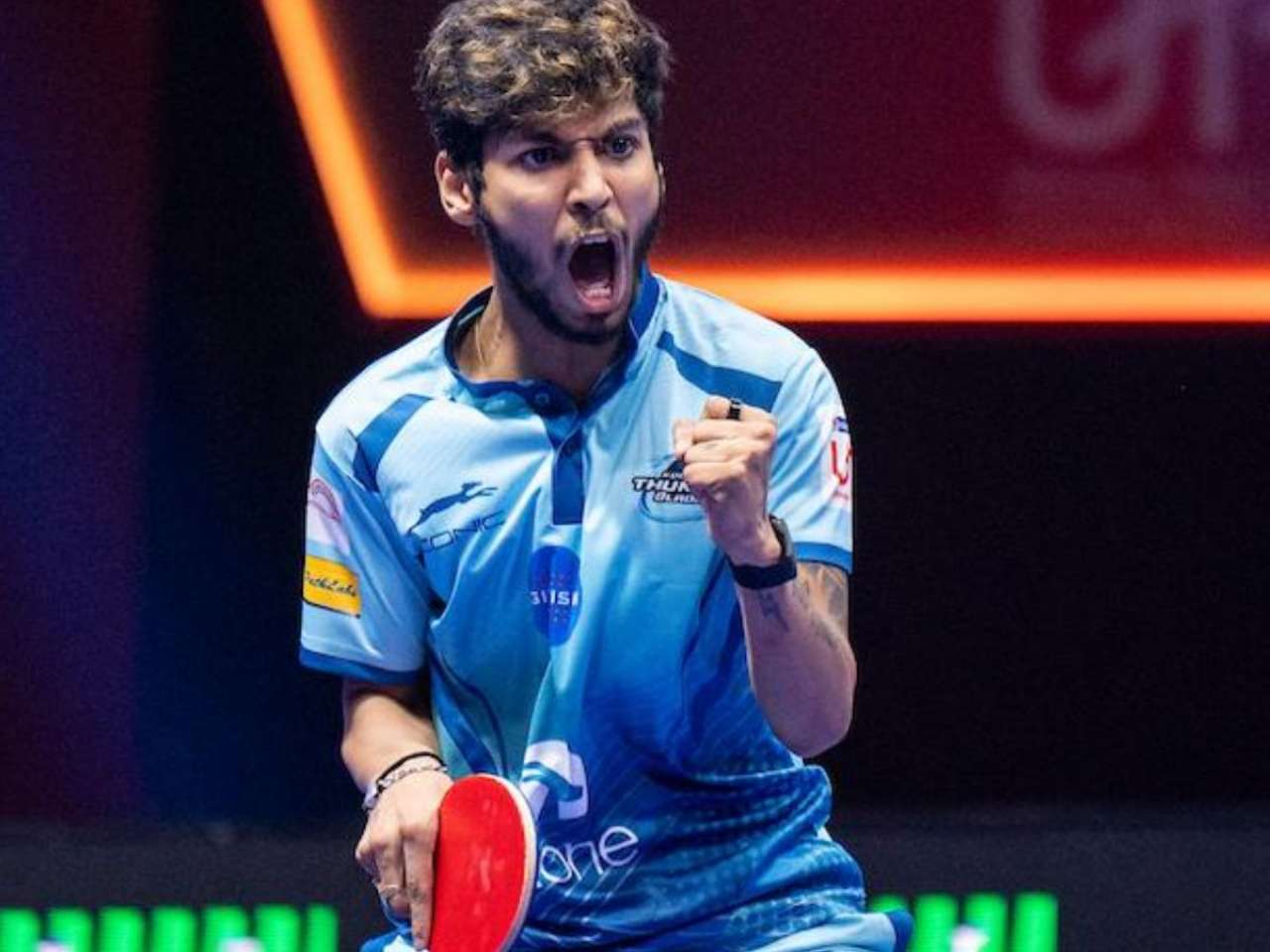
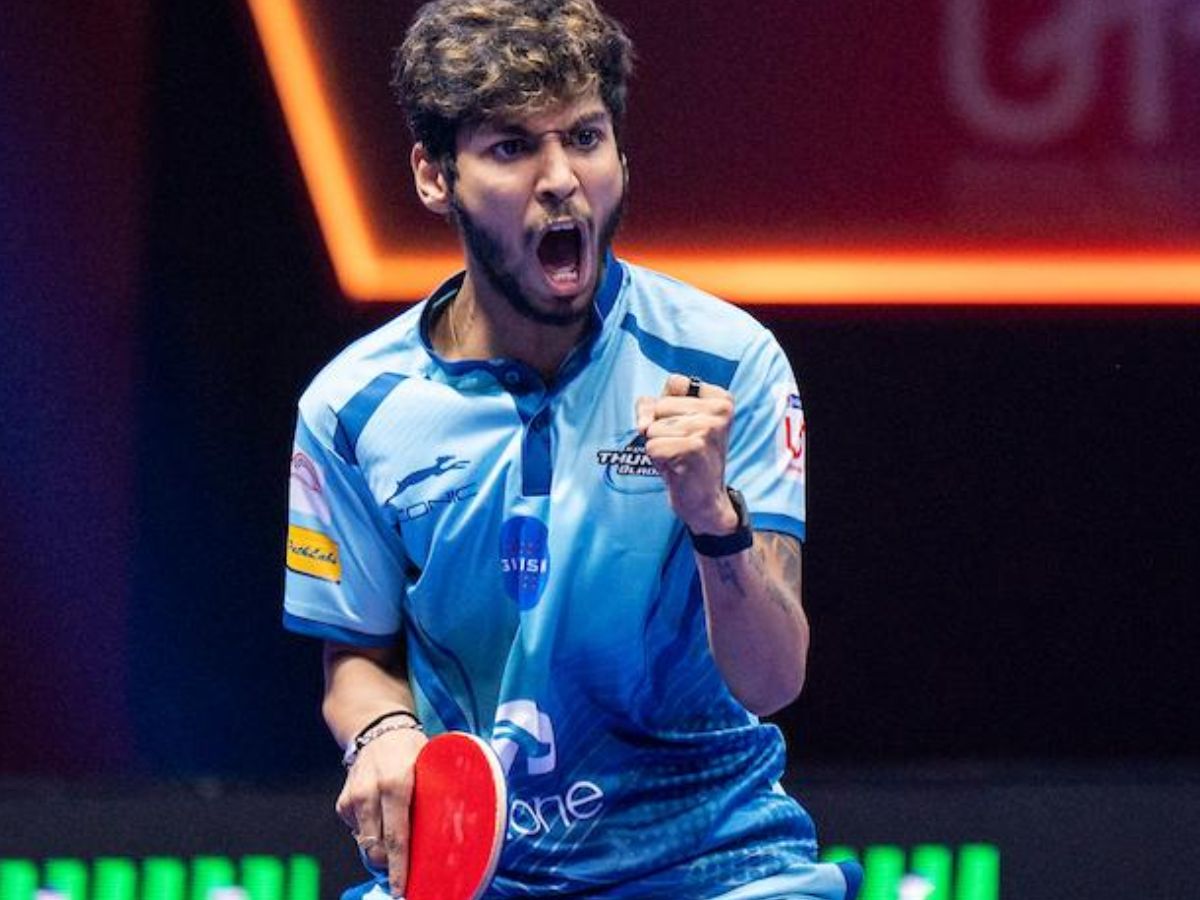
India’s medal haul was nothing short of extraordinary. The nation secured the coveted gold medals in both the men’s and women’s singles categories, a rare double achievement that underscored the depth of talent within the squad. Nineteen-year-old Ankur Bhattacharjee of West Bengal emerged as the men’s singles champion, while the formidable Yashaswini Ghorpade claimed the women’s singles crown. Adding to the golden glow, the dynamic pair of Manav Thakkar and Taneesha Kotecha clinched the mixed doubles gold, staging a remarkable comeback in their final encounter.
)
Beyond these stellar individual and mixed team achievements, India also demonstrated its strength in the doubles categories. Although the men’s doubles pair of Manush Shah and Manav Thakkar secured a silver medal, narrowly losing to a strong Malaysian duo, the women’s doubles saw an all-Indian final, with Sreeja Akula and Syndrela Das triumphing over their compatriots Yashaswini Ghorpade and Divyanshi Bhowmick, ensuring another gold and silver for the host nation. This comprehensive performance underscored India’s strategic depth and meticulous preparation for the championships.
Chronology of Triumph: Navigating the Road to Gold
The journey to Commonwealth glory for the Indian contingent was paved with intense competition, strategic brilliance, and unwavering resilience. The championships commenced with preliminary rounds that saw Indian players navigate through challenging opponents from various Commonwealth nations, steadily building momentum towards the business end of the tournament.
The Men’s Singles Saga: Ankur Bhattacharjee’s Seven-Game Thriller

The men’s singles final was undoubtedly the most gripping contest of the entire championship, an epic battle between two young Indian prodigies: Ankur Bhattacharjee and Payas Jain. The all-Indian final guaranteed gold and silver for the host nation, but the intensity of the rivalry on display was breathtaking. The match went the full distance of seven games, keeping spectators on the edge of their seats from start to finish.
Ankur Bhattacharjee, known for his aggressive style and powerful backhand, drew first blood, taking the opening game 11-8 with a display of controlled aggression. However, Payas Jain, equally talented and determined, quickly regrouped, showcasing his tactical acumen to win the next two games, establishing a crucial 2-1 lead. The momentum appeared to be shifting, and the pressure mounted on Ankur.
Refusing to yield, Ankur dug deep, unleashing a series of blistering forehands and precise serves to clinch the fourth game 11-8, leveling the score at 2-2. The match had now turned into a true test of mental fortitude and physical endurance. Payas, demonstrating remarkable composure, responded emphatically in the fifth game, dominating with an 11-4 victory and once again seizing the lead, standing just one game away from the gold.
)
With his back against the wall, Ankur Bhattacharjee summoned every ounce of his fighting spirit. In a display of sheer willpower and exceptional skill, he elevated his game, executing near-perfect shots and maintaining relentless pressure. He secured the sixth game convincingly with an 11-4 score, forcing a decider. The seventh game was a nail-biting affair, with both players trading points and pushing each other to their limits. The stadium erupted with every rally, the tension palpable. Ankur, however, maintained his composure in the crucial moments, delivering clutch serves and powerful winners to clinch the final game 11-9, completing a sensational comeback and sealing the men’s singles gold medal. It was a victory forged in fire, a testament to his mental toughness and technical prowess.
Yashaswini Ghorpade’s Dominant Women’s Singles Performance
In stark contrast to the men’s singles thriller, the women’s singles final was a more one-sided affair, yet equally impressive in its execution. Yashaswini Ghorpade faced off against her experienced compatriot Sreeja Akula in another all-Indian final. Ghorpade, who had shown incredible form throughout the tournament, continued her dominant run.
)
She began the match with fierce intent, taking the first game 11-6, asserting her control early on. Her confidence soared, and she delivered an even more emphatic performance in the second game, winning it 11-1, leaving Akula struggling to find her rhythm. While Akula managed to stage a brief comeback, securing the third game 11-8, it proved to be a temporary respite. Ghorpade quickly reasserted her authority, showcasing her diverse repertoire of shots and unwavering focus. She won the fourth game 11-7 and sealed her golden victory by taking the fifth game 13-11 after a hard-fought battle, completing the match with a commanding 4-1 scoreline. Ghorpade’s performance was a masterclass in controlled aggression and strategic play, firmly establishing her as a leading force in Indian women’s table tennis.
Mixed Doubles Drama: Thakkar and Kotecha’s Comeback Gold
The mixed doubles final added another layer of excitement to India’s golden haul. The pair of Manav Thakkar and Taneesha Kotecha found themselves in a challenging encounter against Malaysia’s Ai Xin Tee and Richard Rui Zhe Yap. The Malaysian duo proved to be formidable opponents, and India’s pair initially struggled to find their rhythm, trailing 2-1 in games.
)
However, displaying remarkable coordination and mental resilience, Thakkar and Kotecha rallied spectacularly. They adjusted their strategy, improved their service returns, and brought their aggressive game to the forefront. Winning two consecutive games under immense pressure, they completed a magnificent comeback, defeating the Malaysian pair 3-2 to secure India’s third gold medal of the championships. Their victory was a testament to their partnership and ability to perform under duress.
Doubles Battles: Silver and All-Indian Gold
The men’s doubles final saw the Indian pair of Manush Shah and Manav Thakkar pitted against Malaysia’s Shen Qi Wong and Javen Choong. Despite a valiant effort, the Indian duo succumbed to the superior play of the Malaysian pair, losing in straight games (11-9, 12-10, 11-7) to secure a well-deserved silver medal.
)
In the women’s doubles, the podium was guaranteed to be entirely Indian, as Sreeja Akula and Syndrela Das faced off against Yashaswini Ghorpade and Divyanshi Bhowmick. In a highly competitive match between teammates, Akula and Das emerged victorious with a 3-1 scoreline, claiming the gold, while Ghorpade and Bhowmick added a silver to India’s impressive tally. This particular final showcased the healthy competition and strong talent pool within the Indian women’s table tennis circuit.
Supporting Data: The Architects of India’s Success
The unprecedented success at the Commonwealth TT 2026 is not merely a fleeting moment but the culmination of years of dedication, rigorous training, and strategic development within Indian table tennis. The performances of players like Ankur Bhattacharjee and Yashaswini Ghorpade stand as shining examples of this growth.
Ankur Bhattacharjee: The Young Maestro from West Bengal
)
At just 19 years old, Ankur Bhattacharjee has swiftly risen through the ranks to become one of India’s most exciting table tennis talents. Hailing from West Bengal, a region with a rich history of producing exceptional paddlers, Ankur’s journey has been marked by relentless hard work and an insatiable hunger for success. He hones his skills at the prestigious Ultimate Table Tennis Academy, an institution that has played a pivotal role in nurturing India’s next generation of champions.
Ankur’s playing style is characterized by a potent combination of aggression and precision. His powerful backhand is a formidable weapon, often catching opponents off guard and dictating the pace of rallies. He is known for his fearless approach, always looking to attack and seize the initiative. Prior to his Commonwealth gold, Ankur had already represented India with distinction in various international arenas, including World Championships and WTT competitions, garnering invaluable experience. Domestically, he has secured numerous national medals, showcasing his consistent performance and potential. His victory over Payas Jain in the Commonwealth singles final, particularly the manner of his comeback, marks it as one of the greatest career victories to date, a moment that will undoubtedly serve as a springboard for even greater achievements. "This gold means everything," Ankur stated after his win, his voice thick with emotion. "It’s the reward for countless hours, sacrifices, and the belief my coaches and family had in me. To do it in front of a home crowd, against a friend like Payas, makes it even more special."
Yashaswini Ghorpade: A Force to Be Reckoned With
)
Yashaswini Ghorpade’s women’s singles gold is a testament to her unwavering focus and consistent improvement. Her dominant performance in the final highlighted her superior ball control, tactical awareness, and ability to execute under pressure. Ghorpade’s journey has been one of steady progression, refining her technique and mental game to compete at the highest level. Her ability to quickly dismantle an opponent like Sreeja Akula, herself a formidable player, speaks volumes about Ghorpade’s current form and potential. This gold medal firmly establishes her as a cornerstone of the Indian women’s table tennis team, and a player to watch on the international circuit. "Winning gold on home soil is an incredible feeling," Ghorpade expressed. "The crowd support was immense, and it really pushed me. This is a big step, and I’m motivated to achieve more for India."
The Depth of Indian Talent:
The performance of other key Indian players also warrants significant mention. Payas Jain, despite narrowly missing out on gold, demonstrated immense talent and fighting spirit in the men’s singles final, proving he is a champion in the making. Sreeja Akula, a consistent performer, showcased her class by reaching both the women’s singles and doubles finals, securing a silver and a gold respectively. Manav Thakkar’s dual medal haul – gold in mixed doubles and silver in men’s doubles – highlighted his versatility and importance to the team. Taneesha Kotecha’s gold in mixed doubles alongside Thakkar marked her as a rising star in the mixed discipline. The success of Syndrela Das and Divyanshi Bhowmick in the women’s doubles further underscores the robust talent pipeline in Indian table tennis.
)
Historical Context and Home Advantage:
India’s performance at the Commonwealth TT 2026 is not an isolated event but rather a continuation of a positive trend in Indian table tennis. Over the past decade, the sport has witnessed significant investment and development, leading to improved infrastructure, coaching, and exposure for players. Hosting the championships in New Delhi provided an invaluable home advantage, not only in terms of crowd support but also familiarity with conditions, minimal travel fatigue, and the sheer psychological boost of competing on home turf. The vibrant atmosphere generated by the Indian fans was undoubtedly a significant factor in the team’s ability to push through tough matches and deliver stellar performances.
Official Responses and Echoes of Pride
The triumphant conclusion of the Commonwealth Table Tennis Championships 2026 elicited widespread praise and congratulatory messages from officials, coaches, and the players themselves, all echoing a sense of national pride and optimism for the future.
)
Chief Minister Rekha Gupta’s Address:
During the elaborate closing ceremony, Delhi Chief Minister Rekha Gupta addressed the athletes and spectators, her voice resonating with pride. "New Delhi has once again proven its capability to host world-class sporting events, and what a spectacular event it has been!" she exclaimed. "To witness our Indian athletes perform with such zeal and excellence, especially Ankur Bhattacharjee and Yashaswini Ghorpade bringing home the singles gold, is truly inspiring. These championships are more than just a competition; they are a celebration of sport, camaraderie, and the indomitable spirit of our youth. This success will undoubtedly inspire a new generation of athletes across our nation to pick up a paddle and dream big. My heartfelt congratulations to all the winners and participants for making this tournament a grand success."
Table Tennis Federation of India (TTFI) President’s Statement:
)
The President of the Table Tennis Federation of India (TTFI) expressed immense satisfaction with the team’s performance. "This is a historic moment for Indian table tennis," the President stated in a press conference. "Our players have showcased exceptional talent, dedication, and fighting spirit. The gold medals in men’s singles, women’s singles, and mixed doubles are a testament to the hard work put in by the athletes, coaches, and the entire support staff. Hosting the championships successfully has also highlighted our organizational capabilities. We are incredibly proud of this achievement, and it sets a new benchmark for Indian table tennis on the international stage."
Coaches’ Insights:
The national coaching staff lauded the players’ commitment and execution. "Our strategy focused on mental toughness and adapting to game situations, especially in crucial moments," explained the head coach. "Ankur’s comeback in the final and Manav and Taneesha’s mixed doubles victory after trailing were perfect examples of that resilience. Yashaswini’s dominance was a result of her relentless training and meticulous preparation. We knew we had the talent, but to convert it into this many medals, especially gold on home ground, is incredibly satisfying."
)
Players’ Reflections:
The victorious athletes, still basking in the glow of their achievements, shared their elation. Manav Thakkar, reflecting on his mixed doubles gold and men’s doubles silver, commented, "It was tough, especially in the mixed doubles when we were down. But Taneesha and I kept pushing, believing in each other. The crowd’s energy was a huge factor. This is for India." Taneesha Kotecha added, "This gold is a dream come true. Playing alongside Manav and winning in New Delhi is an unforgettable experience. We trained very hard for this, and it paid off." Even after her hard-fought silver, Sreeja Akula remained positive: "It was an all-Indian final in women’s doubles, and that’s a win for Indian table tennis. I gave my best in singles, and Yashaswini played exceptionally well. This competition pushes us all to improve."
Implications: A Bright Future for Indian Table Tennis
The resounding success at the Commonwealth Table Tennis Championships 2026 carries significant implications for the future of Indian table tennis, promising a new era of growth, recognition, and inspiration.
)
Elevating the Sport’s Profile:
The dominant performance, particularly the clean sweep in the major singles and mixed doubles categories, will undoubtedly elevate the profile of table tennis within India. Such high-profile victories on home soil capture national attention, potentially drawing more young athletes to the sport. Increased visibility can translate into greater corporate sponsorship, government funding, and improved infrastructure, creating a virtuous cycle of development.
Future Prospects for Players:
)
For the golden medallists like Ankur Bhattacharjee and Yashaswini Ghorpade, this triumph serves as a significant career milestone. These gold medals are powerful endorsements of their capabilities, opening doors to more international opportunities, higher rankings, and greater confidence as they prepare for even bigger challenges. The experience gained and the recognition earned at the Commonwealth Championships will be invaluable as they set their sights on the Asian Games, World Championships, and ultimately, the Olympic Games. For players like Payas Jain, Manav Thakkar, Sreeja Akula, and Taneesha Kotecha, their medal-winning performances solidify their positions as key players in the national squad, ensuring their continued development and contribution to India’s sporting ambitions.
India’s Sporting Image:
Beyond table tennis, India’s successful hosting and dominant performance at the Commonwealth Championships further enhance the nation’s image as a capable sporting host and a rising power across various disciplines. It reinforces the narrative that India is not just a participant but a formidable contender on the international sporting stage. This success contributes to a broader national pride in sporting achievements and can foster a culture of excellence.
)
Legacy of the Event:
The legacy of the 22nd Commonwealth Table Tennis Championships 2026 in New Delhi will be multifaceted. It will be remembered for the exceptional performances of the Indian team, the vibrant atmosphere created by the home crowd, and the flawless organization of the event. Crucially, it will inspire countless young athletes to pursue their dreams in table tennis and other sports. The sight of their compatriots standing atop the podium, with gold medals around their necks, will serve as a powerful motivation for the next generation of Indian paddlers.
Challenges Ahead:
)
While the current success is momentous, the challenge for Indian table tennis now lies in sustaining this momentum. This includes continuing to invest in grassroots development, identifying and nurturing young talent, providing world-class coaching and training facilities, and ensuring adequate international exposure for promising players. The Table Tennis Federation of India will need to build upon this success, creating a robust pathway for athletes to transition from national champions to international medallists consistently. The goal must be to translate Commonwealth dominance into consistent success at Asian and World levels, with the ultimate aspiration of Olympic glory.
In conclusion, the Commonwealth Table Tennis Championships 2026 will be etched in memory as a golden chapter for Indian sports. Ankur Bhattacharjee, Yashaswini Ghorpade, and the entire Indian contingent not only won medals but also captured the hearts of a nation, setting a new benchmark for excellence and igniting the flames of ambition for future generations of Indian athletes. The paddle has indeed become a powerful symbol of India’s sporting aspirations, and its future looks brighter than ever.
