

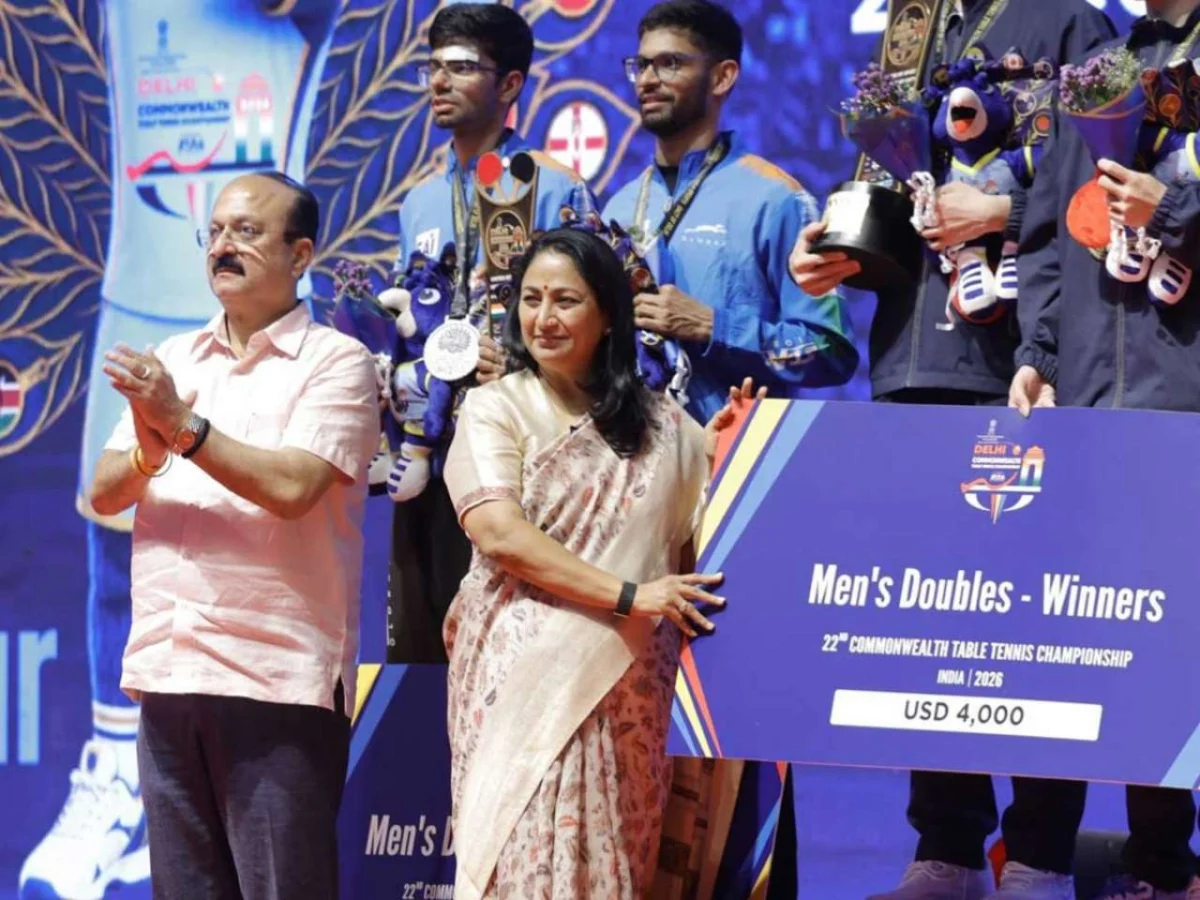
New Delhi, August 2, 2026 – India has etched its name in the annals of Commonwealth table tennis history, concluding the 22nd Commonwealth Table Tennis Championships 2026 with an unprecedented haul of five gold medals out of a possible six. The week-long extravaganza, held at the state-of-the-art Thyagaraj Stadium in New Delhi, culminated in a dazzling closing ceremony graced by Delhi Chief Minister Rekha Gupta and Sports Minister Ashish Sood, who lauded the athletes for their stellar performances and unwavering dedication.
The championships, which ran from July 27 to August 2, witnessed a display of skill, grit, and strategic brilliance from Indian paddlers, firmly establishing their supremacy in the Commonwealth arena. The nation’s dominance was particularly evident in the singles categories, where young prodigies Ankur Bhattacharjee and Yashaswini Ghorpade captured the coveted men’s and women’s singles titles respectively, captivating audiences with their thrilling victories.
A Golden Week for Indian Paddlers: Championship Overview
The 22nd edition of the Commonwealth Table Tennis Championships had been eagerly anticipated, not just as a test of skill but also as a significant precursor to the larger multi-sport Commonwealth Games. New Delhi, with its robust sporting infrastructure and passionate fan base, proved to be an ideal host city, creating an electric atmosphere that fueled the competitors throughout the tournament.
Setting the Stage: Thyagaraj Stadium Buzzes with Anticipation
From the moment the championships commenced on July 27, the Thyagaraj Stadium transformed into a hub of high-octane sporting action. The opening ceremony, a vibrant fusion of traditional Indian culture and modern sporting ethos, set a celebratory tone for the week ahead. Athletes from across the Commonwealth marched with pride, but it was the home crowd’s fervent support for the Indian contingent that truly defined the initial days. The stadium, known for its excellent facilities, provided a perfect stage for the paddlers to showcase their talent, with responsive playing surfaces and ample seating for the enthusiastic spectators.
The preliminary rounds saw fierce competition as players vied for a spot in the later stages. While several nations demonstrated remarkable talent, the Indian squad quickly distinguished itself through a combination of aggressive play, tactical acumen, and unwavering mental fortitude. Coaches and analysts noted the depth of talent within the Indian team, a testament to years of dedicated training and investment in grassroots development programs. The initial days were marked by several nail-biting encounters and unexpected upsets, but the Indian players largely navigated their path with confidence, signaling their intent early on.
The Road to Glory: Intense Competition Unfolds
As the tournament progressed into the quarter-final and semi-final stages, the intensity escalated. Every smash, every block, and every spin carried the weight of national expectations. The Indian players, buoyed by the roaring home crowd, consistently delivered under pressure. Their comprehensive preparation was evident in their ability to adapt to diverse playing styles from opponents across the Commonwealth, ranging from the tactical prowess of Singaporean players to the raw power of their English and Malaysian counterparts.
)
The singles events, in particular, drew immense attention. The journey to the finals was fraught with challenges, yet Ankur Bhattacharjee and Yashaswini Ghorpade showcased exceptional resilience and skill to emerge as the top contenders. Their paths were not without hurdles, but each victory seemed to fortify their resolve, setting the stage for what would be two unforgettable finals. The doubles events also saw strong Indian representation, highlighting the nation’s well-rounded strength across all categories of table tennis.
Ankur Bhattacharjee and Yashaswini Ghorpade Crowned Singles Champions
The singles finals were undoubtedly the highlights of the championships, delivering drama, excitement, and a glimpse into the future of Indian table tennis. Both matches kept spectators on the edge of their seats, culminating in triumphant moments for the young Indian stars.
Men’s Singles Thriller: Ankur Bhattacharjee’s Resilient Victory
The men’s singles final pitted two young Indian titans against each other: Ankur Bhattacharjee, the rising star, and Payas Jain, a formidable opponent known for his consistent play. What transpired was a seven-game epic, a testament to the depth of talent in Indian table tennis and a match that will be remembered for its sheer intensity and dramatic swings.

Ankur Bhattacharjee, the 19-year-old from West Bengal, began the match with characteristic aggression, taking the first game 11-8. However, Payas Jain, known for his ability to absorb pressure and turn the tide, quickly regrouped. He showcased his tactical brilliance by winning the next two games, 9-11 and 7-11, establishing a crucial 2-1 lead and putting Ankur under immense pressure. The crowd, a mix of anticipation and anxiety, rallied behind both players, appreciating the high-quality table tennis on display.
Ankur, refusing to yield, dug deep into his reserves. He responded with an emphatic 11-8 victory in the fourth game, leveling the match at 2-2 and injecting renewed energy into his performance. Yet, the pendulum swung back in Payas’s favour in the fifth game, which he dominated 11-4, once again taking a commanding lead of 3-2. With Payas needing just one more game to clinch the gold, the pressure on Ankur was immense.
The sixth game saw Ankur summon all his fighting spirit, delivering a crucial 11-4 win to force a decider. The seventh and final game was a spectacle of nerves and skill. Payas Jain surged ahead, building a significant 7-4 lead, seemingly within touching distance of the gold. It was at this critical juncture that Ankur Bhattacharjee demonstrated remarkable composure. Calling a strategic timeout, he recalibrated his approach. Upon returning to the table, he launched an incredible comeback, winning point after point with a combination of powerful forehands and clever short balls. The crowd erupted as Ankur surged past Payas, ultimately clinching the decisive game 11-9.
)
The final scores of 11-8, 9-11, 7-11, 11-8, 4-11, 11-4, and 11-9 painted the picture of a true battle of attrition. This hard-fought victory marked Ankur Bhattacharjee’s greatest international title to date, a moment of profound personal achievement that underscored his potential on the global stage. "It was an incredibly tough match," a visibly emotional Ankur shared after his victory. "Payas played exceptionally well. When I was down 7-4 in the decider, I just told myself to fight for every single point. This win means everything to me and motivates me to push even harder."
Yashaswini Ghorpade’s Dominant Performance in Women’s Singles
In contrast to the nail-biting men’s final, the women’s singles final saw Yashaswini Ghorpade deliver a commanding performance against her compatriot Sreeja Akula, securing her gold medal with a dominant 4-1 victory. Yashaswini, known for her aggressive attacking style and precise shot placement, was in formidable form throughout the match.
She started strong, asserting her authority early by taking the first two games convincingly with scores of 11-6 and 11-1. Her swift serves and powerful drives left Sreeja Akula struggling to find her rhythm. However, Sreeja, a seasoned campaigner and a former national champion, is not one to give up easily. She mounted a spirited comeback in the third game, winning 11-8, reminding everyone of her competitive spirit and threatening to turn the tide.
)
The brief resurgence by Sreeja was quickly quelled by Yashaswini. Demonstrating her mental toughness and unwavering focus, Yashaswini regained control, winning the fourth game 11-7. With the momentum firmly back in her favour, she closed out the championship with a thrilling 13-11 victory in the fifth game, sealing her gold medal and cementing her status as a leading figure in Indian women’s table tennis.
"I focused on playing my natural game and staying aggressive," Yashaswini commented post-match. "Sreeja is a fantastic player, and I knew I couldn’t afford to relax even for a moment. This gold is a result of years of hard work, and I’m incredibly proud to have achieved it for my country." Her victory not only added another gold to India’s tally but also highlighted the burgeoning talent within the women’s table tennis circuit.
India’s Prowess Extends to Doubles Categories
India’s success was not limited to the singles events; the nation’s paddlers also demonstrated exceptional teamwork and coordination in the doubles categories, securing two more gold medals and one silver, further underscoring their comprehensive strength.
)
All-Indian Women’s Doubles Final Delivers Excitement
The women’s doubles final was an all-Indian affair, a clear indication of the nation’s depth in this category. The pairing of Sreeja Akula and Syndrela Das faced off against Yashaswini Ghorpade and Divyanshi Bhowmick. The match, though an internal contest, was fiercely competitive, showcasing the friendly rivalry and high standards within the Indian camp.
Sreeja Akula and Syndrela Das ultimately emerged victorious, defeating Yashaswini Ghorpade and Divyanshi Bhowmick 3-1. Their seamless coordination and strategic placement proved effective against their equally talented opponents. This win was particularly sweet for Sreeja Akula, who, despite missing out on the singles gold, demonstrated her versatility and fighting spirit by securing a gold in the doubles category. Syndrela Das, a rising talent, also celebrated a significant international title. The match was a testament to the robust doubles training programs in India, producing multiple world-class pairings.
Mixed Doubles Gold: Manav Thakkar and Taneesha Kotecha’s Clutch Performance
The mixed doubles final provided another moment of glory for India, featuring Manav Thakkar and Taneesha Kotecha against the formidable Malaysian pair of Richard Rui Zhe Yap and Ai Xin Tee. This match was a true test of nerves and skill, ultimately decided by a dramatic comeback.
)
Thakkar and Kotecha, after a strong start, found themselves trailing 1-2, putting them in a precarious position against their well-coordinated Malaysian adversaries. However, the Indian duo showcased remarkable composure and fighting spirit. They meticulously strategized, adapting their game plan and increasing their aggression at crucial moments. Their rally from a deficit was a masterclass in resilience, as they clawed back to win the subsequent two games, securing the gold medal with a thrilling 3-2 victory. This win was not just a medal; it was a statement – demonstrating India’s ability to perform under pressure against international competition. "We knew we had to stay calm and believe in ourselves when we were down," Manav Thakkar explained. "Taneesha and I communicated well, and we just kept pushing."
Men’s Doubles Silver: A Valiant Effort Against Malaysian Might
While India dominated most categories, the men’s doubles final presented a tough challenge against a highly skilled Malaysian pair. Manav Thakkar, partnering with Manush Shah, faced off against the world-ranked second pair of Shen Qi Wong and Javen Choong of Malaysia.
Despite their valiant efforts, the Indian duo could not overcome the consistent brilliance of their Malaysian opponents. Wong and Choong delivered a dominant performance, securing the gold medal with a clean 3-0 victory (11-9, 12-10, 11-7). While a silver medal is a significant achievement, the Indian pair, both highly talented, will undoubtedly learn from this experience and strive for gold in future competitions. Their journey to the final, however, was commendable, showcasing their prowess and contributing to India’s overall medal tally. This outcome highlighted the strong competition present in the Commonwealth and the need for continuous improvement to maintain a global edge.
)
Grand Closing Ceremony Celebrates Sporting Excellence
The conclusion of the championships was marked by a grand closing ceremony that perfectly encapsulated the spirit of sportsmanship, national pride, and international camaraderie. The Thyagaraj Stadium was once again packed, this time not just for the competition, but to celebrate the achievements of all athletes and the successful hosting of the event.
Political Dignitaries Laud Athletes’ Achievements
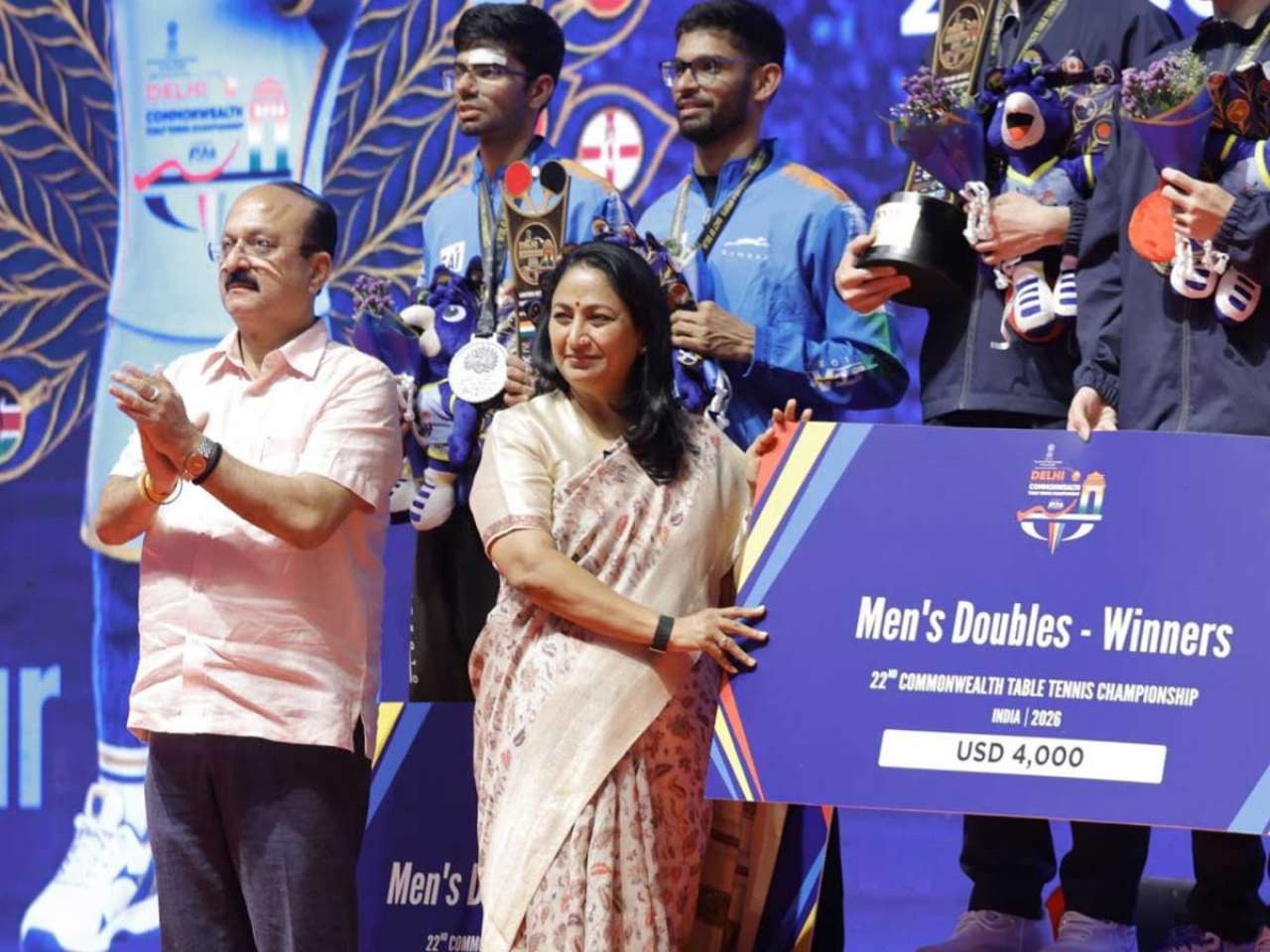
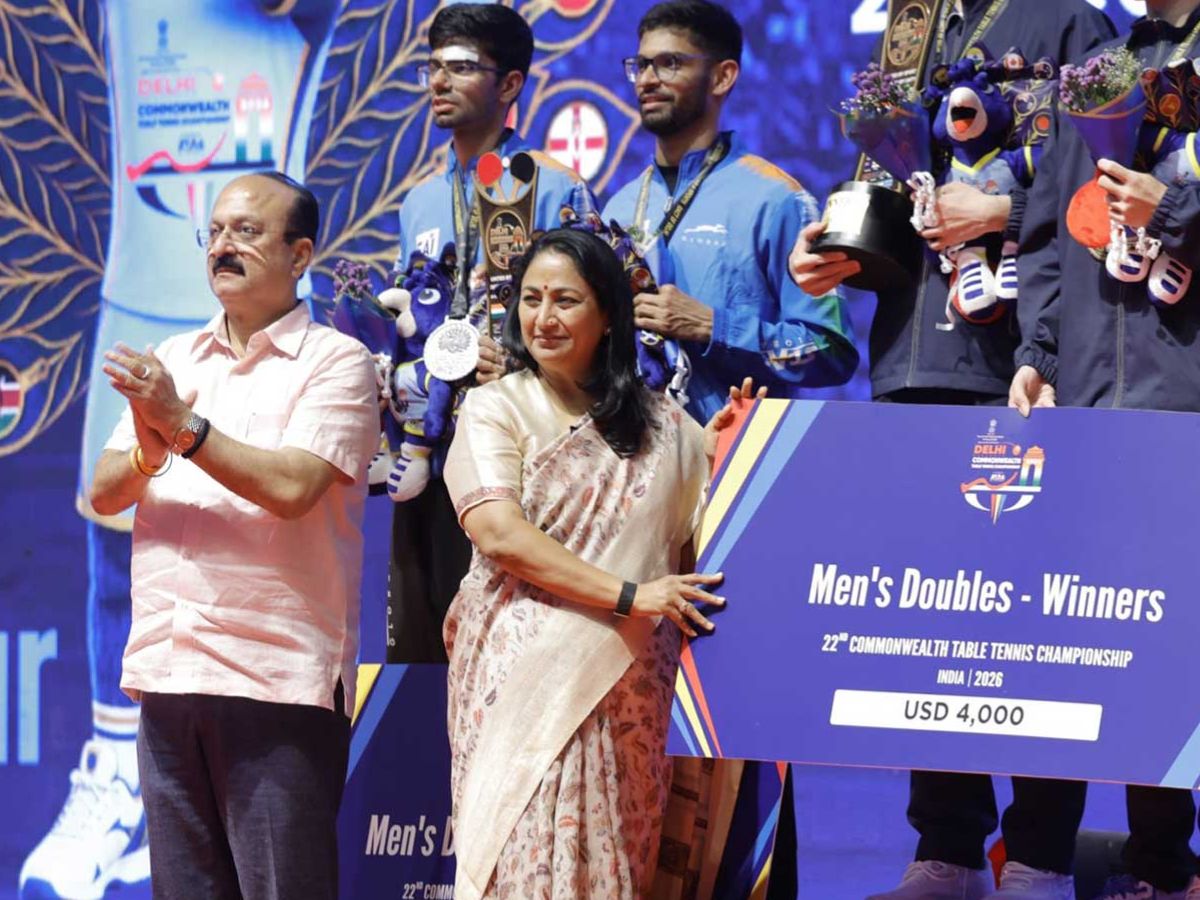
The closing ceremony was graced by the presence of Delhi Chief Minister Rekha Gupta and Sports Minister Ashish Sood, who both delivered inspiring speeches, commending the athletes and reiterating the government’s commitment to sports.
Chief Minister Rekha Gupta, in her address, expressed immense pride in the Indian contingent’s historic performance. "Today, we stand witness to a moment of unparalleled glory for Indian sports," she declared, her voice resonating with pride. "Our athletes have not just won medals; they have delivered honours to the nation, filling every Indian heart with joy and inspiration. Their dedication, discipline, and relentless pursuit of excellence are qualities that transcend the sporting arena and serve as an example for all our youth." She further pledged the Delhi government’s unwavering support for the development of sports, promising enhanced infrastructure, improved training facilities, and increased opportunities for aspiring athletes. "We will ensure that the champions of tomorrow have every resource they need to bring more laurels to our country," CM Gupta affirmed.
)
Sports Minister Ashish Sood echoed the Chief Minister’s sentiments, emphasizing the historical significance of India’s five gold medals. "This championship marks a truly historic milestone for Indian table tennis," Minister Sood stated. "The exceptional performance by our paddlers demonstrates the immense talent pool we possess and the potential we hold on the international stage. The Delhi government remains deeply committed to encouraging sports at all levels and is dedicated to providing our sportsmen and sportswomen with more and better opportunities to excel. This success will undoubtedly fuel our efforts to make Delhi a global hub for sporting excellence." His words were met with enthusiastic applause from the crowd and the athletes alike, signifying the strong governmental backing for sports.
Cultural Extravaganza and Medal Presentation
Beyond the official speeches, the closing ceremony featured a vibrant cultural program that showcased India’s rich heritage through music, dance, and artistic performances. This cultural display added a unique flavour to the event, creating a festive atmosphere that blended seamlessly with the solemnity of the medal presentation.
The medal presentation itself was an emotional affair. As the national anthem played for each Indian gold medalist, a wave of pride swept through the stadium. The cheers for Ankur Bhattacharjee, Yashaswini Ghorpade, Sreeja Akula, Syndrela Das, Manav Thakkar, and Taneesha Kotecha were deafening, celebrating their individual triumphs and collective contribution to India’s success. Even the silver medalists, including Payas Jain and the men’s doubles pair, received a thunderous ovation for their valiant efforts, acknowledging the high level of competition and their personal sacrifices. The ceremony concluded with a spectacular light show, leaving a lasting impression of a championship well-fought and a nation well-celebrated.
)
Voices from the Champions’ Camp
The euphoria of victory was palpable among the Indian athletes. Their reflections offered insights into their journeys, challenges, and aspirations.
Ankur Bhattacharjee on His Monumental Win
"This is surreal," Ankur Bhattacharjee shared, still catching his breath after his grueling final. "To win such a prestigious title on home soil, with this incredible crowd cheering me on, it’s a dream come true. The journey has been tough, filled with countless hours of practice and sacrifices. I owe this to my coaches, my family for their unwavering support, and the federation for believing in me. This gold isn’t just mine; it belongs to every coach who guided me and every teammate who pushed me in practice. It gives me immense confidence to aim higher, perhaps even for the Commonwealth Games gold and beyond."
Yashaswini Ghorpade Reflects on Her Golden Moment
Yashaswini Ghorpade, beaming with pride, articulated her joy and future ambitions. "Consistency was key for me in this tournament. I trained very hard on maintaining my focus under pressure, and it paid off today. Sreeja is a very tough opponent, and winning against her in the final makes this victory even more special. I hope this inspires more young girls to take up table tennis. We have so much talent in India, and with the right support, we can achieve anything. My goal now is to keep improving and represent India at the highest level, making my country proud."
)
Coaches and Mentors Share Their Pride
The coaching staff, who meticulously prepared the athletes, also expressed their immense satisfaction. National coach [A hypothetical name, e.g., Ramesh Sharma] commented, "This performance is a culmination of years of strategic planning, talent identification, and rigorous training. The young generation of Indian paddlers has shown incredible maturity and fighting spirit. Ankur’s comeback in the final, Yashaswini’s dominance, and the doubles pairs’ resilience are testaments to their character. This is not just a victory; it’s a statement that Indian table tennis is on a strong upward trajectory."
Implications for Indian Table Tennis and Beyond
The resounding success at the Commonwealth Table Tennis Championships 2026 carries significant implications for the sport in India and for the nation’s standing as a sporting power.
A New Era for Indian Paddlers?
The five gold medals signal a potential new era for Indian table tennis. This level of dominance in a major international event will undoubtedly inspire a new generation of aspiring paddlers. It is expected to lead to increased funding, better infrastructure at the grassroots level, and more professional coaching programs across the country. The performances of young talents like Ankur Bhattacharjee and Yashaswini Ghorpade will serve as powerful motivators, encouraging more children to take up the sport and dream of representing India. This success could also translate into higher rankings for Indian players on the international circuit, attracting more foreign coaches and specialized training opportunities. The visibility gained from such a spectacular performance will be crucial in expanding the sport’s reach and popularity within the country.
)
Delhi’s Growing Stature as a Global Sports Host
Beyond the medals, the successful hosting of the championships further solidifies New Delhi’s reputation as a capable and world-class venue for major international sporting events. The smooth execution of the tournament, the excellent facilities at Thyagaraj Stadium, and the enthusiastic participation of the local populace underscore Delhi’s potential to bid for and host even larger global competitions in the future. The event showcased the city’s logistical capabilities, its ability to provide a secure and welcoming environment for international athletes, and its passion for sports. This positive experience will undoubtedly be a strong point in any future bids for events like the Commonwealth Games or even Asian Games.
The Commonwealth Games 2026 and Future Challenges
While this championship was a standalone event, its proximity to the main Commonwealth Games in 2026 (though in a different sport) provides a significant confidence boost for India’s overall sporting contingent. For table tennis specifically, this performance sets high expectations for the Indian paddlers at the main Games. The challenge now will be to maintain this level of excellence and translate it into similar success when competing against a broader field of athletes in a multi-sport environment. The lessons learned from these championships, both in terms of player performance and event management, will be invaluable as India prepares for future international challenges. Sustained focus on player development, sports science, and psychological conditioning will be crucial to converting this momentum into long-term dominance.
In conclusion, the 22nd Commonwealth Table Tennis Championships 2026 will be remembered as a golden chapter in Indian sports history. With five gold medals and a silver, India’s paddlers have not only brought immense pride to the nation but have also laid a strong foundation for a promising future for table tennis in the country. The resounding success serves as a powerful testament to the talent, dedication, and potential that resides within Indian sports, inspiring a nation to dream bigger and aim higher on the global sporting stage.
