

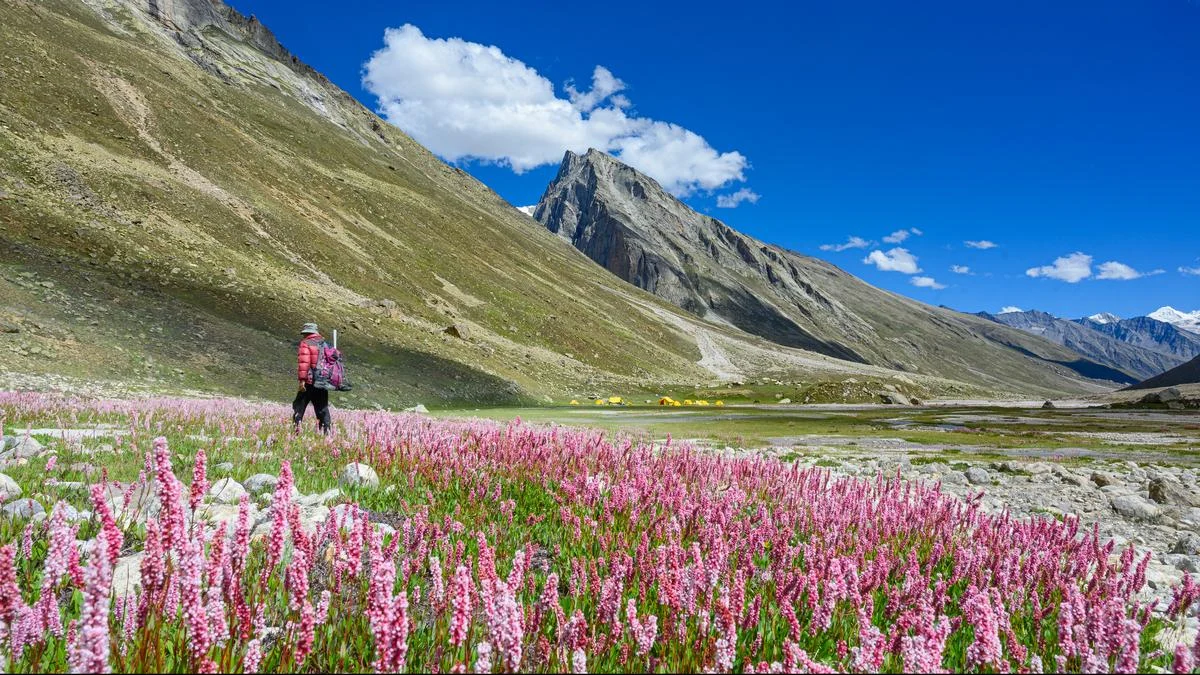
As the monsoon clouds roll across the Indian subcontinent and the high altitudes of the Himalayas, a quiet transformation takes place. The rugged, snow-dusted peaks of winter and the dusty trails of early summer give way to a vibrant, multi-colored carpet of life. From the basaltic plateaus of the Western Ghats to the hidden valleys of Nagaland and the dramatic crossover passes of Himachal Pradesh, the "season of blooms" has arrived.
This year, travel experts and conservationists are noting a significant shift in trekking trends. While classic Himalayan panoramas remain a draw, a growing demographic of "botanical trekkers" is seeking immersive experiences centered on the fleeting beauty of wildflowers. This guide explores the most significant trails of the season, the ecological challenges they face, and the expert-led initiatives defining modern mountain tourism.

1. Main Facts: The Geography of the Bloom
The phenomenon of the mountain bloom is not a singular event but a staggered progression that follows the rhythm of the rains. In India and Nepal, these floral displays are concentrated in four primary ecological zones:
- The Western Ghats (Maharashtra): Home to the Kaas Plateau, a UNESCO World Heritage site famous for its high level of endemism.
- The Indo-Myanmar Border (Nagaland): Featuring the Dzukou Valley, known for the rare Dzukou Lily and vast rhododendron forests.
- The Central Himalayas (Nepal): A biodiversity hotspot containing nearly 3% of the world’s flowering plants.
- The Pir Panjal and Lahaul Ranges (Himachal Pradesh): Offering dramatic "crossover" treks where lush alpine meadows meet high-altitude cold deserts.
For the 2024-2025 season, professional trekking outfits like Indiahikes, Waves of Nature, and Deccan Drifts are reporting a surge in bookings from southern and western India, particularly from Maharashtra and Kerala, signaling a national interest in high-altitude flora.

2. Chronology: The Floral Calendar
To witness the mountains in full bloom requires precise timing, as many species appear only for a few weeks.
June to August: The Early Monsoon Surge
The season begins in the Northeast and the high-altitude valleys of Himachal. In Nagaland, the Dzukou Lily peaks from June to early August. Simultaneously, in the Miyar Valley of Himachal Pradesh, rolling meadows begin to fill with Himalayan bistort and marsh marigolds.

July to September: The Peak Himalayan Bloom
This is the window for the Hampta Pass trek in Himachal Pradesh. As the monsoon hits its stride, the valley transforms into what Ravi Ranjan, Chief of Experience at Indiahikes, describes as a "spectacular alpine flower garden." This period also marks the "underrated" monsoon trekking season in Nepal, where Himalayan blue poppies and orchids emerge.
August to October: The Western Ghats and Autumn Transitions
In mid-August, the Kaas Plateau in Maharashtra comes alive. This is a short-lived spectacle, peaking in September as the rains slow down. By October, the focus shifts back to Nepal, where the landscape transitions from wildflowers to cultural blooms like marigolds, which are woven into the fabric of the Dashain and Tihar festivals.

3. Regional Deep Dives: Supporting Data and Trail Profiles
Kaas Plateau: The "Valley of Flowers" of the South
Located 25 kilometers from the Koyana Sanctuary, the Kaas Plateau is a geological marvel—a fossilized volcanic plateau. Randhir Jaya Naidu, founder of Deccan Drifts, notes that the region hosts over 170 species of wildflowers. However, the plateau serves as a cautionary tale for over-tourism. Since receiving its UNESCO tag, the drop in bloom density has been sharp.
"I had the privilege of seeing it untouched in 2011," says Naidu. "Due to recent climate changes and rains continuing through September, the flowering season has been affected. Human factors—plucking flowers and walking on flower beds—have hampered growth rates."

Dzukou Valley: The Lily of the East
In Nagaland, the Dzukou Valley trek is a communal effort. Khriebu Zhasa and Nino Zhasa of Explore Nagaland have been guiding visitors through these hills since 2002. The valley is famous for the Dzukou Lily, but the sisters highlight a broader spectrum: hydrangeas in Kigwema during June and cosmos at Mosen View Point in October.
The management of Dzukou has evolved significantly. "Nowadays, camping out in the Valley is no longer allowed," explains Khriebu. "There is a designated campsite to protect the ecosystem. It’s about maintaining the balance between popularity and preservation."

Hampta Pass: The Crossover Garden
The Hampta Pass (14,000 ft) is unique because of its ecological duality. The trek starts in the lush greenery of Manali and ends in the arid, stark landscape of Lahaul.
"This transition is the trek’s most defining feature," says Ravi Ranjan of Indiahikes. "On one side, you have mist-covered slopes and vibrant greenery; on the other, an arid landscape devoid of vegetation." The trail is carpeted with Himalayan bistort (pink spikes), Himalayan geranium (blue-violet), and the delicate white Himalayan anemone.

4. Official Responses: Expert Insights on Sustainability
As mountain tourism grows, industry leaders are vocal about the need for strict ethical guidelines. The consensus among operators in Maharashtra, Nagaland, and Nepal is that the "Instagrammification" of these trails poses a direct threat to the flora.
On Environmental Impact:
Prashan Poudyal, founder of Waves of Nature in Nepal, emphasizes that the monsoon—while beautiful—is a fragile time. "Nepal is home to an estimated 6,000 species of flowering plants. The monsoon breathes life into the landscape, but it requires a trekker who is willing to embrace uncertainty and respect the path."

On Regulatory Changes:
In many regions, local forest departments have stepped in. At Kaas, private vehicles are now banned from the main zones, replaced by Forest Department shuttles. In Nagaland, village youth groups have taken over the maintenance of flower trails, ensuring that tourism revenue supports the local economy directly.
On Trekker Preparedness:
Ravi Ranjan stresses that flower treks are still physically demanding. "Hampta Pass and Miyar Valley require cardio and strength training. Rushing through high-altitude regions increases the risk of Acute Mountain Sickness (AMS)."

5. Implications: The Future of Floral Tourism
The rise of flower-centric trekking suggests a shift toward "Slow Travel." Travelers are no longer just looking to "summit" a peak; they are looking to observe the minute details of the alpine ecosystem. However, this trend carries significant implications for conservation.
The Climate Factor
Climate change is the most unpredictable variable. In both Maharashtra and the Himalayas, shifting rainfall patterns are altering the blooming cycles. Late-season rains can destroy delicate blossoms or delay the "carpet effect" that tourists expect, leading to disappointment and economic instability for local guides.

The Ethics of the Trail
The industry is moving toward a "Leave No Trace" policy. Experts have issued a stern set of Dos and Don’ts for the upcoming season:
Essential Protocols:

- Do: Use local guides to support the village economy and gain indigenous knowledge of the flora.
- Do: Carry your own cutlery and avoid packaged foods to prevent plastic waste.
- Don’t: Pluck flowers or seeds. These are vital for the next year’s pollination and growth.
- Don’t: Use loudspeakers or play music. Noise pollution disturbs the pollinators (birds and butterflies) essential for the bloom.
- Don’t: Use wet wipes, which are non-biodegradable; opt for simple tissue paper or reusable cloths.
Conclusion
The mountains in bloom offer a rare window into the resilience and beauty of high-altitude ecosystems. Whether it is the Karvi flower of the Western Ghats or the Blue Poppy of the Himalayas, these species are biological treasures. As the 2026 season approaches, the message from the trails is clear: the beauty of the bloom is a privilege, not a right, and its survival depends entirely on the footsteps of those who visit.
Trekker’s Resource Box
- Kaas Plateau, Maharashtra: Best in August/September. Cost: approx. ₹2,400 per head. Contact: Deccan Drifts (+91 9130641707).
- Dzukou Valley, Nagaland: Best June–August. Custom tours via Explore Nagaland (+91 9089948353).
- Nepal Wildflowers: Best June–September. Guided treks from ₹4,000 per day. Details: wavesofnature.com.
- Hampta Pass & Miyar Valley: Best June–September. Organized by Indiahikes. Cost: ₹12,950–₹14,950 + GST. Details: indiahikes.com.
