

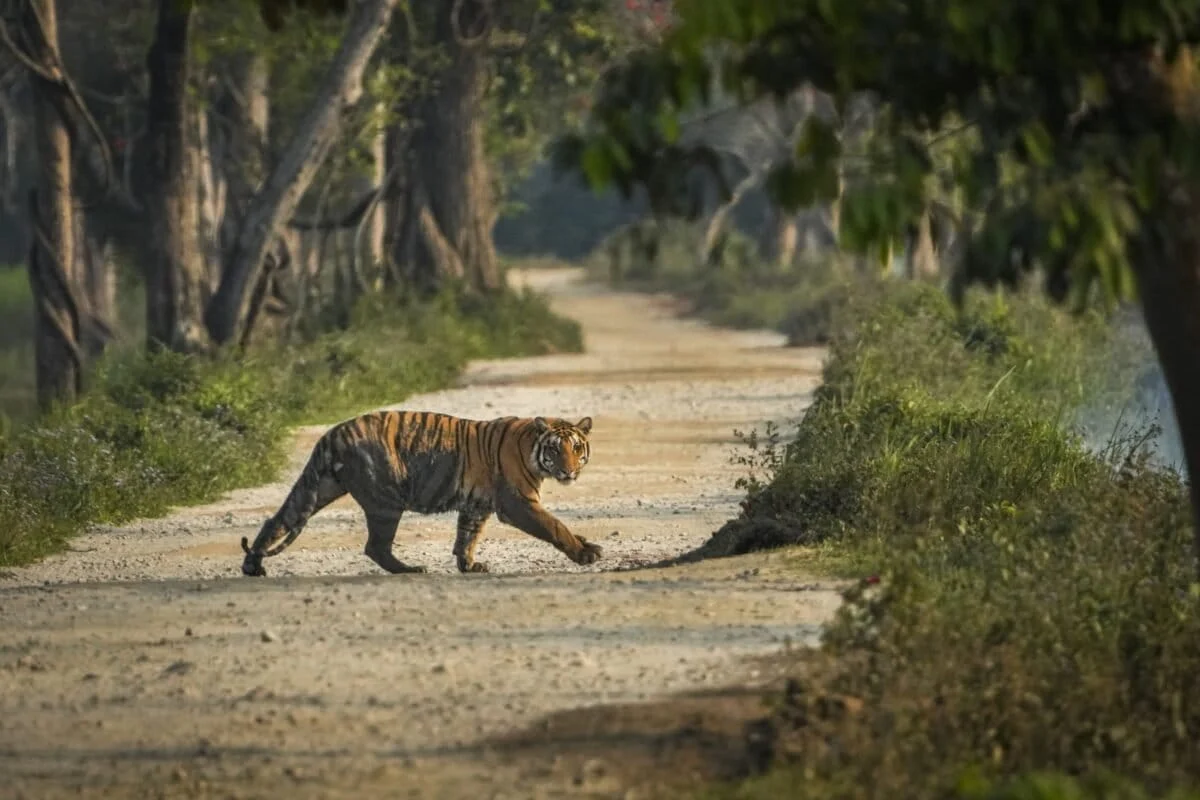
GUWAHATI, ASSAM — The detention of Pranab Doley, a prominent environmental and Indigenous rights activist in Assam, under the stringent National Security Act (NSA) has ignited a firestorm of controversy, drawing condemnation from over 60 civil rights organizations and sparking a national debate on the boundaries of dissent in a democracy. Doley, who has been at the forefront of a grassroots movement against the construction of a luxury resort within the sensitive ecological zone of the Kaziranga National Park and Tiger Reserve, now faces up to 12 months of incarceration without a formal trial.
The case has become a flashpoint for the intersection of corporate-led development, ecological preservation, and the rights of Indigenous communities. As the Assam government invokes "national security" to justify the detention, critics argue that the move is a tactical use of "extraordinary laws" to suppress legitimate opposition to a high-profile tourism project.
Main Facts: The Detention of Pranab Doley
Pranab Doley is a well-known figure in Assam’s socio-political landscape, particularly among the Mising and tea-tribe communities. His activism primarily focuses on land rights and the protection of the Kaziranga National Park, a UNESCO World Heritage site that serves as the global stronghold for the greater one-horned rhinoceros.
The current legal saga began with Doley’s opposition to a proposed five-star luxury resort. The project is being developed by Juniper Hotels, a company linked to the international Hyatt Group, on land leased by the Assam Tourism Development Corporation (ATDC). Doley and local Adivasi (Indigenous) communities allege that the land for this project was forcibly acquired, displacing tea-tribe families who have lived and farmed there for generations.
On July 30, 2024, just one day after a sessions court granted him bail in a separate case, the Assam government invoked the National Security Act (NSA) against Doley. The NSA is a preventive detention law that allows the state to hold individuals for months without charging them with a specific crime, provided the government deems them a threat to public order or national security.
The government’s primary justification for the NSA invocation includes allegations that Doley "masterminded" violent protests and engaged in "suspicious foreign transactions" in violation of the Foreign Contribution (Regulation) Act (FCRA). However, rights groups and legal experts have pointed to the timing of the detention—occurring immediately after a court found no evidence of violence in his prior arrest—as evidence of a "vindictive" state response.
Chronology of the Crisis
To understand the gravity of the situation, one must look at the rapid sequence of events that led to Doley’s current detention:
- June 28, 2024: Local residents and activists, led by Doley, organized a demonstration against the construction of the luxury resort near Kaziranga. Protesters argued that the construction violated environmental norms and displaced local farmers.
- July 12, 2024: Doley was arrested by the Assam police. He was accused of inciting violence during the June 28 protest and allegedly attacking police personnel.
- July 29, 2024: A sessions court heard Doley’s bail application. In a significant ruling, the court granted him bail, observing that there was no substantive evidence to suggest that Doley had engaged in or incited violence. The judge noted that the notice for his arrest appeared to be served as an afterthought and emphasized that "true public order is achieved not by silencing the affected, but by listening to them."
- July 30, 2024: Within 24 hours of the bail order, before Doley could be released, the state government served him with a detention order under the National Security Act. This effectively bypassed the court’s bail order, ensuring his continued incarceration.
- August 2, 2024: Over 60 civil rights groups, including the People’s Union for Civil Liberties (PUCL) and various environmental collectives, issued a joint statement condemning the use of the NSA.
- August 2024 (Ongoing): National political figures, including former Union Environment Minister Jairam Ramesh, have taken to public platforms to criticize the move, while local Indigenous groups have continued their legal battle in the Gauhati High Court.
Supporting Data: Ecology and Displacement
The controversy is rooted in the unique status of Kaziranga National Park. Spanning over 430 square kilometers, the park is not only a UNESCO site but also a critical tiger reserve and a sanctuary for elephants, wild water buffalo, and swamp deer. Any large-scale infrastructure project in its immediate vicinity—known as the Eco-Sensitive Zone (ESZ)—is subject to strict environmental clearances.
The Corporate Connection
The luxury hotel project is a joint venture between the state government and Juniper Hotels. While the Hyatt Group has officially "distanced" itself from the project following the outcry, the land remains leased to Juniper Hotels by the ATDC. Proponents of the project argue that high-end tourism will bring revenue and global visibility to Assam. However, environmentalists argue that the influx of traffic, noise pollution, and waste from a five-star facility will disrupt the migratory corridors of animals, particularly during the annual monsoon floods when wildlife moves to higher ground.
The Land Struggle
At the heart of the protest are the Adivasi tea-tribe communities. According to petitions filed in the Gauhati High Court, these families claim that the land earmarked for the resort was agricultural land they had cultivated for decades. They allege that the state government reclassified the land for "tourism purposes" without adequate consultation or compensation, a move they describe as "land grabbing" under the guise of development.
Official Responses and Political Reaction
The response to Doley’s detention has been sharply divided along political and ideological lines.

The State’s Position
The Assam government maintains that the detention is necessary to prevent the breakdown of law and order. Officials have suggested that Doley’s activities were not merely "activism" but were designed to create communal disharmony and impede essential development projects. The mention of "suspicious foreign transactions" in the NSA notice suggests that the state is attempting to link local environmental protests to broader international interference, a common narrative used in recent years to justify the cancellation of FCRA licenses for several Indian NGOs.
The Judicial Perspective
The sessions court’s bail order on July 29 serves as a stark counter-narrative to the state’s claims. The judge’s remarks—stating that the standard apparatus of criminal law should not be used to "suppress local anxieties"—highlighted a judicial concern over the overreach of executive power. The court’s observation that ecological preservation and indigenous survival are intertwined suggested that the protests were a legitimate expression of constitutional rights rather than a threat to the nation.
The Opposition
Senior Congress leader Jairam Ramesh has been vocal in his criticism, stating, "The use of the NSA against Doley is part of a growing pattern of BJP governments weaponizing extraordinary laws to silence dissent." Ramesh compared the situation to instances in Uttar Pradesh where the NSA was used against labor activists, arguing that the government is increasingly treating disagreement over policy as a security threat.
Implications for Democracy and Conservation
The detention of Pranab Doley carries profound implications that extend far beyond the borders of Assam.
1. The Shrinking Space for Civil Society
The use of the NSA—a law originally intended for extreme threats to the state—against a grassroots activist sets a chilling precedent. It signals to environmental defenders and Indigenous leaders that traditional legal protections, such as bail, can be rendered moot by the executive’s use of preventive detention. This creates a "chilling effect," where individuals may fear to speak out against state-sponsored projects for fear of indefinite incarceration.
2. The Narrative of "National Security"
By framing environmental and land rights protests as matters of national security, the state effectively bypasses the need for public dialogue. When an activist is labeled a "threat to the nation," the nuances of their arguments—regarding environmental impact assessments or land titles—are often lost in the rhetoric of security. This shift makes it difficult for local communities to engage in the "transparent disclosure" that rights groups are currently demanding.
3. Conservation vs. Commercialization
The Kaziranga case highlights a global tension: how to balance the economic potential of "eco-tourism" with the actual protection of the ecosystem and the people who inhabit it. If "development" in a UNESCO World Heritage site requires the detention of those trying to protect it, it raises questions about the sustainability and ethics of such projects.
4. The Role of the FCRA
The mention of FCRA violations in Doley’s detention order aligns with a broader trend in India where environmental NGOs have faced regulatory crackdowns. By linking activism to foreign funding, the state can delegitimize local movements as "foreign-funded conspiracies," a tactic that has been increasingly scrutinized by international human rights bodies.
Conclusion: A Call for Transparency
The coalition of 60 civil rights groups has laid out a clear set of demands: the immediate revocation of the NSA against Pranab Doley, an independent investigation into police conduct during the June protests, and a full, transparent disclosure of all land allotments related to the Kaziranga tourism projects.
As the legal battle moves to the higher courts, the case of Pranab Doley remains a testament to the ongoing struggle for the soul of India’s environmental policy. Whether the state chooses to "listen to the affected," as the sessions court suggested, or continues to utilize the "standard apparatus of criminal law" to enforce its developmental agenda, will determine the future of dissent in the world’s largest democracy. For the people of Kaziranga and the wildlife they protect, the stakes could not be higher.
