

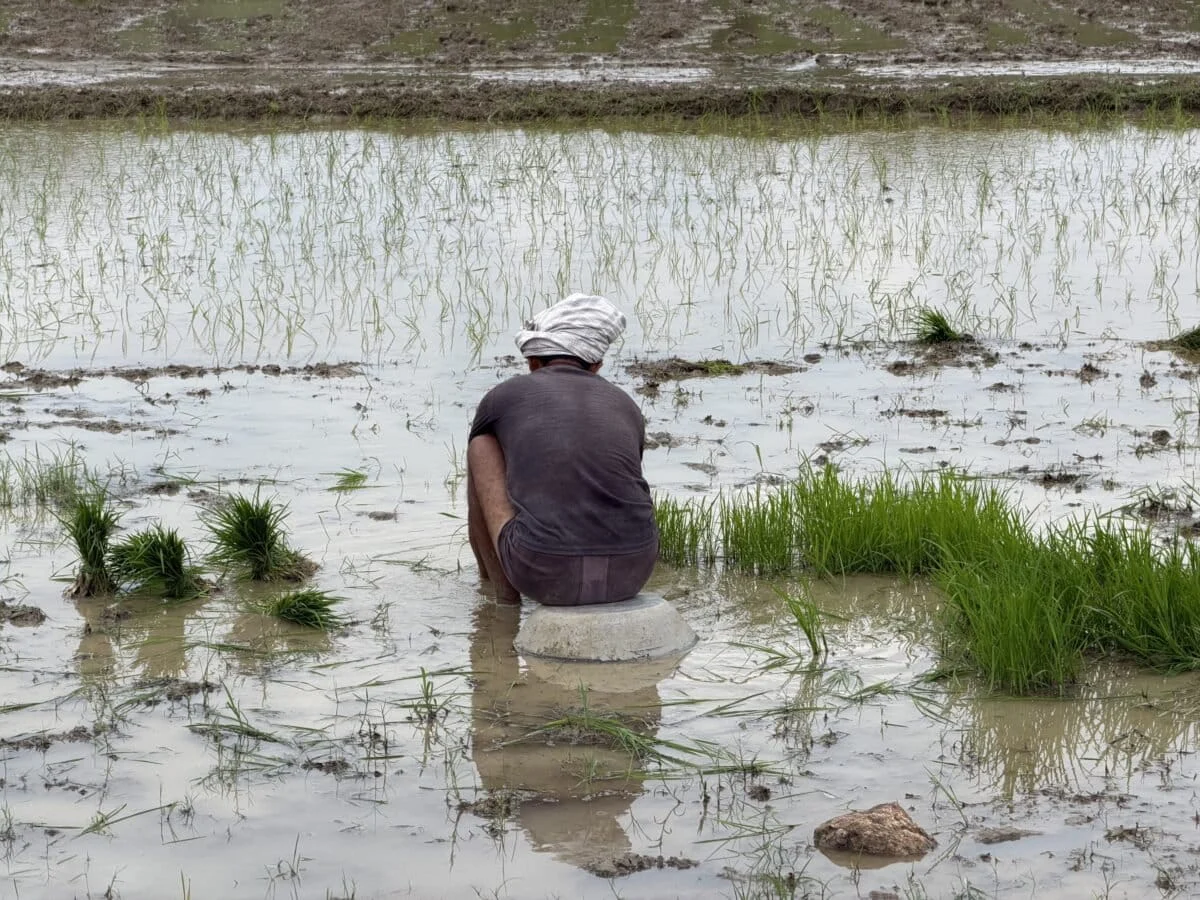
PALAMU, JHARKHAND — Standing on a parched expanse of land in Darudih village, 52-year-old Koushal Kishore Vishvakarma points toward a horizon that offers no shade and little hope. "This is all barren land now, but here we used to farm," he says, his voice carrying the weight of two decades of decline. While a recent dusting of monsoon rain has turned the earth a deceptive shade of green, Vishvakarma is quick to dispel any notion of productivity. "It is nothing more than grazing land now."
In the Palamu district of Jharkhand, a region historically synonymous with drought, the tragedy is not a lack of infrastructure, but the systematic failure of it. Over the last sixty years, billions of rupees have been funneled into lift irrigation systems, farm ponds, canals, and check dams. Yet, as the climate crisis accelerates—bringing warmer nights, erratic monsoons, and strengthening El Niño conditions—the farmers of Palamu find themselves exactly where they were in the 1960s: staring at the sky, waiting for rain that may never come.
Main Facts: A Landscape of Failed Assets
The crisis in Palamu is defined by a stark disconnect between government records and ground reality. Despite thousands of irrigation schemes listed on paper, the agricultural backbone of the region is collapsing.
- Irrigation Deficit: According to Akhilesh Saha, Deputy Director of Krishi Vigyan Kendra (KVK) Palamu, less than 5% of the district’s agricultural land is currently irrigated. This is significantly lower than the state average, which itself sees 92% of farmland dependent entirely on rainfall.
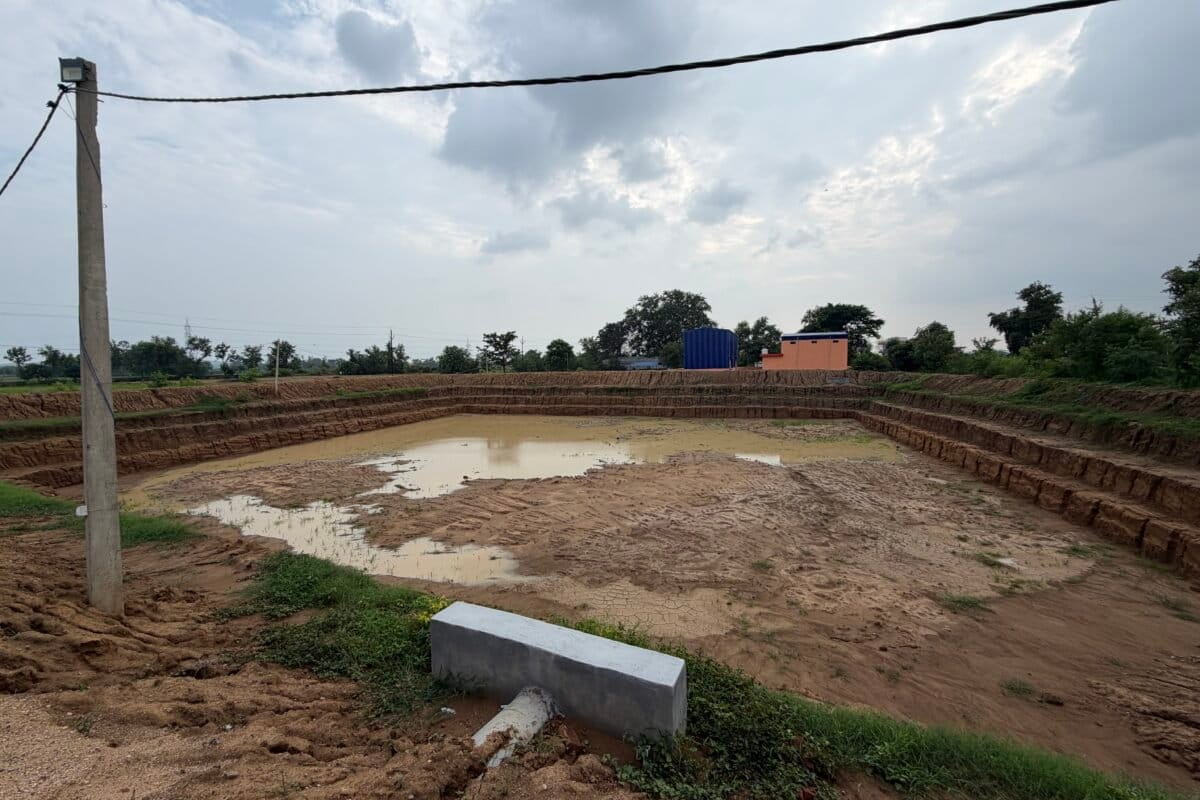
- Infrastructure Decay: The state of Jharkhand officially lists 17,285 surface water lift schemes. However, in districts like Palamu, many of these—including a massive system that once served ten villages around Darudih—have been defunct for decades due to minor damages that were never repaired.
- The Maintenance Gap: Soil Conservation Officer Shyam Bind admits that while the state has been successful at "asset creation" (building ponds and dams), it has failed catastrophically at maintenance. Many "dobhas" (small farm ponds) fill with silt and become useless within two to three monsoon seasons.
- Climate Shift: In the last 20 years, the number of annual rainy days in the region has plummeted from approximately 90 days to just 50, forcing a desperate shift in crop patterns and driving mass migration.
Chronology: From Famine to Fragmented Recovery
To understand Palamu’s current predicament, one must look back to 1966, a year that remains etched in the collective memory of the region.
The Great Famine of 1966
In 1966, the undivided state of Bihar (which then included Jharkhand) was hit by one of the worst droughts of the 20th century. Over 48,000 villages faced famine conditions. Shrikrishna Oraon, now 72, remembers the era vividly. "We survived by eating dry-ber (Indian jujube); there was nothing else," he recalls.
The government’s response was a massive, labor-intensive water management drive. This era saw the birth of the ahara (traditional pond) system, built by villagers who were paid in grain—mostly bajra and sorghum—rather than cash. This infrastructure allowed for the first significant cultivation of paddy in the region.

The 1970s: The Era of Big Engineering
In the 1970s, the central government launched the Drought Prone Areas Programme (DPAP). This period saw the initiation of ambitious projects like the Mandal Dam, designed to irrigate hundreds of villages across Palamu, Garhwa, and Aurangabad. It was also the era when lift irrigation systems were introduced to pump water uphill to the Chotanagpur plateau’s undulating fields.
2005–Present: The MGNREGA and "Dobha" Boom
With the passage of the Mahatma Gandhi National Rural Employment Guarantee Act (MGNREGA) in 2005, the focus shifted to decentralized water harvesting. Between 2015 and 2016, the state aggressively promoted "dobhas"—small 20×20 foot ponds. In Palamu alone, 2,500 were built. However, without a budget for desilting or repairs, these assets began to vanish from the functional landscape almost as quickly as they were dug.
Supporting Data: The Shrinking Window of Survival
The vulnerability of Palamu is underscored by increasingly grim meteorological data. The India Meteorological Department (IMD) recently warned that ongoing El Niño conditions are expected to strengthen, which historically correlates with weak monsoons in East India.

As of early August, the rainfall deficit in Palamu stood at a staggering 48%. The impact on sowing has been near-total:
- July 2023: Farmers had completed 107% of the district’s paddy sowing target by late July.
- July 2024: By the same date, less than one percent of the sowing target had been met.
The heat is also changing. Farmers like Vishvakarma report that "warm nights" are now a summer staple, a phenomenon that prevents crops from recovering from daytime heat stress. This environmental pressure has led to a forced crop diversification. Roughly 150,000 hectares in Jharkhand have shifted from paddy to more hardy, short-duration crops like maize, pigeon pea, and coarse grains. While this is a necessary adaptation, it represents a loss of the higher-value rice yields that once provided food security for the year.
Official Responses: Policy Without Records
When questioned about the failure of these systems, officials point to a systemic lack of accountability and the absence of long-term planning.

Shyam Bind, the Soil Conservation Officer, offers a candid assessment of the lift irrigation failure. "It was a huge investment; we laid heavy metallic underground pipelines. But it was a total failure on the maintenance side," he says. He notes that once a project is handed over to local middlemen or committees, the funds for upkeep often disappear. Perhaps most telling is Bind’s admission that the district has no surviving records of these schemes. "This scheme is no more," he states flatly.
Regarding the 2,500 dobhas built a decade ago, the department admits there has been no audit in ten years. There is no data on how many remain functional and how many have been reclaimed by silt and soil.
The current strategy involves "reviving" old ponds rather than building new ones, with a contingency plan that advises farmers to switch to short-duration varieties if rains are delayed. However, the delivery of these "contingency" resources is disputed. While KVK officials mention free seed distribution, farmers like Basant Singh of Chiyanki village claim they have never seen such support. "I don’t know anyone here who received those seeds," Singh says.

Implications: The Human Cost of Dry Canals
The failure of irrigation is not merely a technical issue; it is the primary driver of a massive socio-economic shift in Jharkhand.
1. The Migration Crisis
In villages like Chiyanki, the dry bed of the Mandal Dam canal serves as a monument to failed dreams. Basant Singh observes that farming in his village has shrunk by more than 50%. The result is a hollowed-out community. "One out of every four men from this village has migrated," he says. His own sons now work as daily-wage laborers in Bengaluru, thousands of kilometers away, because the land that was promised water remains a dust bowl.
2. Food Insecurity
For small and marginal farmers—who make up the vast majority of Jharkhand’s agricultural population—the loss of a single rabi (winter) season is the difference between self-sufficiency and debt. Vishvakarma recalls a time when his 10 acres produced enough for two years of food plus a 50-quintal surplus to sell. Today, he barely manages enough paddy for immediate consumption.

3. The Feedback Loop of Poverty
As groundwater levels continue to drop—evidenced by the "pond-wells" built in 2025 that already sit dry—the cost of accessing water increases. Marginal farmers cannot afford deep borewells, leaving them entirely dependent on state infrastructure that has proven unreliable.
Conclusion: A Future Held Hostage by the Clouds
The story of Palamu is a cautionary tale for climate adaptation in the Global South. It demonstrates that building infrastructure is only half the battle; without a robust framework for maintenance, community ownership, and transparent auditing, "climate-proofing" remains a buzzword rather than a reality.
As Koushal Kishore Vishvakarma walks back across his dry fields, the fundamental tragedy of Palamu is clear. After six decades of independence, multiple "Green Revolutions," and billions in rural development funds, the survival of the village still hinges on a single, increasingly fickle variable: the arrival of the monsoon. "If the rains come on time, we can somehow survive," he says. "If they don’t, there is nothing we can do."

In the absence of functional irrigation, the people of Palamu are not just fighting a changing climate; they are fighting the ghosts of infrastructure that was supposed to save them.
