

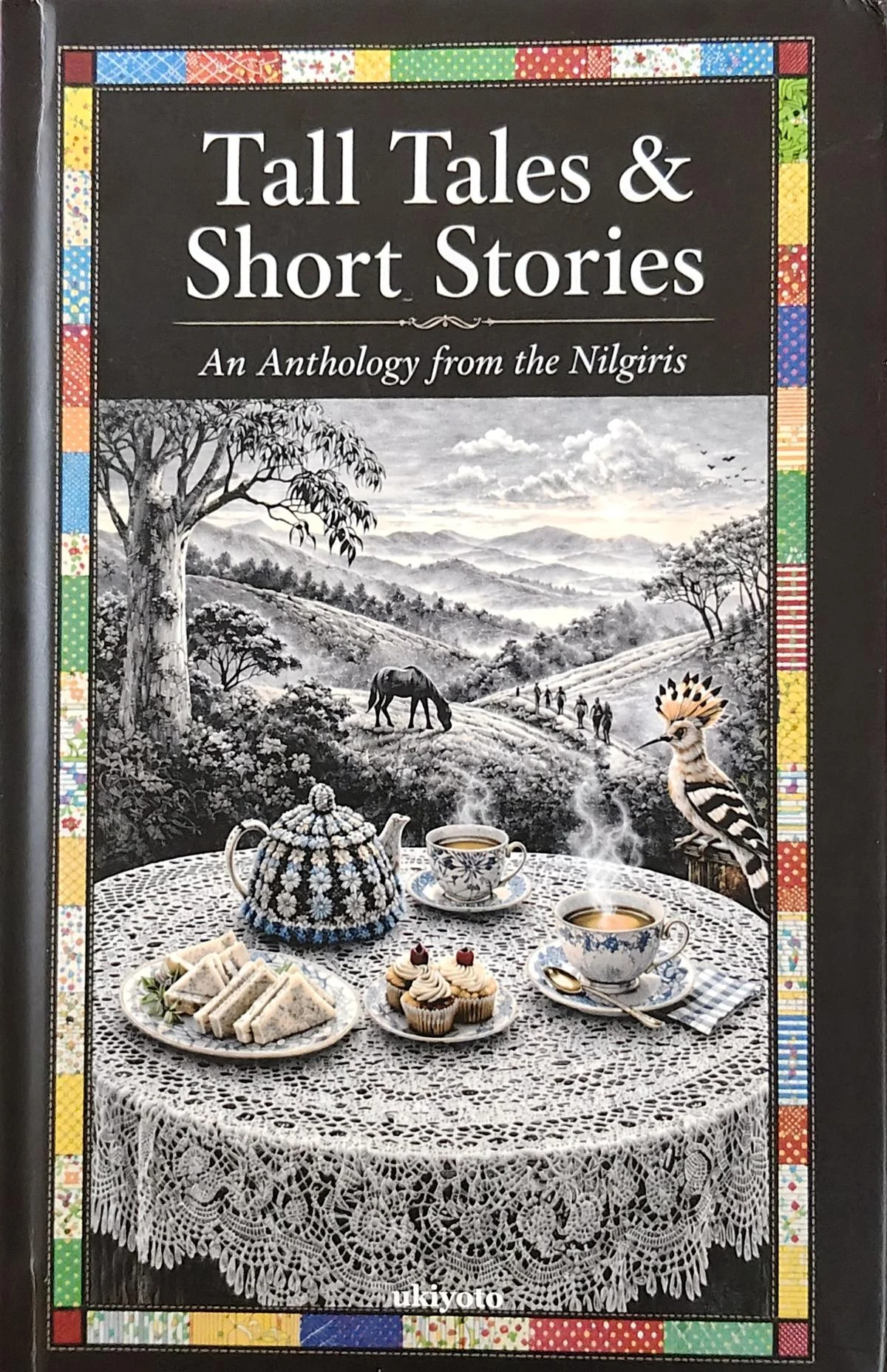
COONOOR – In the heart of the Nilgiris, where the emerald tea gardens meet the veil of the morning mist, a new literary voice has emerged. What began as a modest gathering of bibliophiles over tea and traditional varkeys has culminated in the publication of Tall Tales & Short Stories, an anthology that captures the soul of the Blue Mountains. Published by Ukiyoto and edited by a trio of seasoned professionals—Nimi Kurian, Nina Varghese, and Theresa Varghese—the collection marks a significant milestone for the Coonoor Book Club, transitioning its members from passionate readers to published authors.
Main Facts: A Hyper-Local Literary Landmark
The Nilgiris have long served as a muse for poets, novelists, and naturalists, but Tall Tales & Short Stories offers something distinct: an insider’s perspective. Featuring the work of 13 writers, all residents of the Nilgiris, the anthology is a curated mosaic of short stories, poems, and essays.
The book is not merely a collection of fiction; it is a sensory map of life in the hills. The narratives are steeped in the specificities of the region—the rhythmic chugging of the UNESCO-recognized Toy Train, the architectural echoes of colonial bungalows, the warmth of wood-fired kitchens, and the intricate social tapestry of a small hill station where "delicious gossip" is as much a staple as the local tea.
Edited by Nimi Kurian and Nina Varghese—both of whom bring decades of journalistic rigor to the project—and Theresa Varghese, the anthology was published under the Ukiyoto imprint. The contributors range from first-time writers to those returning to their creative roots, making the book a testament to the democratization of literature within community spaces.
Chronology: From Living Rooms to the Printing Press
The journey of Tall Tales & Short Stories began not in a publishing house, but in the cozy living rooms of Coonoor.
2024: The Genesis of the Club
The Coonoor Book Club was founded approximately two years ago by sisters Nimi Kurian and Nina Varghese. Nimi, who had spent decades in the bustling media landscape of Chennai, returned to her roots in the Nilgiris and sought a community of like-minded readers.
"There are lots of readers in Coonoor; we thought we should get together and discuss books," Nimi recalls. The club’s format was simple yet effective: members would choose a book, read it independently, and then meet at a member’s home to share their insights. Early favorites included Perumal Murugan’s poignant One Part Woman and Abraham Verghese’s sprawling epic The Covenant of Water.

Late 2025: The Creative Spark
During one of their regular meetings, the conversation shifted from critiquing the works of others to the potential of their own stories. Living in a landscape as dramatic and storied as the Nilgiris, the members realized they were sitting on a goldmine of narrative material. The proposal was made to compile an anthology that celebrated their home.
While the enthusiasm was high, it was tempered by the natural hesitance of amateur writers. "People were quite enthusiastic, but most of them are first-time writers," Nimi explains. "So, they were a bit nervous about getting down to writing. But then finally, they did it."
January – August 2026: The Editorial Grind
The bulk of the manuscripts were received in January 2026. The subsequent three months were dedicated to a rigorous editorial process led by Nimi, Nina, and Theresa. This period involved extensive "back and forth" between the editors and contributors to refine the prose while maintaining the authentic voice of each writer. By mid-2026, the design was finalized, leading to the official release in August.
Supporting Data: Themes and Literary Contributions
The anthology is structured to reflect the multifaceted nature of the Nilgiris. The content can be broadly categorized into three pillars: social satire and fiction, nostalgic memoirs, and evocative poetry.
The Fiction of Manners and the Macabre
Nimi Kurian’s own contributions highlight the versatility of the collection. Her story Coffee’s Ready is a humorous exploration of the "dinner party culture" prevalent in the hills. Set in "The Bungalow" and hosted by the character Mrs. Claire Williamson, the story satirizes the social etiquette and eccentricities of the local elite.
Conversely, Kurian also taps into the region’s folklore with a ghost story. The Nilgiris, with its creaking floorboards, overgrown gardens, and thick fog, provides the perfect gothic backdrop for tales of the supernatural—a genre that has remained popular in hill station literature for over a century.
Memoirs and Culinary Heritage
One of the most poignant pieces is Missy Ma by Shernaz Sethna. The essay recounts Sethna’s transition from the plains of Nagpur to the palatial West Croft bungalow in Coonoor as a young bride.

The narrative centers on her relationship with Devadas, the formidable cook and butler who "ruled with an iron fist." In a move that blends literature with lifestyle, Sethna includes her recipe for Parsi roast chicken—the first dish she ever prepared in her new home under Devadas’s watchful eye. This inclusion highlights a key data point: the Nilgiris’ culture is inextricably linked to its culinary traditions, which are a blend of British, Parsi, and local Tamil influences.
The Poetics of Landscape
Johnny John’s Nilgiris – Scapes and Scaped provides the rhythmic heartbeat of the book. His verses serve as a travelogue in meter, referencing specific landmarks such as Lamb’s Rock, Tenerife Hill, and the rare blooming of the Neelakurinji flowers. His poetry also captures the mundane joys of club life—shuttle games and the comfort of fish pie—which define the daily rhythm of the permanent resident.
Official Responses: Perspectives from the Editors
The editors view this project as more than just a book; it is an act of "wearing an old shoe," a metaphor used by Nimi Kurian to describe her return to the Nilgiris.
"I thought it would be difficult to fit in again [after Chennai], but actually it was like wearing an old shoe," says the 65-year-old Nimi. Her transition from a high-pressure journalistic career to the communal editing of local stories represents a growing trend of "reverse migration" among professionals seeking a slower, more meaningful engagement with their heritage.
Nina Varghese, a third-generation Coonoorian, emphasizes the emotional investment behind the project. "Writing about the Nilgiris was a gratifying process," she states. "This is because all of us were writing about a place we love very much, one in which we are very invested in."
Nina also confirmed that the literary journey of the club is far from over. Due to the success and the wealth of stories still left untold, a sequel is already in the pipeline. "It too will be based on Coonoor," she noted, suggesting that the club intends to create a definitive contemporary archive of the town’s life.
Implications: The Rise of Community-Led Literature
The publication of Tall Tales & Short Stories carries several broader implications for the regional literary landscape:

1. The Preservation of "Hill Station" Identity
As urbanization threatens the traditional character of many Indian hill stations, projects like this serve as a cultural bulwark. By documenting the specific nuances of Coonoor life—from the flora to the social hierarchies—the Coonoor Book Club is preserving a version of the Nilgiris that might otherwise be lost to time.
2. The Democratization of Publishing
The partnership with Ukiyoto highlights how technology and niche publishing houses are allowing small-town communities to bypass traditional gatekeepers. This enables "hyper-local" stories to reach a global audience via online platforms, ensuring that the Nilgiris are represented by those who live there rather than by outsiders or tourists.
3. Community Cohesion through Creative Arts
The transition from a reading club to a writing collective demonstrates the power of community spaces in fostering adult education and creative expression. The "nervousness" of the first-time writers, overcome through the support of the club, suggests that such groups can play a vital role in mental well-being and social connectivity for retirees and long-term residents.
4. Tourism and Cultural Branding
Books like Tall Tales & Short Stories contribute to the "slow tourism" movement. By highlighting the history, ghosts, and recipes of Coonoor, the anthology invites visitors to look beyond the viewpoints and see the town as a living, breathing entity with a deep intellectual life.
As the mist continues to roll over the blue mountains, the members of the Coonoor Book Club are already looking toward their next chapter. With a sequel on the horizon and a published volume already in hand, they have ensured that the tall tales of the Nilgiris will no longer remain confined to the tea tables of Coonoor, but will find a home on bookshelves around the world.
Tall Tales & Short Stories is currently available for purchase through major online retailers.
