

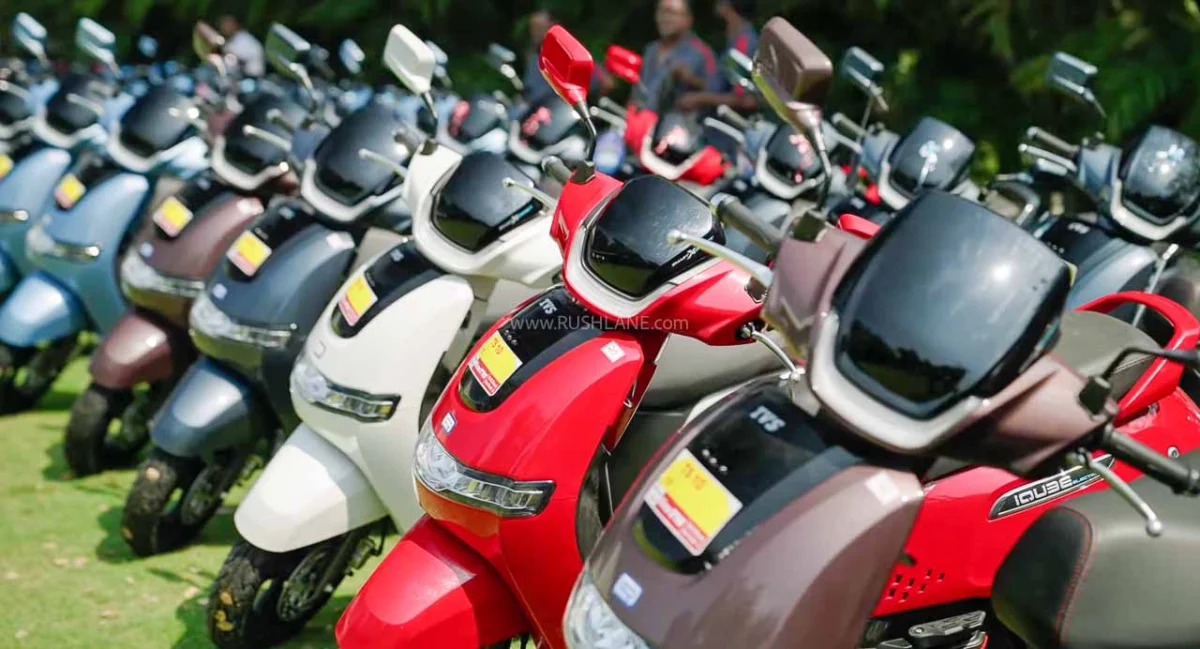
The Indian automotive landscape witnessed a historic transformation in July 2026, as the electric two-wheeler (E2W) sector breached the psychological and operational barrier of 2,00,000 monthly retail units for the first time. According to the latest retail registration data from the Federation of Automobile Dealers Associations (FADA), the month saw a record-breaking 2,04,362 electric scooters and motorcycles hitting Indian roads.
This milestone is not merely a numerical achievement; it signifies a fundamental shift in consumer behavior and a maturing ecosystem. With electric vehicles (EVs) now accounting for a record 11.24% share of the total two-wheeler market, the transition from internal combustion engines (ICE) to battery-operated powerhouses has moved beyond early adoption into the mainstream consciousness of the Indian commuter.
Main Facts: Breaking Down the Record-Breaking Performance
The data for July 2026 reveals a sector in high gear. The 2,04,362 units registered represent a staggering 88.32% year-on-year (YoY) growth compared to the 1,08,516 units sold in July 2025. This near-doubling of the market size within twelve months underscores the efficacy of government incentives, improved charging infrastructure, and a wider array of product choices for the consumer.
On a month-on-month (MoM) basis, the industry maintained its upward trajectory with a 4.82% increase over June 2026’s registration figure of 1,94,963 units. Perhaps the most significant metric, however, is the market penetration. In July 2025, EVs held a 7.65% share of the two-wheeler market. By June 2026, this had climbed to 10.59%, finally peaking at the current 11.24%. While petrol-powered vehicles still command the lion’s share at 88.67%, their dominance is being steadily eroded by the "silent revolution" of electric drivetrains. Meanwhile, alternative fuels like CNG and LPG remain marginal players, stagnating at 0.09% of total registrations.
Chronology of Growth: From Niche to Necessity
The journey to the 2-lakh milestone has been a multi-year marathon. In 2024 and early 2025, the market faced volatility due to fluctuations in the FAME-II (Faster Adoption and Manufacturing of Electric Vehicles) subsidy and the transition to the EMPS (Electric Mobility Promotion Scheme). However, the stabilization of policy frameworks by late 2025 provided manufacturers with the long-term clarity needed for capital investment.
Throughout the first half of 2026, several factors converged to create the "perfect storm" for EV adoption:
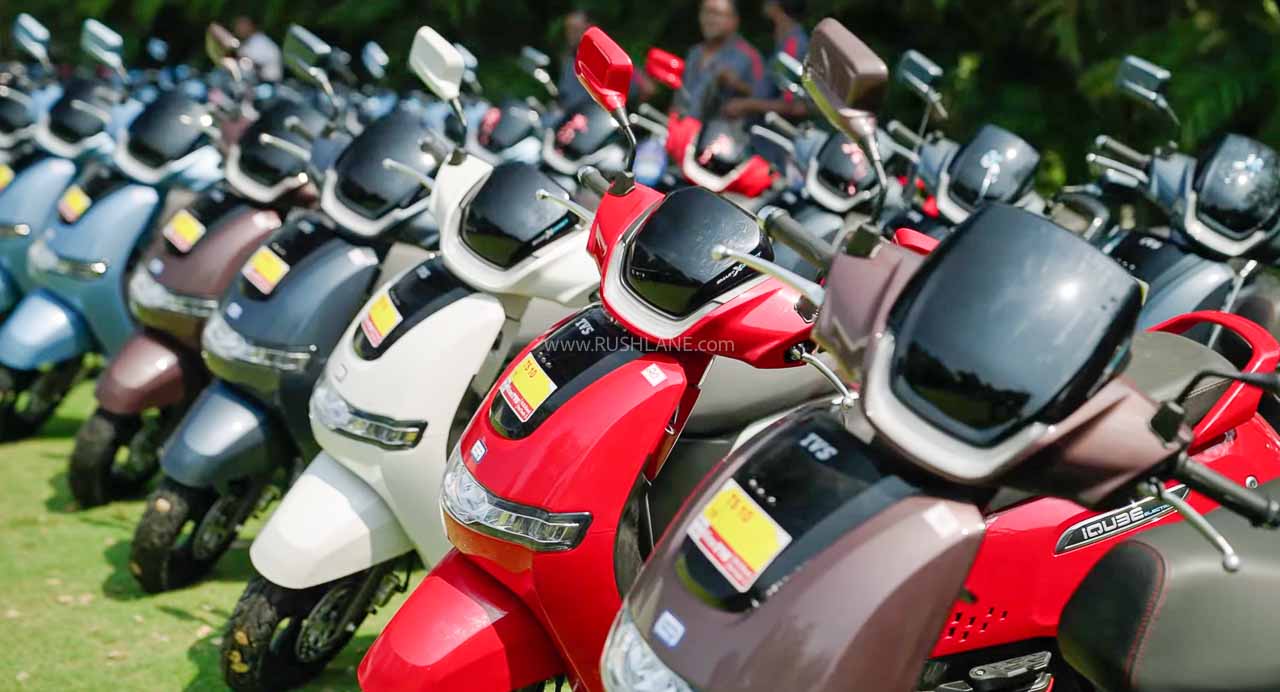
- Product Diversification: Manufacturers moved beyond premium offerings, launching mid-range and entry-level models that appealed to price-sensitive rural and semi-urban markets.
- Infrastructure Expansion: The rapid installation of fast-charging "hubs" in Tier 1 and Tier 2 cities significantly mitigated range anxiety.
- Fuel Price Parity: As global crude oil prices remained volatile, the Total Cost of Ownership (TCO) for electric scooters became undeniably superior to their petrol counterparts for the average daily commuter.
By the time July 2026 arrived, the momentum was unstoppable, culminating in the highest retail volumes ever recorded in the history of the Indian E2W industry.
Supporting Data: The Competitive Landscape
The July 2026 data reveals a dramatic reshuffling of the leaderboards, with established legacy players asserting their dominance while some early pioneers struggle to maintain pace.
The Frontrunners: TVS and Bajaj
TVS Motor Company has emerged as the undisputed titan of the E2W space. In July, the company recorded 55,499 retail registrations, capturing over 27% of the total market. This performance represents a massive 135.24% YoY growth. The success of the iQube series, bolstered by new variants with varying battery capacities, has allowed TVS to cater to a broad demographic.
Bajaj Auto secured the second position with 45,613 units. The Chetak range, once a nostalgic brand, is now a high-tech sales driver. Bajaj saw a 121.89% YoY increase, proving that its strategy of leveraging a robust legacy dealership network for service and sales is paying off handsomely.
The Middle Ground: Ather and Hero Vida
Ather Energy maintained its position as the third-largest brand with 30,357 units. While its 70.22% YoY growth is healthy, the company saw a slight MoM decline of 3.46%. Industry analysts attribute this to increased competition in the premium segment and a temporary supply chain realignment as Ather prepares for new model launches.
Hero MotoCorp’s Vida brand continues its steady ascent. With 22,900 units sold in July, Vida registered 111.35% YoY growth. Hero’s aggressive expansion of its "Vida Hubs" and integration into its massive existing distribution network are key drivers of this success.

The Outlier: Ola Electric’s Decline
In a surprising turn of events, Ola Electric, once the market leader, continued to face headwinds. Its retail registrations fell to 14,106 units—a 23.54% YoY drop and a 13.19% MoM decline. Market sentiment suggests that Ola is grappling with intensified competition from legacy brands and persistent concerns regarding after-sales service and long-term reliability.
The High-Growth Disruptors
The "fastest-growing" titles for July 2026 belong to the newer entrants:
- River: The "SUV of scooters" brand posted a phenomenal 254.40% YoY growth, reaching 5,954 units.
- BGauss: Retailed 5,518 units, marking a 212.99% YoY increase.
- Greaves Ampere: Rebounded with 10,125 units, showing a 137.34% YoY growth despite a minor MoM dip.
Official Responses and Industry Sentiment
While official statements from the Ministry of Heavy Industries (MHI) have praised the milestone, the sentiment within the Federation of Automobile Dealers Associations (FADA) is one of "cautious optimism."
A spokesperson for FADA noted, "Crossing the 2 lakh mark is a testament to the Indian consumer’s readiness for green mobility. However, we must ensure that the backend infrastructure—specifically service centers and battery recycling protocols—keeps pace with this front-end sales explosion. The growth in Tier 3 cities is particularly encouraging, as it suggests EVs are no longer just an urban fashion statement."
Industry experts from leading consultancies suggest that the decline of some players and the meteoric rise of others indicate a "flight to quality." Consumers are increasingly prioritizing brands that offer long-term stability, comprehensive warranties, and physical touchpoints for maintenance, rather than just high-tech features or aggressive digital marketing.
Implications: What This Means for India’s Future
The implications of this 11.24% market share are far-reaching for the Indian economy and environment.

1. The "Tipping Point" for ICE
Historically, in many global markets, once a new technology reaches a 10-12% market share, the rate of adoption accelerates exponentially. India has now hit that tipping point. The psychological barrier has been broken; for every ten two-wheelers sold, at least one is now electric. This puts immense pressure on traditional petrol-only manufacturers to accelerate their electrification roadmaps or risk irrelevance.
2. Supply Chain and Localization
The surge in volume is forcing a deeper localization of the supply chain. With 2 lakh units a month, the demand for lithium-ion cells, permanent magnet motors, and power electronics has reached a scale where domestic manufacturing becomes highly viable. This aligns with the "Atmanirbhar Bharat" (Self-Reliant India) initiative, potentially reducing the country’s trade deficit in the long run.
3. Impact on the Power Grid
The influx of 2 lakh new EVs every month necessitates a rapid upgrade of urban power grids. Smart charging solutions and Time-of-Use (ToU) electricity tariffs will become essential to manage the peak load as thousands of commuters plug in their vehicles simultaneously in the evening.
4. Resale Market and Financing
The growth in retail registrations will eventually lead to a more robust secondary (used) market for EVs. As banks and Non-Banking Financial Companies (NBFCs) see the sustained demand and improved resale values, financing options are expected to become more affordable, further lowering the entry barrier for low-income households.
Looking Ahead: The Festive Season and Beyond
As India enters the second half of 2026, all eyes are on the upcoming festive season. Traditionally a period of peak consumer spending, the months of September through November could see E2W sales climb even higher, potentially testing the 2.5 lakh or even 3 lakh unit mark.
The data from July 2026 serves as a clear signal: the electric transition in India is no longer a future projection—it is a present-day reality. While challenges such as raw material cost fluctuations and the need for a standardized charging protocol remain, the momentum is firmly on the side of electrons over molecules. The "2 lakh milestone" will likely be remembered as the moment the Indian two-wheeler industry changed forever.
