

KALYANSINGPUR, ODISHA – As the first light of Monday morning breaks over the undulating ridges of the Niyamgiri hills, a quiet transformation overtakes the small town of Kalyansingpur. The silence of the foothills is replaced by the rhythmic clatter of motorcycles, the metallic swing of weighing scales, and a polyphony of voices engaging in the ancient art of the bargain. This is the Monday santha, or weekly market—a vital economic artery for the Dongria Kondh, one of India’s most reclusive and culturally distinct Particularly Vulnerable Tribal Groups (PVTGs).
Here, at the intersection of tradition and commerce, the bounty of the hills meets the demands of the modern world. The air is thick with the scent of sun-dried mangoes and the earthy aroma of native pulses. For the Dongria Kondh, the santha is more than a marketplace; it is a testament to their enduring sovereignty over a landscape they have defended for generations.

Main Facts: The Economic Pulse of the Foothills
The Monday market at Kalyansingpur serves as the primary clearinghouse for produce gathered from the dense forests and steep slopes of the Niyamgiri range, which spans the Rayagada and Kalahandi districts of southwestern Odisha. By 10:00 AM, the market floor is a mosaic of tarpaulin sheets piled high with the season’s primary commodity: dried wild mango slices.
The Dongria Kondh are masters of horticulture. Unlike the intensive monoculture of the plains, their agricultural practice is a sophisticated form of mountain farming that blends shifting cultivation (podu) with the maintenance of permanent orchards. The market reflects this biodiversity, featuring:

- Wild Mangoes: Sliced and sun-dried, these are the current seasonal staple.
- Native Pulses: High-protein varieties of tur dal (pigeon pea) and black gram.
- Millets: Ragi (finger millet), the dietary backbone of the community.
- Forest Produce: Tamarind, jackfruit, and various wild berries.
The scale of trade is significant. Consignments of dried mangoes do not merely stay within the district; they are destined for major urban hubs including Raipur, Mumbai, and various cities in Andhra Pradesh. However, the market is volatile. This year, a bumper harvest has seen prices drop to approximately ₹45 per kilogram, nearly half of last year’s premium of ₹85. Despite the price fluctuations, the volume of trade remains a critical source of liquid cash for a community that otherwise lives largely outside the formal monetary economy.
Chronology: From Sacred Ancestry to Legal Landmark
To understand the scene at the Kalyansingpur santha, one must understand the history of the people who frequent it. The Dongria Kondh derive their name from dongar, meaning ‘hill’. They consider themselves the descendants of Niyam Raja, the benevolent king and deity who resides in the highest peaks of the Niyamgiri range.

The Era of Resistance (2003–2013)
For over a decade, this community was at the center of one of the world’s most significant environmental and indigenous rights battles. In the early 2000s, plans were unveiled for a massive bauxite mining project in the Niyamgiri hills, led by the multinational Vedanta Resources. The project promised industrial development but threatened the very survival of the Dongria Kondh by targeting the "mountain of law" (Niyamgiri) which acts as a massive sponge, feeding dozens of perennial streams and providing the tribe with their livelihood.
The struggle escalated through the mid-2000s, drawing international attention from human rights organizations and environmentalists. The Dongria Kondh argued that the hills were not merely a source of ore, but a living deity and the source of their biological existence.

The 2013 Turning Point
The chronology reached its climax on April 18, 2013. In a landmark judgment, the Supreme Court of India ruled that the religious and cultural rights of the Dongria Kondh—and their right to worship their deity, Niyam Raja—must be protected. The court mandated that the local Gram Sabhas (village councils) would have the final say on whether mining could proceed.
In a series of historic meetings held in July and August 2013, twelve Gram Sabhas unanimously rejected the mining proposal. This was the first time in Indian history that the "right to say no" was effectively exercised by a tribal community under the Forest Rights Act (FRA).

Supporting Data: A Profile of Resilience
The Dongria Kondh’s ability to maintain their lifestyle in 2024 is supported by their unique socio-economic structure.
- Demographics: There are approximately 10,000 to 15,000 Dongria Kondh living in around 120 villages across the Niyamgiri hills. Their status as a PVTG grants them specific protections under Indian law, though they remain fiercely independent.
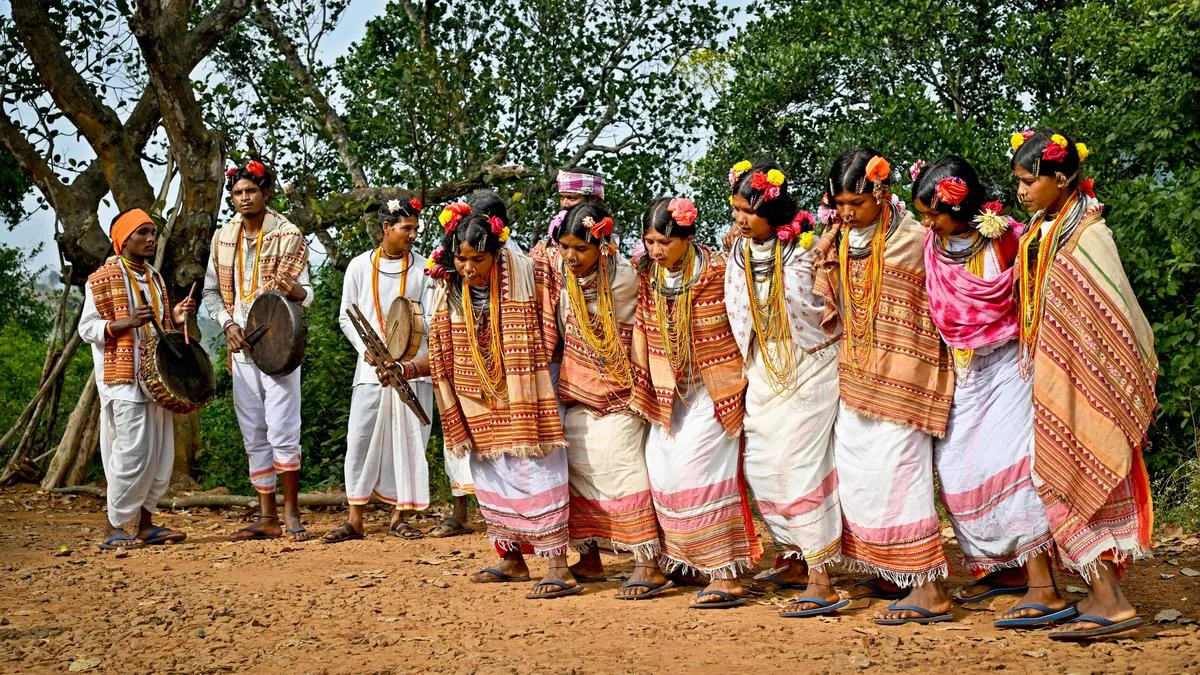
- Cultural Identity: The women are the visible pillars of this identity. Their attire is a complex language of beads, metal earrings, and the Kapdagunda—a hand-embroidered shawl with geometric motifs representing the ridges of the hills. Most striking is the kapi, a small traditional dagger tucked into their hair buns, used for both daily utility and protection.
- Nutritional Sovereignty: A typical meal in a village like Phakeri consists of ragi porridge, mixed native dal, brinjal, plantain fry, and seasonal fruits. Data suggests that this traditional diet, rich in millets and forest-derived micro-nutrients, provides a level of food security that is often superior to that of the rural poor in the plains who rely on PDS (Public Distribution System) rice.
Official Responses and the Role of the State
The state’s relationship with Niyamgiri is a delicate balancing act between development and conservation. Following the 2013 verdict, the Odisha government and the Dongria Kondh Development Agency (DKDA) have shifted focus toward providing "soft" infrastructure.

Official reports highlight the introduction of solar lighting and the construction of all-weather roads connecting remote hamlets like Parsali to the foothills. However, the presence of the state is often viewed with a mix of gratitude and skepticism. While solar panels gleam on concrete rooftops—a recent addition to the traditional mud-and-thatch architecture—the community remains wary of any intervention that might lead to large-scale land alienation.
Local officials emphasize that the goal is now "inclusive growth without displacement." This includes supporting the santha through better transport links and attempting to stabilize prices for forest produce, though market forces still largely dictate the terms for the traders from Rayagada.

Implications: The Future of Tribal Autonomy
The current state of the Niyamgiri hills carries profound implications for the future of indigenous rights in India and globally.
1. The Model of Sustainable Development
The Dongria Kondh demonstrate that "development" need not be synonymous with industrialization. Their management of the wild mango harvest and millet cultivation offers a blueprint for climate-resilient agriculture. As the world grapples with climate change, the Dongria’s reliance on drought-resistant millets and forest biodiversity is increasingly seen not as "primitive," but as visionary.

2. The Persistence of Cultural Sovereignty
Despite the influx of mobile phones and the occasional cricket match among the youth, the core of Dongria life remains unchanged. The dagger in the hair and the embroidery on the shawl are not mere costumes; they are symbols of a community that refuses to be homogenized. The implication is clear: tribal groups can integrate with the market economy (as seen in the santha) without sacrificing their cultural DNA.
3. Legal Precedent and Ongoing Vigilance
The 2013 Supreme Court judgment remains the "Magna Carta" for tribal rights in India. However, the community remains vigilant. Conversations at the Monday market often drift from crop yields to the latest rumors of land surveys. The implication for the Indian legal system is the ongoing need to harmonize the Forest Rights Act with the pressures of national mineral demands.

4. Ethical Tourism
The emergence of guided, respectful excursions—such as those organized by local resorts like Anija Golf Resort—suggests a new path for economic diversification. By allowing outsiders to witness the Dongria lifestyle through a lens of "respectful engagement," there is an opportunity to build a global constituency of supporters for the preservation of Niyamgiri.
Conclusion: The Unhurried Rhythm
As the afternoon sun begins to dip behind the peaks, the Kalyansingpur santha winds down. The motorcycles, now loaded with sacks of salt, kerosene, and dried fish bought with the proceeds of the mango sale, begin the long climb back into the hills.

In villages like Phakeri, the rhythm returns to the unhurried pace of the forest. Children play beneath the canopy, and the elders discuss the coming rains. The dried mangoes are on their way to Mumbai, but the soul of the Niyamgiri remains firmly rooted in the slopes. For the Dongria Kondh, the market is a bridge to the world, but the hills are their world—a sanctuary of law, spirit, and survival that has, for now, remained inviolate.
Traveler’s Note:
For those seeking to understand the ecology and culture of this region, guided day-long excursions are available via Rayagada. These visits are strictly regulated to ensure they provide an educational experience without disrupting the privacy or customs of the Dongria Kondh. Contact local guides or the Anija Golf Resort (7799772285) for itineraries that focus on forest-based livelihoods and traditional food practices.
