

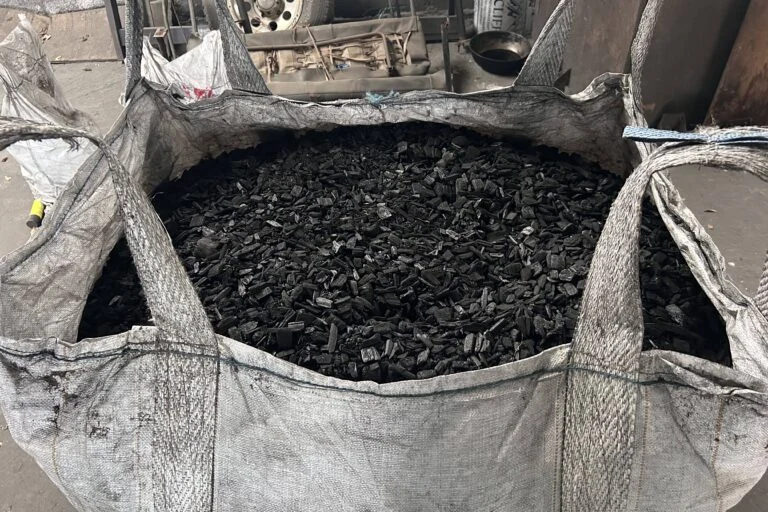
In the arid expanse of the Banni grasslands in Kachchh, Gujarat, a complex ecological and economic drama is unfolding. Decades ago, an invasive tree species was introduced by the state to combat desertification. Today, that same tree—now an ecological menace—has become the centerpiece of a multi-million dollar "carbon removal" industry backed by global tech giants like Google and Microsoft.
As the voluntary carbon market seeks "durable" solutions to the climate crisis, the conversion of Prosopis juliflora into biochar has emerged as a flagship project. However, beneath the veneer of corporate sustainability reports lies a more troubling reality: a landscape struggling with water scarcity, soil alkalinity, and the persistent resilience of an invasive species that refuses to stay dead.
Main Facts: The High Stakes of Carbon Removal
The core of this initiative involves "biochar," a carbon-rich substance produced by heating organic matter—in this case, the invasive Prosopis juliflora—in low-oxygen environments (pyrolysis). Proponents argue that biochar can lock carbon away for centuries when buried in soil, offering a more stable alternative to traditional forest-based offsets.

The financial scale of this endeavor is unprecedented for the region:
- Major Partnerships: In early 2025, Google signed a landmark deal with Gurugram-based startup Varaha ClimateAg to purchase 100,000 tonnes of carbon dioxide removal (CDR) credits. By 2026, Microsoft, Lufthansa, Swiss Re, and Capgemini joined the roster.
- Market Value: Carbon credits generated from the Kachchh pilot have been sold on the European voluntary market for approximately $120 per credit.
- Ecological Footprint: Prosopis juliflora now dominates roughly 50% of the Banni grasslands, a region that once produced 4,000 kg of fodder per hectare in the 1960s but saw that figure plummet to 620 kg by the turn of the century.
While the project is framed as "ecosystem restoration," local pastoralists and ecologists warn that the rush to generate credits may be overlooking fundamental environmental costs and social transparency.
Chronology: From "Mad Tree" to "Black Gold"
The history of the Banni grasslands is a cautionary tale of well-intentioned environmental intervention gone awry.
- The 1960s: The Introduction. Fearing the encroachment of the Rann of Kachchh desert, the Indian government aerial-seeded Prosopis juliflora. Known locally as Gando Baval (the "mad tree"), it was chosen for its hardiness and rapid growth.
- 1990s – 2010s: The Invasion. The tree lived up to its name, outcompeting native species like Vachellia nilotica and Senegalia senegal. It decimated the grazing grasses essential for the Maldhari pastoralists, fundamentally altering the local economy and biodiversity.
- Late 2022: The Carbon Pivot. A private project developer approached Sahjeevan, a local NGO, to pilot a biochar project. The goal was to link the removal of Prosopis to the global carbon market.
- 2023 – 2024: The Pilot Phase. Using low-cost Kon-Tiki kilns, the project processed 800 tonnes of biomass in Dedhiya village, generating 2,000 carbon credits.
- 2025 – 2026: The Corporate Gold Rush. Google and Microsoft announced massive offtake agreements with Varaha, scaling the project from a local pilot to a cornerstone of international climate strategy.
Supporting Data: The Science and Economics of Biochar
The climate logic of the Varaha project rests on the durability of biochar. Unlike trees, which release carbon when they die or burn, biochar is chemically stable. However, the data from the ground in Kachchh suggests a disconnect between theoretical sequestration and practical application.

The Production Math
According to Sahjeevan’s 2023-24 annual report, the efficiency of the process is low. Processing one metric tonne of raw Prosopis biomass yields only about 200 kg of biochar. To generate significant credits, massive amounts of wood must be harvested and burned, leading to concerns about the sustainability of the "removal" process itself.
The Soil Chemistry Conflict
A critical component of biochar credits is its application to soil. In Kachchh, this has proven problematic. Shailesh Vyas, an agricultural expert, conducted trials that yielded "entirely negative" results.
"The soil in Kachchh is naturally alkaline," Vyas explains. "Biochar is also alkaline. When you add it to this environment, the pH increases rather than stabilizes, leading to a drop in crop production compared to control plots."
The Water Equation
Kachchh is a water-stressed, arid landscape. Yet, biochar production requires significant "quenching"—dousing the hot charcoal with water to stop the combustion.
- Per Kiln: 500 to 600 liters per cycle.
- Daily Usage: Contractors operating 20 kilns simultaneously reported needing 12,000 liters of water per day.
This water is often trucked in, adding to the carbon footprint of the "removal" project and competing with the needs of local livestock and humans who rely on a single Narmada pipeline.
Official Responses: Defense and Counter-Claims
The primary developer, Varaha, and its partners have defended the project’s integrity, though their accounts often clash with those of local operators.

On Soil Application
Varaha stated in May 2024 that biochar never leaves production sites without being mixed with manure (a 1:1 ratio), ensuring it is used as a soil amendment. They claim their systems prevent unmixed biochar from being credited.
However, local farmers like Umra Pala Jepar reported stockpiles of biochar lying abandoned for two years. Furthermore, experts like Vyas argue that if biochar is mixed with cow dung—a high-quality fertilizer—any observed benefits are likely from the dung, not the carbon-rich charcoal.
On Water Recycling
Varaha maintains that they recycle quench water by digging trenches beside kilns. Gafur Mutva, a contractor on the ground, dismissed this as a "theoretical solution," noting that in the heat of the Banni, recovery is minimal and the process remains highly water-intensive.
On Transparency and Auditing
Kavita Mehta, Executive Director of Sahjeevan, raised concerns about the "built-in conflict of interest" in the carbon market. Currently, auditors are paid by the very companies they are verifying. Varaha counters that their projects are validated annually by independent bodies appointed by the registry, including unannounced site visits.
Google, despite its massive investment in these credits, has seen its own greenhouse gas emissions surge by 81% between 2019 and 2025, largely due to the energy demands of AI data centers. When asked for comment, the tech giant emphasizes the "scalability" of biochar as a reason for its support.

Implications: Greenwashing or Genuine Restoration?
The Banni biochar project serves as a microcosm for the broader tensions within the global voluntary carbon market.
1. The "Business of Regrowth"
One of the most alarming implications is the potential for a "perverse incentive." Prosopis juliflora is famous for its regenerative power. If the root is not completely destroyed—a costly and difficult task—the tree grows back denser within two years.
Ecologist Khyati Thacker warns that if removal is tied to biomass profits, the model might shift from "restoration" to a "harvesting cycle." If companies wait for the invasive species to grow back just to burn it again for credits, the native ecosystem never truly recovers, but the carbon credits continue to flow.
2. Social Equity and Transparency
While Varaha claims to sign "Free, Prior and Informed Consent" (FPIC) agreements, the actual financial breakdown remains opaque. Communities are paid roughly ₹7 to ₹8 per kg of biochar produced, but the credits themselves sell for over $120 (approx. ₹10,000) on the global market. The lack of transparency regarding the "middleman" margin raises questions about whether the pastoralists—the traditional custodians of the Banni—are receiving a fair share of the climate wealth being generated on their land.
3. The Offsetting Trap
Watchdog groups like Carbon Market Watch argue that projects like the one in Kachchh allow corporations to bypass the urgent need to reduce their own direct emissions. By purchasing credits derived from a problematic, water-intensive process in the Global South, companies like Google can claim "net zero" status while their actual emissions continue to climb.

Conclusion
The Banni grasslands are at a crossroads. The promise of "black gold" in the form of biochar offers a tempting financial solution to a long-standing ecological crisis. However, without more rigorous oversight of soil application, water usage, and the biological reality of Prosopis regrowth, there is a risk that the carbon market is simply trading one environmental disaster for another.
As fresh shoots of "Gando Baval" pierce through the soil of cleared plots, they serve as a silent reminder that nature does not always follow the logic of a corporate ledger. For the Maldhari pastoralists, the success of the project isn’t measured in carbon tonnes sold in London or Zurich, but in the return of the native grasses that once sustained their way of life—a return that, for now, remains elusive.
