

TOKYO — There is a fleeting, transcendent moment—somewhere between the violent snap of the first transition and the second, suffocating lungful of vaporized rubber—when drifting ceases to be mere automotive theater and begins to make profound, mathematical sense.
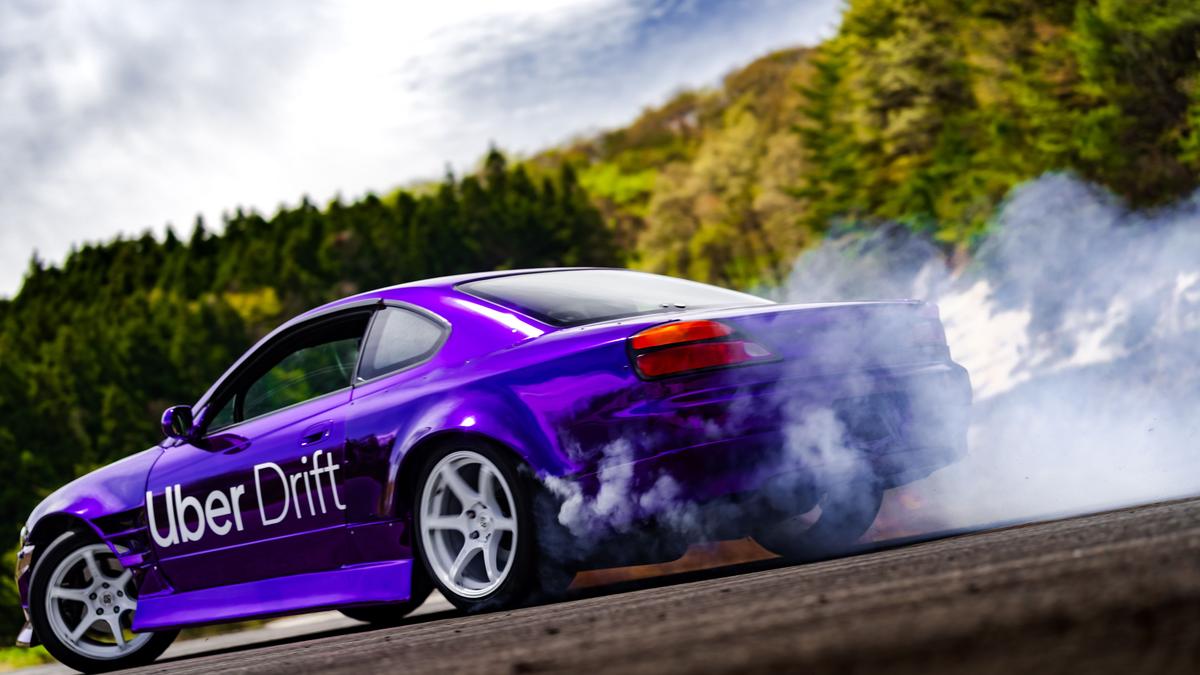
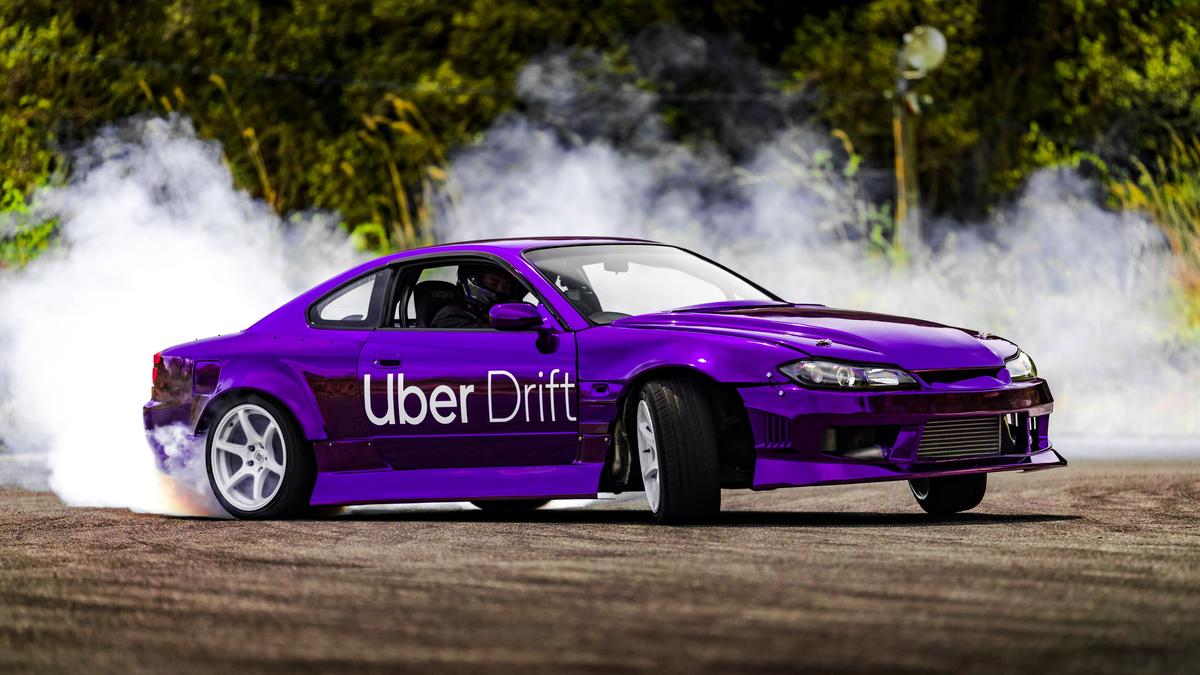
At the Mobara Twin Circuit, a storied asphalt arena nestled in the Chiba Prefecture roughly 90 minutes outside the neon sprawl of Tokyo, the reality of Japan’s most famous subculture is laid bare. Strapped into the bucket seat of a Nissan Silvia S15, the world outside the polycarbonate windows becomes a blur of grey and white. Fausto, a reigning Drift Champion, initiates a slide at a speed that defies logic, holding the car at an angle that feels mechanically impossible.
To the uninitiated, this is a crisis. To the Japanese drift master, it is a Tuesday. As the rear tires evaporate into a thick, white shroud and the SR20DET engine hammers relentlessly against the rev limiter, a strange realization dawning on the passenger: despite the violence, the car is under total, surgical control. This is the paradox of Japanese drifting—a discipline defined by abandoning grip to find a higher form of balance.
Main Facts: The Anatomy of a Sideways Revolution
Drifting is perhaps the only major motorsport where the primary objective is not to cross the finish line in the shortest time possible. Instead, it is an aesthetic and technical pursuit of "style." In professional competition, drivers are judged on four primary pillars: Line, Angle, Speed, and Style (Impact).
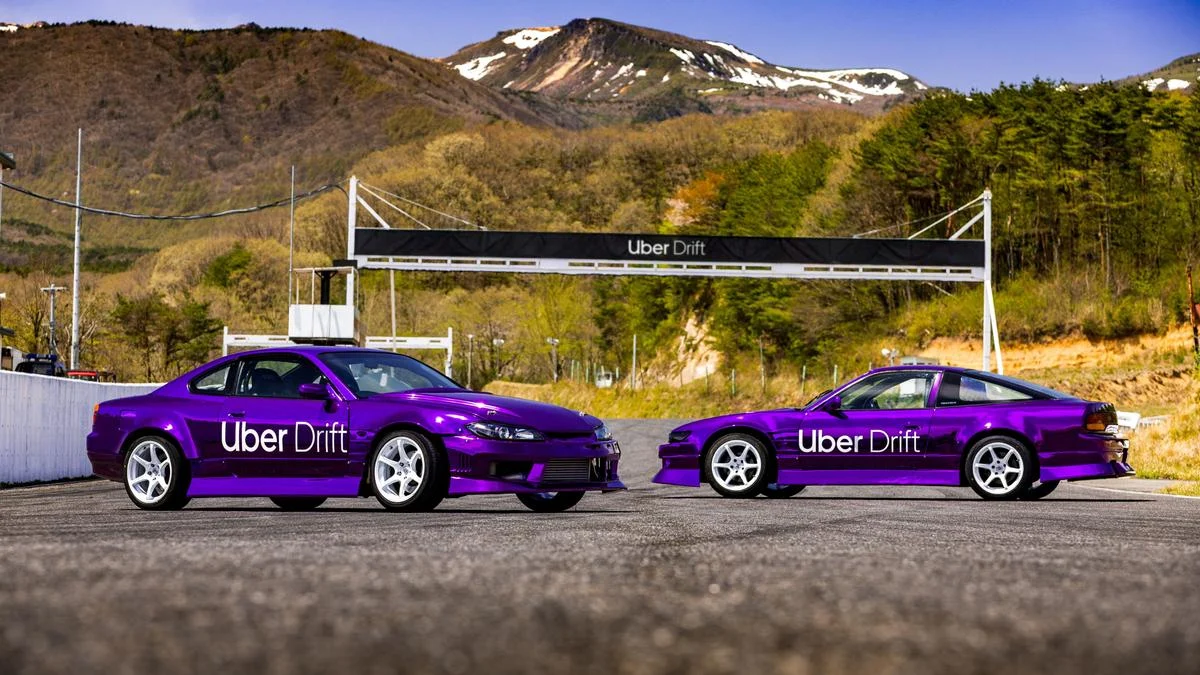
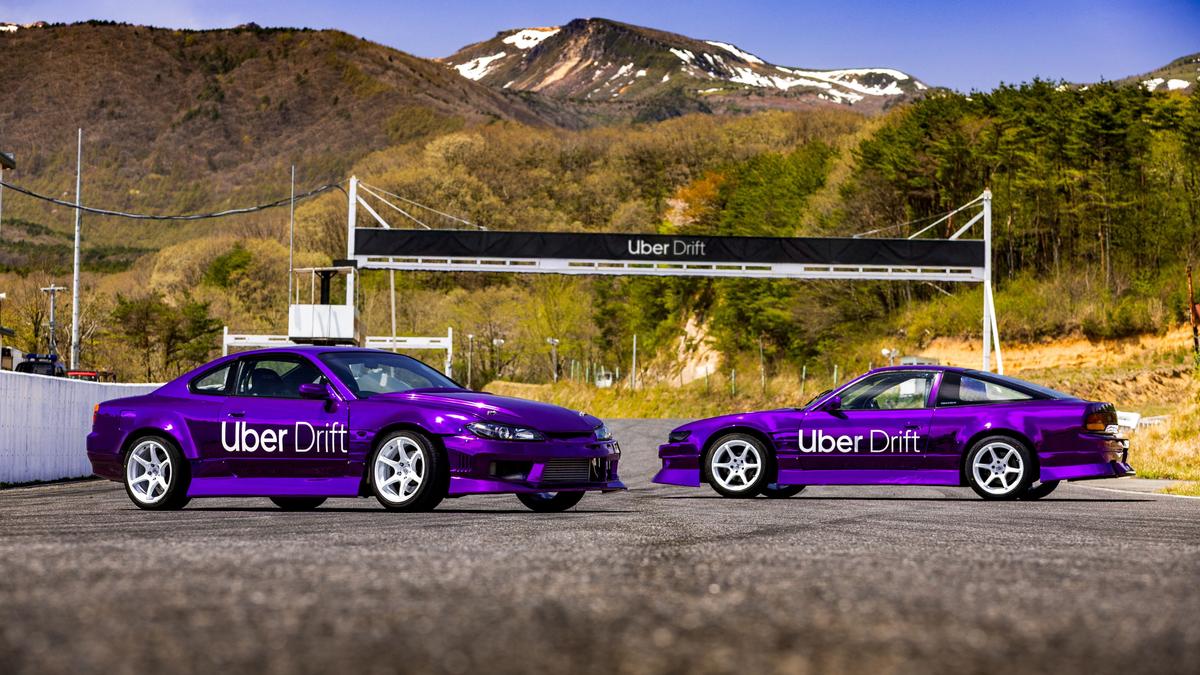
At the Mobara Twin Circuit, these pillars are tested to their breaking point. The "Uber Drift" experience—a recent high-profile initiative under Uber’s "Go Anywhere" series—has brought this once-clandestine world into the spotlight. The program pairs enthusiasts with Formula Drift licensed professionals, utilizing legendary chassis like the Nissan Silvia S15 and the 180SX.
The technical requirements for these maneuvers are immense. Unlike a standard road car, a professional drift machine is a marvel of specialized engineering:
- Steering Geometry: Modified "angle kits" allow the front wheels to rotate up to 60 or 70 degrees, far beyond the 30-degree limit of a factory vehicle.
- Power Delivery: Engines are tuned for immediate torque rather than top-end speed, ensuring the rear wheels can break traction at any moment.
- Suspension: The setup is paradoxically stiff yet communicative, allowing the driver to "feel" the exact moment the contact patch of the tire gives way to kinetic friction.
Chronology: From Mountain Passes to Global Stadiums
To understand the current state of Japanese drifting, one must trace its lineage back to the winding mountain roads, or touge, of the 1970s.
1970s: The Birth of the Touge
In the post-war industrial boom, Japan’s mountainous terrain was carved with narrow, winding passes. Local enthusiasts began racing on these roads at night. They discovered that by intentionally "kicking" the rear of the car out, they could navigate tight hairpins more effectively, maintaining engine RPMs that would otherwise bog down during traditional braking.
1980s: The Rise of the "Drift King"
The transition from a utility-based racing technique to a stylized art form is largely credited to Kunimitsu Takahashi, a legendary motorcyclist and driver who used aggressive "oversteer" to win championships. However, it was his protégé, Keiichi Tsuchiya—now known globally as the "Drift King"—who popularized the movement. Tsuchiya’s 1987 film, Pluspy, showcased him drifting his Toyota AE86 through mountain passes, turning an illegal street activity into a national obsession.
1990s – 2000s: Institutionalization
By the late 1990s, drifting moved from the mountains to the tracks. The D1 Grand Prix (D1GP) was established in 2000, providing the first professional framework for the sport. This era saw the rise of the "drift icons"—the Nissan Silvia, the Mazda RX-7, and the Toyota Chaser—cars that remain the gold standard for the culture today.
2010s – Present: The Global Phenomenon
Drifting exploded internationally, fueled by franchises like The Fast and the Furious: Tokyo Drift and the rise of social media. Today, Japan remains the "Mecca," but the sport has evolved into a multi-million dollar industry with factory-backed teams and global sponsorships.
Supporting Data: The Physics of the Slide
The data behind a successful drift run reveals the immense physical strain placed on both man and machine. During a high-speed entry at a circuit like Mobara, a car may enter the "initiation zone" at speeds exceeding 120 km/h.
According to telemetry data from professional tandem runs:
- G-Forces: Drivers and passengers experience lateral G-forces of up to 1.5G during the transition—the moment the car switches from a left-hand slide to a right-hand slide.
- Tire Temperature: Rear tires can reach temperatures of over 100 degrees Celsius in under 30 seconds, leading to "delamination" or total failure if the run lasts too long.
- Input Frequency: A professional driver makes an average of 15 to 20 micro-corrections per second across the steering wheel, throttle, and handbrake to maintain a constant angle.
In tandem drifting, the "chase car" must mirror the "lead car" with millimetric precision. Proximity is often measured in centimeters; it is not uncommon for the front bumper of the chase car to gently "rub" the door of the lead car, a move known as a "rub-tap" that earns high marks from judges but requires nerves of steel.
Official Responses: Uber and the Commercialization of Subculture
The launch of "Uber Drift" represents a significant shift in how Japanese car culture is marketed to the world. For decades, the drifting scene was notoriously difficult for outsiders to access, guarded by language barriers and a general distrust of "tourist" spectators.
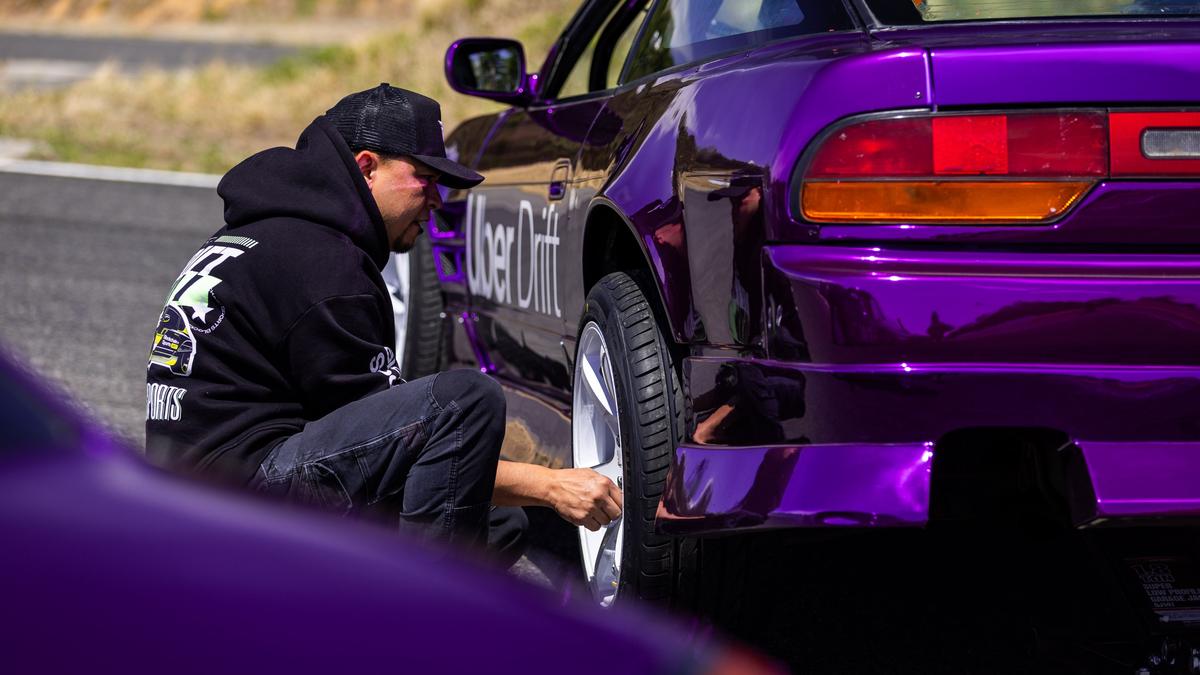
An Uber spokesperson commented on the initiative, stating: "Our ‘Go Anywhere’ series is designed to unlock experiences that are typically out of reach. Drifting is an integral part of Japan’s modern heritage. By partnering with professional drivers and historic circuits like Mobara, we are providing a safe, controlled, yet authentic bridge into this world."
Local circuit officials at Mobara Twin Circuit have also noted a shift in demographics. While the core of the sport remains grassroots—young drivers in battered "missile" cars held together by zip ties—there is a growing "luxury enthusiast" segment. These are individuals who may not want to build a car themselves but are willing to pay for the high-octane experience of riding with a pro.
However, the "official" embrace of drifting comes with a caveat. The Japanese police continue to crack down on illegal street drifting (street-drifting or hashiriya), pushing the culture further toward sanctioned tracks. This "legitimatization" has led to a cleaner, more corporate image for the sport, though veterans argue it loses some of the "raw" energy that defined the 1980s.
Implications: The Future of the Internal Combustion Legacy
The rise of drifting tourism and professionalized experiences carries several long-term implications for Japan’s automotive landscape.
1. The Preservation of the "Golden Era" Chassis
As the world pivots toward Electric Vehicles (EVs), the internal combustion engines (ICE) of the 90s—like the Nissan SR20 or the Toyota 2JZ—have become precious artifacts. The demand for drift-capable cars has caused prices for used Silvias and Skylines to skyrocket, turning what were once "cheap fun" cars into investment-grade assets. This "JDM (Japanese Domestic Market) Bubble" shows no signs of bursting, as enthusiasts scramble to own a piece of the era before it is regulated out of existence.
2. Environmental and Regulatory Pressures
Drifting is, by definition, an environmentally "loud" sport. Between the noise pollution and the particulate matter from burning tires, circuits face increasing pressure from local governments. The future of the sport may eventually involve synthetic fuels or even "electric drifting," though many purists argue that without the roar of a turbocharged engine, the soul of the sport is lost.
3. The Evolution of Automotive Tourism
The success of programs like Uber Drift suggests a new model for Japanese tourism. Beyond temples and sushi, there is a massive market for "experiential subculture." We are likely to see more "curated" access to Japan’s underground, from mid-night runs to Daikoku Parking Area to workshops with legendary tuners.
Conclusion: The Controlled Madness
As the Nissan Silvia S15 pulls back into the pits at Mobara, the cabin cooling and the smell of burnt rubber lingering in the upholstery, the "madness" of drifting reveals its true face. It is not a lack of control, but an excess of it. It is the ability to live in the "in-between" space—the fraction of a second where physics says the car should crash, but the driver’s right foot says it should dance.
In a world increasingly defined by autonomous driving and safety-first engineering, Japanese drifting remains a defiant, smoke-filled tribute to human skill. Whether experienced through the window of an Uber or from behind the wheel of a battered mountain runner, it remains Japan’s most visceral contribution to the world of speed. For those willing to look past the smoke, there is a profound beauty in the art of losing control.
