

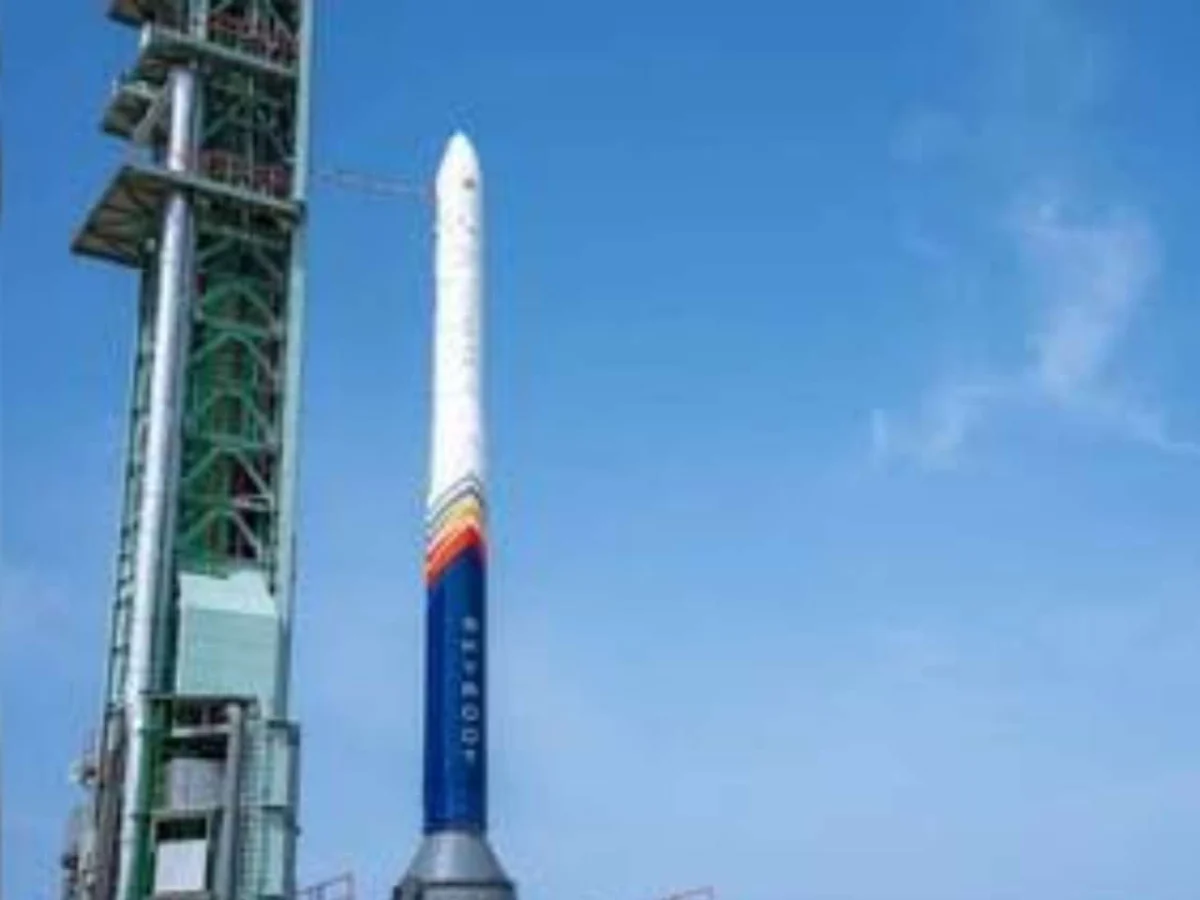
SRIHARIKOTA, India – July 16, 2026 – India’s burgeoning private space sector is on the cusp of a monumental achievement as Skyroot Aerospace prepares for the inaugural orbital test flight of its Vikram-1 rocket. Scheduled for launch on July 18 at 11:30 AM IST from the First Launch Pad at the Satish Dhawan Space Centre in Sriharikota, this mission marks a pivotal moment, signifying the nation’s entry into the global commercial satellite launch market through private enterprise.
Pawan Kumar Chandana, co-founder and CEO of Hyderabad-based Skyroot Aerospace, encapsulated the gravity of the occasion, calling the flight approval "a big moment for India." He emphasized the broader vision: "After passing all tough tests, Vikram-1 is cleared to fly. This first launch is the start of our goal to open up space for everyone." The successful execution of this mission is expected to solidify India’s position as a serious contender in the competitive international space industry, complementing the long-standing efforts of the Indian Space Research Organisation (ISRO).
Main Facts: A New Dawn for Indian Space
The launch of Vikram-1 is not merely another rocket taking to the skies; it represents a paradigm shift in India’s space narrative. For decades, ISRO has been the sole torchbearer of India’s space ambitions, achieving remarkable feats from lunar and Martian missions to launching hundreds of satellites. However, with the government’s push for liberalizing the space sector and encouraging private participation, companies like Skyroot Aerospace have emerged, ready to leverage India’s engineering prowess and cost-effective solutions.
Vikram-1, named in honour of Dr. Vikram Sarabhai, the revered father of India’s space program, is India’s first privately developed orbital-class rocket. Its maiden flight is a critical validation of Skyroot’s indigenous technologies and its ambition to provide reliable and affordable launch services for small satellites. The mission’s success will not only validate the company’s technical capabilities but also demonstrate the viability of India’s private sector to contribute significantly to the global space economy. This test flight is the culmination of years of dedicated research, development, and rigorous testing, underscoring the innovative spirit driving India’s NewSpace era.
)
Chronology: From Concept to Launchpad
The journey of Vikram-1 to the launchpad is a testament to perseverance and technological innovation, built upon a foundation laid by Skyroot’s previous successes and India’s evolving space policy.
Skyroot’s Genesis and Prior Milestones
Founded in 2018 by former ISRO scientists Pawan Kumar Chandana and Naga Bharath Daka, Skyroot Aerospace quickly positioned itself at the forefront of India’s private space revolution. Their vision was clear: to make space access reliable, regular, and affordable. The company’s first significant milestone came on November 18, 2022, with the launch of Vikram-S, a sub-orbital sounding rocket. Dubbed ‘Prarambh’ (The Beginning), this mission made history as India’s first privately developed rocket to reach space. While Vikram-S was a sub-orbital flight designed to test critical technologies, its success provided invaluable data and boosted confidence for the more ambitious orbital mission of Vikram-1.

The progression from Vikram-S to Vikram-1 showcases a rapid development cycle, indicative of the agility and innovation characteristic of private enterprises. The lessons learned from ‘Prarambh’ have been meticulously integrated into the design and execution of Vikram-1, ensuring a more robust and reliable system for orbital deployment.
The Final Preparations for Vikram-1
The period leading up to July 18 has been a flurry of intense activity at the Satish Dhawan Space Centre. All components of Skyroot’s Vikram-1 have been meticulously assembled and successfully integrated onto the launch pad. This intricate process involves the careful mating of multiple stages, payload integration, and connection to ground support systems. Simultaneously, the company’s dedicated launch control centre has completed exhaustive final checks on the rocket’s myriad systems, ensuring every sensor, actuator, and communication link is functioning flawlessly. Critical to this phase are the rigorous tests of telemetry ground stations and tracking radars, which will monitor every second of the rocket’s ascent.
)
Furthermore, a crucial step in ensuring launch safety involved concerned authorities issuing the necessary airspace and maritime notices. These notices formally designate restricted zones along Vikram-1’s ascent and impact corridor for launch day, a standard procedure to safeguard aviation and shipping traffic. This administrative clearance not only ensures safety but also signifies the full governmental support and regulatory backing for this private venture, highlighting a seamless collaboration between public and private entities.
The Enabling Regulatory Environment
The emergence of private players like Skyroot Aerospace has been significantly facilitated by India’s progressive space reforms. In 2020, the Indian government announced a major overhaul of its space policy, opening up the sector to private participation through the establishment of the Indian National Space Promotion and Authorisation Centre (IN-SPACe). This independent body acts as a single-window agency for private companies to utilize ISRO’s facilities and expertise, as well as to seek authorization for their space activities. Coupled with the formation of NewSpace India Limited (NSIL), ISRO’s commercial arm, these reforms have created an ecosystem ripe for private innovation and growth. Vikram-1’s launch is a direct outcome of these visionary policies, demonstrating the government’s commitment to fostering a vibrant and self-reliant space industry.
)
Supporting Data: Engineering Marvel and Mission Objectives
Vikram-1 is an embodiment of cutting-edge engineering and strategic mission planning, designed to meet the growing demands of the small satellite market. Its technical specifications and payload manifest underscore Skyroot’s innovative approach and its commitment to contributing to diverse space applications.
Technical Prowess of Vikram-1
At its core, Vikram-1 is a sophisticated, seven-storey, multi-stage launch vehicle built specifically to deploy small satellites weighing up to 350 kg into Low Earth Orbit (LEO). This payload capacity positions it perfectly within the rapidly expanding small satellite launch segment, which caters to constellations for internet, Earth observation, and scientific research.
)
For its maiden mission, Vikram-1 aims for an altitude of 450 km at a 60-degree orbital inclination. This specific orbital parameter allows for a wide range of applications, including imaging and communication, covering various regions of the Earth. A defining feature of Vikram-1 is its lightweight yet robust all-carbon composite body. Carbon composites offer superior strength-to-weight ratios compared to traditional metallic structures, significantly enhancing the rocket’s performance by reducing inert mass and increasing payload capacity.
The rocket leverages entirely indigenous propulsion systems, a testament to India’s self-reliance in critical aerospace technologies. This includes advanced 3D-printed engines, which represent a revolutionary approach to rocket engine manufacturing. 3D printing allows for rapid prototyping, complex geometries, and consolidated part count, leading to more efficient and cost-effective production. Additionally, Vikram-1 incorporates high-thrust solid-fuel boosters for its initial stages, providing the necessary brute force to overcome Earth’s gravity. The combination of these advanced materials and propulsion systems highlights Skyroot’s commitment to innovation and efficiency, aiming to offer competitive launch services.
)
Diverse Payload Manifest and Mission Goals
The primary objective of Vikram-1’s first flight is not commercial deployment, but rather a comprehensive test of its performance. The mission aims to gather crucial performance data on its propulsion systems, stage separation mechanisms, Guidance, Navigation, and Control (GNC) systems, and the overall vehicle’s structural integrity and flight dynamics. This invaluable data will be meticulously analyzed to support Skyroot’s transition to full-fledged commercial launch operations, enabling them to refine the rocket’s design and operational procedures for future missions.
Beyond its data-gathering role, Vikram-1 will host four distinct technology demonstration payloads, showcasing both Indian and international collaboration:
)
- Solaras S3 satellite from Grahaa Space: Hailing from Bengaluru and incubated at the Indian Institute of Space Science and Technology (IIST), Solaras S3 represents an emerging Indian startup’s contribution, likely focused on Earth observation or scientific research.
- Embrace by Cosmoserve Space: This Hyderabad-based startup is demonstrating a space-debris removal robotic arm. Space debris is a growing threat to active satellites and future missions, making technologies like Embrace crucial for sustainable space operations.
- Skyroot’s own Scope satellite: This internal payload will provide Skyroot with direct data and insights into the performance of its rocket from a satellite perspective, potentially testing proprietary technologies or communication systems.
- Orbital demonstration from German firm DCUBED: The inclusion of an international payload underscores Skyroot’s global aspirations and its ability to attract foreign clients, even at this early stage of its orbital flight program.
In a blend of scientific pursuit and cultural homage, the flight will also carry symbolic payloads. These include 18-carat gold micro-sculptures of three towering figures of Indian science and space: Sir C.V. Raman (Nobel laureate in Physics), Dr. Vikram Sarabhai (father of India’s space program), and Dr. A.P.J. Abdul Kalam (renowned aerospace scientist and former President of India). Additionally, Cosmos Diamonds’ artwork titled "Cosmic Bloom" will be onboard. These symbolic gestures serve to connect India’s rich scientific heritage with its future in space, adding a layer of national pride to the mission.
Economic and Industrial Footprint
The development of Vikram-1 is a colossal undertaking that extends far beyond the confines of Skyroot Aerospace. Naga Bharath Daka, co-founder and COO, highlighted the extensive collaborative effort: "The launch represents the hopes and hard work of around 1,000 people, the contributions of over 400 suppliers, and nearly 3,000 days of resolve to build a global offering from India." This statement underscores the significant economic impact and the vast ecosystem of talent and industry that has coalesced around this ambitious project. From material suppliers to manufacturing partners, software developers, and engineering teams, the Vikram-1 project has stimulated innovation and created numerous high-tech jobs across India. It showcases the capability of Indian industry to not only support but also lead in complex aerospace manufacturing, establishing a robust supply chain for future space endeavours.
)
Official Responses: Confidence and Vision
The leadership at Skyroot Aerospace has articulated a clear vision for Vikram-1, emphasizing both the immediate technical objectives and the long-term strategic implications for India.
Statements from Skyroot Leadership
Pawan Kumar Chandana’s excitement is palpable: "On 18 July, we are eager to see how Vikram-1 performs in a real flight environment for the first time. This is our first test flight, and we will be getting valuable data from it. This will be foundational to Skyroot’s aspirations of establishing launch cadence." His remarks highlight the pragmatic approach to this maiden orbital flight – it’s a learning mission, a crucial step in gathering empirical data that will inform and refine future operational launches. The emphasis on "launch cadence" reveals Skyroot’s ambition to move beyond one-off launches to a regular, reliable schedule, a key differentiator in the commercial launch market.
)
Naga Bharath Daka further elaborated on the company’s commitment to continuous improvement: "With the in-flight data gathered from this mission, we will return to the shop floor to learn, improve, and build further." This iterative approach is standard in aerospace development, where initial test flights provide indispensable feedback for optimization. It reflects a culture of innovation and adaptability, essential for success in a dynamic field like space exploration. Daka’s assertion of building "a global offering from India" also reinforces the ambition to compete on the international stage, providing cost-effective and efficient launch solutions to customers worldwide.
Governmental Endorsement and Regulatory Facilitation
While specific official statements from government bodies were not detailed in the original article beyond the "concerned authorities have issued the necessary airspace and maritime notices," the very approval of this launch is a powerful endorsement. It demonstrates the success of the IN-SPACe framework in facilitating private sector participation and ensuring regulatory compliance. The collaboration between Skyroot and ISRO, particularly the use of ISRO’s launch facilities at Sriharikota, further underscores a harmonious public-private partnership aimed at advancing India’s overall space capabilities. This symbiotic relationship is crucial for nurturing a thriving space ecosystem, where ISRO can focus on strategic, deep-space missions, and private players can drive commercial innovation and market growth.
)
Implications: Reshaping India’s Space Future
The launch of Vikram-1 carries profound implications, not just for Skyroot Aerospace but for India’s entire space sector, its economy, and its standing in the global arena. It heralds a new era where innovation, agility, and commercial viability become central pillars of India’s space strategy.
For India’s Space Sector: Private Sector Ascendancy
The most immediate implication is the formal "arrival of India’s private sector in the global launch business." This is a game-changer. Historically, only a handful of nations with state-backed space agencies have had orbital launch capabilities. India’s private entry signifies a democratization of space access, fostering a competitive environment that will drive down costs, accelerate innovation, and increase the frequency of launches. This private surge complements ISRO’s strategic missions, allowing the national agency to focus on scientific exploration and advanced technology development, while private companies cater to the burgeoning commercial satellite market. It also cultivates a dynamic "NewSpace" ecosystem in India, mirroring global trends where private entities are increasingly becoming key players.
)
Furthermore, the emphasis on "made-in-India" and "indigenous propulsion systems" underscores a deepened commitment to technological self-reliance. This independence in critical space technologies not only strengthens national security but also positions India as a hub for advanced manufacturing and innovation, reducing reliance on foreign components and expertise. The development of 3D-printed engines and carbon composite structures showcases India’s capability to adopt and master cutting-edge aerospace technologies, potentially paving the way for further advancements in rocket science.
For the Global Space Market: A New Contender
Vikram-1’s entry into the orbital launch market will undoubtedly intensify competition globally. With its promise of cost-effective and reliable launch services, Skyroot Aerospace could attract a significant share of the small satellite market, challenging established players and offering new opportunities for satellite operators. This competition benefits the entire industry by driving efficiencies and reducing the barriers to space access.
)
The diverse array of payloads on Vikram-1’s first flight – from Earth observation to space debris removal and international tech demonstrations – illustrates the breadth of applications that India’s private rockets can support. This versatility makes India an attractive partner for international collaborations, fostering global scientific and technological advancement. The democratization of space, enabled by more affordable and frequent launches, will allow more countries, universities, and private entities to deploy their satellites, fostering a new wave of space-based innovation.
Economic Growth and Future Outlook
The Vikram-1 project has already demonstrated significant economic impact, employing thousands and engaging a vast network of suppliers. As Skyroot scales its operations and achieves "launch cadence," this economic footprint is expected to grow exponentially, creating high-skilled jobs, attracting foreign investment, and fostering a robust aerospace manufacturing base. India’s ambition to become a global space hub is not just about launching rockets; it’s about building a sustainable, economically vibrant space industry.
)
Looking ahead, the success of Vikram-1 is merely the beginning. The iterative process of "learn, improve, and build further" outlined by Skyroot’s leadership suggests a continuous evolution of their launch vehicles. Future iterations of the Vikram series could offer enhanced payload capacities, more flexible launch options, and potentially even reusable components, further solidifying India’s position in the global space race. The challenges remain substantial, including intense global competition, the need for sustained investment, and navigating complex regulatory landscapes. However, with the successful flight of Vikram-1, India will have unequivocally demonstrated its capability to not only launch private rockets but also to foster a dynamic, innovative, and commercially viable space industry, propelling the nation into a new orbit of global leadership.
