

By [Your Name/Journalist Name]
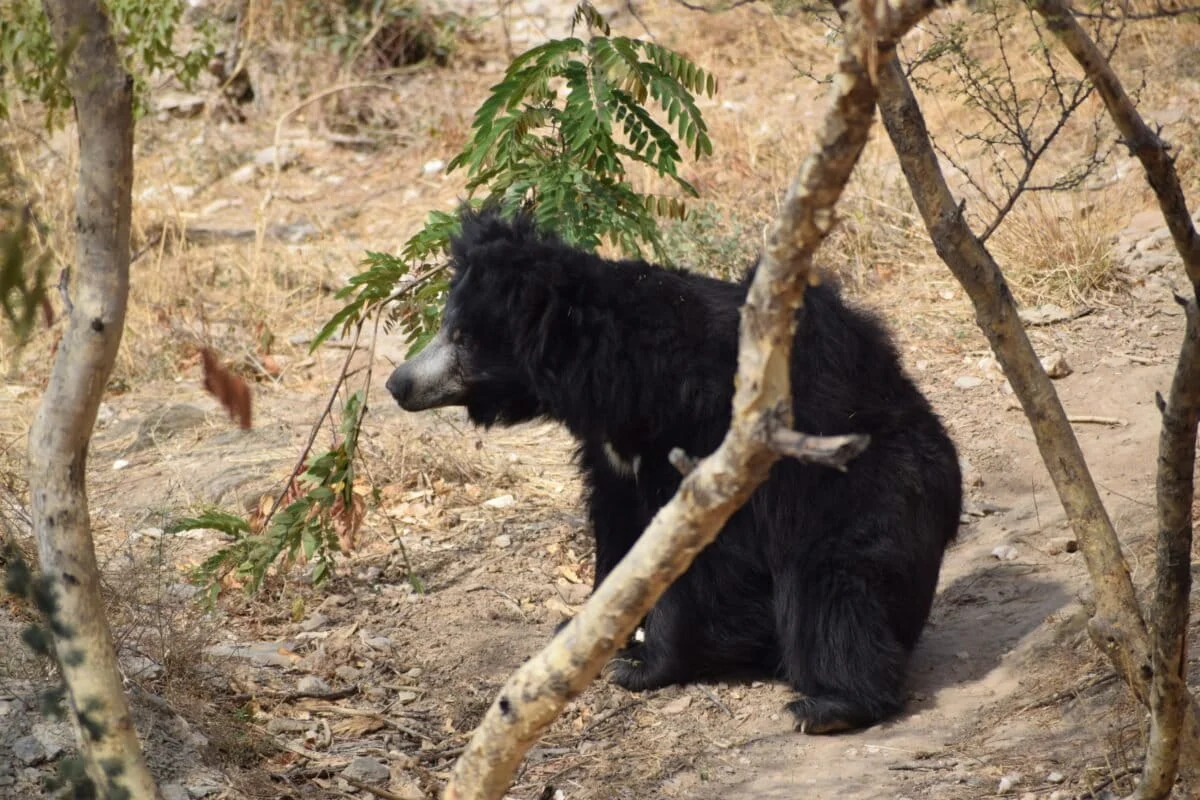
The semi-arid deciduous forests of Rajasthan’s Aravalli hills are often viewed through the lens of their most charismatic residents—the leopard or the elusive tiger. However, a groundbreaking new study suggests that the true architects of these ancient landscapes may be a much shaggier, often misunderstood inhabitant: the sloth bear (Melursus ursinus).
Far from being mere foragers, sloth bears are playing a sophisticated role in the maintenance and regeneration of their habitat. According to research conducted in the Kumbhalgarh and Todgarh-Raoli wildlife sanctuaries, these omnivores act as vital seed dispersers, influencing not only which plants grow where but also how quickly they germinate. The findings challenge long-held perceptions of sloth bears as simple insectivores and highlight the critical ecological services provided by large omnivores in Indian ecosystems.
Main Facts: The Sloth Bear as a Forest Engineer
The core of the study, published by a team of researchers including independent scientist K.S. Gopi Sundar and experts from the Wildlife Institute of India and Mohanlal Sukhadia University (MLSU), reveals that sloth bears are fundamental to the "plant composition" of the dry deciduous forests.
By consuming vast quantities of fruit and subsequently depositing seeds across large distances, the bears facilitate a process known as endozoochory—seed dispersal via an animal’s digestive tract. The study found that:
- Sloth bear gut passage can significantly accelerate germination for several native plant species.
- The bears demonstrate remarkable dietary flexibility, shifting between plant-based and insect-based diets depending on seasonal availability and climatic conditions.
- Bears are inadvertently aiding the spread of invasive species like Lantana camara, a finding that complicates conservation strategies.
- The presence and movement of bears are direct drivers of forest health, making them "keystone" species for the Aravalli ecotone.
"Clearly, dry deciduous forests’ plant compositions are a function of sloth bear presence, movement, and dietary habits," says K.S. Gopi Sundar. "Bears are influencing a number of plant species in germinating more and faster than if they were left to germinate naturally."

Chronology of the Research: From Field to Lab
The investigation into the secret lives of Aravalli’s bears was a multi-stage process that spanned nearly a year of intensive fieldwork and subsequent laboratory analysis.
Phase 1: Field Surveys (November 2021 – July 2022)
The research team focused on a 1,100-square-kilometer area comprising the Kumbhalgarh and Todgarh-Raoli wildlife sanctuaries. This region is a unique "ecotone"—a transition zone between the arid western slopes of the Aravallis and the more humid, greener eastern reaches.
To ensure a representative sample, the landscape was divided into 5×5 km grids. Researchers spent months monitoring forest tracks, identifying bear-use corridors, and collecting scat samples. A total of 180 scat samples were gathered: 90 during the winter months and 90 during the summer. Notably, the monsoon season was excluded from the study because heavy rains frequently washed away samples and rendered the rugged terrain inaccessible.
Phase 2: Laboratory Analysis
Back at the Wildlife Research Laboratory at MLSU, Udaipur, the "detective work" began. Each scat sample was meticulously washed, dried, and sorted. Researchers identified undigested remains—ranging from beetle elytra and ant heads to intact seeds and fruit skins—to reconstruct the bears’ seasonal menu.
Phase 3: Germination Experiments
The final phase involved testing the viability of the seeds recovered. The team selected the eight most prevalent plant species in the bears’ diet. They planted 25 seeds recovered from bear scat and 25 seeds collected directly from the parent trees to serve as a control group. These were monitored for 180 days to track germination rates and the survival of the resulting seedlings.
Supporting Data: A Seasonal Shift in Diet
One of the most surprising findings was the dramatic seasonal shift in the bears’ diet, which appeared to be influenced by larger climatic patterns like La Niña.

The Winter Menu: Fruit-Heavy
In the winter, the bears’ diet was dominated by plant matter. The primary source of nutrition was Grewia flavescens (the crossberry) and Ziziphus nummularia (jharber). During this period, the bears acted as primary dispersers for these woody shrubs. However, even in a plant-heavy season, ants remained a staple, appearing in over 80% of the scat samples.
The Summer Menu: The Insect Paradox
In many other parts of India, sloth bears are known to gorge on fruits during the summer. However, in the Aravallis during the study period, the bears shifted toward a largely insect-based diet. Termites became the dominant food source, found in more than half of all summer scats.
"The strong shift in diet was of great surprise," says co-author Utkarsh Prajapati. The researchers hypothesize that a wetter-than-normal summer—a byproduct of the La Niña weather pattern—increased soil moisture, making it easier for bears to dig up termite mounds and ant colonies. This highlights the sloth bear’s role as an "adaptable generalist," capable of altering its behavior to exploit the most accessible energy sources.
Supporting Data: The "Gut Effect" on Germination
The germination experiments provided the most concrete evidence of the bear’s role as a forest architect. The results showed that passing through the sloth bear’s digestive system was not just a means of transport, but a biological "trigger" for many plants.
- Speed of Growth: The most dramatic result was seen in Ziziphus nummularia. Seeds recovered from bear scat germinated in approximately 50 days. In contrast, seeds collected directly from the fruit took 100 days—twice as long—to sprout.
- Viability: Seeds of six out of the eight species studied remained perfectly viable after gut passage.
- Survival Rates: For the Ebony tree (Diospyros melanoxylon), seedlings grown from bear-dispersed seeds actually had a higher survival rate than those from the control group.
However, the news wasn’t entirely positive for the native ecosystem. The study found that Lantana camara, a notorious invasive shrub that chokes out native vegetation across India, benefited significantly from the bears. In the experiment, Lantana seeds only germinated after being eaten by a bear. None of the control seeds from the fruit germinated on their own.
"I was surprised that Lantana germinated only after the sloth bear had eaten it," Prajapati noted, warning that the bears’ large home ranges could be facilitating the spread of this invasive species across the landscape.

Official Responses: Shifting the Conservation Focus
The researchers are using these findings to advocate for a broader approach to wildlife conservation in India, which has traditionally been "megafauna-centric."
Vijay Kumar Koli, head of the Department of Zoology at MLSU, emphasizes the bear’s intelligence and flexibility. "The changing food habits showed that bears were highly adaptable… This of course would require bears to change their behaviors—dig more for ants and termites in summer, and seek fruits more during the winter."
K.S. Gopi Sundar points out a systemic bias in environmental policy. "Omnivores are rarely studied in Indian ecosystems, with most effort and resources going to predators and herbivores. But being an omnivore gives species like bears a lot of dexterity to survive in harsh locations."
Sundar notes that while India has numerous tiger-centric sanctuaries, there is a lack of "sloth bear-centric" protected areas. The study suggests that protecting the bear is synonymous with protecting the forest’s ability to regenerate itself. "An additional important takeaway is the necessity to have a wide diversity of species supported in our ecosystems so that the benefits are enjoyed by a variety of species," Sundar adds.
Implications: Resilience in a Changing Climate
The implications of this study extend far beyond the borders of Rajasthan. As climate change alters fruiting cycles and soil moisture levels, the sloth bear’s ability to switch between being a "gardener" (dispersing seeds) and an "exterminator" (controlling insect populations) makes it a vital component of ecosystem resilience.
1. Forest Regeneration
By speeding up the germination of native species like Ziziphus, bears help the forest recover more quickly from disturbances. In semi-arid regions where the growing season is limited by water availability, a 50-day "head start" in germination can be the difference between a seedling’s survival and its death during the first dry spell.

2. The Invasive Species Challenge
The finding regarding Lantana camara presents a conundrum for land managers. While bears are essential for native trees, they are also "force multipliers" for invasive species. This suggests that invasive species management cannot be separated from wildlife management. If bears are spreading Lantana, manual removal of the weed becomes even more urgent to prevent bears from inadvertently destroying their own habitat.
3. Rethinking "Protected Areas"
The Aravallis are under constant pressure from mining, encroachment, and infrastructure development. Understanding that the sloth bear is a key driver of forest health provides a new scientific argument for the strict protection of these corridors. If the bears disappear, the very composition of the forest—the types of trees and the density of the scrub—will inevitably change, leading to a collapse of the local food web.
Conclusion: The Need for Long-Term Vision
The study concludes with a call for long-term ecological monitoring. While the 2021-2022 data provides a fascinating snapshot, the researchers acknowledge that the "La Niña effect" may have made this an unusual year.
"Whether the same pattern occurs elsewhere remains an important question for future research," says Sundar. Future studies will need to determine the relative roles of other dispersers—such as birds, civets, and insects—to truly quantify the sloth bear’s individual contribution.
For now, the shaggy sloth bear of the Aravallis has earned a new title. It is no longer just a resident of the forest; it is one of its most industrious and essential caretakers. Protecting this "gardener" may be the most effective way to ensure that the ancient Aravalli hills remain green for generations to come.
