

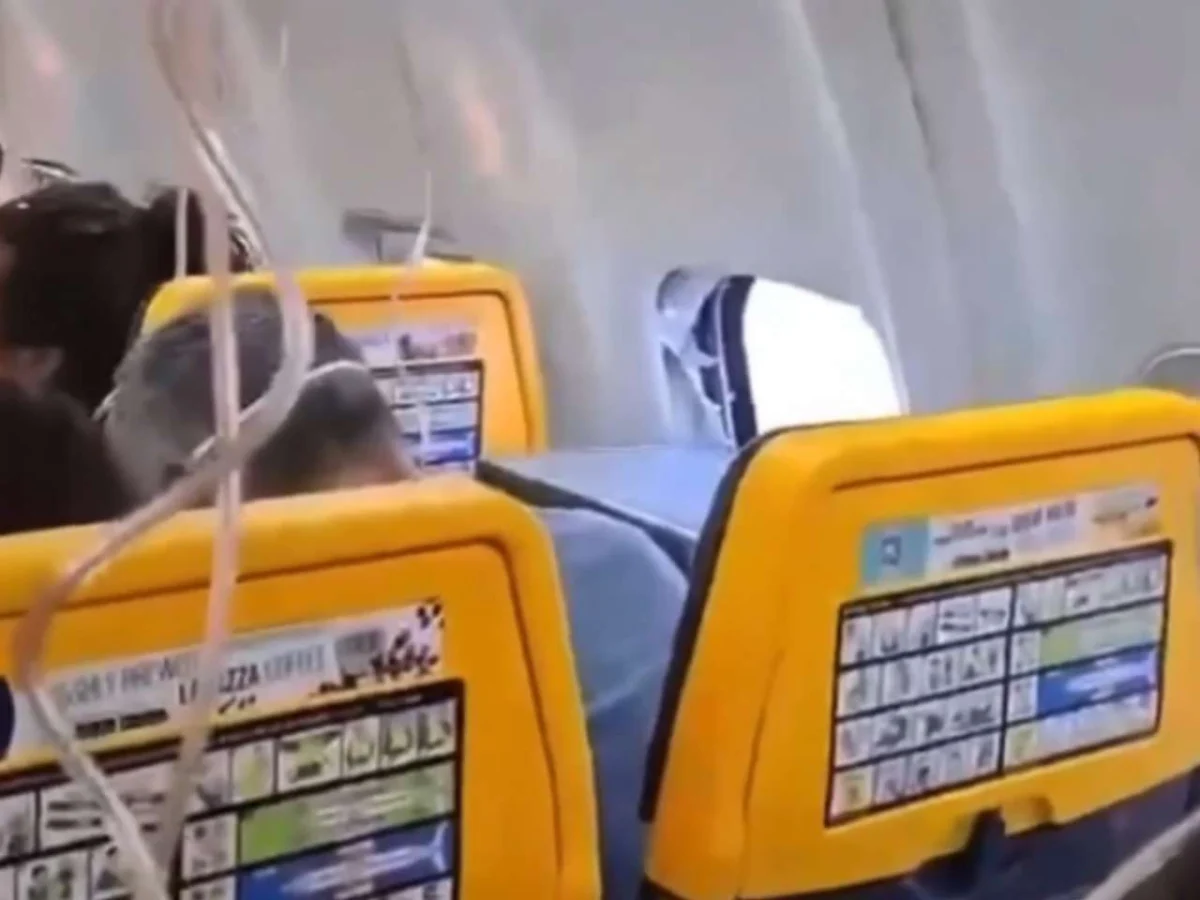
Thessaloniki, Greece – July 11, 2026 – In a harrowing incident that sent shockwaves through the aviation community, a passenger was partially pulled out of a commercial aircraft after a cabin window unexpectedly came loose shortly after take-off from Thessaloniki, Greece. The terrifying ordeal forced the Malta Air flight, operating for Ryanair, to make an emergency return, but not before fellow passengers demonstrated incredible bravery, managing to pull the 61-year-old man back inside the plane from the extreme vacuum of the mid-air environment.
The incident, which occurred on a Friday flight bound for Memmingen, Germany, has ignited a fresh round of scrutiny into aircraft maintenance, material integrity, and emergency protocols, even as aviation authorities commend the swift actions of both the flight crew and the ordinary citizens who averted a potential catastrophe. The injured passenger, whose identity has not been fully disclosed, is currently recovering from neck and shoulder injuries, including friction burns, a testament to the sheer force exerted by the sudden decompression.
Main Facts: A Nightmare at 15,000 Feet
The routine journey from Thessaloniki International Airport (SKG) to Memmingen Airport (FMM) on Friday, July 10, 2026, quickly devolved into a scene of panic and peril for the passengers aboard Ryanair flight FR1879, operated by Malta Air. Moments after the Boeing 737-800 aircraft ascended past 15,000 feet, a sudden and catastrophic failure of a cabin window plunged the aircraft and its occupants into a state of extreme emergency.
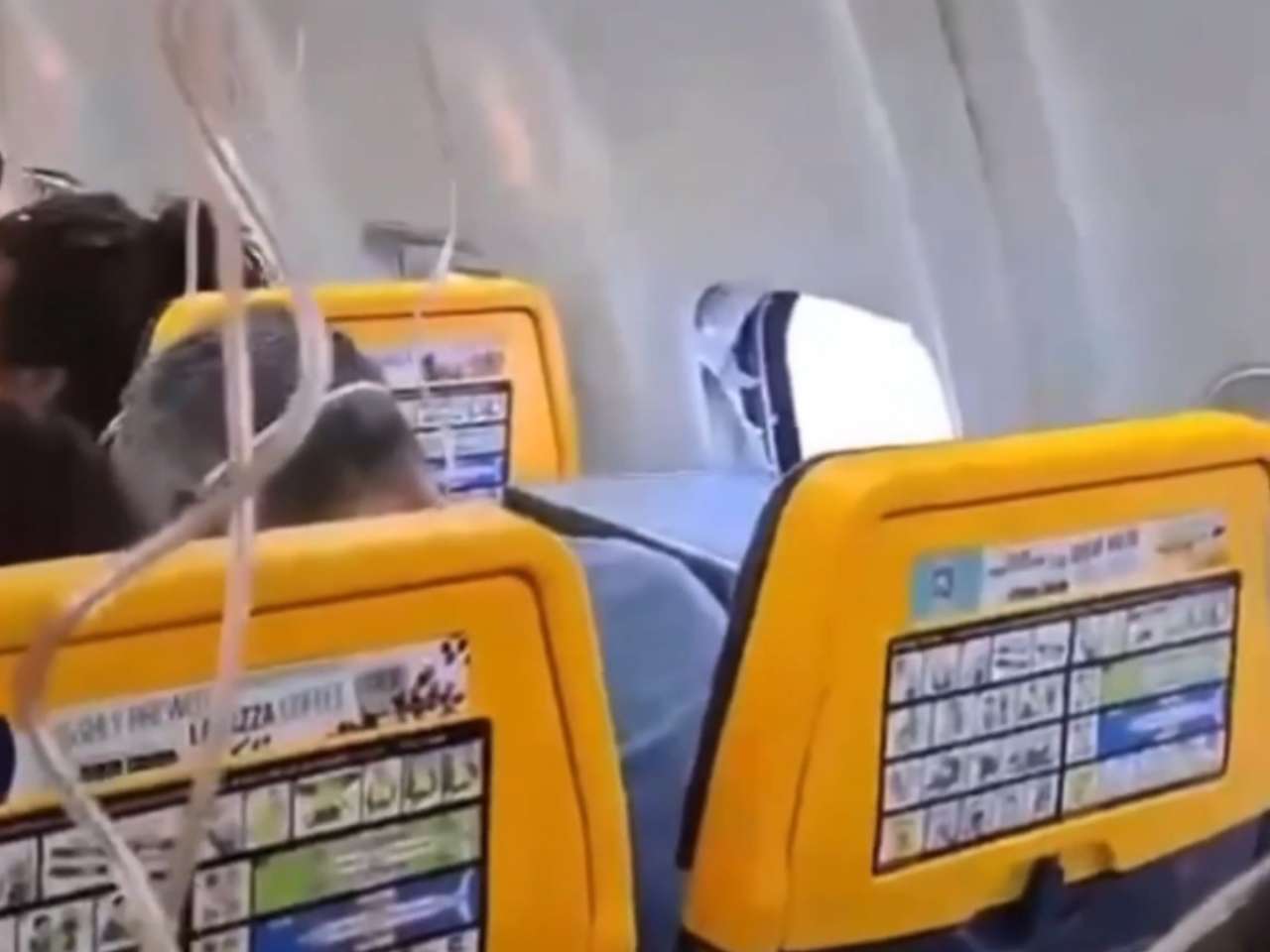
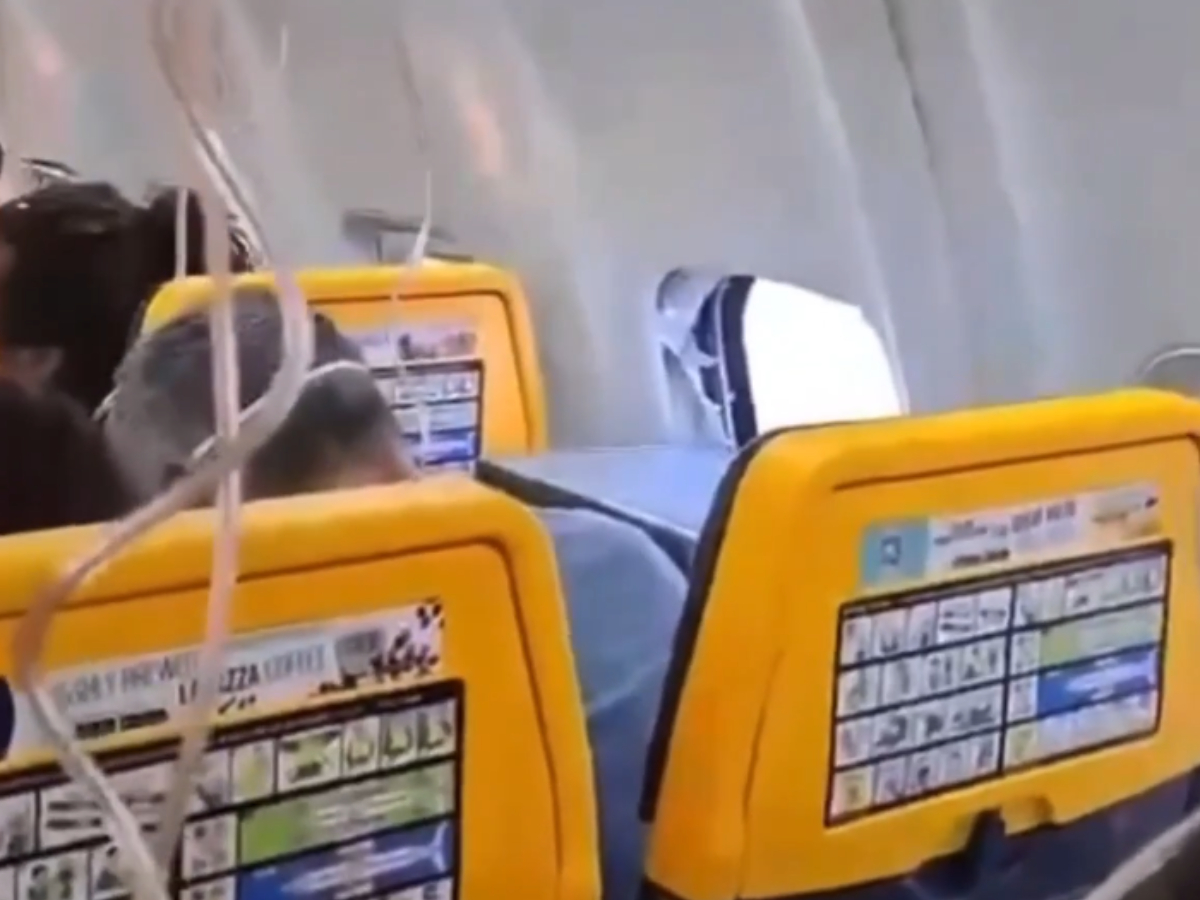
Eyewitnesses described hearing a deafening "tire bursting" sound, immediately followed by the deployment of oxygen masks and a rapid loss of cabin pressure and altitude. In the chaotic aftermath, a 61-year-old male passenger, seated adjacent to the compromised window, was subjected to the terrifying force of the outward suction, which pulled his head, neck, and shoulders partially out of the aircraft.
)
In a remarkable display of human courage and quick thinking, several nearby passengers immediately sprang into action, grabbing hold of the man and struggling against the powerful forces of physics to pull him back into the relative safety of the cabin. Their heroic efforts undoubtedly saved his life, preventing him from being fully ejected from the plane.
The flight crew, demonstrating exemplary crisis management, initiated an emergency descent and swiftly turned the aircraft back towards Thessaloniki. Approximately an hour after its initial departure, the damaged Boeing 737-800 made a safe, albeit tense, emergency landing back at Thessaloniki International Airport. Upon arrival, emergency services were on standby, and the injured passenger received immediate medical attention for his non-life-threatening but significant injuries. Ryanair subsequently arranged for a replacement aircraft to transport the remaining shaken passengers to their destination in Germany.
)
The incident has drawn the attention of international aviation safety bodies, with the US National Transportation Safety Board (NTSB) being informed and offering assistance, while the primary investigation is set to be led by the Aircraft Accident and Incident Investigation Committee of the Republic of North Macedonia, indicating a multi-national effort to uncover the precise cause of this near-fatal event. The aircraft involved, a Boeing 737-800, has been in service with Ryanair since 2008.
Chronology of the Terrifying Incident
The journey began like any other, a routine flight connecting the vibrant city of Thessaloniki with the Bavarian town of Memmingen. Passengers had settled into their seats, some perhaps dozing off, others engrossed in books or conversation, completely unaware of the peril that lay just minutes ahead.

Pre-flight & Take-off
On Friday morning, July 10, 2026, Ryanair flight FR1879, operated by its subsidiary Malta Air, prepared for its scheduled departure from Thessaloniki International Airport. The Boeing 737-800, a workhorse of short-to-medium haul aviation, underwent its standard pre-flight checks. With all passengers boarded and doors closed, the aircraft taxied to the runway, received clearance, and began its powerful ascent into the Greek skies. The initial climb was uneventful, a standard procedure for an aircraft designed for thousands of such operations. The cabin crew would have just begun their service, or passengers would have been instructed to keep their seatbelts fastened as the aircraft continued its climb towards cruising altitude.
The Initial Shock
According to passenger Christina, who later spoke to local radio, the first sign of trouble came with an abrupt, violent noise. "We heard a sound, I’d describe it like a tire bursting, but very loud," she recounted, emphasizing the sheer volume and unexpected nature of the sound. This deafening bang was the precursor to a catastrophic event: the sudden failure and dislodgement of a cabin window. Almost instantaneously, the cabin atmosphere underwent a dramatic change. Oxygen masks automatically dropped from the ceiling, an emergency protocol designed to provide breathable air when cabin pressure falls below safe levels. The aircraft also began a rapid descent, a critical maneuver by the pilots to bring the plane to an altitude where oxygen levels are naturally higher, mitigating the risks of hypoxia. The sudden loss of pressure and altitude triggered immediate panic among the passengers. "We knew straight away we lost pressure because we lost altitude," Christina stated, describing the terrifying realization that swept through the cabin.
)
The Harrowing Ordeal
The immediate consequence of the window failure was a localized, yet incredibly powerful, decompression event. The differential in pressure between the sealed cabin and the thin, cold air outside at 15,000 feet created an immense outward suction. It was this force that tragically affected the 61-year-old passenger seated directly beside the compromised window. Christina vividly described the horrifying scene: "His whole head, neck, shoulders were pulled out of the window." This detail paints a stark picture of the gravity of the situation – the man was literally being pulled from the aircraft, suspended between the safety of the cabin and the deadly vacuum outside. The extreme cold, lack of oxygen, and high-speed wind would have been instantly life-threatening. The sheer force would have been almost unimaginable, akin to being caught in a powerful industrial vacuum, but magnified by the speed and altitude of the aircraft.
Heroic Intervention
In the face of such extreme danger, human instinct and solidarity prevailed. Despite the panic and chaos, several fellow passengers, witnessing the man’s perilous situation, reacted with incredible courage and speed. They immediately lunged towards him, grabbing hold of his limbs and clothing. This was not a simple task; they were fighting against the immense outward pressure created by the cabin breach. It would have required significant physical strength and coordination from multiple individuals to counteract the suction force. Their collective struggle, a desperate tug-of-war against the elements, ultimately succeeded in pulling the injured man back into the fuselage. Their actions were nothing short of heroic, a spontaneous act of selflessness that undoubtedly saved a life.
)
Emergency Descent and Return
Concurrently with the terrifying struggle in the cabin, the flight crew was battling their own challenges in the cockpit. Reacting to the sudden decompression and the associated alerts, the pilots initiated emergency procedures. This involved deploying oxygen masks for themselves, communicating with air traffic control, and, most critically, initiating an emergency descent. Flight tracking data later confirmed this maneuver, showing the plane climbing above 15,000 feet shortly after take-off before rapidly descending to approximately 6,000 feet. This lower altitude is crucial because it significantly reduces the risks associated with hypoxia (lack of oxygen) and helps to equalize the pressure differential, making the environment inside the cabin more survivable. With the aircraft stabilized at a safer altitude, the pilots executed a swift but controlled turn back towards Thessaloniki, informing air traffic control of their emergency and requesting priority landing.
Safe Landing and Aftermath
Despite the preceding trauma, the pilots successfully guided the damaged aircraft back to Thessaloniki International Airport. The landing was executed without further incident, bringing a wave of profound relief to the terrified passengers and crew. Emergency services, including paramedics and fire crews, were already on standby, having been alerted to the incoming emergency. Upon disembarkation, the 61-year-old passenger received immediate medical attention. A Greek hospital official later confirmed he suffered neck and shoulder injuries, along with friction burns, indicative of the violent forces he endured. The remaining passengers, shaken but safe, were escorted back to the terminal. Ryanair swiftly activated its contingency plans, arranging for a replacement aircraft to continue the journey to Memmingen, ensuring that passengers, after having time to compose themselves, could eventually reach their destination. The incident, however, left an indelible mark on all who experienced it.
)
Supporting Data and Context
Incidents of structural failure in commercial aviation, particularly involving the fuselage or windows, are exceedingly rare due to stringent design, manufacturing, and maintenance protocols. However, when they do occur, they highlight the critical importance of these safety measures.
Aircraft Details
The aircraft involved in the incident was a Boeing 737-800, a narrow-body, twin-engine jet, which entered service with Ryanair in 2008. The 737-800 is part of the highly successful Boeing 737 Next Generation (NG) family and is one of the most common passenger aircraft globally, known for its reliability and efficiency. Ryanair operates one of the largest fleets of 737-800s in the world. The flight was operated by Malta Air, a subsidiary of the Ryanair Group, which often operates flights on behalf of its parent company. This operational structure is common in the airline industry, where subsidiaries are used for various strategic or licensing reasons. The aircraft’s relatively long service life (18 years by 2026) means it would have undergone numerous scheduled heavy maintenance checks, where structural components, including windows, are meticulously inspected.
)
Technical Aspects of Cabin Decompression
Cabin decompression is a critical aviation emergency. Commercial aircraft fly at altitudes where the atmospheric pressure is too low to sustain human life without supplemental oxygen. To counter this, aircraft cabins are pressurized to simulate an altitude of around 6,000 to 8,000 feet.
When a window or part of the fuselage fails, this pressurized environment is compromised, leading to a rapid equalization of pressure with the outside atmosphere. This can be either a "slow decompression," where pressure leaks gradually, or a "rapid decompression," which is sudden and violent, as experienced in this incident.
The dangers of rapid decompression include:
- Hypoxia: Lack of oxygen, leading to impaired judgment, loss of consciousness, and ultimately death if not quickly addressed. This is why oxygen masks deploy automatically.
- Extreme Cold: Temperatures at 15,000 feet can be well below freezing.
- Outward Force: The sudden pressure differential creates a powerful suction, capable of pulling objects and even people out of the aircraft, as tragically demonstrated.
- Noise and Air Blast: The sudden rush of air is incredibly loud and can cause physical injury.
- Fogging: Rapid cooling of the air can cause moisture to condense, creating a dense fog in the cabin.
The quick deployment of oxygen masks and the pilots’ immediate emergency descent are standard procedures designed to mitigate these dangers and bring the aircraft to a "survivable altitude" as quickly as possible.
Historical Precedents and Similar Incidents
While rare, incidents of structural failure leading to decompression and passenger peril have occurred throughout aviation history, underscoring the constant need for vigilance in maintenance and design.
)
- British Airways Flight 5390 (1990): Perhaps the most famous incident, where a poorly installed windscreen detached shortly after take-off, partially sucking the captain out of the cockpit. The flight attendants bravely held onto him for twenty minutes while the co-pilot made an emergency landing. Miraculously, no fatalities occurred. This incident highlighted the critical importance of proper maintenance and fastener inspection.
- Aloha Airlines Flight 243 (1988): During a flight, a large section of the fuselage roof ripped off, leading to rapid decompression and the loss of a flight attendant. The aircraft, a Boeing 737, made an emergency landing with significant structural damage. This event brought considerable attention to aircraft aging, metal fatigue, and maintenance practices.
- Southwest Airlines Flight 1380 (2018): An engine fan blade failed, sending debris through a window, causing rapid decompression and tragically leading to the death of a passenger who was partially pulled out. This incident emphasized the dangers of uncontained engine failures and their secondary effects on the fuselage.
The Thessaloniki incident, while not involving an engine failure as the primary cause of the window breach according to Ryanair’s initial statement (though the NTSB mentioned an "engine issue"), shares chilling similarities with these events, particularly the terrifying prospect of a passenger being pulled from the aircraft. These historical cases serve as stark reminders of the forces at play in aviation and the continuous learning and adaptation within the industry.
The Human Element: Panic and Resilience
The psychological impact of such an incident on passengers and crew cannot be overstated. Christina’s description of "screams, shrieks, shouting" perfectly captures the raw, primal fear that would have gripped everyone onboard. The suddenness of the event, the deafening noise, the deployment of oxygen masks, and the sight of a fellow passenger in mortal danger would have triggered a universal ‘fight or flight’ response.
Yet, amidst this chaos, the remarkable resilience of the human spirit shone through. The immediate, selfless actions of the passengers who pulled the man back into the cabin are a powerful testament to collective humanity in crisis. These individuals, initially strangers, became life-savers, acting instinctively and courageously under extreme pressure. Their bravery prevented an already terrifying situation from becoming an even greater tragedy, turning a moment of horror into a story of survival and heroism. Such events often lead to long-term psychological effects for those involved, underscoring the traumatic nature of the experience.
Official Responses and Investigations
The immediate aftermath of an aviation incident triggers a complex web of official responses, from airline statements to comprehensive international investigations, all aimed at understanding what went wrong and preventing future occurrences.
)
Airline Statements
Ryanair, through its operating arm Malta Air, issued an initial statement confirming the incident. The airline acknowledged that "a passenger window dislodged in-flight" shortly after take-off from Thessaloniki, forcing the aircraft to return. The statement further confirmed that one passenger received medical treatment on the ground and that a replacement aircraft was subsequently arranged to transport the remaining passengers to their destination. While brief, as is typical during the early stages of an investigation, the statement focused on the immediate operational aspects and passenger welfare. Airlines are often cautious with their statements to avoid speculation and allow official investigators to determine the facts. The incident will undoubtedly prompt an internal review by Malta Air and Ryanair of their maintenance records and operational procedures for the specific aircraft and potentially their wider fleet.
Regulatory Bodies and Investigation Teams
The investigation into such a serious incident is a meticulous and often lengthy process, involving multiple national and international aviation safety bodies. The US National Transportation Safety Board (NTSB) has confirmed its awareness of the incident, noting that it was informed the flight turned back due to "a right engine issue and cabin decompression." This detail is significant, as Ryanair’s initial statement focused solely on the window dislodgement, suggesting the investigation will look into potential interconnected factors. While the NTSB remains available to assist, the lead agency for the investigation will be the Aircraft Accident and Incident Investigation Committee of the Republic of North Macedonia. This highlights the international nature of aviation safety, where the nationality of the airline, aircraft registration, or location of the incident/operator’s base can determine the lead investigative body, often with assistance from other nations whose interests are involved (e.g., country of manufacture, country of operator, country where incident occurred).
The investigation will be comprehensive, encompassing several critical areas:
)
- Aircraft Examination: Forensic analysis of the damaged window and surrounding fuselage structure. This will involve examining for signs of metal fatigue, corrosion, manufacturing defects, or external impact.
- Maintenance Records: A thorough review of all maintenance logs for the specific aircraft, particularly those pertaining to windows, fuselage, and recent service checks.
- Flight Data Recorder (FDR) and Cockpit Voice Recorder (CVR): Analysis of these "black boxes" will provide crucial data on the aircraft’s performance, crew actions, and cabin environment leading up to and during the incident.
- Witness Testimonies: Interviews with passengers, cabin crew, and flight crew to gather detailed accounts of the event.
- Engine Inspection: Given the NTSB’s mention of a "right engine issue," investigators will meticulously examine the engine for any signs of uncontained failure or debris that could have caused secondary damage to the fuselage or window.
Safety Protocols and Maintenance
The aviation industry operates under exceptionally rigorous safety protocols, which are constantly refined based on incidents and research. Aircraft undergo regular, multi-tiered maintenance checks, ranging from daily pre-flight inspections to extensive heavy maintenance visits (C-checks and D-checks) that can strip an aircraft down to its bare frame. These checks are designed to detect wear, fatigue, and potential defects before they become critical.
The failure of a cabin window, a component designed to withstand significant pressure differentials and structural stress, is a serious matter. The investigation will undoubtedly scrutinize the materials used in the window’s construction (typically multiple layers of acrylic), its installation methods, and the integrity of the fuselage structure around it. Any findings will likely lead to recommendations for revised maintenance schedules, updated inspection techniques, or even design modifications across the global fleet of similar aircraft, reinforcing the continuous feedback loop that underpins aviation safety.
Implications and Broader Context
The incident aboard Ryanair flight FR1879 carries significant implications, not only for the airline and the specific individuals involved but also for the wider aviation industry and public perception of air travel.
)
Passenger Safety and Trust
At its core, aviation relies on public trust in its safety. Incidents like the one in Thessaloniki, though rare, can erode this trust and heighten anxieties among travelers. The image of a passenger being partially sucked out of a plane is deeply unsettling and directly challenges the perception of an aircraft as a secure, impenetrable capsule. It serves as a stark reminder of the immense forces at play at altitude and the potential vulnerabilities of even the most robust machines. For many, air travel is already a source of apprehension, and such events can exacerbate those fears. The industry’s challenge lies in transparently investigating such incidents and communicating the subsequent safety enhancements to reassure the public that air travel remains one of the safest modes of transportation, despite isolated alarming events.
Airline Responsibility and Accountability
For Malta Air and Ryanair, this incident carries significant reputational and potentially financial implications. Beyond the immediate costs of the emergency landing, medical care, and replacement aircraft, there will be the expense of the investigation, potential fines, and compensation claims. More importantly, the incident places their maintenance and operational oversight under intense scrutiny. While Ryanair has an impressive safety record, any findings of negligence or systemic issues could severely impact its brand image and passenger loyalty. The airline will be expected to cooperate fully with investigators, implement any recommended changes promptly, and demonstrate a clear commitment to passenger safety to rebuild any lost confidence. The public and regulatory bodies will be watching closely to see how the airline responds to the findings of the investigation.
)
Future of Aviation Safety
Every aviation incident, no matter how rare or seemingly isolated, contributes to the ongoing evolution of aviation safety. Lessons learned from events like British Airways Flight 5390 or Aloha Airlines Flight 243 led to significant improvements in maintenance protocols, inspection techniques, and structural design. This incident will be no different. The detailed analysis of the window failure, potentially linked to an engine issue as indicated by the NTSB, will yield invaluable data. This data will inform manufacturers about potential material fatigue points, design tolerances, and the interaction between different aircraft systems. It will also influence regulatory bodies to update airworthiness directives and maintenance mandates, ensuring that similar vulnerabilities are addressed across the global fleet. The continuous cycle of incident analysis, learning, and implementation of new safety measures is a cornerstone of the aviation industry’s commitment to continuous improvement.
Lessons Learned
The Thessaloniki incident offers several critical lessons. Firstly, it underscores the paramount importance of thorough and uncompromising maintenance. Even seemingly minor components like a cabin window are integral to the structural integrity and safety of the aircraft. Secondly, it highlights the effectiveness of emergency procedures and pilot training. The rapid descent and safe return to the airport by the flight crew were crucial in mitigating the severity of the incident. Thirdly, and perhaps most poignantly, it celebrates the extraordinary power of human intervention. The heroic actions of the fellow passengers who pulled the injured man back into the aircraft exemplify the innate human capacity for courage and solidarity in moments of extreme crisis. Their bravery turned a potential tragedy into a remarkable story of survival, reminding us that while technology and protocols are vital, the human element remains an indispensable factor in aviation safety. As the investigation unfolds, the aviation world will be watching closely, ready to integrate the lessons from this terrifying mid-air scare into the fabric of future flight safety.
