

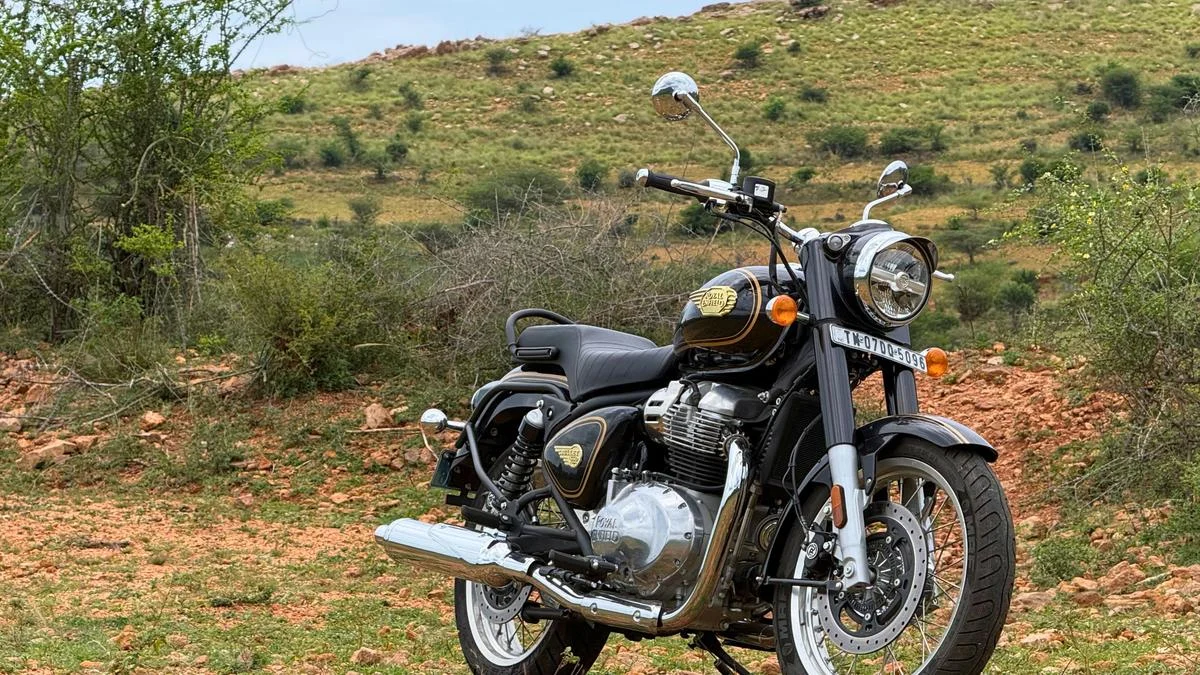
The motorcycling world has long anticipated the marriage of Royal Enfield’s most storied nameplate with its most acclaimed modern engine. With the official launch of the Bullet 650, priced at ₹3.64 lakh (ex-showroom), that union is finally a reality. This isn’t merely a new model launch; it represents a pivotal moment in the history of the world’s oldest motorcycle brand in continuous production. By transplanting the 648cc parallel-twin heart into the iconic Bullet silhouette, Royal Enfield has sought to bridge a seventy-year gap between post-war nostalgia and 21st-century performance.
Main Facts: The New Standard of the 650cc Platform
The Royal Enfield Bullet 650 arrives as the fifth installment in the company’s successful 650cc parallel-twin lineup, following the Interceptor, Continental GT, Super Meteor, and the recently introduced Classic 650. While it shares the same mechanical DNA as its siblings, the Bullet 650 occupies a unique space in the market. It is designed for the purist who demands the "Bullet" identity—characterized by its regal stance and heavy-set proportions—but requires the refinement necessary for modern interstate touring.
Key Specifications at a Glance:
- Engine: 648cc, air-oil cooled, parallel-twin SOHC.
- Power: 47 PS @ 7,250 rpm.
- Torque: 52.3 Nm @ 5,650 rpm.
- Transmission: 6-speed with a slipper and assist clutch.
- Weight: 243 kg (kerb).
- Seat Height: 800 mm.
- Price: ₹3.64 lakh (ex-showroom).
The Bullet 650 is positioned not as a replacement for the smaller Bullet 350, but as a "big-bore" upgrade path for millions of loyalists who have spent decades on the single-cylinder platforms. It offers a significant leap in top speed, vibration management, and overall build quality while retaining the hand-crafted aesthetic that defines the brand.

Chronology: From the 1930s to the Parallel-Twin Era
To understand the significance of the Bullet 650, one must look at the chronology of the nameplate. The "Bullet" moniker first appeared in 1932, and the iconic design we recognize today took shape in 1948. For decades, the Bullet was synonymous with the "thump" of its long-stroke single-cylinder engine—a mechanical heartbeat that became the soundtrack of Indian motorcycling.
The evolution toward the 650cc platform began in 2018 with the global launch of the Interceptor 650. This engine was a departure from Royal Enfield’s traditional architecture, favoring a 270-degree crank for a smoother, more "V-twin-like" character. After establishing the engine’s reliability across various styles (roadster, cafe racer, and cruiser), the final step in the brand’s modernization strategy was to apply this technology to its heritage "Standard" models. The Bullet 650 is the culmination of this decade-long engineering journey, transforming a vintage design into a high-performance machine capable of sustained speeds of 120 km/h and beyond.
Supporting Data: Design, Engineering, and Performance
Design and Visual Identity
Royal Enfield’s design team, led by Mark Wells, has exercised remarkable restraint with the Bullet 650. The goal was clearly to "evolve, not reinvent." The motorcycle retains the signature "casquette" headlamp housing, which incorporates the speedometer and the famous "tiger eye" pilot lamps.
The teardrop fuel tank remains the centerpiece, adorned with hand-painted gold pinstripes—a craft still performed by artisans at the Chennai plant. The 3D winged badging is a direct nod to the Bullets of the 1950s. At the rear, the squared-off mudguard provides a more substantial look compared to the rounded fenders of the Classic series. The dual "peashooter" exhausts are finished in high-grade chrome, completing a silhouette that is instantly recognizable from a distance.

The 648cc Powerplant
The engine is the star of the show. Producing 47PS and 52.3Nm of torque, the parallel-twin unit is praised for its "flat" torque curve. This means that nearly 80% of the torque is available from as low as 2,500 rpm, allowing the rider to pull away cleanly in higher gears without the engine "knocking."
The transition from a single-cylinder to a twin-cylinder has fundamentally changed the acoustic profile. The traditional "thump" has been replaced by a sophisticated, low-frequency rumble. While some purists may mourn the loss of the old rhythm, the trade-off is a vibration-free experience that allows for hours of fatigue-free riding.
Chassis and Dynamics
Underneath the retro skin lies a modern steel tubular spine frame. The suspension duties are handled by 43mm telescopic forks at the front (120mm travel) and twin gas-charged shock absorbers at the rear (90mm travel). Despite its 243kg kerb weight, the motorcycle features a low center of gravity.
The braking system is a significant upgrade over previous generations. The 320mm front disc and 300mm rear disc, equipped with twin-piston floating calipers from ByBre (a Brembo subsidiary), provide progressive and predictable stopping power. The dual-channel ABS is tuned to be non-intrusive, intervening only when the limit of traction is truly reached.

Fuel Efficiency and Range
In real-world testing, the Bullet 650 demonstrates the efficiency of modern fuel injection. While Royal Enfield claims a figure of 25kmpl, spirited riding in mixed conditions (city traffic and mountain climbs) yields approximately 18-20kmpl. For a 650cc machine weighing nearly a quarter of a ton, these figures are competitive. With its generous fuel tank, the Bullet 650 offers a touring range of roughly 250-300 kilometers between refills, making it a viable cross-country companion.
Official Responses and Market Positioning
Royal Enfield executives have frequently described the 650cc platform as a "global middleweight" strategy. By pricing the Bullet 650 at ₹3.64 lakh, the company is targeting a demographic that has outgrown the 350cc segment but finds European or American liter-class cruisers either too expensive or too intimidating.
Industry analysts suggest that the Bullet 650 is a "prestige play." While the Interceptor 650 appeals to a younger, more global audience, the Bullet 650 is aimed at the "traditionalist" who wants the highest expression of the brand’s legacy. Royal Enfield’s official stance emphasizes that this motorcycle is for those who value "pure motorcycling"—uncomplicated, mechanical, and evocative.
Furthermore, the comparison with the Classic 650 is inevitable. Royal Enfield clarifies that while the two share a platform, the Classic is for those who want "premium ornamentation," whereas the Bullet is for those who want "timeless authority." The Bullet features a more upright riding posture and a single-piece bench seat, whereas the Classic often sports a split-seat setup and more extensive chrome accents on the engine fins.

Implications: The Future of the Heritage Cruiser
The launch of the Bullet 650 has several long-term implications for the motorcycling landscape:
- The Death of the "Compromised" Retro: For decades, riding a retro motorcycle meant accepting poor brakes, heavy vibrations, and unreliable electrics. The Bullet 650 proves that a motorcycle can look 70 years old but perform with the reliability of a modern Japanese or German machine. This sets a new benchmark for other manufacturers (like Jawa, Yezdi, or BSA) to follow.
- Democratization of Twin-Cylinder Power: By keeping the price point accessible, Royal Enfield is making twin-cylinder ownership a reality for a much wider audience. This is likely to spur growth in the touring accessories market and the "slow travel" movement.
- Global Heritage Appeal: The Bullet 650 is not just for India. It is a potent export product. In markets like Europe and North America, there is a growing demand for "authentic" motorcycles that are easy to customize. The Bullet 650’s simple frame and classic lines make it an ideal canvas for custom builders.
- The Shift in Rider Demographics: With a seat height of 800mm and a substantial weight, the Bullet 650 demands a certain level of physical presence. However, its friendly power delivery makes it approachable for "re-entry" riders—older enthusiasts returning to motorcycling after a long hiatus.
Verdict: A Legend Refined
The Royal Enfield Bullet 650 is a triumph of engineering empathy. It understands what the rider loves about the past—the metal fenders, the pinstripes, the sense of "heavy metal" solidity—and discards what the rider hated—the oil leaks, the numbing vibrations, and the lack of highway passing power.
While the ₹3.64 lakh price tag places it in a premium bracket, the value proposition is clear. You are not just buying a set of specifications; you are buying into a lineage that has survived world wars and economic shifts. The Bullet 650 is a motorcycle that feels like it was built to last for decades, not just a few seasons.
For the enthusiast who wants to cruise at 100 km/h with the engine barely breaking a sweat, while looking like they’ve stepped out of a 1950s cinema reel, there is simply no other motorcycle that offers this blend of character and capability. The "thump" may be gone, but the soul of the Bullet is more vibrant than ever.

This report was compiled in association with Motorscribes and The Hindu. For further updates on the automotive sector, follow @motorscribes on Instagram.
