

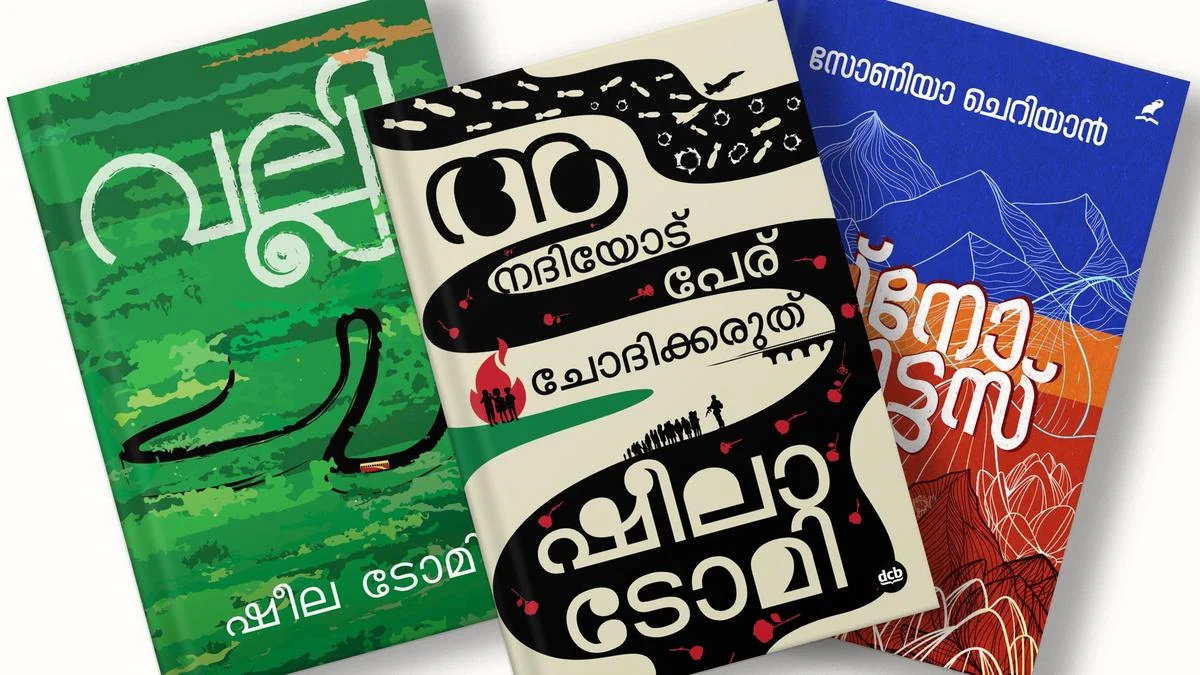
In the bustling corridors of Kerala’s vibrant publishing industry, where thousands of titles are birthed every year, a silent struggle for recognition persists. It is a struggle measured in inches—specifically, 1/8 demy size. This measurement, 5.5 by 8.5 inches, defines the standard dimensions of a textbook or a novel. For Arun Gokul, one of Kerala’s most prolific book cover designers, it also serves as a poignant metaphor for the level of attention his profession receives.
“When it comes to the recognition book cover designers get in Kerala, it is 1/8 demy size,” Gokul remarks. It is a sobering observation from a man who has spent two decades serving as the visual gatekeeper to some of the most profound works in contemporary Malayalam literature. While authors are feted, critics are quoted, and titles become household names, the artist who crafted the "packaging" of that intellectual product often remains a ghost in the machine.
The Invisible Branding: More Than Just an Image
To the casual reader browsing a shelf at a DC Books outlet or a local library, a cover is an invitation. To Arun Gokul, it is a sophisticated exercise in branding. In an era where the "shelf life" of a book is dictated by its ability to catch the eye in a fraction of a second, the cover designer acts as the primary marketer.
“What we do is essentially helping in the branding of the book; a cover is akin to packaging the ‘product,’ which the book is,” Gokul explains. This perspective shifts the conversation from pure aesthetics to commercial necessity. A book is a vessel of ideas, but in a competitive marketplace, it is also a commodity that requires a visual identity.
The tragedy of the profession, Gokul notes, is the disconnect between a book’s success and the designer’s visibility. When a novel wins a Sahitya Akademi Award or tops the bestseller charts, the world celebrates the author’s prose. Rarely does the public acknowledge the person who created the portal through which the reader first entered that world. The cover is the "silent salesman," yet its creator often remains uncredited in the grand narrative of literary achievement.
A Chronology of Visual Storytelling: From College Magazines to 1,200 Covers
Arun Gokul’s journey into the heart of Kerala’s publishing world was not paved with formal artistic training. Instead, it was built on a foundation of curiosity, persistence, and a "kick" gotten from being noticed.

The Early Years (Early 2000s)
Gokul’s foray into design began during his undergraduate years at Catholicate College in Pathanamthitta. Tasked with designing the college magazine, he found himself captivated by the power of visual arrangement. The positive reception of his work sparked an interest in the intersection of text and image.
Lacking a formal degree in fine arts, Gokul became a self-taught practitioner. He spent his formative years honing his skills through constant practice, experimenting with layouts, and studying the relationship between color palettes and emotional resonance.
The Breakthrough (2005)
Piqued by the potential of professional publishing, Gokul began creating "mock covers" for existing novels. These were not assignments, but rather exercises in creative expression. He took high-quality printouts of these experimental designs and mailed them to major publishing houses, including the industry giant DC Books.
His persistence paid off in 2005 when he was commissioned to design the cover for Cheru Marmarangal by R. Sreelekha, the retired Director General of Police. This debut marked the beginning of a relentless career that has seen no signs of slowing down.
Two Decades of Dominance
Over the past 20 years, Gokul has designed approximately 1,200 book covers. His portfolio reads like a Who’s Who of Malayalam literature. He has provided the visual identity for works by legendary figures such as:
- Madhavikutty (Kamala Das): The icon of transgressive and confessional poetry.
- M. Mukundan: The "Man of Mayyazhi" and a pioneer of modernism.
- MT Vasudevan Nair: The Jnanpith-winning doyen of Malayalam prose.
- Anand: The philosophical heavyweight of the literary scene.
- Contemporary Voices: Including Sheela Tomy, Haritha Savitri, and Hari Nandan.
Today, while continuing his freelance design work, Gokul serves as a creative designer with the Centre for Development of Imaging Technology (C-DIT) in Thiruvananthapuram, bridging the gap between government communication and artistic endeavor.

The Design Process: Working in the Dark
One might imagine that a book cover designer spends hours immersed in the manuscript, absorbing every nuance of the author’s prose before putting pen to paper (or mouse to pad). The reality, as Gokul describes it, is far more pragmatic and high-pressure.
“It is not possible to read all the books that I design the covers for,” he admits. In the fast-paced world of publishing, timelines are often too tight for a cover-to-cover reading. Instead, the designer relies on a collaborative shorthand with editors.
The Synthesis of Information
The design process usually begins with:
- A Synopsis: A brief summary of the plot and themes.
- Voice Notes: Editors often send audio descriptions detailing the "mood" or "vibe" of the book.
- Title Only: In extreme cases, the designer has nothing but the title to work with, requiring a leap of creative faith.
Despite these constraints, Gokul’s work is noted for its clever use of typography and color to convey complex narratives. He views the cover as an extension of himself as an artist—a canvas where he must balance the author’s intent with his own creative signature.
The Challenge of the Classic
One of Gokul’s most significant recent projects involved redesigning the covers of Muttathu Varkey’s works. Varkey, a prolific writer known for his "yellow books" (popular fiction) that dominated the mid-20th century, required a visual overhaul to appeal to a younger, modern audience.
“When you are introducing a writer, especially of that stature, to a new audience, you need to be as aware of the trends and the works,” Gokul says. For the Varkey project, he utilized brighter, more vivid color palettes to arouse curiosity in a generation that might otherwise view the author as a relic of the past. Having been familiar with the writer’s works beforehand proved to be an invaluable asset in this specific instance.

Supporting Data: The Changing Landscape of Cover Design
The role of the designer is evolving alongside technology. While Gokul emphasizes that a book cover is a "work of art," he acknowledges the shifting sands of the industry.
| Aspect | Traditional Approach | Modern Approach (Arun Gokul’s Era) | Future Trends (AI/Digital) |
|---|---|---|---|
| Medium | Hand-painted/Illustrative | Digital (Photoshop/Illustrator) | AI-Generated/Algorithmic |
| Typography | Standard Lead/Manual | Custom Typography/Branding | Dynamic/Variable Fonts |
| Information | Full manuscript reading | Synopses/Voice Notes | Metadata-driven design |
| Recognition | Localized to industry | Growing social media presence | Often uncredited/Stock-based |
Gokul notes a concerning trend where some publishers or "designers" resort to quick-fix solutions, using stock images from the internet or AI-generated art to bypass the creative process. This, he argues, dilutes the artistic integrity of the book. For him, the human touch—the ability to interpret a voice note into a visual metaphor—remains irreplaceable.
Official Responses and Industry Perspectives
While the source article focuses on Gokul’s personal journey, the broader Malayalam publishing industry has begun to grapple with the issues he raises.
Publishing House Perspectives:
Editors at major houses like DC Books and Mathrubhumi have occasionally acknowledged that the "visual package" can account for up to 30-40% of a book’s initial sales traction in retail environments. "A good cover doesn’t just sell the book; it honors the text," says one industry veteran. However, the budget for design often remains a fraction of the marketing or production costs.
The Artistic Community:
Within the circle of Kerala’s graphic designers, there is a growing movement to ensure that designers’ names are printed on the back cover or the inner flap of every book. This "credit revolution" aims to elevate the designer from a service provider to a co-creator.
Implications: The Future of the "First Impression"
The work of Arun Gokul highlights a critical juncture in the world of bibliophilia. As digital consumption grows through e-books and audiobooks, the physical book cover is becoming more of a "collectible" item. This raises the stakes for designers.

The AI Threat and Opportunity
Gokul’s reliance on "clever use of typography" is a defense mechanism against the rise of AI. While AI can generate an image, it often struggles with the nuanced placement of Malayalam script and the specific cultural semiotics required for local literature. The "human" element of understanding a synopsis and translating it into a cultural aesthetic is where Gokul and his peers find their strongest footing.
Cultural Preservation
By redesigning classics like those of Muttathu Varkey, designers like Gokul are effectively acting as cultural preservationists. They are the ones who decide how the next generation will "see" the history of their own literature. If the cover is dull, the history remains unread.
Conclusion: Opening the Door
Despite the lack of widespread recognition—the "1/8 demy" status of his fame—Arun Gokul remains driven by the core essence of his craft. He is the man who opens the door to the worlds created by others.
“A book cover designer extends the invitation to the world the author has created,” he says. Whether his name is on the front of the book or hidden in the fine print, the 1,200 covers he has produced stand as a testament to a two-decade-long dialogue between art and literature. In the end, for Gokul, the reward is not necessarily the accolade, but the moment a reader stops at a bookshelf, intrigued by a splash of color or a bold font, and decides to step inside.
