

By [Your Name/Staff Reporter]
Published: April 23, 2026
Main Facts: The Intersection of Gastronomy and the Written Word
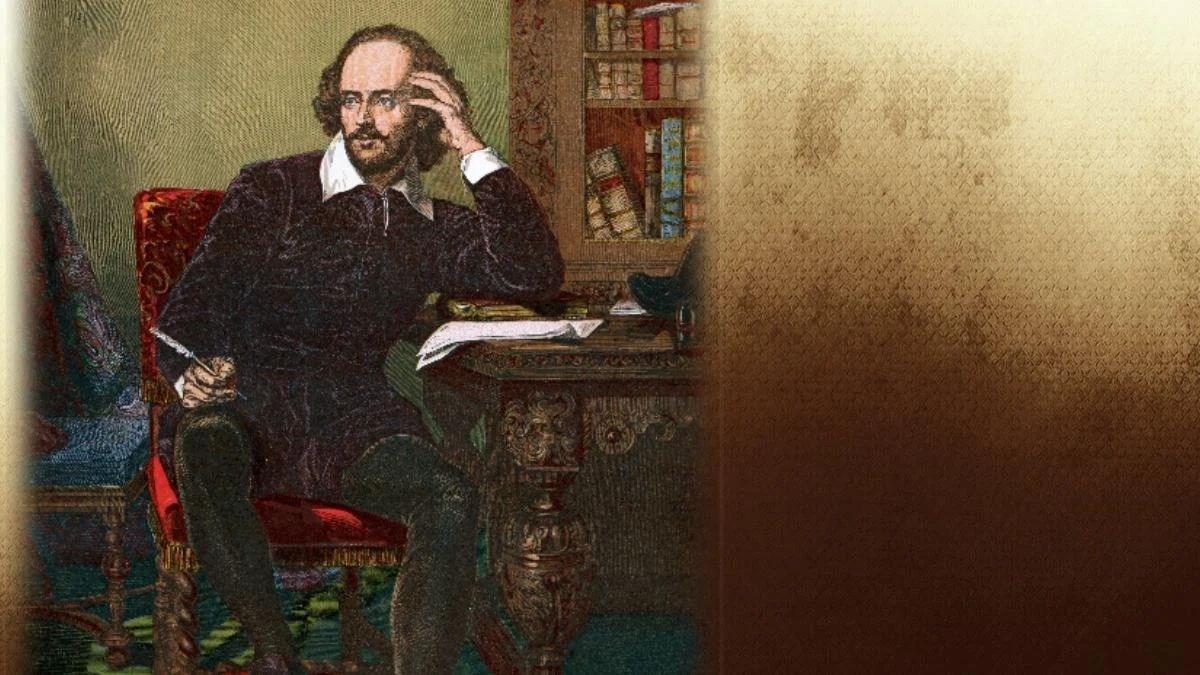
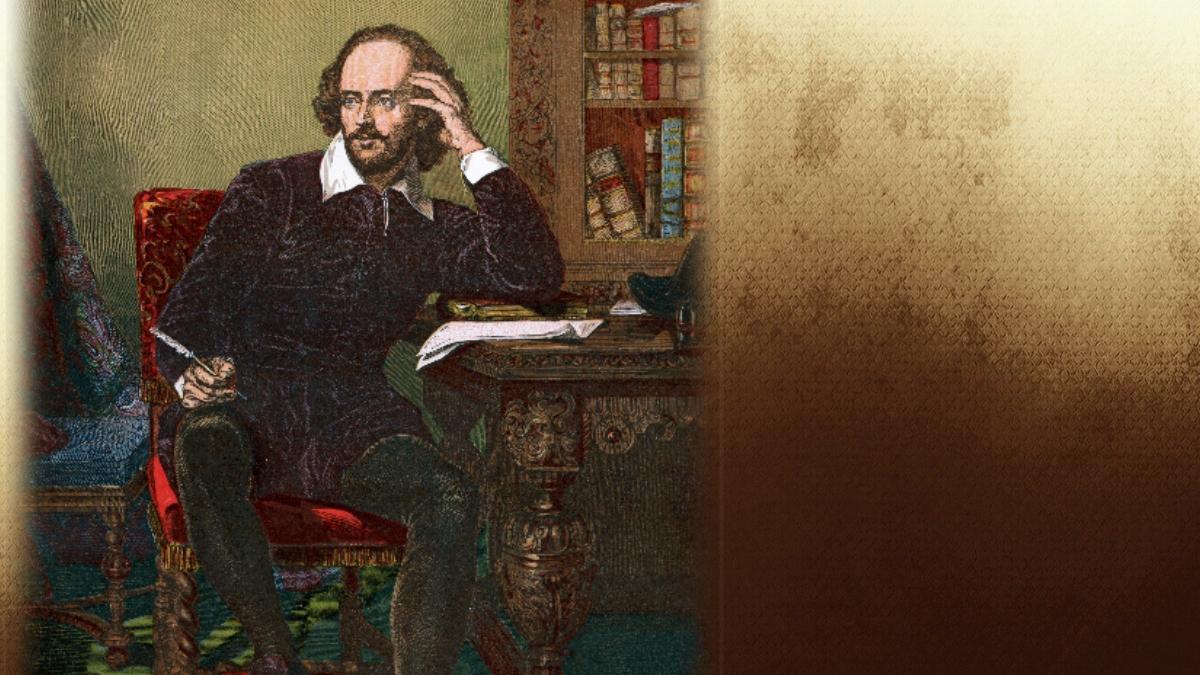
As the world observes World Book Day on April 23, 2026, the literary community has turned its gaze toward an often-overlooked element of the classics: the plate. This year’s celebrations, themed "Literature You Can Taste," coincide with the 462nd anniversary of William Shakespeare’s birth—and the 410th anniversary of his death. Central to the festivities is the release of Much Ado about Cooking, a comprehensive study and recipe collection that decodes the complex culinary metaphors and historical diets found within the Bard’s canon.
However, the exploration of the "literary kitchen" extends far beyond the Elizabethan stage. Modern scholarship and new publications are increasingly highlighting how authors like Jane Austen and Amitav Ghosh use food not merely as a prop, but as a vital instrument of characterization, social critique, and historical documentation. From the high-society tea tables of Regency England to the spice-scented holds of 19th-century schooners in the Indian Ocean, food serves as the visceral connective tissue between the reader and the text.
The 2026 literary calendar emphasizes that to read Shakespeare, Austen, or Ghosh is to consume a specific historical reality. As Shakespeare wrote in As You Like It, “O, I die for food! Here lie I down and measure out my grave.” This sentiment, while dramatic, underscores a fundamental truth: in literature, as in life, food is the ultimate arbiter of survival, status, and identity.
Chronology: From the Elizabethan Larder to the Post-Colonial Table
The evolution of food in literature follows a trajectory that mirrors human history’s shift from survival to refinement, and finally to global interconnectedness.
The Elizabethan Era (Late 16th – Early 17th Century)
In Shakespeare’s time, food was a matter of intense political and social regulation. The "Sumptuary Laws" dictated what one could eat based on rank. In his plays, Shakespeare used food to signal the health of the state. A banquet in Macbeth is not just a meal; it is a disrupted ritual that signals the breakdown of social order. By the time of his death in 1616, the English lexicon had been enriched by his culinary metaphors—referring to "the milk of human kindness" or "the bitter bread of banishment."
The Regency Period (Early 19th Century)
Fast forward to Jane Austen’s era, where the industrial revolution began to change the British diet. Food moved from the communal hall to the private dining room. Austen’s novels, published between 1811 and 1818, utilized the "dinner party" as the primary stage for psychological warfare. The arrival of exotic goods like sugar and tea—products of the burgeoning British Empire—began to appear as subtle markers of wealth and complicity in global trade.
The Contemporary Era (21st Century)
In the 21st century, writers like Amitav Ghosh have reclaimed the narrative of food. His Ibis trilogy (2005–2015) and subsequent works re-examine the culinary world through the lens of colonialism. He traces how the movement of seeds, spices, and people across the Indian Ocean created a "fusion" culture born of both trauma and resilience. The 2026 focus on Ghosh during World Book Day highlights his role in "decolonizing the palate," showing how the poppy and the peppercorn shaped the modern world.
Supporting Data: The Dramaturgy of the Dish
To understand the scale of culinary influence in these works, one must look at the frequency and function of food-related references.
Shakespeare’s Culinary Vocabulary
Scholars contributing to Much Ado about Cooking note that Shakespeare mentions food and drink over 2,000 times across his plays and sonnets.
- Wine and Ale: Mentioned more than any other substance, symbolizing both fellowship (as with Falstaff) and moral decay.
- The "Cannibal" Metaphor: In Titus Andronicus, the act of eating becomes the ultimate vengeance, where a mother is served a pie containing her own sons. This extreme use of food serves as a critique of the "appetite" for violence.
- Sugar: In the 1600s, sugar was a luxury. Shakespeare uses "sweet" not just as a descriptor of taste but as a marker of deceptive flattery in the royal courts.
Jane Austen’s Domestic Economy
In Austen’s world, the cost of a dinner was a public statement of a family’s "livings."
- The Gruel in Emma: Mr. Woodhouse’s obsession with thin gruel represents a fearful, stagnant upper class, while the abundance of strawberries at Donwell Abbey represents the fertility and social openness of the English countryside.
- Tea: By 1810, tea consumption in England had reached 2 pounds per capita annually. Austen uses the tea tray as a symbol of domestic stability; when the tea is delayed, the social fabric is perceived to be at risk.
Amitav Ghosh’s Botanical History
Ghosh’s work is underpinned by rigorous historical research. In the Ibis trilogy, he documents the "chutneyfication" of the English language and diet.
- The Opium Trade: Ghosh illustrates how the forced cultivation of poppies in India to satisfy the British "appetite" for Chinese tea fundamentally altered global ecology.
- Laborer Diets: He provides meticulous details on the "dhal" and "galgal" (citrus) consumed by lascars (sailors), showing food as a tool of survival for the subaltern.
Official Responses: Perspectives from the Literary and Culinary Worlds
The 2026 World Book Day initiatives have drawn praise from various international bodies.
Dr. Helena Sallow, Chair of the International Shakespeare Association, remarked:
"For too long, we viewed Shakespeare’s mentions of food as mere background noise. But as Much Ado about Cooking demonstrates, food is his primary metaphor for the human condition. To ‘eat the Bard’s words’ is to understand the physical reality of the Renaissance—the hunger, the gluttony, and the scarcity."
UNESCO’s Literary Heritage Division issued a statement highlighting the importance of Amitav Ghosh’s inclusion:
"By celebrating Ghosh alongside Austen and Shakespeare, we acknowledge that the history of literature is also a history of global trade and migration. Food in Ghosh’s work is a testament to the resilience of cultures. It reminds us that every spice in a modern kitchen carries a story of a voyage, often one of great hardship."
Chef and Historian Julian Thorne, lead consultant on the Much Ado about Cooking project, spoke on the practical application of these texts:
"We aren’t just looking at the words; we are recreating the flavors. We’ve reconstructed the ‘Marchpane’ (an early marzipan) mentioned in Romeo and Juliet and the ‘White Soup’ from Austen’s Pride and Prejudice. These dishes provide a sensory bridge to the past that a standard history book simply cannot provide."
Implications: Why the "Culinary Turn" Matters in 2026
The shift toward "gastro-criticism"—the study of food in literature—carries significant implications for how we consume culture in the mid-21st century.
1. The Humanization of the Classics
By focusing on something as universal as a meal, the works of Shakespeare and Austen become accessible to a broader audience. It strips away the intimidation factor of "high art" and replaces it with the shared human experience of hunger and satisfaction. In an era of digital detachment, the tactile nature of food-based literary analysis grounds the reader.
2. Environmental and Post-Colonial Awareness
Through the works of Amitav Ghosh, the culinary focus forces a confrontation with the darker side of history. It highlights how the "rich culinary worlds" we enjoy today were often built on the exploitation of land and labor. This awareness is crucial for a 2026 audience grappling with climate change and the ethics of global food chains.
3. The Future of Literacy
Educational programs are already adopting these "edible curricula." By integrating cooking with reading, schools are finding higher engagement levels among students. World Book Day 2026 serves as a pilot for a new kind of literacy—one that engages the eyes, the mind, and the palate simultaneously.
4. Cultural Preservation
As global fast food threatens to homogenize the world’s diet, literary food studies preserve the "memory of the tongue." Recreating a dish described in a 200-year-old novel is an act of preservation, ensuring that the nuances of regional flavors and traditional preparations are not lost to time.
Conclusion
As the sun sets on April 23, 2026, the legacy of the "Bard’s Month" remains clear. Whether it is the tragic "broken feast" of a Shakespearean play, the polite "taking of tea" in an Austen drawing-room, or the "scent of the sea and spice" in a Ghosh novel, food remains the most potent language we have.
World Book Day 2026 reminds us that books are not just to be read—they are to be digested. In the words of Francis Bacon, a contemporary of Shakespeare, "Some books are to be tasted, others to be swallowed, and some few to be chewed and digested." This April, the world has chosen to do all three, finding in the pages of our greatest writers a feast that never ends.
