

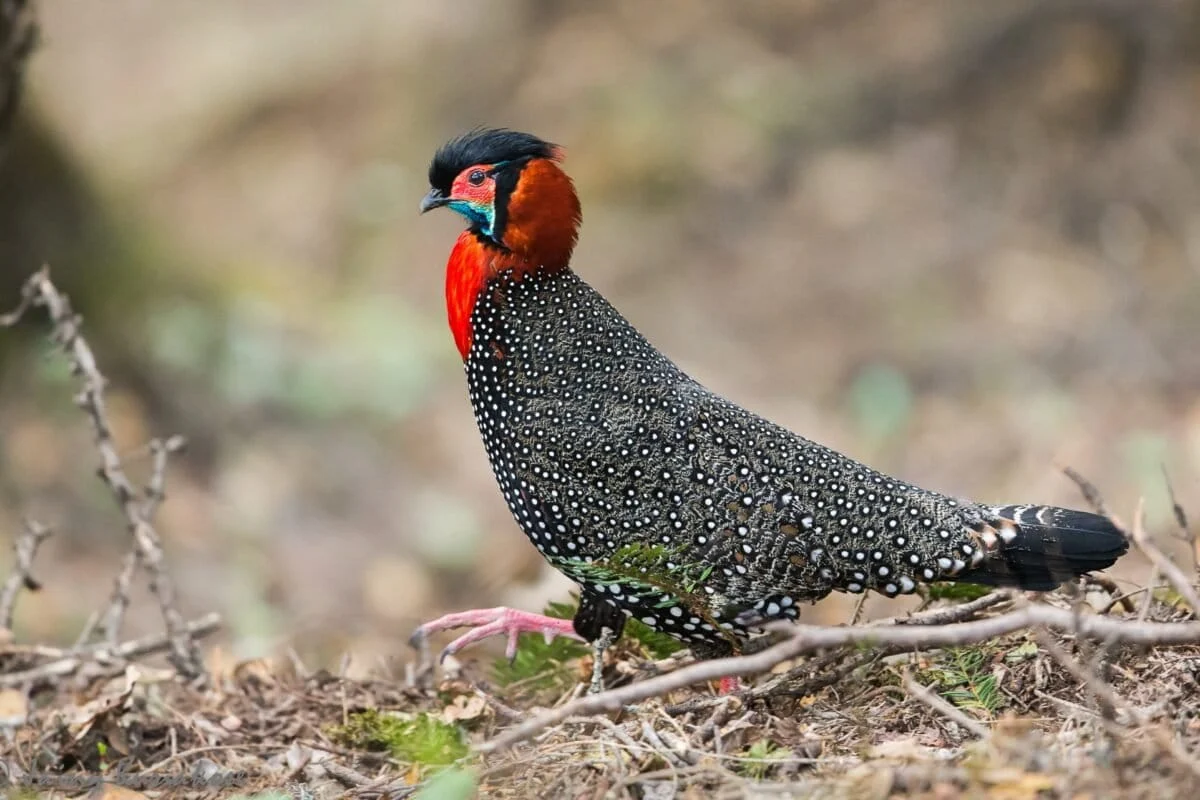
The mist-shrouded forests of the northwestern Himalayas are home to some of the world’s most spectacular avian species. Among them, the pheasants—ground-dwelling birds known for their kaleidoscopic plumage—serve as vital "barometers" for the health of one of the planet’s most fragile ecosystems. However, a series of recent studies and expert warnings suggest that even the most adaptable of these species are beginning to buckle under the weight of human encroachment, habitat degradation, and the looming specter of climate change.
From the relatively common white-crested kalij pheasant to the elusive and endangered western tragopan, the pheasants of Jammu and Kashmir are facing a multi-fronted assault. While some species remain classified as "least concern," researchers warn that their decline provides an early warning for the entire Himalayan biodiversity hotspot.
I. Main Facts: The Ecological Pillars of the Northwestern Himalayas
The Indian subcontinent is a global stronghold for the family Phasianidae, housing 51 pheasant species, 20 of which are endemic to the Indian Himalayas. These birds are not merely aesthetic wonders; they are functional pillars of the forest.
The Adaptable Underdog: The White-Crested Kalij
The white-crested kalij pheasant (Lophura leucomelanos hamiltoni) is perhaps the most recognizable of the group in the western Himalayas. Known locally in Kashmir as "wan-kokur" (wild cock), it is a bird of the mid-to-low elevations, typically found between 1,300 and 2,500 meters above sea level. Unlike its high-altitude cousins, the kalij is remarkably adaptable, inhabiting mixed forests, scrublands, and even forest edges near human settlements.

Despite its current status as "least concern" on the IUCN Red List, the kalij is an essential component of the ecosystem. It acts as a primary seed disperser and a soil aerator through its constant foraging on the forest floor. Furthermore, it serves as a critical prey base for the region’s apex predators, including leopards and various raptors.
The Elusive "King" of the Forest: The Western Tragopan
At the other end of the spectrum is the western tragopan (Tragopan melanocephalus). Endemic to the western Himalayas and listed as "vulnerable," this bird is one of the rarest pheasants in the world. Known as "danne geer" in Kashmiri, it is the antithesis of the kalij in terms of temperament. It is extremely shy, requiring undisturbed, dense oak and coniferous forests with thick undergrowth to survive.
In India, the western tragopan is granted the highest level of legal protection under Schedule I of the Wildlife (Protection) Act. Its presence is considered the ultimate indicator of a "pristine" habitat. If the tragopan is present, the forest is healthy; if it vanishes, the ecosystem is in deep distress.
II. Chronology of Environmental Stress: A Growing Threat Profile
The history of pheasant conservation in the Himalayas has shifted from general observation to a realization of urgent, overlapping threats. Over the last several decades, the nature of human interaction with these forests has evolved, creating a timeline of increasing pressure.

The Traditional Threats: Hunting and Timber
For generations, pheasants were hunted for meat and their decorative feathers. While modern wildlife laws have curtailed large-scale hunting, poaching remains a persistent "severe" threat in remote areas. Simultaneously, the historical reliance on Himalayan forests for timber and firewood has led to significant canopy thinning. For birds like the kalij, which rely on dense understory vegetation for nesting and cover from predators, the loss of brush and thicket is catastrophic.
The Modern Crisis: Resource Extraction and Disturbance
In recent years, the chronology of threat has moved toward "indirect" human interference. A landmark study conducted in the Limber and Lachipora wildlife sanctuaries in Baramulla identified a modern culprit: mushroom collection.
The collection of morels and other wild mushrooms often coincides exactly with the pheasants’ breeding season. As villagers scour the forest floor for these lucrative products, they inadvertently flush nesting females. This disturbance leads to abandoned nests and increased egg predation, significantly lowering breeding success rates even in areas where the forest remains standing.
The Climate Shift
The latest chapter in this chronology is climate change. Modeling studies, including recent work by the Forest Research Institute in Dehradun, suggest that the suitable thermal envelopes for these birds are shifting upward. This forces species into higher altitudes where the vegetation may not yet be suitable for their specialized diets or nesting habits.

III. Supporting Data: Quantifying the Decline
To understand the scale of the challenge, researchers have turned to a mix of traditional and modern data collection methods.
Population and Distribution
- Western Tragopan: Experts estimate the population in Jammu and Kashmir to be between 200 and 300 individuals. While recent sightings in Kazinag National Park are encouraging, the overall trend remains uncertain due to the bird’s elusive nature.
- Global Significance: India holds approximately one-third of the world’s pheasant species. Of the 17 species found in the Indian Himalayas, nearly all are currently facing some form of habitat fragmentation.
Threat Hierarchy
According to the study led by Arif Nabi Lone of the University of Kashmir, threats to these birds can be categorized by severity:
- Severe: Habitat degradation (deforestation, timber extraction) and illegal hunting.
- Moderate: Livestock grazing and mushroom collection (due to seasonal overlap with nesting).
- Low but Increasing: Forest fires and natural predation.
Methodological Evolution
Historically, population estimates relied on "call-counts"—surveys conducted during the breeding season when males are vocal. However, researchers like Ankita Sinha of the Senckenberg Biodiversity and Climate Research Institute note that this data is often incomplete. Today, scientists are supplementing call-counts with:
- Camera Traps: Providing 24/7 monitoring of elusive species.
- Social Surveys: Gathering community perceptions to understand the human-wildlife interface.
- Landscape Modeling: Using satellite data to predict how climate change will fragment future habitats.
IV. Official Responses: Conservation in Action
The Department of Wildlife Protection in Jammu and Kashmir maintains a cautiously optimistic but vigilant stance. Government officials argue that while threats are real, the populations of common species like the kalij remain stable.

Habitat Management
Intesar Suhail, the Wildlife Warden for North Kashmir, emphasizes that conservation efforts are moving toward a "holistic" approach. "The interventions we undertake in protected areas are aimed at improving habitats for all wildlife," Suhail notes. This includes maintaining the "dense understory" that pheasants require and managing water sources within sanctuaries.
Anti-Poaching Measures
Winter is the most vulnerable time for Himalayan pheasants. Heavy snowfall forces the birds to lower elevations and makes them more visible against the white landscape. In response, the department deploys special anti-poaching squads and increases patrolling during the winter months to deter opportunistic hunters.
The Call for a Centralized Project
Despite local efforts, many ecologists, including Rahul Kaul, a member of the IUCN SSC Galliformes Specialist Group, argue for a broader strategy. Kaul suggests that because pheasants are "indicator species" for the entire Himalayan range, a centrally launched, federally funded project—similar to "Project Tiger"—could be the only way to safeguard the various species across state and international borders.
V. Implications: Why the Pheasant’s Fate Matters
The struggle of the kalij and the tragopan is not an isolated biological event; it is a reflection of the broader health of the Himalayan mountain system, which provides water and climate regulation for hundreds of millions of people downstream.

The "Flagship" Effect
Conservationists argue that the western tragopan should be treated as a "flagship species." By protecting the specific, high-quality habitat required by the tragopan, authorities automatically protect thousands of other less charismatic species—insects, plants, and smaller mammals—that share that ecosystem.
Genetic Isolation
As habitat fragmentation continues due to road building and developmental pressure, pheasant populations are becoming "islands" of biodiversity. Small, isolated groups are at higher risk of inbreeding and local extinction. If the "corridors" between these forests are not maintained, the genetic health of these species will decline, making them less resilient to disease and climate shifts.
A Warning for the Future
The adaptability of the white-crested kalij has long been its greatest strength, but the fact that even this resilient bird is now showing signs of stress is a sobering thought. As Riyaz Ahmad, a senior ecologist, puts it: "The western tragopan is a barometer of pristine habitats. If its numbers decline, it is a warning that something is going wrong in these ecosystems."
The pheasants of the northwestern Himalayas are more than just beautiful birds; they are the guardians of the mountain’s secrets. Their survival is inextricably linked to the survival of the forests themselves. Without a concerted effort to balance human resource needs with the biological requirements of these "wan-kokur," the colorful flashes of feathers in the Himalayan undergrowth may soon become a memory of the past.
