

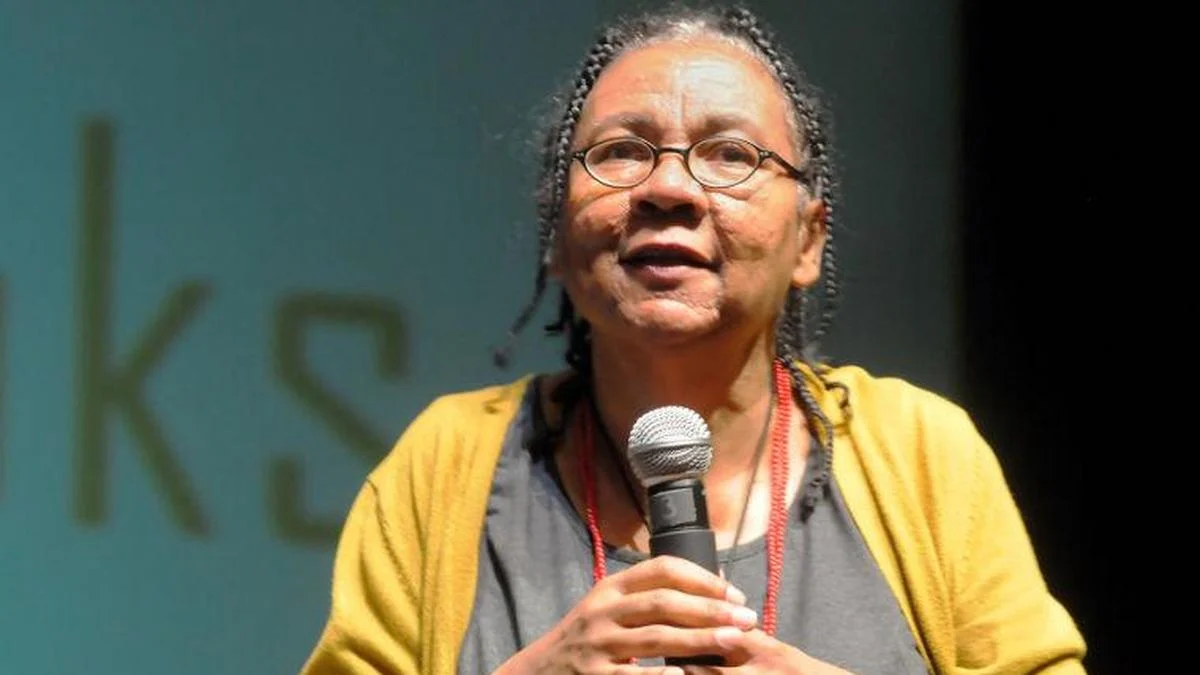
A Luminary’s Enduring Legacy: Championing Intersectional Justice Through Accessible Scholarship
The world lost a towering intellect and a fearless advocate in December 2021 with the passing of Gloria Jean Watkins, more famously known by her pen name, bell hooks. Born into a working-class family in rural Kentucky in 1952, hooks transformed her lived experiences of racism, class disparity, and gender oppression into a revolutionary framework that profoundly reshaped feminist theory and discourse on Black life. Her prolific body of work, characterized by its intellectual rigor and remarkable accessibility, continues to serve as an indispensable guide for understanding the complexities of intersectionality, gender discrimination, and the ongoing struggle for liberation.
While the name Gloria Jean Watkins may not immediately resonate with the same impact as her chosen moniker, bell hooks, it is this name that has become synonymous with a critical and inclusive approach to feminism. From her earliest days, hooks was recognized for her indomitable spirit, her intellectual defiance, and a youthful inclination to "talk back" – a trait that would later blossom into a lifelong commitment to challenging dominant narratives and advocating for marginalized voices. This inherent courage and intellectual resistance laid the foundation for her remarkable journey as a writer, academic, feminist theorist, and social critic, empowering millions across the globe.
The Genesis of a Radical Voice: Early Life and Intellectual Awakening
Gloria Jean Watkins’ formative years in the segregated South of Kentucky provided a stark introduction to the pervasive inequalities that would fuel her life’s work. Growing up in a predominantly Black, working-class community, she witnessed firsthand the intricate web of social injustices that intersected to shape the lives of her family and neighbors. These early observations instilled in her a deep understanding of how race, class, and gender were not isolated issues but rather interconnected forces that dictated power dynamics and shaped lived realities.
Her courageous spirit, evident even in her youth, was not merely a personality trait but a deliberate act of intellectual resistance. She questioned assumptions, challenged authority, and refused to be silenced by societal expectations. This "talking back," as it was often perceived by those in power, was in fact a nascent form of critical thinking and a precursor to the incisive analyses that would define her academic and literary career. It was this innate curiosity and a refusal to accept the status quo that set her on a path to becoming one of the most influential thinkers of her generation.
A Pen Name, a Purpose: The Birth of bell hooks and Her Groundbreaking Debut
At the young age of 19, Gloria Jean Watkins embarked on her literary journey with the publication of Ain’t I a Woman: Black Women and Feminism. This seminal work was a deliberate and much-needed departure from the mainstream feminist discourse of the era, which had largely failed to acknowledge or address the specific experiences and concerns of Black women. In a powerful act of self-definition and a testament to her commitment to centering marginalized voices, Watkins adopted the pen name "bell hooks" – a tribute to her maternal great-grandmother, Bell Blair Hooks.
The choice of this name was not merely symbolic; it was a profound statement of intent. By intentionally using lowercase letters, hooks sought to direct attention away from her individual authorial presence and towards the ideas and messages she conveyed. This stylistic choice underscored her belief that the content of her work, the intellectual contributions, and the empowerment of her readers were paramount, transcending the ego of the individual writer. This deliberate act of de-centering the author would become a hallmark of her approach, fostering a sense of collective engagement with her transformative ideas.
A Prolific Literary Career: Beyond Academia, Towards the People
In the decades that followed, the name bell hooks became an unavoidable and essential point of reference within feminist circles and beyond. Her output was extraordinary, spanning a diverse range of formats and genres, including essays, poetry, social commentary, and children’s books. She published over 40 books, each meticulously crafted to engage, educate, and inspire.
Among her most influential works are:
-
Feminist Theory: From Margin to Center (1984): In this foundational text, hooks challenged the prevailing feminist theories that often centered the experiences of white, middle-class women. She argued for a more inclusive feminism that acknowledged and addressed the intersecting oppressions faced by women of color, working-class women, and other marginalized groups. She called for a feminist movement that recognized the "margin" not as a place of deficiency but as a site of critical insight and revolutionary potential.

-
Teaching to Transgress: Education as the Practice of Freedom (1994): This groundbreaking work revolutionized pedagogical thought by advocating for a transformative approach to education. hooks posited that classrooms should be spaces of dialogue, critical thinking, and intellectual liberation, rather than sites of passive knowledge transmission. She championed "engaged pedagogy," where teachers and students collaboratively construct knowledge, fostering a more equitable and empowering learning environment. Her ideas continue to inform educators and institutions seeking to create more inclusive and effective educational systems.
-
All About Love: New Visions (2000): In this deeply personal and widely acclaimed book, hooks explored the transformative power of love as a force for social change. She moved beyond simplistic notions of romantic love to examine love as a practice, a verb, and a fundamental human need that could be cultivated to heal individuals and communities. Her exploration of love as a political act resonated deeply with readers seeking a more compassionate and connected world.
-
The Will to Change: Men, Masculinity, and Love (2004): Recognizing that patriarchy harms all genders, hooks dedicated this work to examining the societal pressures and expectations that shape masculinity. She challenged men to embrace vulnerability, emotional intelligence, and authentic connection, arguing that true liberation requires a collective dismantling of patriarchal norms that limit both men and women.
What distinguished bell hooks’ scholarship was its profound accessibility. Unlike many academic texts that can be dense and exclusionary, her writings were characterized by clear, direct language. This deliberate choice ensured that her ideas could reach a broad audience, empowering even the most marginalized individuals with the intellectual tools to understand and challenge their own circumstances. She believed that true empowerment came from making complex theoretical concepts understandable and applicable to everyday life.
A Life Dedicated to Education and Activism
hooks’ commitment to education extended far beyond her written works. Her academic career was marked by a dedication to fostering critical thinking and social justice within the institutions she served. She began her teaching career in 1976, lecturing on English and Ethnic Studies at the University of Southern California. Over the years, she held positions at esteemed universities such as Stanford University and Yale University, leaving an indelible mark on generations of students.
In 2004, she returned to her roots, joining Berea College in Kentucky as a distinguished professor in residence. This move signified her commitment to education within a community setting and her desire to contribute to the intellectual and social development of her home state. In 2014, she further solidified her legacy by founding the bell hooks Institute at Berea College, an institution dedicated to the preservation and advancement of her intellectual and activist contributions.
A remarkable aspect of bell hooks’ engagement with the world was her remarkable capacity to receive and integrate criticism. She viewed critiques not as attacks but as valuable feedback, opportunities for growth and refinement. This open-mindedness allowed her to continuously evolve her thinking and ensure her work remained relevant and inclusive, a testament to her unwavering dedication to intellectual honesty and the pursuit of justice.
Enduring Impact and a Call for Collective Liberation
bell hooks’ passing in December 2021 marked the end of an era, but her intellectual and activist legacy continues to reverberate. She played a critical role in broadening the very definition of feminism, transforming it from a niche academic pursuit into a vital, inclusive movement for social justice. Her insistence on intersectionality provided a crucial lens through which to understand the multifaceted nature of oppression and the interconnectedness of liberation struggles.
Her work continues to inspire activists, educators, scholars, and everyday individuals to engage in critical self-reflection and to actively work towards building a more just and equitable world. The simple yet profound question she often posed – "Can’t the world be a bit more kinder and free for everyone in it?" – serves as a constant reminder of the ongoing struggle and the collective responsibility we share in creating such a reality. bell hooks did not just write about change; she embodied it, leaving behind a blueprint for a more compassionate, equitable, and loving future for all.
