

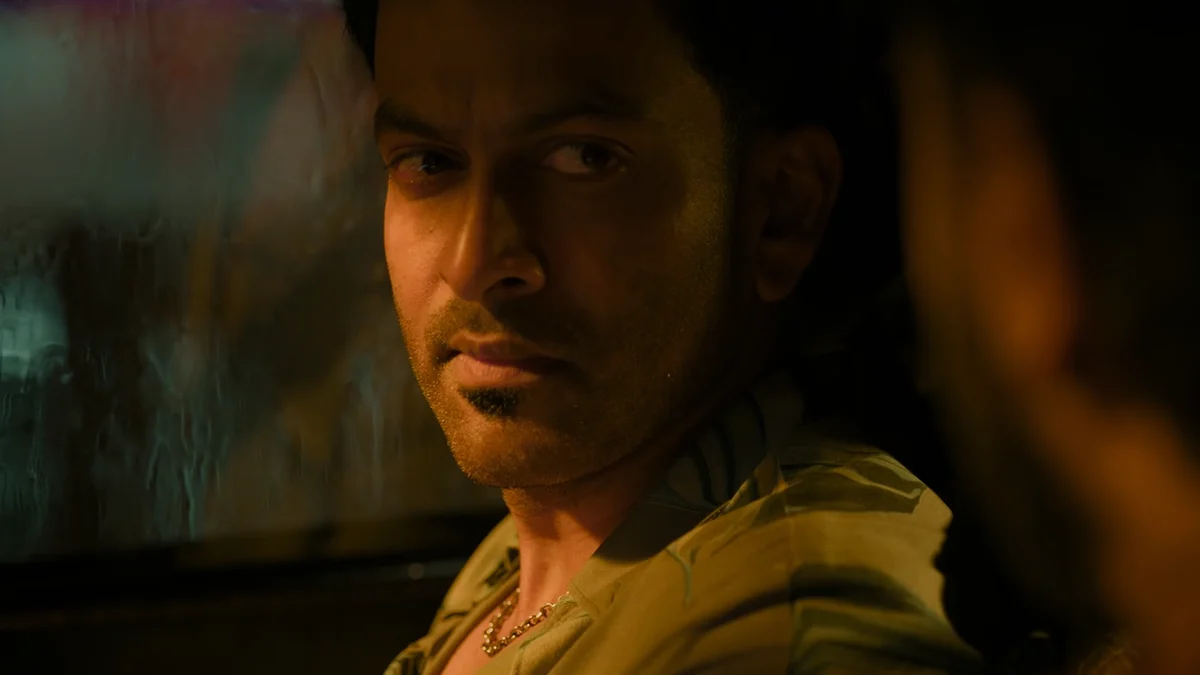
Kochi, Kerala – August 20, 2026 – Vysakh’s latest directorial venture, "Khalifa," starring Prithviraj Sukumaran in the titular role, attempts to chart a course through the treacherous waters of gold smuggling. The film hinges on a seemingly potent premise: a righteous businessman forced into illicit trade by the machinations of corrupt politicians, seeking to clear his honest father’s mounting debts. However, despite a compelling core concept and the star power of Sukumaran, "Khalifa" ultimately founders, its narrative weighed down by a lack of originality, underdeveloped characters, and an execution that feels decidedly out of its time.
The film presents Aamir Ali, portrayed by Prithviraj Sukumaran, as a man driven to extremes by circumstances beyond his control. The core of the film’s purported emotional resonance lies in this origin story, a tale of familial duty clashing with legal boundaries. The initial setup promises a gripping exploration of how an individual, when pushed to the brink, can transform into a formidable player in the shadowy world of smuggling. Yet, the screenplay, penned by Jinu Abraham, struggles to imbue this narrative with the requisite emotional depth or the edge-of-your-seat thrills that such a subject demands. Instead, the film often treads a familiar path, echoing a plethora of cinematic endeavors from the 1980s and 1990s, a stylistic echo that contributes significantly to its perceived dullness.
The Perilous Landscape of Gold Smuggling: A Narrative Rehashed
The world of "Khalifa" is populated by antagonists who are also entangled in the gold smuggling racket, a choice that writer Jinu Abraham attempts to leverage by drawing distinctions between "good" and "bad" smugglers. However, this distinction does little to salvage the narrative from its overarching predictability. The film’s most significant failing lies in its apparent disinterest in updating a well-worn cinematic template. Malayalam cinema, in particular, has explored the intricacies of smuggling narratives from nearly every conceivable angle. "Khalifa," by adhering so closely to established formulas, fails to offer any fresh perspectives or innovative approaches to the genre, rendering its central conflict disappointingly familiar.
Beyond a somewhat novel depiction of the operational methods employed by smugglers and a handful of reasonably well-executed action sequences, the film offers little in the way of groundbreaking elements. The narrative’s reliance on familiar tropes, from the morally conflicted protagonist to the archetypal corrupt officials, creates a sense of déjà vu that undermines any potential for genuine suspense or engagement. The pacing often falters, punctuated by moments that feel gratuitous rather than essential to the plot’s progression.
The Specter of the Superstar Cameo: A Double-Edged Sword
A significant factor contributing to the film’s lack of novelty is the much-hyped, yet ultimately anticlimactic, superstar cameo. This particular appearance, strategically placed towards the film’s latter half, arrives at a point where the narrative has largely reached its conclusion. Consequently, its impact on both the storyline and the audience’s overall experience is negligible. The cameo feels less like an integral plot device and more like a perfunctory addition, a narrative epilogue that, rather than enhancing the film, serves only to hint at the unsettling possibility of a sequel. Given the film’s lackluster reception, it is highly improbable that any member of the production team would willingly embark on such a misguided endeavor again.
The premature introduction of such a high-profile appearance, without sufficient narrative justification, detracts from the established characters and their arcs. It serves as a distraction rather than a culmination, leaving the audience with a sense of missed opportunity. The film would have benefited more from a robust and organically developed plot that could naturally accommodate such star power, rather than relying on it as a last-ditch effort to generate excitement.
Underdeveloped Antagonists and Lazy Writing: The Weakest Links
Even when setting aside the issue of originality, the film’s antagonist characters emerge as one of its weakest links. Harris Basheer, the rival smuggler played by Neil Nitin Mukesh, and the politician Raghavan, portrayed by Shammi Thilakan, never quite materialize as formidable adversaries for Aamir Ali. Throughout the film, Aamir consistently appears to be several steps ahead of them, diminishing the sense of threat and escalating the stakes. The conflicts that arise between them fail to generate anticipation or significant dramatic tension, contributing to the narrative’s overall sagging momentum.
Furthermore, a crucial plot point involving Aamir’s close friend and associate, Samad (Sanju Sivram), is sketchily written. The character’s motivations and role in the larger narrative remain underdeveloped, leaving the audience questioning his significance. In a desperate attempt to compensate for the perceived lack of drama and imagination, the filmmakers have woven in elements from recent real-world incidents. While this might have been intended to lend a sense of contemporary relevance, it ultimately betrays a sign of lazy writing, an uninspired shortcut to inject urgency where genuine narrative development is absent. This approach often feels forced and disconnected from the core story, further eroding the film’s credibility.

A Symphony of Tedium: Direction, Performances, and Technical Aspects
Neither the writing nor the staging of the sequences in "Khalifa" manages to produce memorable moments, which are vital for a film of this genre. The repetitive background score, characterized by its insistent and often jarring melodies, contributes significantly to the audience’s growing sense of agony. The recurring trope of characters engaging in "slow motion walks," intended to convey authority or gravitas, instead becomes an exercise in prolonged tedium.
Despite Prithviraj Sukumaran’s evident physical commitment to the role of Aamir Ali, his performance is ultimately constrained by the limitations of the screenplay. He imbues the character with a certain intensity, but the material itself offers little room for nuanced exploration. The female characters, though present, are largely relegated to the periphery. Mohini, as Aamir’s mother, and Malvika Sharma, as his wife, appear on screen for mere minutes, their roles too brief to leave any significant impression. Their limited screen time signifies a missed opportunity to explore the personal impact of Aamir’s dangerous profession on his family.
The film’s technical aspects, while not overtly flawed, fail to elevate the material. The cinematography, editing, and sound design, though competent, do not offer any distinctive flair or contribute to building atmosphere or suspense. They serve the story, but do not enhance it in any meaningful way. The film’s overall aesthetic feels generic, lacking the visual dynamism that could have potentially compensated for its narrative shortcomings.
The Illusion of Salvage: Cameos as a Crutch
The adage "If only a few late cameos could save every shoddily-written movie" perfectly encapsulates the prevailing sentiment surrounding "Khalifa." The film seems to rely on the star power of its cameo appearances to inject a semblance of excitement, a strategy that has proven to be largely ineffective. Such cameos, when not organically integrated into the narrative, often feel like superficial attempts to appease the audience or to generate buzz, rather than serving a genuine storytelling purpose.
The film’s runtime of 159 minutes also contributes to its languid pacing. The extended duration could have been utilized for deeper character development or for building a more intricate plot, but instead, it feels stretched and often repetitive. The narrative struggles to maintain a consistent tempo, with certain sections dragging considerably, further testing the patience of the viewer.
Conclusion: A Missed Opportunity in the Smuggling Genre
In its entirety, "Khalifa" represents a significant missed opportunity. The premise held promise, and Prithviraj Sukumaran is a capable lead, but the film’s adherence to outdated narrative structures, underdeveloped characters, and an overall lack of originality render it a forgettable entry in the Malayalam film industry. While it attempts to explore the complexities of desperation and the moral compromises it can engender, it fails to deliver a compelling or engaging cinematic experience. The film ultimately succumbs to its own predictable plotting and a style that feels anachronistic, leaving audiences yearning for the thrill and novelty that the world of smuggling narratives can offer. "Khalifa" sails into theaters, but its voyage is marred by a lack of direction, ultimately failing to reach its intended destination of cinematic success.
Khalifa (Malayalam)
- Director: Vysakh
- Cast: Prithviraj Sukumaran, Neil Nitin Mukesh, Malvika Sharma, Suresh Oberoi, Mohini, Renji Panicker, Indrans, Mohanlal
- Runtime: 159 minutes
- Storyline: After his businessman father faces a crisis, Aamir Ali steps into the world of gold smuggling.
Khalifa is currently running in theatres.
