

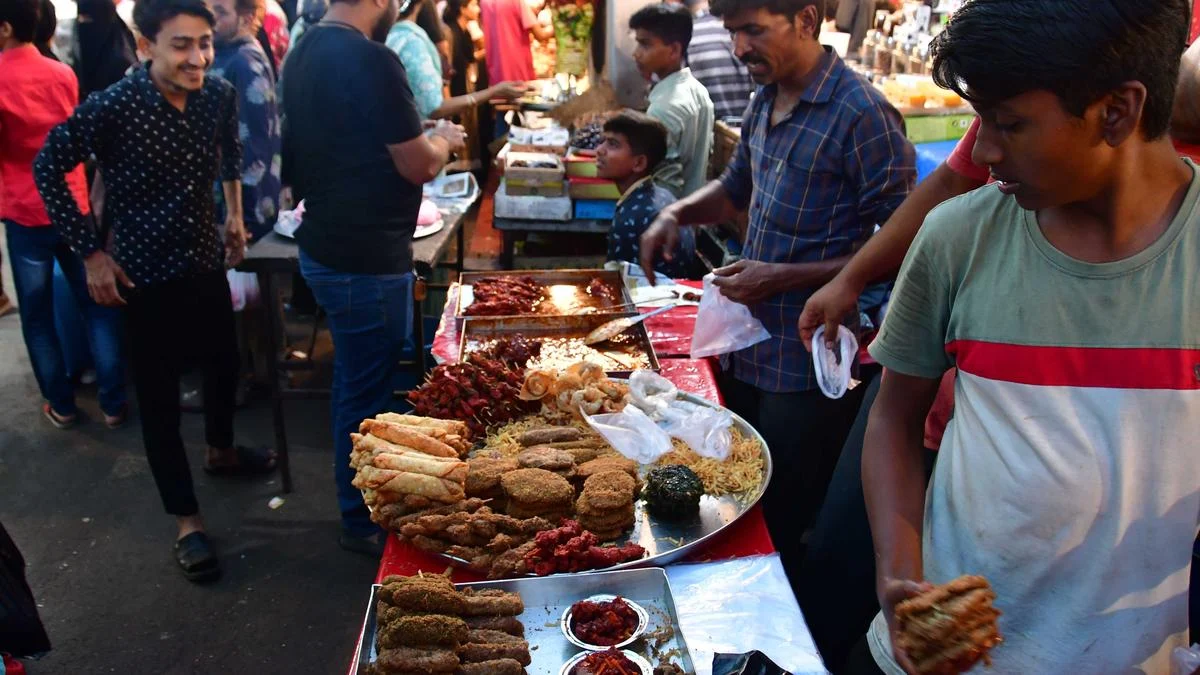
The city of Mumbai has long been a Muse for the literary and artistic world. From the gritty noir of Suketu Mehta’s Maximum City to the sweeping historical fiction of Rohinton Mistry and the cinematic tapestries of Anurag Kashyap, the "Urbs Prima in Indis" has been dissected, mythologized, and romanticized in almost every conceivable medium. To enter this crowded arena in 2024 with a new narrative requires more than just research; it requires what critics call "bravery" or a profound, almost obsessive, love.
Meher Mirza’s latest work, Sea, Salt and Spice: A History of Mumbai Through Food, published by HarperCollins India, attempts this daunting feat. Rather than a dry academic recitation of dates and dynasties, Mirza presents a "love letter" to the city, framed through the sensory and sociological lens of its kitchens, markets, and street stalls. This 1,200-word analysis explores the depth of Mirza’s achievement, the chronological evolution of Mumbai’s palate, and the broader implications of food as a historical document.
Main Facts: A Gastronomic Biography of Mumbai
At its core, Sea, Salt and Spice is an ambitious attempt to map the evolution of Mumbai from a cluster of seven marshy islands into a global financial powerhouse, using food as the primary waypoint. Mirza, a seasoned food and travel writer, eschews the traditional "great man" theory of history in favor of a more democratic approach: the history of the people, told through what they ate, how they cooked it, and who they shared it with.
The book is priced at ₹999 and serves as a comprehensive archive, yet it maintains a prose style that is both erudite and accessible. Mirza’s central thesis is that food is the ultimate "love language" of the Indian subcontinent, and in Mumbai—a city defined by waves of migration—food becomes the primary medium through which identities are forged, defended, and blended.
The work is notable for its refusal to stick to elite narratives. While it covers the banquets of the British Raj, it gives equal weight to the khanawalis (women-run eating houses for mill workers), the dabbawalas, and the humble street-side innovations that have come to define the city’s contemporary "vibe."
Chronology: From Ancient Spices to Modern Fine Dining
Mirza’s narrative arc is vast, spanning over three millennia. The book structures the city’s history into several distinct epochs, each defined by a shift in culinary influence.
The Ancient Entrepôt (1213 BCE – 1000 CE)
The history begins not with the British or the Portuguese, but with the monsoon winds. Mirza tracks Egyptian merchants who, as early as 1213 BCE, were sourcing spices from the Indian subcontinent. The most striking piece of evidence cited is the use of peppercorns to stuff the nostrils of Rameses II during mummification. This indicates that even in antiquity, the region that would become Mumbai was a vital node in global trade, an "entrepôt" where the world came to shop.
The Medieval Palate (1129 CE)
Moving into the medieval era, Mirza highlights the Manasollasa, a 1129 CE text attributed to King Someshvara III. This document is a revelation for culinary historians, containing a chapter titled ‘Annabhoga.’ It describes dishes that are recognizably the ancestors of modern-day staples: idlis, dosais, puris, laddus, and dahi vada. This section anchors Mumbai’s food history in a deep indigenous tradition that predates colonial intervention.
The Colonial Transformation (1534 – 1947)
The arrival of the Portuguese brought chillies, tomatoes, and potatoes—ingredients now considered "traditionally" Indian. However, Mirza focuses heavily on the British era in a section titled "The Edible Empire." She notes the establishment of the city’s first tavern by John Wright in 1694, marking the beginning of a public dining culture that was often "rowdy" and masculine. By the 19th century, this evolved into the exclusive, segregated spaces of the Byculla Club and other colonial institutions.
The Post-Independence Metamorphosis
The 20th century brought the dual pressures of Independence and industrialization. Mirza explores the impact of food shortages, the "Grow Your Own Food" campaigns, and the rise of communal dining spaces. This era saw the flourishing of Irani cafes and the "Hindu hotels," which mirrored the sociological shifts of a young nation finding its footing.
Supporting Data: Unorthodox Sources and Sociological Insights
What sets Sea, Salt and Spice apart from standard histories is Mirza’s reliance on "delightfully unorthodox authorities." Rather than relying solely on official government gazettes, Mirza mines:
- Letters to the Editor: Public grievances about the quality of bread or the price of fish.
- Emigrating Ladies’ Handbooks: Instructional manuals for British women moving to the colonies, offering a glimpse into domestic life and the "servant-employer" dynamics of the kitchen.
- Vintage Advertisements: Tracking the introduction of processed foods and the commercialization of the Mumbai kitchen.
- Poetry and Fiction: Using the creative arts to capture the "smell" and "feel" of the city’s markets.
The Sociology of the Plate
Mirza is at her most poignant when discussing the intersection of food, caste, and religion. She provides data on the "Hindu hotel" phenomenon—establishments that explicitly catered to caste-based dietary restrictions—and the subtle segregation found in Irani cafes, such as the use of different glassware for different communities.
She also traces the migratory data of South Indians moving to Mumbai, explaining why coffee—despite being introduced much earlier by Muslim traders from Aden—only gained a cultural foothold when the southern diaspora established its own enclaves within the city.
Critical Reception and "Official" Responses
While the book has been hailed as a future classic, critical analysis from historians and literary reviewers has highlighted both its brilliance and its minor logistical hurdles.
The Digital Divide in Citations
One point of contention among traditionalists is Mirza’s use of QR codes for annotations. Due to the sheer volume of cross-referencing, the physical book could not contain all the citations. Readers must scan a code to access the bibliography on the publisher’s website. While modern, some critics find this "disruptive" to the reading experience, arguing that a history of this magnitude deserves the permanence of printed footnotes.
Linguistic Dissonance
Reviewers have noted a curious stylistic choice: the use of modern internet slang. Specifically, the use of the term "main character energy" in a chapter heading has been described by some as "dissonant" with the book’s otherwise scholarly and elegant tone. However, others argue this reflects the city’s own nature—a place that is simultaneously ancient and hyper-modern.
The Spatial Gap
A common critique from non-residents is the lack of contemporary maps. While Mumbaikars can easily visualize the transition from Byculla to Bandra, outsiders may find the geographical shifts difficult to follow without a visual schematic of the seven islands’ evolution into a contiguous landmass.
Implications: Food as a Tool for Urban Preservation
The publication of Sea, Salt and Spice has broader implications for how we understand urban history in India.
1. Reclaiming the Narrative
By focusing on trade and food, Mirza moves the conversation away from a purely Eurocentric view of Mumbai’s origins. She proves that the city was a thriving economic hub long before the British arrived, driven by the demands of the global spice trade.
2. The Preservation of "Intangible Heritage"
As Mumbai undergoes rapid redevelopment, many of the old khanawalis, Irani cafes, and traditional markets are disappearing. Mirza’s book acts as a formal record of this "intangible heritage." It preserves the recipes, the social customs, and the linguistic quirks of a culinary world that is under threat from globalized fast-food culture.
3. Understanding Contemporary Dining
The book provides the "umbilical cord" that connects ancient spice routes to modern culinary icons like Rahul Akerkar’s Indigo or the late Floyd Cardoz’s The Bombay Canteen. It explains why Mumbai eats the way it does today—showing that a modern fusion dish is not just a trend, but the latest chapter in a 3,000-year-old story of cultural exchange.
Conclusion: A Book for the Ages
Meher Mirza’s Sea, Salt and Spice is more than a history book; it is a vital piece of cultural reportage. Despite minor quibbles regarding its digital citations and modern slang, the work stands as a monumental achievement in Indian non-fiction.
For the resident Mumbaikar, it is a mirror reflecting their own daily rituals. For the outsider, it is a map into the soul of a city that can often feel impenetrable. As long as the Arabian Sea laps against the shores of Marine Drive, Mirza’s account will remain a primary source for anyone seeking to understand the "salt" that gives Mumbai its flavor. It is a book to be, as the reviewer suggests, "dipped into, nibbled at, or consumed in large chunks"—much like the city itself.
