

In an era increasingly defined by the blurring lines between digital existence and physical reality, a recent collaboration between reality television mogul Kylie Jenner and tech titan Meta has ignited a fervent debate, drawing sharp criticism and raising profound questions about personal privacy in the age of omnipresent surveillance. In June, Jenner unveiled her latest venture on social media: a new design for Meta’s AI-powered "smart glasses." The internet was promptly flooded with images of the celebrity sporting the sleek eyewear, an aesthetic endorsement that, for many, was immediately juxtaposed with old videos of a younger Jenner lamenting the relentless lack of privacy afforded by her stratospheric fame. The irony, poignant and undeniable, resonated deeply: how could a figure once so vocal about the erosion of her personal space now actively promote a device that, by its very design, facilitates covert recording and data collection?
This episode is more than just a celebrity endorsement gone awry; it serves as a stark illustration of smart glasses representing the latest, and arguably most insidious, frontier in wearable technology. It also stands as a dangerous testament to the alarming chasm between rapid technological innovation and the lagging legal frameworks struggling to keep pace, leaving citizens vulnerable in the wake of advancing digital capabilities.
Beneath the "Normal-Looking Eyewear": Decoding Meta’s Discreet Surveillance Devices
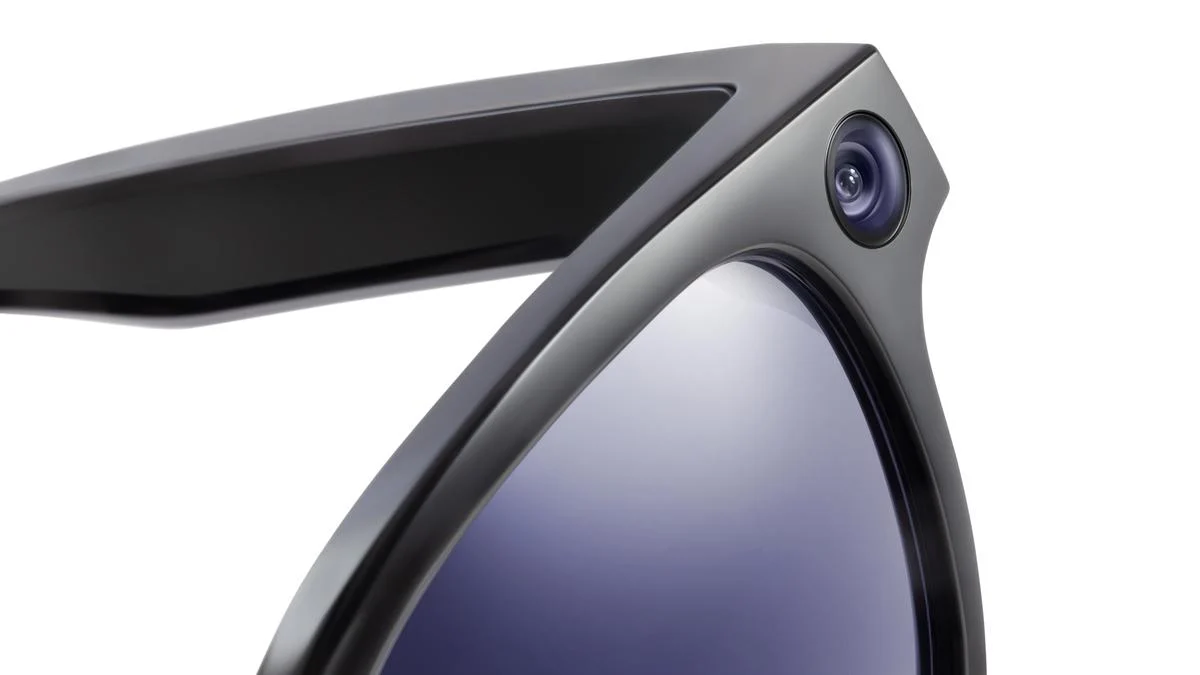
Meta’s smart glasses are marketed as an extension of one’s digital life, seamlessly integrated into everyday eyewear. According to Meta’s promotional materials, these glasses empower users to manage calls, messages, and notifications through intuitive voice commands. Built-in speakers facilitate private listening to music or podcasts, while an integrated camera allows for the capture of photos and videos directly through the lenses. Meta’s description of these devices is particularly telling: "normal-looking eyewear with discreetly integrated glasses technology." The emphasis is consistently placed on their inconspicuous nature, a design philosophy that intentionally renders their advanced capabilities virtually invisible to the naked eye. Within their seemingly innocuous frames lie "tiny speakers, microphones, [and] a lightweight camera," all designed to operate without drawing attention. Far from shying away from the covert nature of these features, the tech giant actively flaunts it as a key selling point, promoting an aesthetic of subtlety that inherently conceals their surveillance potential.
The implications of such "discreet" technology are manifold. While offering convenience to the wearer, they simultaneously introduce an unprecedented level of ambiguity and vulnerability for those in their vicinity. The very essence of the product — its ability to record and transmit data without obvious indicators — shifts the power dynamic significantly, placing the unconsenting subject at a profound disadvantage. This design choice, whether intentional or not, positions the glasses as a tool ripe for unintended, or even malicious, exploitation, challenging the fundamental right to privacy in public and increasingly, private spaces.
A Pandora’s Box of Privacy Breaches: Unpacking the Data Security Risks
In India, these highly advertised smart glasses retail at approximately ₹25,000, making them an accessible piece of advanced technology for a significant segment of the population. Alongside their widespread availability, an unsettling cottage industry has emerged: stickers claiming to completely obscure the tiny LED recording indicator are also widely available. Meta purports that if this LED is covered, the glasses will automatically block recording until the obstruction is removed. However, the efficacy of such a safeguard is highly questionable, with readily available "workarounds" merely a simple Google search away, demonstrating the ease with which this minimal protective measure can be bypassed. Furthermore, the glasses are designed to emit a subtle shutter sound when recording begins and ends. Yet, this auditory cue is often too faint or easily masked by ambient noise to serve as a reliable indicator that one is being recorded, especially in bustling public environments or even quieter, more intimate settings.
Meta’s official stance is that these glasses are "designed for privacy, controlled by you." This assertion, however, immediately raises a critical distinction: the "control" is exclusively afforded to the wearer of the glasses, not to the recorded subject. While the device might require additional verification from the user before active use, this internal control mechanism offers no agency or awareness to individuals who may unknowingly be captured by the lenses. This fundamental imbalance in control underscores a significant ethical dilemma, placing the onus of privacy entirely on the person operating the device, rather than guaranteeing the privacy rights of those being observed.
Meta’s Data Collection Practices Under Scrutiny
Beyond the immediate recording capabilities, the broader data collection practices associated with Meta’s smart glasses present another layer of profound concern. The company’s website explicitly states, "Meta collects data needed to help ensure that your glasses and app are reliable, secure and operating normally." While framed as a benign operational necessity, the scope and handling of this collected data have come under severe scrutiny. An investigation conducted by the prominent Swedish newspapers Svenska Dagbladet and Goteborgs-Posten unearthed disturbing findings. Their inquiry revealed that Meta’s contracted workers, tasked with reviewing user experience data, were able to view highly sensitive content filmed on the smart glasses. Alarmingly, this included instances of wearers using the toilet, exposing deeply personal and private moments to third-party scrutiny. In response to these revelations, Meta issued a comment to BBC News, asserting that its privacy policy transparently states its practice of sometimes utilizing contractors to review data shared with them. This defense, while technically within the bounds of their stated policy, does little to assuage the ethical implications of such intimate data being accessible, even by "contracted workers," highlighting a significant breach of trust and a potential disregard for the deeply personal nature of user-generated content.
Amplifying Existing Threats: Vulnerabilities for Women and Children
In this landscape of inconspicuous recording and pervasive data collection, concerns about the privacy and safety of vulnerable populations, particularly women and children, have escalated dramatically. Statistics from India’s National Crime Records Bureau (NCRB) paint a grim picture of pre-existing digital vulnerabilities. In 2023, even before smart glasses gained significant market penetration, the NCRB recorded a staggering 3,678 cases of women-centred cybercrimes. Of these, a substantial 2,767 cases involved the transmission or publication of sexually explicit material without consent. The introduction of smart glasses into this environment has the potential to catastrophically exacerbate these figures. Imagine the ease with which these devices could be used to record individuals without their knowledge, not only in public spaces but, more chillingly, within ostensibly private environments where a sense of security is typically assumed. The risk of non-consensual image sharing, cyberstalking, and voyeurism becomes exponentially higher when recording devices are virtually undetectable.
The potential risks to children are equally, if not more, alarming. In the same year, 2023, the NCRB documented over 698 cases related to the use or storage of child sexual abuse material. Given that many adults struggle to discern when smart glasses are actively recording, it is unequivocally clear that a child would possess virtually no capacity to recognize or protect themselves from such surveillance. The innocuous appearance of these devices could easily disarm both children and their guardians, making them unwitting subjects of potentially harmful content capture. The psychological impact of such privacy invasions, particularly on younger individuals, can be profound and long-lasting, fostering an environment of mistrust and fear in an increasingly monitored world.
The Pervasive Reach: Extended Battery Life, Extensive Data Capture
The operational capabilities of these smart glasses further compound the privacy concerns. With a reported battery life offering 4-9 hours of active use, the devices possess an alarming capacity for sustained, covert recording. This extended operational window means that entire feature films could be recorded surreptitiously in cinemas, university lectures taped without the lecturer’s consent, confidential documents scanned in corporate or legal settings, and sensitive patient information collected within healthcare environments. The ramifications extend beyond deliberate malicious intent. Even individuals not actively seeking to engage in malpractice could inadvertently do so by capturing something private in the periphery of their frame – a confidential conversation, a private moment, or sensitive data displayed on a screen. Ultimately, the cumulative effect of these features is the facilitation of extensive, non-consensual data collection, fundamentally altering the landscape of public and private interactions and eroding the very notion of personal space.
India’s Legal Framework: A Lagging Response to Cutting-Edge Tech
The rapid evolution of technologies like smart glasses highlights a critical deficiency in India’s current legal architecture. The Digital Personal Data Protection Act, 2023 (DPDPA), while a significant step towards data privacy, is fundamentally "technologically agnostic." This means its primary focus is on the purpose of data collection, rather than the method or device used. This approach, while aiming for broad applicability, inadvertently creates loopholes when confronting devices designed for inconspicuous recording. In a public space, for instance, individuals are largely unable to grant explicit consent for data collection, nor can they effectively monitor how their information is being used, processed, or stored. The inherent invisibility of smart glasses renders the DPDPA’s consent-based framework largely ineffectual in such scenarios.
Undermining "Reasonable Expectation of Privacy"
India’s legal landscape regarding privacy was significantly shaped by the landmark K.S. Puttaswamy vs. Union of India judgment in 2017, which unequivocally recognized the "reasonable expectation of privacy" as a fundamental right enshrined under Article 21 of the Constitution. This judgment implied that individuals, even in public spaces, generally do not expect to be captured in minute detail or subjected to indiscriminate surveillance. However, the DPDPA, in a problematic clause, explicitly excludes information that is "made publicly available" from its purview. This exclusion directly clashes with the spirit and intent of the Puttaswamy judgment. The "reasonable expectation of privacy" that the Supreme Court sought to protect is undermined because the Act fails to regulate how someone is recorded in public, particularly when the recording device is designed to be invisible.
The Act’s scope is further diluted by the minimal indicators associated with smart glasses. Unlike a person openly recording with a smartphone, where their intent is usually clear, smart glasses provide virtually no visible cues that one might be in someone’s frame. This crucial difference creates a legal blind spot, allowing for covert recording that bypasses the spirit of privacy protection that the DPDPA, and indeed the Puttaswamy judgment, aimed to uphold. Without a clear and enforceable mechanism to detect and consent to being recorded, the promise of privacy remains largely theoretical.
The Perfect Storm: Innovation, Ignorance, and Inaction
This confluence of rapid technological innovation, a noticeable absence of specific legal regulation tailored to these new devices, and a pervasive lack of public awareness creates what can only be described as a perfect storm. As devices like smart glasses become increasingly commonplace, countless individuals may be collecting vast amounts of information with little to no understanding of where that data is stored, how it is processed, or for what purposes it might ultimately be used. The casual, almost unconscious act of recording through seemingly innocuous eyewear could lead to unforeseen consequences, ranging from minor privacy infringements to significant data breaches and potential misuse of sensitive information. Without robust legal safeguards specifically addressing the unique challenges posed by these "invisible" recording devices, the concept of digital accountability risks becoming a mere afterthought, leaving citizens exposed and unprotected in the ever-expanding digital frontier. The onus cannot solely be on individual users to understand and navigate the complex ethical and legal landscape of such technologies; rather, systemic protections are urgently required.
Charting a Forward Path: Beyond Bans, Towards Proactive Regulation
While the privacy concerns are undeniably grave, a blanket ban on such devices is neither practical nor desirable from a business or technological standpoint. The market for smart glasses is not limited to Meta; global tech giants like Google and major Indian players such as Reliance are also making significant inroads into this burgeoning market. As wearable technology continues its relentless march towards greater sophistication and integration into daily life, attempting to prohibit its development or use will become increasingly difficult, akin to trying to halt the tide. Such a reactive approach would stifle innovation and likely prove ineffective in the long run, as demand for cutting-edge technology remains robust.
Instead, the imperative lies in developing proactive and future-proof legal frameworks. Laws must be framed with a profound and nuanced understanding of how artificial intelligence and advanced sensors are fundamentally changing the technological landscape. This requires a shift from reactive legislation to anticipatory governance. There is an urgent need for comprehensive assessments on how new technologies, particularly those with recording and data collection capabilities, are likely to evolve, identifying potential risks to individual privacy, societal norms, and national security well in advance. Crucially, the government bears an undeniable responsibility in ensuring that its citizens are adequately protected in this new digital era. This involves not only crafting robust legislation but also investing in public awareness campaigns to educate individuals about the capabilities and risks associated with emerging technologies.
Furthermore, the tech industry itself has a critical role to play. Companies developing these devices must adopt ethical design principles that prioritize privacy by design, building in safeguards and transparent indicators from the outset, rather than relying on afterthoughts like easily circumvented LED stickers. This includes clearer communication about data collection, processing, and storage, and offering users more granular control over their data, extending beyond just the wearer to those who might be inadvertently recorded. International collaboration among regulatory bodies could also help establish global best practices and standards for privacy in wearable tech, ensuring a more harmonized approach to these complex challenges.
Conclusion: Reclaiming Privacy in an Always-On World
The saga of Kylie Jenner’s endorsement of Meta’s smart glasses serves as a potent microcosm of a much larger societal challenge: how to reconcile the relentless march of technological innovation with the fundamental human right to privacy. These discreet, AI-powered devices represent a significant leap in pervasive surveillance capabilities, threatening to dismantle established notions of personal space and consent in both public and private spheres. The unmissable irony of a celebrity, once vocal about her own lack of privacy, promoting such a device, underscores the complex ethical tightrope the digital age forces us to walk.
As India’s legal frameworks struggle to keep pace with these advancements, a dangerous vacuum has emerged, leaving citizens vulnerable to potential misuse of their most personal data. The current laws, particularly the DPDPA, while well-intentioned, fall short in addressing the unique challenges posed by technologies designed for covert recording, effectively undermining the "reasonable expectation of privacy" enshrined by landmark judgments.
The path forward is not through prohibition, which is both impractical and counterproductive. Instead, it demands a sophisticated, multi-pronged approach: proactive, AI-informed legislation that anticipates future technological trends; robust risk assessments that prioritize citizen protection; and a concerted effort from both governments and industry to foster greater transparency and ethical design. Ultimately, safeguarding privacy in an "always-on" world requires a collective commitment – from lawmakers to tech developers and individual citizens – to ensure that innovation serves humanity without inadvertently eroding the very freedoms it purports to enhance. The time for digital accountability is now, before the silent click of a smart lens irrevocably alters the fabric of our personal and societal lives.
