India’s automotive landscape is currently navigating one of the most transformative eras since the liberalization of the 1990s. As the world’s third-largest automobile market, the nation finds itself at a critical crossroads, balancing the urgent need for decarbonization with the economic imperative of reducing a staggering reliance on imported crude oil. While battery electric vehicles (BEVs) have dominated the headlines, a more pragmatic and immediate solution is emerging from the workshops of India’s largest carmaker.
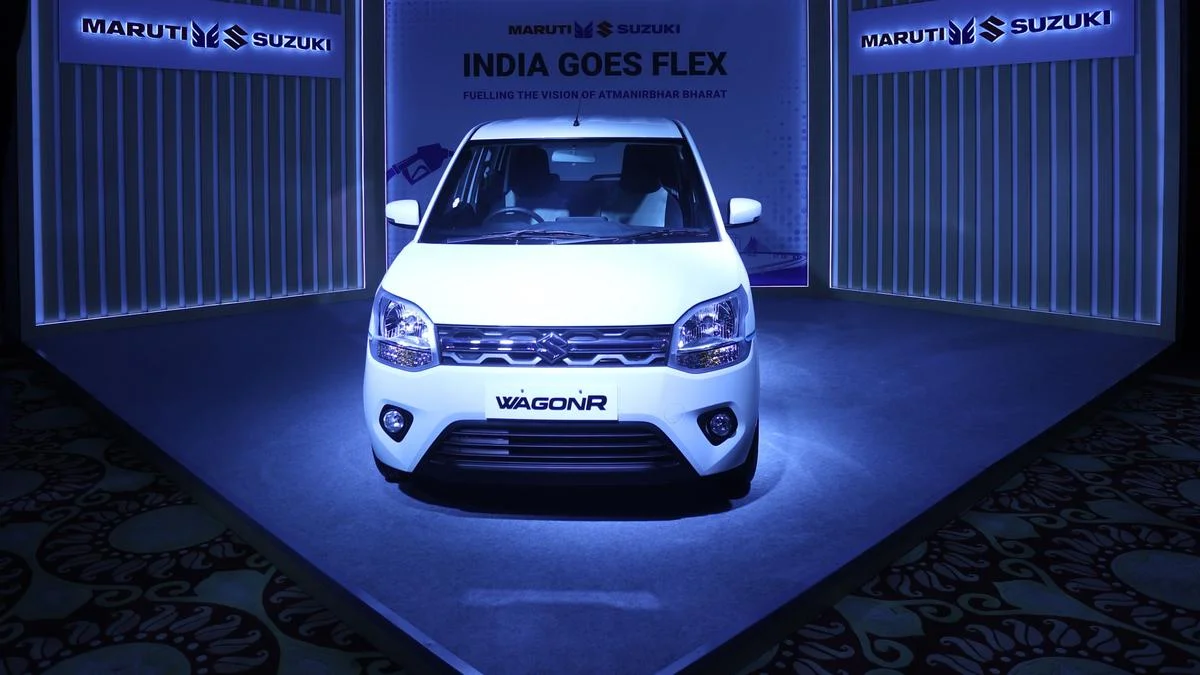
The unveiling of the Maruti Suzuki Wagon R Flex Fuel represents more than just a new variant of a popular hatchback; it signifies a strategic pivot in India’s long-term mobility roadmap. By engineering a mass-market vehicle capable of running on ethanol blends ranging from E20 to E100, Maruti Suzuki is signaling that the internal combustion engine (ICE) still has a vital role to play—provided it can adapt to a greener, more self-reliant fuel ecosystem.
Main Facts: Breaking Down the Wagon R Flex Fuel Technology
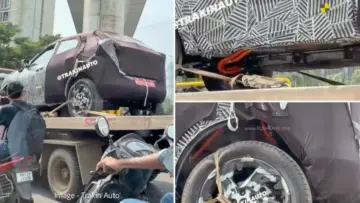
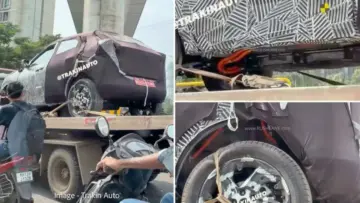
At first glance, the Maruti Suzuki Wagon R Flex Fuel retains the familiar "tall-boy" silhouette that has made it a staple on Indian roads for decades. However, the engineering beneath the hood represents a fundamental departure from standard petrol-powered vehicles.
The Engine and ECU
The heart of the Wagon R Flex Fuel is a modified version of Maruti’s K-Series engine, specifically re-engineered to handle the chemical properties of ethanol. Ethanol is more corrosive than petrol and has a lower energy density, which necessitates several hardware and software modifications.
The most critical component is the advanced Engine Control Unit (ECU). This system acts as the "brain" of the vehicle, equipped with sensors that continuously monitor the ethanol-to-petrol ratio in the fuel tank. Whether the driver fills up with E20 (20% ethanol, 80% petrol) or E100 (pure ethanol), the ECU instantaneously adjusts the ignition timing and fuel injection parameters to ensure optimal combustion and performance.
Material Upgrades
Beyond the software, the physical components of the fuel system have undergone rigorous upgrades. Ethanol is hygroscopic (it absorbs water) and can be abrasive to standard rubber and plastic components. To counter this, Maruti Suzuki has utilized specialized materials for the fuel pump, fuel injectors, and fuel lines. The engine valves and valve seats have also been reinforced to withstand the different combustion temperatures associated with high-ethanol blends.
Market Positioning
Maruti Suzuki has strategically chosen the Wagon R for this technology. By integrating flex-fuel capabilities into a vehicle expected to be priced between INR 7.50 and 8.00 lakh, the company is targeting the heart of the Indian middle class. This is not a niche luxury experiment; it is a bid to mainstream alternative fuels.

Chronology: The Evolution of India’s Ethanol Ambitions
To understand the significance of the Wagon R Flex Fuel, one must look at the timeline of India’s fuel policy evolution.
- Early 2000s: India began tentative experiments with 5% ethanol blending (E5) in select states, primarily as a way to support the sugar industry. However, inconsistent supply hindered progress.
- 2018: The National Policy on Biofuels was introduced, setting an ambitious target of 20% ethanol blending by 2030.
- 2021: Observing the rapid progress in the sugar sector and the rising oil import bill, the Indian government advanced the E20 target from 2030 to 2025.
- 2022-2023: Maruti Suzuki showcased its first flex-fuel prototype at the SIAM (Society of Indian Automobile Manufacturers) Ethanol Exhibition. Simultaneously, the government began the rollout of E20 fuel at select petrol pumps across the country.
- 2024: The showcase of the production-ready Wagon R Flex Fuel marks the transition from "proof of concept" to "market readiness," aligning with the government’s push for E100 availability in the near future.
Supporting Data: The Economic and Environmental Rationale
The push for flex-fuel technology is driven by a set of compelling data points that highlight India’s unique economic position.
Energy Security and the Import Bill
India currently imports over 85% of its crude oil requirements. In the 2022-2023 fiscal year, the oil import bill exceeded $150 billion. According to government estimates, achieving the E20 blending target alone could save the country approximately INR 30,000 crore (roughly $3.6 billion) in foreign exchange annually. Moving toward E85 and E100 would exponentially increase these savings.
The Agrarian Connection
Unlike lithium-ion batteries, which require minerals India largely lacks, ethanol is "homegrown." It is primarily derived from sugarcane, broken rice, and other food grains.
- Surplus Management: India often produces a surplus of sugar. Diverting this excess to ethanol production helps stabilize sugar prices and ensures timely payments to millions of farmers.
- Economic Impact: The biofuel industry is projected to create thousands of jobs in rural India, shifting the energy economy from global oil cartels to local agricultural districts.
Emissions Profile
While not "zero-emission" like EVs, flex-fuel vehicles offer a significant reduction in tailpipe emissions compared to pure petrol engines. Ethanol is an oxygenated fuel, leading to more complete combustion. Studies indicate that E100 can reduce Carbon Monoxide (CO) emissions by up to 30-40% and Hydrocarbon (HC) emissions by nearly 20% compared to conventional gasoline.
Official Responses: Aligning Corporate Strategy with National Policy
The development of the Wagon R Flex Fuel is a direct response to the government’s "Atmanirbhar Bharat" (Self-Reliant India) initiative.
Government Stance:
The Ministry of Road Transport and Highways (MoRTH), led by Minister Nitin Gadkari, has been a vocal proponent of flex-fuel technology. The Ministry has frequently urged manufacturers to look at Brazil as a model, where flex-fuel vehicles account for over 80% of new car sales. The government has signaled that it will provide the necessary policy support, including potential GST (Goods and Services Tax) rationalization for flex-fuel vehicles, to make them competitive with petrol and CNG variants.

Maruti Suzuki’s Corporate Vision:
Hisashi Takeuchi, Managing Director & CEO of Maruti Suzuki India, has emphasized that the company’s strategy is "multi-path." While the company is preparing its first electric SUV for 2025, it maintains that a country as diverse as India cannot rely on a single technology. Maruti’s leadership views flex-fuel as a bridge that allows the existing ICE infrastructure to become sustainable without requiring the massive capital expenditure of a nationwide fast-charging network.
Implications: Challenges and the Road Ahead
Despite the technical readiness of the Wagon R Flex Fuel, the path to widespread adoption is fraught with challenges that both the industry and the government must address.
The Infrastructure Gap
While ethanol can leverage the existing fuel distribution network better than electricity, it requires dedicated tanks and nozzles at petrol pumps to prevent cross-contamination. As of now, the availability of E100 is virtually non-existent, and even E20 is still in the process of a nationwide rollout. Without a "fuel-first" approach, consumers will be hesitant to purchase flex-fuel vehicles.
The Consumer Trust Deficit
A significant hurdle is public education. There is a lingering perception among car owners that ethanol blends can damage engines or reduce fuel efficiency. Ethanol has roughly 33% less energy content than petrol by volume, meaning a car running on E100 will likely see a 20-25% drop in mileage.
- The Price Incentive: For flex-fuel to succeed, the price of ethanol at the pump must be significantly lower than petrol to compensate for the lower mileage. If the government does not price ethanol attractively, the total cost of ownership (TCO) for a flex-fuel vehicle may not appeal to the budget-conscious Indian buyer.
Maintenance and Longevity
The automotive industry must be transparent about maintenance schedules. High-ethanol fuels require more frequent oil changes and specific checks on the fuel system. Maruti Suzuki will need to leverage its vast service network—the largest in India—to educate mechanics and customers alike on the nuances of flex-fuel upkeep.
Environmental Trade-offs
Critics of ethanol often point to the "water-food-energy" nexus. Sugarcane is a water-intensive crop. In a water-stressed country like India, scaling up ethanol production to meet E100 demand for millions of cars could put a strain on water resources. The second generation (2G) of ethanol, produced from agricultural waste like parali (stubble), will be crucial to making the technology truly sustainable.
Conclusion: A Multi-Modal Future
The Maruti Suzuki Wagon R Flex Fuel is a testament to engineering adaptability. It proves that the transition to green mobility does not have to be a "one-size-fits-all" race toward electrification. By offering a vehicle that can run on any blend of ethanol, Maruti is providing a safety net for the consumer—allowing them to use standard petrol today while being ready for the high-ethanol fuels of tomorrow.

However, the success of this "Green Hatchback" will not be determined in the factory, but at the fuel pump and in the legislative halls of New Delhi. If the ecosystem—comprising fuel pricing, infrastructure, and consumer awareness—can evolve at the same pace as Maruti’s engineering, flex-fuel technology could very well become the backbone of India’s decarbonization strategy.
The Wagon R Flex Fuel is a bold first step. It signals that the roar of the internal combustion engine is not fading away; it is simply learning to breathe a different, cleaner air.
Maruti Suzuki Wagon R Flex Fuel expected price: (INR 7.50 – 8.00 lakh)
Motorscribes, in association with The Hindu, brings you the latest in cars and bikes. Follow them on Instagram @motorscribes