

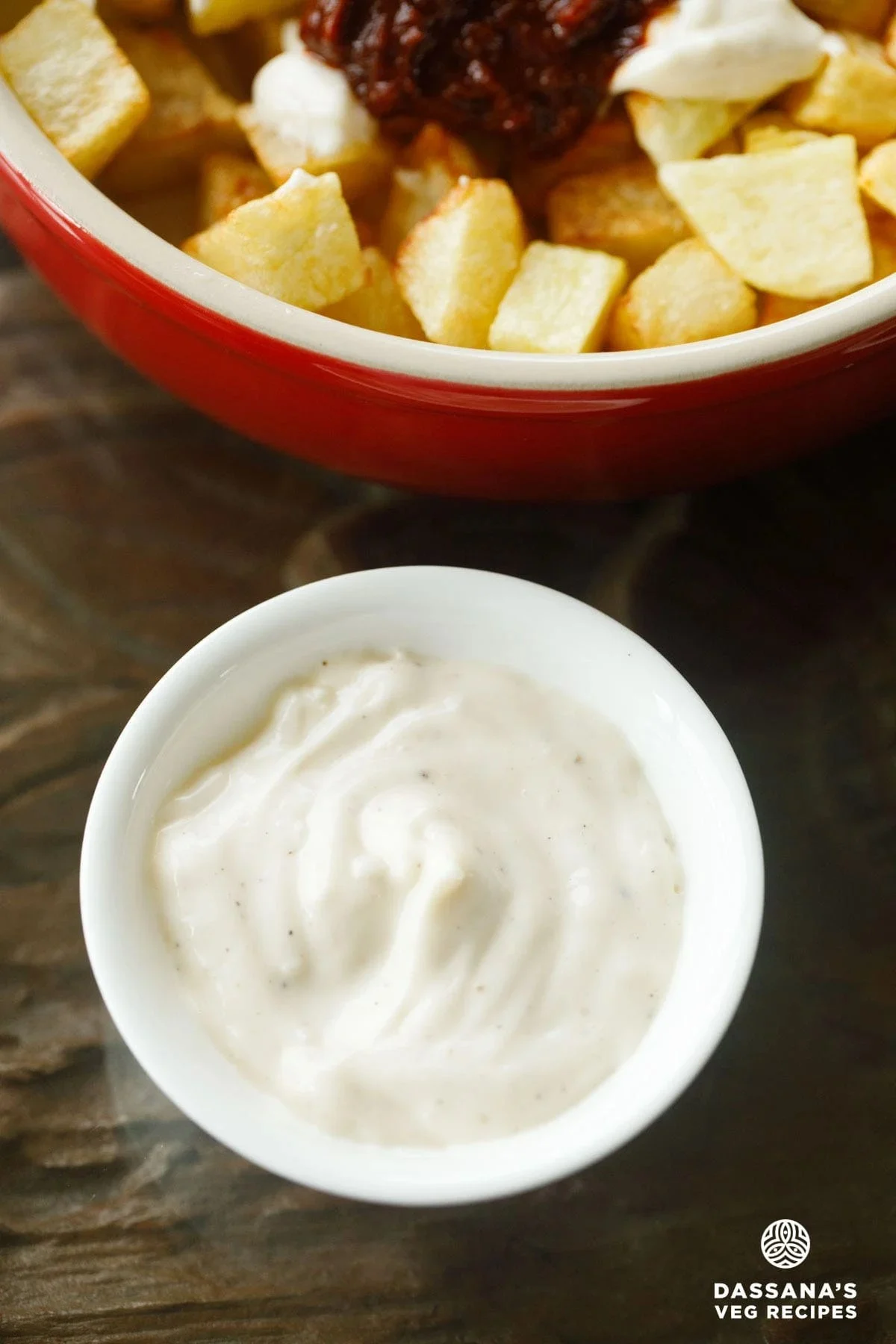
In the contemporary culinary landscape, where the line between professional kitchens and home cooking continues to blur, the demand for "shortcut gourmet" has reached an all-time high. Leading this movement is Dassana Amit, a Le Cordon Bleu-trained pastry chef and recipe developer, whose latest iteration of Garlic Aioli provides a case study in how simplicity can yield professional-grade results. By pivoting away from the labor-intensive traditional emulsion of garlic and oil toward a sophisticated mayonnaise-based construction, this recipe highlights a broader trend in global gastronomy: the prioritization of balance, accessibility, and flavor infusion over rigid adherence to historical technique.
Main Facts: A Simplified Mediterranean Staple
Aioli, a cornerstone of Mediterranean cuisine, has traditionally been a temperamental sauce. The classical preparation requires a painstaking emulsion of raw garlic and olive oil, often resulting in a product that is either too pungent for the average palate or prone to "breaking" (separating) during the whisking process.
The version developed by Dassana Amit and shared via Dassana’s Veg Recipes disrupts this tradition by utilizing a high-quality mayonnaise base. This modification serves several functional purposes: it ensures structural stability, provides a consistent creamy texture, and allows the secondary ingredients—fresh garlic, lemon juice, and black pepper—to take center stage without the competition of heavy extra virgin olive oil.

The recipe is defined by its minimalist four-ingredient profile:
- Mayonnaise: ½ cup (the structural foundation).
- Fresh Garlic: ½ teaspoon, finely minced (the aromatic heart).
- Lemon Juice: 1 teaspoon, freshly squeezed (the acidic brightener).
- Black Pepper: ¼ teaspoon, freshly cracked (the seasoning agent).
By omitting additional oil, the recipe caters to a modern preference for streamlined preparation, requiring no specialized equipment such as a mortar and pestle or an immersion blender.
Chronology: From Mediterranean Roots to Modern Kitchens
The history of aioli is a journey through the coastal regions of the Mediterranean, particularly Provence in France and Catalonia in Spain (where it is known as alioli).

- Ancient Origins: Historians believe the sauce dates back to the Roman Empire, where garlic was prized for its medicinal properties. The original "al-i-oli" (literally "garlic and oil") was a thick paste used to accompany meats and vegetables.
- The Provencal Influence: By the 19th century, aioli became synonymous with the "Grand Aïoli" of Provence—a feast of boiled vegetables, salt cod, and eggs, all centered around the potent garlic sauce.
- The Mayonnaise Pivot: As mayonnaise became a global commodity in the mid-20th century, chefs began using it as a "cheat" base for aioli. While purists initially balked, the culinary world eventually embraced "garlic mayonnaise" as a legitimate variation of aioli, especially in commercial and fast-casual settings.
- 2009–Present: Dassana Amit began sharing tested vegetarian recipes online in 2009. Over the last decade and a half, her approach has evolved to favor "clean" recipes that minimize unnecessary fats. Her current Garlic Aioli recipe reflects this evolution, emphasizing a 10-to-15-minute "resting period" that allows the garlic’s allicin to interact with the fats in the mayonnaise—a technique honed through years of professional training.
Supporting Data: The Chemistry of Flavor and Nutrition
The effectiveness of this aioli is rooted in the chemical interaction of its components. Unlike a traditional oil-based aioli, which can be aggressively sharp, the mayonnaise-based version uses the egg yolks and stabilized oils of the base to encapsulate the garlic’s volatile compounds.
The Role of the "Resting Period"
Scientific analysis of garlic-based sauces suggests that the pungency of raw garlic changes over time. When garlic is minced, it releases an enzyme called alliinase, which produces allicin. By allowing the aioli to rest for 15 minutes, the acidity of the lemon juice and the fats in the mayo mellow the initial "bite" of the allicin, creating a more rounded, umami-rich flavor profile.
Nutritional Profile
Based on a three-serving yield, the nutritional data for this garlic aioli reveals a calorie-dense but flavor-packed condiment:

- Total Calories: 242 kcal
- Total Fat: 24g (Saturated Fat: 3g)
- Sodium: 213mg
- Carbohydrates: 3g
- Vitamin C: 1mg (derived from the fresh lemon juice)
While high in fats, the sauce is virtually free of sugars (0.05g) and provides trace amounts of essential minerals like Potassium, Calcium, and Magnesium. From a dietary perspective, it serves as a high-satiety dip that encourages the consumption of fiber-rich roasted vegetables and legumes.
Official Responses: The Chef’s Philosophy
Dassana Amit’s approach to this recipe is informed by her extensive background, including a Plant-Based Patisserie course at Le Cordon Bleu. Her professional training in Indian and continental cooking provides a unique perspective on how condiments function across different cuisines.
"Whenever I need a quick dipping sauce or sandwich spread, this is the garlic aioli I make," Amit states. Her decision to exclude extra virgin olive oil is a deliberate culinary choice. "Since the mayonnaise already provides a rich and creamy texture, I find it unnecessary and prefer to keep the recipe simple."

This philosophy mirrors a wider shift in the "Pro-Home" cooking movement, which advocates for "essentialism"—using the fewest ingredients possible to achieve the maximum flavor impact. Amit’s insistence on fresh lemon juice over bottled alternatives and freshly cracked pepper over pre-ground varieties highlights the importance of ingredient quality in simple preparations.
Implications: The Versatility of the Modern Condiment
The rise of recipes like this Garlic Aioli has significant implications for both home dining and the restaurant industry.
1. The "Elevated Casual" Trend
The versatility of the sauce allows it to bridge the gap between various food categories. It is equally at home paired with traditional Spanish Patatas Bravas as it is with modern plant-based options like Peri Peri fries, cauliflower wings, or falafel. This adaptability makes it a "mother sauce" for the modern era, capable of being transformed into a spread for veggie burgers or a dressing for shawarma wraps.

2. Democratization of Gourmet Flavors
By removing the technical barrier of manual emulsion, the recipe democratizes gourmet cooking. It empowers novice cooks to create a sauce that rivals those found in high-end bistros, using only a bowl and a spoon. This shift contributes to a declining reliance on highly processed, preservative-laden store-bought condiments.
3. Food Safety and Preservation
The recipe also highlights a shift toward small-batch, "fresh-to-table" consumption. With a recommended storage life of only 1 to 2 days in the refrigerator, it encourages home cooks to move away from the "pantry-stable" mindset. This ensures a higher nutritional value and a superior flavor profile, though it requires a more disciplined approach to food safety, such as using clean utensils and avoiding prolonged exposure to room temperature.
Helpful Tips for the Professional Result
To achieve the best results, culinary experts suggest several "pro-tips" that elevate the final product:

- Garlic Prep: For a smoother texture, use a microplane or a garlic press rather than a knife. This maximizes the surface area of the garlic, leading to better infusion.
- Mayonnaise Quality: The final taste is 80% dependent on the base. Using an avocado oil-based or high-quality egg-based mayonnaise can drastically change the richness.
- Acid Balance: If the sauce feels too heavy, a small increase in lemon juice can "cut" through the fat, providing a cleaner finish on the palate.
Conclusion
The transition of aioli from a labor-intensive Mediterranean tradition to a four-ingredient household staple represents more than just a convenience; it reflects the evolution of modern culinary values. By focusing on the synergy between fresh garlic and a stabilized creamy base, Dassana Amit has created a blueprint for efficient, high-impact cooking. As home cooks continue to seek restaurant-quality results with minimal friction, the mayonnaise-based garlic aioli stands as a testament to the power of culinary simplification—proving that in the world of gastronomy, sometimes less truly is more.
