

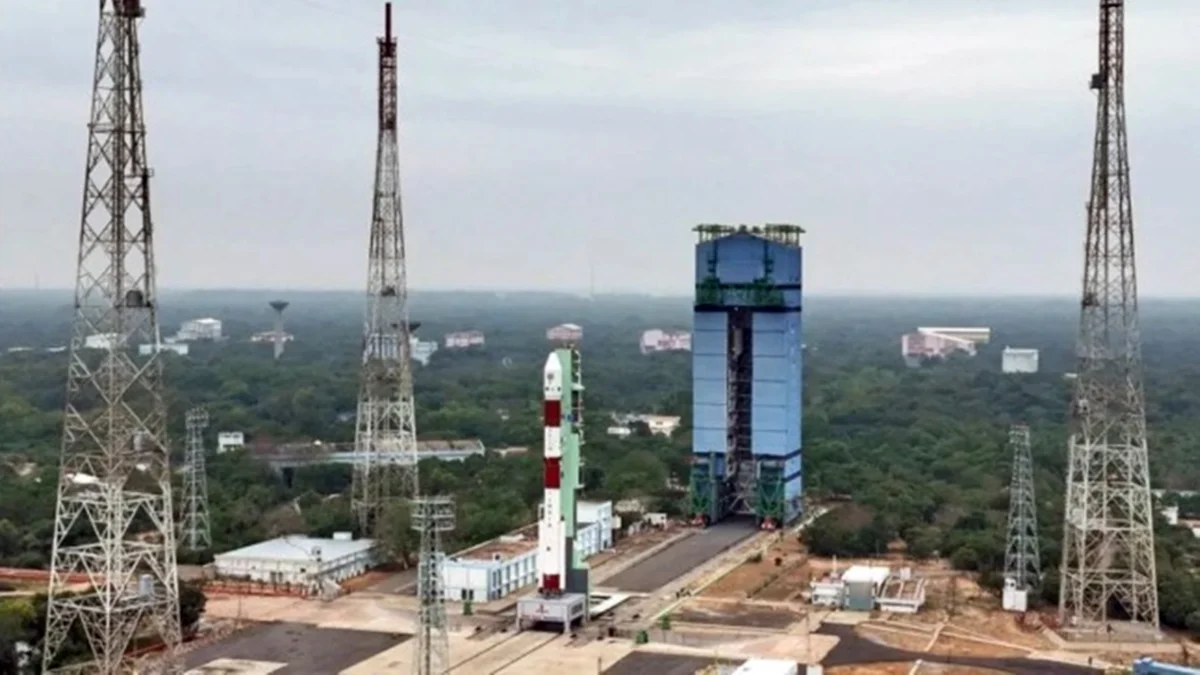
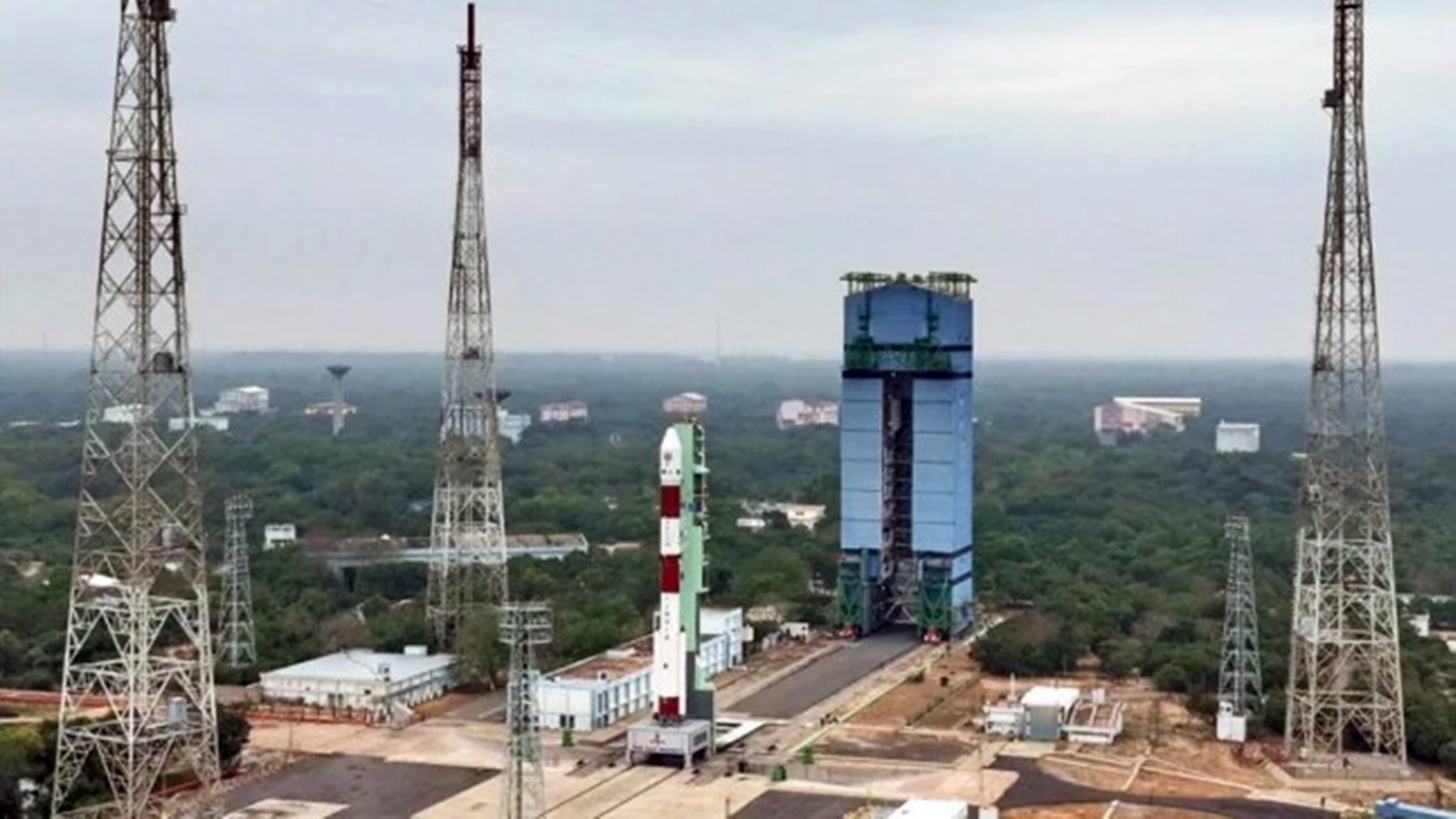
NEW DELHI — In the quiet corridors of the Satish Dhawan Space Centre (SDSC) in Sriharikota, the rhythmic hum of preparation has replaced a heavy, seven-month silence. The Indian Space Research Organisation (ISRO), the pride of the nation’s technological prowess, is finally gearing up to resume its launch services. Following a period of introspection and rigorous technical audits triggered by a series of mission failures, the space agency has announced that the Earth Observation Satellite, GISAT-1A, is scheduled for liftoff in the first week of September 2026.
This mission represents more than just a routine deployment; it is a critical "return-to-flight" moment for an agency that has faced unprecedented challenges over the last two years. With two major satellites—GISAT-1A and the navigation satellite NVS-03—having remained "parked" in cleanrooms for months, the upcoming launch is a bid to restore confidence in India’s launch vehicle reliability and its ambitious space manifest.
The Mission: GISAT-1A and the Return to Orbit
The primary objective of the September mission is the successful deployment of GISAT-1A, now officially designated as EOS-05 under ISRO’s revised nomenclature. This satellite is a sophisticated replacement for the ill-fated GISAT-1 (EOS-03), which was lost in August 2021 when the cryogenic upper stage of the GSLV-F10 failed to ignite.
GISAT-1A is designed to be a "game-changer" for India’s observational capabilities. Boasting a mission life of a decade, the satellite is equipped with high-resolution multispectral and hyperspectral sensors. Positioned in a geostationary orbit, it will provide near real-time imaging of the Indian subcontinent. Unlike the lower-orbiting IRS series, which passes over a specific spot only once every few days, GISAT-1A can "stare" at a particular region of interest at frequent intervals.
This capability is vital for:
- Disaster Management: Rapid monitoring of floods, cyclones, and forest fires.
- Agricultural Surveillance: Tracking crop health and yield estimation across vast rural tracts.
- Border Security: Frequent imaging of sensitive geographic areas.
- Environmental Monitoring: Observing changes in vegetation cover and ocean dynamics.
Following the September launch, ISRO officials have indicated that the NVS-03 navigation satellite, which is currently fueled and ready at the spaceport, will likely follow in November 2026.
A Chronology of Setbacks: 2021–2026
The seven-month hiatus that preceded this announcement was not an arbitrary pause but a necessary reaction to a volatile period in ISRO’s recent history. Between 2025 and early 2026, the agency undertook six missions, three of which failed to reach their intended orbits—a 50% failure rate that is uncharacteristic of the usually dependable Indian space program.
The 2021 GISAT-1 Heartbreak
The lineage of the current mission traces back to August 12, 2021. The original GISAT-1 was lost during the GSLV-F10 mission. While the first and second stages performed normally, a technical anomaly in the Cryogenic Upper Stage (CUS) prevented the satellite from reaching orbit. This failure necessitated the construction of the GISAT-1A replacement.
The 2025 Anomalies
In 2025, ISRO attempted five launches, but the results were mixed.
- PSLV-C61 / EOS-9: ISRO’s "workhorse," the Polar Satellite Launch Vehicle (PSLV), suffered a rare failure. An anomaly in the third stage (PS3) resulted in the mission’s inability to deliver the EOS-9 satellite to its precise orbit.
- GSLV-F15 / NVS-02: While the GSLV rocket itself functioned as expected, the mission failed during the post-launch phase. The orbit-raising maneuvers—critical for moving the satellite from its initial transfer orbit to its final operational slot—failed, rendering the NVS-02 navigation satellite unusable.
The January 2026 Debacle
The most recent blow came on January 12, 2026. The PSLV-C62 mission, intended to place the Earth observation satellite EOS-N1 into orbit, ended in failure. Similar to the C61 mission, the culprit was reportedly an "anomaly" in the rocket’s third stage. This second consecutive failure of the PSLV’s third stage sent shockwaves through the agency, leading to the seven-month operational hiatus to investigate potential systemic flaws in the stage’s manufacturing or design.
Supporting Data: Targets vs. Reality
ISRO’s recent performance stands in stark contrast to its stated goals. In its annual reports, the agency had set aggressive targets to capture a larger share of the global commercial launch market and to fulfill domestic requirements.
| Metric | FY 2025-26 Target | FY 2025-26 Actual (to date) | FY 2026-27 Target |
|---|---|---|---|
| Total Missions | 15 | 6 | 27 |
| Earth Observation | 4 | 2 (1 failed) | 5+ |
| Navigation | 2 | 1 (failed) | 2 |
| Gaganyaan Missions | 3 | 0 | 4 |
| SSLV Flights | 0 | 0 | 5 |
The data reveals a significant backlog. The space agency counts both the launch vehicle and the satellite as separate "missions" in its internal metrics, yet even by this generous accounting, the numbers have fallen short. The failure to meet these targets has delayed critical infrastructure, most notably the NavIC navigation constellation.
Official Responses and the "Culture of Silence"
The Indian government and ISRO leadership have been cautious in their public communications regarding these failures. While the Failure Analysis Committees (FAC) were promptly formed after each incident, their full reports have remained classified, leading to calls for greater transparency within the scientific community.
During a recent session in Parliament, Union Minister of State for Space, Dr. Jitendra Singh, addressed the state of India’s indigenous GPS alternative, NavIC (Navigation with Indian Constellation). His response highlighted the strategic urgency of the upcoming NVS launches.
"Presently, the NavIC constellation has three satellites for providing PNT (Positioning, Navigation, Timing) services—IRNSS-1B, IRNSS-1I, and NVS-01," Dr. Singh stated. "To provide basic positioning service, a minimum of four operational satellites are required in orbit. Hence, the NavIC constellation cannot provide standalone positioning service at this time."
The Minister clarified that while the "timing service" remains functional, the Indian armed forces and civilian users must rely on a multi-constellation setup, using signals from the US-owned GPS, the EU’s Galileo, and Russia’s GLONASS to supplement the limited NavIC data.
Strategic Implications: What is at Stake?
The resumption of launches with GISAT-1A is not merely about clearing a backlog; it carries deep strategic and commercial implications.
1. National Security and NavIC
The failure of NVS-02 has left India’s sovereign navigation system in a state of limbo. For a nation with complex borders and regional security concerns, reliance on foreign satellite constellations (like GPS) is a strategic vulnerability. The success of the upcoming NVS-03 mission in November is non-negotiable for achieving a functional, four-satellite minimum for independent positioning.
2. Commercial Credibility
ISRO’s commercial arm, NewSpace India Limited (NSIL), has been successfully marketing the LVM3 and PSLV to international clients. However, back-to-back anomalies in the PSLV’s third stage threaten the "workhorse" reputation of the vehicle. International clients require a proven track record of reliability; any further setbacks could drive commercial satellite operators toward competitors like SpaceX or Arianespace.
3. The Gaganyaan Timeline
The shadow of these launch failures looms over the Gaganyaan program—India’s mission to send humans into space. Reliability is the cornerstone of human-rated flight. The "anomalies" observed in the PSLV and GSLV stages must be completely understood and rectified before ISRO can safely commit to the crewed phases of Gaganyaan, which are already seeing timeline shifts.
4. Technological Self-Reliance
The GISAT-1A mission utilizes the GSLV Mk II, which features the indigenous cryogenic engine. Proving the stability of this technology is essential for India’s goal of ending its dependence on foreign components and heavy-lift launchers for high-altitude missions.
The Road Ahead
As the countdown for GISAT-1A begins, the eyes of the global space community are on Sriharikota. The September launch will serve as a litmus test for the "new" ISRO—an agency that has spent seven months re-evaluating its quality control protocols and engineering standards.
If GISAT-1A successfully reaches its geostationary slot, it will signal the end of a dark chapter and the beginning of a high-tempo operational phase. With five Small Satellite Launch Vehicle (SSLV) flights and multiple Gaganyaan test missions planned for the 2026-27 cycle, the agency has no room for error. For ISRO, the upcoming roar of the GSLV engines is not just about physics; it is about reclaiming its trajectory toward the stars.
