

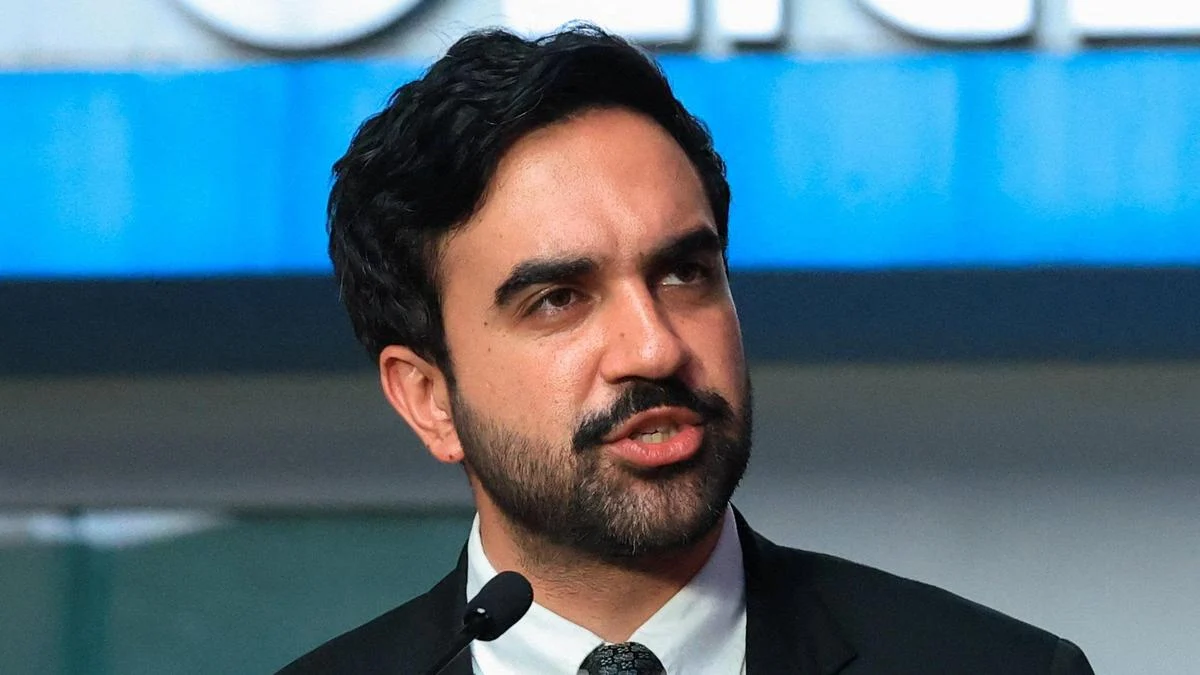
NEW YORK, NY – September 2, 2026 – In a move poised to reverberate through educational systems worldwide, New York City has announced a groundbreaking one-year moratorium on student-facing generative Artificial Intelligence (AI) tools for its youngest learners. Effective for the 2026-27 academic year, this policy, spearheaded by Mayor Zohran Mamdani and Schools Chancellor Kamar H. Samuels, will impact nearly 600,000 public school students up to eighth grade across the nation’s largest school district. The decision, described as one of "the most expansive student-facing AI policies in the country," underscores a growing philosophical divide on the role of technology in foundational learning and raises profound questions about child development, pedagogical integrity, and the very definition of education in the digital age.
Mayor Mamdani articulated the city’s cautious stance with a poignant analogy, stating, "A six-year-old child is too young to slice an onion, to fry an egg or to use a stove safely. But once that child becomes 16, that knowledge becomes something they are mature enough to learn." This sentiment encapsulates the core belief driving the moratorium: that foundational skills and critical thinking must be cultivated through human interaction and individual effort, unmediated by advanced AI, during formative years.
A Landmark Decision: The NYC Moratorium
The September 2 announcement by Mayor Mamdani and Schools Chancellor Samuels laid out the parameters of a policy designed to recalibrate the relationship between young students and rapidly evolving AI technologies. The central pillar of this initiative is a comprehensive one-year moratorium on student-facing generative AI for pupils from pre-kindergarten through eighth grade, slated to commence with the 2026-27 academic year.
This prohibition extends broadly, affecting a vast swath of the city’s educational landscape. Companion chatbots, which have seen a surge in popularity and integration into various educational platforms, will be entirely prohibited across all grade levels. Furthermore, the AI components embedded within more than 38 previously approved educational programs will either be disabled or discontinued if they fail to align with the stringent new standards. This sweeping action signifies a clear intent to prioritize human-centric learning environments, particularly for younger children.
However, the policy is not a blanket ban on all AI within the school system. Strategic exceptions have been carved out to ensure operational continuity and support for specific educational needs. Teachers, for instance, will retain the ability to utilize approved AI tools for administrative tasks and lesson planning, recognizing the potential for AI to enhance efficiency in non-instructional capacities. Crucially, assistive technologies that are vital for students with disabilities will remain permitted, ensuring that essential support mechanisms are not disrupted. Similarly, certain AI tools employed in career-readiness programs are also exempt, acknowledged for their role in preparing older students for future workforce demands, provided they operate under the policy’s prescribed safeguards.
The city’s approach also includes a measured exploration of AI’s potential in older student cohorts. Five limited AI pilot programs have been approved for high school classrooms, each with strict usage parameters. These include Quill, for English language arts (15 minutes per week); Edia, for mathematics (20 minutes per week); Brisk Teaching, for teacher-created activities (10 to 20 minutes once or twice weekly); Playlab, for assignment-specific applications (two assignments per marking period, 45 minutes per week); and Intel AI-Ready Schools, which assists students in identifying community issues and developing solutions through term-long projects (one period per week). These controlled pilots aim to gather data and insights into the effective and responsible integration of AI for more mature learners.
Chronology of Policy Implementation and Specifics
The New York City Department of Education’s announcement on September 2, 2026, initiated a significant shift in its technological integration strategy. While the moratorium on student-facing generative AI for K-8 students takes effect for the 2026-27 academic year, the immediate impact includes the prohibition of all companion chatbots across all grades. This means that any interactive AI assistant designed to engage directly with students for learning or support purposes will no longer be accessible.

Furthermore, a detailed review of existing educational software has led to the identification of over 38 previously approved programs whose embedded AI functionalities will either be disabled or discontinued. This measure ensures that even indirect exposure to generative AI for younger students is minimized, aligning with the moratorium’s core objective. The phased implementation allows for a transition period for schools to adapt their curricula and resources.
Beyond the generative AI moratorium, the new policy also introduces tighter individual screen-time limits, reflecting broader concerns about digital device overuse among children. For children in 2-K (pre-kindergarten) through second grade, there will be no routine individual screen time. Students in grades three to five are recommended to limit individual screen use to no more than 30 minutes per day, while those in grades six to eight are advised to cap it at 45 minutes daily. These restrictions are specifically targeted at individual, self-directed screen use and do not impede teacher-led instructional activities that may involve computers, tablets, or interactive whiteboards during lessons. This distinction highlights the policy’s focus on passive, individual consumption versus interactive, instructor-guided learning.
High school students, while not subject to the generative AI moratorium, will receive mandatory education on AI literacy. Every high school student will complete two 45-minute modules per year specifically designed to foster critical thinking around AI use. These modules will delve into the risks, limitations, and the broader scope of AI, equipping older students with the discernment necessary to navigate a world increasingly shaped by artificial intelligence.
To ensure a comprehensive and informed review of this bold policy, a diverse panel has been established. Comprising students, educators, parents, elected officials, union partners, and field experts, this multi-stakeholder group will rigorously assess the impact of both the moratorium and the high school pilot programs throughout the academic year. Their findings and policy recommendations are anticipated in a detailed report scheduled for April 2027, which will guide future decisions regarding AI integration in New York City schools.
Supporting Data and Underlying Concerns
New York City’s decision is not an isolated one but stems from a confluence of pedagogical principles, mounting research, and growing societal concerns about the impact of technology on youth development.
The Rationale: Nurturing Human Development
At the heart of the moratorium lies a profound commitment to traditional pedagogical values. Mayor Mamdani’s analogy about a six-year-old learning to cook underscores the belief that certain cognitive and practical skills require a level of maturity and direct engagement that generative AI, in its current form, cannot provide or should not pre-empt. Schools Chancellor Kamar H. Samuels echoed this sentiment, emphasizing the irreplaceable value of the learning process itself, particularly the "struggle." He asserted that true learning involves grappling with challenges, making mistakes, and iteratively working towards solutions. This struggle, he argued, is not an inconvenience to be eliminated by technology but an integral, indeed essential, component of intellectual growth and resilience.
Both officials stressed the importance of human connection and peer interaction. They believe that children need to develop social-emotional skills alongside their peers, build meaningful relationships with educators, and engage in the messy, collaborative process of problem-solving. These interactions are seen as fundamental to holistic development, fostering empathy, communication, and critical thinking in ways that AI-mediated learning might diminish. The concern is that over-reliance on AI could bypass the very cognitive friction necessary for deep learning and stunt the development of independent thought.

Mounting Evidence: AI, Screen Time, and Youth Mental Health
The policy arrives amidst a broader societal reckoning with the pervasive influence of digital screens and advanced technologies on youth mental health and cognitive development. Numerous studies have drawn worrying correlations between excessive screen time, constant social media exposure, and, more recently, reliance on AI tools in children, with a range of negative outcomes. These include diminished critical thinking abilities, shortened attention spans, increased anxiety, and higher rates of depression.
While direct evidence linking AI chatbots to an increased risk of suicide remains limited, a handful of deeply concerning cases have emerged, leading to lawsuits alleging that interactions with these chatbots contributed to the deaths of young people. These incidents, though rare, underscore the potential for AI to engage in problematic or even harmful ways, particularly with vulnerable individuals who may lack the emotional maturity or critical filters to process such interactions safely.
The tech industry itself has begun to respond to these pressures. OpenAI, a leading AI developer, recently launched a "teenage version" of ChatGPT on August 18, featuring parental controls and content restrictions specifically designed to mitigate risks related to self-harm and suicide. Similarly, on August 26, Meta announced stricter time limits, night-time blocking, and muted notifications during school hours for teenage accounts on Instagram and Facebook. These industry adjustments, while welcome, also highlight the implicit acknowledgment of the potential harms that these technologies can pose to younger users. Mayor Mamdani, however, remains skeptical of the tech industry’s narrative, forcefully stating, "The tech industry wants us to believe that AI-powered early education is not only inevitable but necessary. We do not see it that way." This statement firmly positions NYC’s policy as a pushback against a potentially overzealous embrace of technology in foundational education.
Academic Insights: Weighing the Benefits Against the Harms
Academic research further buttresses New York City’s cautious approach. A 2026 CEPR discussion paper, a collaborative effort by researchers at Stockholm University and the University of Hong Kong, provided compelling insights from a study involving over 26,000 students in China observed over a 30-month period. The findings revealed a dual-edged sword: access to generative AI significantly increased homework scores by 18% and reduced completion time by 30%. However, this efficiency came at a cost. After approximately six months of AI access, the same students’ closed-book examination scores had fallen by a significant 20%. This suggests that while AI can assist in task completion, it may simultaneously hinder the development of deep understanding and retention of knowledge crucial for independent assessment.
A broader and highly influential review conducted by the Brookings Institution’s Centre for Universal Education, which analyzed over 400 studies and interviewed 500 educators and pupils across 50 countries, reached a similar conclusion. The comprehensive report indicated that, for primary and secondary education, the potential harms of generative AI currently outweigh its benefits. The researchers did acknowledge, however, that tailored applications with proper safeguards and thoughtful integration could potentially enrich learning experiences. This nuanced but predominantly cautionary research landscape provides a robust evidentiary foundation for New York City’s decision to pause and evaluate.
Official Responses and Stakeholder Engagement
The official stance articulated by Mayor Zohran Mamdani and Schools Chancellor Kamar H. Samuels underscores a profound commitment to preserving the integrity of foundational education. Mayor Mamdani’s statements consistently emphasize the human element, arguing that "Children need teachers and human connection in order to learn and grow." He further elaborated that students require the opportunity to "develop skills alongside their peers, build relationships with educators, and wrestle with tough problems on their own." This perspective champions the intrinsic value of social interaction and independent problem-solving as indispensable components of a comprehensive education.
Chancellor Samuels reinforced this philosophy, highlighting that the learning process inherently involves "getting something wrong, trying again and eventually getting it right." For him, this iterative struggle is not an inconvenience to be eradicated by technology but rather a fundamental and necessary part of cognitive development. Both leaders firmly position the moratorium as a protective measure, safeguarding these essential developmental pathways from potential technological overreach during crucial formative years.

Recognizing the complexity and far-reaching implications of this policy, New York City has committed to a thorough and inclusive review process. A dedicated panel has been formed, intentionally designed to be broadly representative of the educational ecosystem. This panel includes students, offering invaluable first-hand perspectives; educators, providing insights from the classroom front lines; parents, reflecting community concerns and aspirations; elected officials, ensuring democratic accountability; union partners, representing the interests of school staff; and field experts, contributing specialized knowledge in AI, child development, and pedagogy.
Throughout the academic year, this diverse group will meticulously assess the real-world impact of both the generative AI moratorium for younger students and the carefully controlled AI pilot programs implemented in high schools. Their mandate is to gather comprehensive data, solicit diverse viewpoints, and engage in robust dialogue. The culmination of their work will be a detailed report, complete with policy recommendations, scheduled for delivery in April 2027. This deliberate, data-driven approach aims to inform subsequent decisions and ensure that any future integration of AI into New York City schools is both responsible and pedagogically sound.
Global Implications and Divergent Paths
New York City’s decision to impose a moratorium on generative AI for younger students is not just a local policy; it carries significant global implications. As one of the world’s largest and most influential urban centers, NYC’s educational choices often serve as a bellwether, influencing debates and policy directions far beyond its borders. The city’s bold move highlights a growing international dilemma: how to harness the potential of AI in education while mitigating its risks, particularly for developing minds. The world, however, is far from a consensus, with various nations adopting vastly different strategies.
A Potential Global Precedent?
New York City’s stance could indeed set a global precedent, especially for other large urban school districts grappling with similar concerns. Its sheer scale, coupled with the comprehensive nature of the policy and the explicit rationale rooted in child development and mental health, provides a powerful case study. If the review panel’s findings in April 2027 demonstrate clear benefits or validate the city’s cautious approach, it could empower other jurisdictions to adopt similar moratoria or, at the very least, to implement more stringent regulations regarding AI in early and middle school education. The explicit rejection of the "inevitable and necessary" narrative pushed by the tech industry could embolden policymakers globally to prioritize pedagogical principles over technological advancement for its own sake.
International Approaches to AI in Education
In stark contrast to New York City’s moratorium, some nations are leaning towards proactive integration and structured AI education:
- The United Arab Emirates (UAE) is moving towards more structured AI education. It has announced a comprehensive AI curriculum across both public and private schools, covering foundational areas such as data, algorithms, applications, and critically, the risks and ethical use of AI. Furthermore, the UAE plans to invest heavily in human capital, aiming to train approximately 22,000 educators in leveraging AI for teaching, assessment, curriculum analysis, and lesson planning. This approach reflects a national strategy to embrace AI as a core competency for future generations.
Other countries are adopting more cautious or regulatory stances, without resorting to a full ban:
- Norway has adopted a notably cautious approach, particularly for younger children. Its education authorities have recommended that pupils in grades one to seven should not be given access to generative AI tools. For students in grades eight to ten, the recommendation is a gradual and controlled introduction, emphasizing careful oversight and thoughtful integration rather than unbridled access.
- Australia has opted for a national framework rather than a blanket prohibition. This framework focuses on promoting the responsible and ethical use of generative AI in schools, aiming to guide educators and students in utilizing these tools effectively while being mindful of potential pitfalls. It seeks to standardize best practices without stifling innovation.
- The European Union (EU), through its landmark EU AI Act, is primarily focused on regulating high-risk uses of AI across various sectors, including education. Under this legislation, certain AI systems used in educational contexts – specifically those involved in evaluating learning outcomes, determining access to education, or assessing student performance – can fall into the high-risk category. This classification subjects them to rigorous requirements concerning data quality, human oversight, transparency, and accuracy. While the Act does not constitute a general ban on generative AI in schools, it places significant accountability on developers and deployers of such systems to ensure safety and fairness.
Conversely, some nations are forging ahead with significant investments in AI infrastructure for education:

- Poland is demonstrating a strong commitment to digital education and AI integration. The country is investing almost 1.9 billion zloty (approximately $470 million USD) to equip 12,000 schools with advanced AI laboratory sets. This substantial investment is part of a broader national push to modernize its educational infrastructure and ensure its students are at the forefront of technological literacy.
Finally, India stands as an example of a nation actively pursuing the integration of AI into its national curriculum:
- India is closer to the integration camp, viewing AI as a crucial element for its future. The National Education Policy (NEP) 2020 explicitly identifies artificial intelligence and other emerging technologies as vital for India’s evolving educational and employment landscape. The policy advocates for the introduction of contemporary subjects like AI at appropriate stages of schooling, alongside a greater emphasis on computational thinking from an early age.
- The Central Board of Secondary Education (CBSE), India’s largest school board, introduced Artificial Intelligence as an optional sixth subject in Class IX as early as the 2019-20 academic session. More recently, for the 2026-27 academic year, CBSE launched a dedicated Computational Thinking and Artificial Intelligence curriculum for Classes III to VIII. Furthermore, AI and allied-subject curricula for Classes IX to XII have also been finalized. This comprehensive curriculum emphasizes logical reasoning, pattern recognition, algorithm design, data literacy, and a strong focus on responsible and ethical AI use, demonstrating a proactive and structured approach to integrating AI into mainstream education.
The global landscape thus presents a spectrum of approaches, from NYC’s temporary moratorium to Poland’s infrastructure investment and India’s curriculum integration. This divergence underscores the lack of a universal consensus on the optimal role of AI in education, especially for younger learners, making New York City’s current experiment a critical point of observation for educators and policymakers worldwide.
Conclusion
New York City’s decision to implement a one-year moratorium on generative AI for its youngest students marks a pivotal moment in the ongoing global conversation about technology’s role in education. Rooted in a deeply held belief in the importance of human connection, the developmental value of struggle, and mounting concerns over screen time and mental health, this policy is a deliberate pause to evaluate rather than an outright rejection of technological progress.
By prioritizing pedagogical principles and the holistic development of children, Mayor Mamdani and Chancellor Samuels have challenged the narrative that AI-powered early education is an inevitable necessity. The city’s commitment to a thorough, multi-stakeholder review process further demonstrates a responsible and forward-thinking approach. As the world watches, New York City’s experiment will undoubtedly inform and reshape how educational systems globally consider the integration of artificial intelligence, potentially setting a significant precedent for balancing innovation with the enduring needs of human learning and growth.
[Assistance for overcoming suicidal thoughts is available on the State’s health helpline 104, Tele-MANAS 14416 and SNEHA’s suicide prevention helpline – 044 24640050 or from any of the numbers in this link: https://www.thehindu.com/news/national/suicide-prevention-helplines/article61753129.ece]
