

New Delhi, India – Imagine a classroom reimagined, a vibrant space where curiosity reigns supreme, and the vast ocean of human knowledge, accessible via the internet, becomes the primary textbook. Envision students not as passive recipients of facts, but as active explorers, guided by a mentor and the boundless resources of the digital realm. This is not a utopian fantasy, but the profound vision championed by Professor Sugata Mitra, a distinguished computer scientist and educational theorist whose groundbreaking work has challenged and continues to reshape conventional pedagogical paradigms worldwide.
At a time when global conversations are increasingly dominated by concerns over screen time, social media addiction, and the perceived detrimental effects of technology on young minds, Professor Mitra stands as a powerful counter-narrative. He advocates for a revolutionary integration of technology into education, demonstrating its potential not as a distraction, but as a catalyst for profound, self-directed learning. A recent conversation with Professor Mitra delved into the genesis of his radical ideas, the global impact of his experiments, and his enduring belief in the transformative power of self-organized learning.
The Genesis of a Radical Idea: The "Hole in the Wall" Experiment (Main Facts)
Professor Mitra’s journey into educational innovation began not with grand theoretical pronouncements, but with a simple, yet audacious, question born of pure curiosity. In the late 1990s, during the nascent stages of internet penetration in India, computers were largely a luxury, confined to affluent households or specialized institutions. This prompted Mitra to ponder: could children, irrespective of their socioeconomic background or linguistic proficiency, intuitively grasp the complexities of a computer and navigate the then-uncharted territory of the internet? Would the barriers of language (specifically English, the dominant language of the internet) and financial constraint truly impede their ability to engage with this powerful new tool?

This compelling inquiry led to what would become his most famous and influential experiment: the "Hole in the Wall" (HIW). Conducted in 1999, the experiment was a testament to the power of unconventional thinking and a direct challenge to the prevailing belief that formal instruction was indispensable for technological literacy.
A Chronology of Discovery: Empowering the Uninstructed
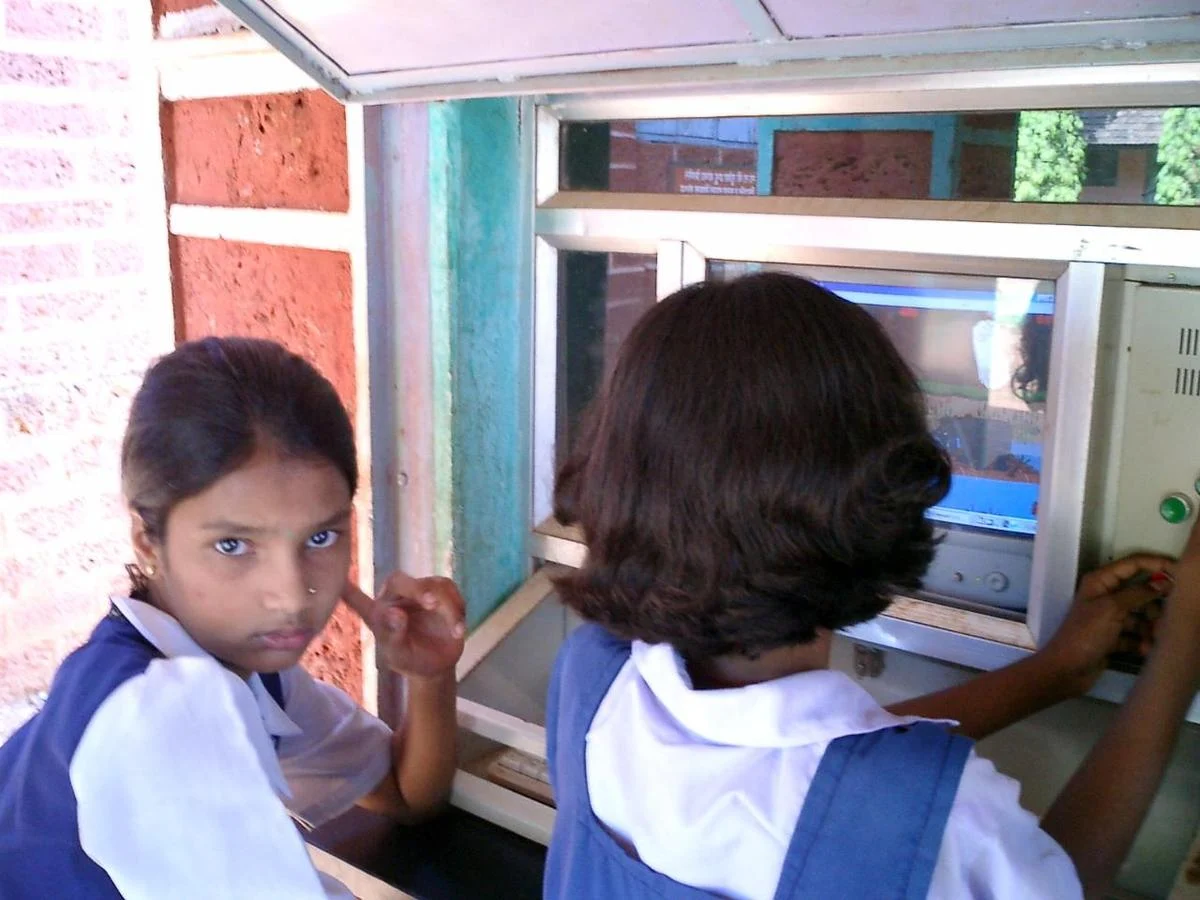
The "Hole in the Wall" experiment was meticulously designed to test Mitra’s hypothesis under real-world conditions. He chose a particularly poignant location: Kalkaji, a bustling area in New Delhi, where his office backed onto a sprawling, economically disadvantaged slum. The setup was deceptively simple, yet revolutionary in its implications. Mitra embedded a freely accessible, internet-connected computer within a brick boundary wall, its screen and mouse exposed to the public thoroughfare of the slum. Crucially, there were no teachers, no instructors, and no pre-set curriculum. The children of the slum were left entirely to their own devices, with the internet as their sole guide.
The initial observations were nothing short of astonishing. Within hours of the computer’s installation, groups of curious children, some as young as six or seven, began congregating around the screen. They experimented, they touched, they clicked. They communicated, collaborated, and, perhaps most remarkably, they taught each other. What began as hesitant exploration quickly evolved into confident navigation. Children who had never seen a computer before, many of whom did not speak English, rapidly learned to browse the web, play games, and even perform basic search queries. The digital divide, it seemed, was not an insurmountable chasm, but a permeable membrane.

Professor Mitra recounts this period with a mix of wonder and amusement. "What the experiment showed was that groups of children using the Internet can learn almost anything by themselves," he stated, reflecting on the profound implications of his findings. He humorously noted the generational divide in perception: "Young people will say, ‘What’s the big deal?’ But older people keep telling me, ‘That can’t be true because we must be required. We have to teach the children things. Otherwise, how will they learn?’" This stark contrast underscored the deeply ingrained assumptions about pedagogy that Mitra was inadvertently challenging. The children, through sheer collective curiosity and peer-to-peer instruction, had bypassed centuries of traditional educational thought.
From Observation to Methodology: The Self-Organized Learning Environment (SOLE) (Supporting Data)
The "Hole in the Wall" experiment was not an isolated incident; its resounding success became the bedrock for a more formalized educational approach: the Self-Organized Learning Environment, or SOLE. At its core, SOLE is an educational methodology that empowers students to take ownership of their learning journey. It typically involves posing "big, open-ended questions" – inquiries that cannot be answered with a simple factual recall but require deeper investigation, critical thinking, and synthesis of information.
In a SOLE session, students are provided with internet-connected devices and encouraged to work collaboratively in small groups. The teacher’s role shifts dramatically from that of a knowledge dispenser to a facilitator, a guide who poses stimulating questions, offers encouragement, and steps back to allow the organic process of discovery to unfold. This approach actively fosters self-discovery, cultivates teamwork and communication skills, and sharpens independent critical thinking.

Mitra emphasizes the profound impact of this "upside-down teaching process." He observes that when children discover knowledge for themselves, rather than being spoon-fed, the learning is far more robust and enduring. "The children come back, and what I’ve measured is that if they learn that way, then they remember it for the rest of their lives because they will go home and they will tell their parents, ‘today I told the teacher what a certain concept or thing is, not the other way about it.’" This shift in dynamic, where the student becomes the explainer, solidifies understanding and imbues them with a sense of accomplishment and intellectual agency.
The initial motivation for the HIW experiment stemmed from anecdotal evidence: parents of children from affluent backgrounds often marveled at how quickly their children mastered computers, even teaching their elders. Mitra wondered why this phenomenon should be exclusive to privileged children. "It can’t be that just those kids from the rich households were able to do this, right?" he posited, setting the stage for an experiment that proved access, opportunity, and an environment of curiosity were far more critical than formal instruction or economic status.
Navigating the Digital Age: Official Responses to Modern Dilemmas
A significant challenge to Mitra’s vision today is the pervasive fear surrounding technology in education. As nations grapple with rising rates of screen addiction and the negative impacts of social media, there’s a growing movement towards banning phones and restricting internet access in schools. When confronted with this contemporary paradox, Mitra’s response is, again, strikingly simple and pragmatic.

"The Hole in the Wall experiment had two very important rules which we are forgetting in today’s age. The children must be in groups, and the large device screen must be in public," Mitra asserted. He argues that by adhering to these two fundamental principles, many of the problems currently associated with device usage in schools can be effectively managed, if not entirely mitigated.
He uses a compelling analogy: "Would you open your Facebook, your own Facebook page, in public when everybody else can see what you’re doing? You would not, so we know the answer. The answer is not to ban the thing; the answer is to make it public." This insight reframes the problem from the inherent "evil" of the device or the internet to the context and conditions of its use. Privacy, or rather the lack thereof in a public group setting, acts as a natural deterrent against inappropriate or distracting individual use.
In a practical classroom setting, Mitra suggests that mobile phone usage should indeed be prohibited, much like reading a novel during a lecture. Instead, he proposes that classrooms of approximately 20 children could effectively utilize around four public-facing computers. These devices should be strategically placed so that the teacher can easily view all screens. Within this setup, the SOLE method can thrive, with students collaborating to find answers to collective questions. The emphasis here is on collective inquiry and shared discovery, turning technology into a collaborative tool rather than a personal distraction. Mitra’s solution champions a change in format and approach rather than an outright avoidance of a potentially resourceful learning tool.

Challenging the Bedrock: Reimagining the Examination System
Perhaps the most radical of Professor Mitra’s proposals concerns the very foundation of traditional education: the examination system. He unequivocally declares, "The crux of the problem is the examination system," describing it as a "decades-old, outdated practice."
Mitra argues that the traditional examination model, designed in an era devoid of instant information access, is fundamentally ill-suited for the digital age. "At that time, there was no way that you could find the answer unless you knew the answer in your head, but today we are in exactly the opposite situation where all the answers are in your pocket all the time," he explained. The current system, by prioritizing rote memorization of facts, fails to equip students with the skills they truly need in an information-rich world.
His solution, while appearing audacious to many, is logically consistent with his broader philosophy: allow the use of the internet in class and, critically, during exams. This isn’t about making exams easier; it’s about fundamentally altering their purpose and design. By permitting internet access, the focus of assessment would be forced to shift from factual recall to higher-order thinking skills. Students would no longer be rewarded for merely regurgitating information, but for their ability to formulate questions, critically evaluate sources, synthesize diverse data, solve complex problems, and apply knowledge creatively.

This systemic change would necessitate a complete overhaul of question patterns. "Give them questions where they have to think before they can answer, whether they know the question or not," Mitra suggests. He wryly contrasts this with the current, often absurd, lengths to which educational authorities go to prevent cheating: "So instead, what are we doing? We are going to use the army and the navy and helicopters and police and everybody so that the question paper does not leak," he said with a smile, highlighting the misplaced priorities of a system obsessed with preventing access to information rather than fostering its intelligent use.
Mitra firmly believes that "It’ll be a really big mistake we make if we stop children from accessing the internet, instead of realising that the problem is the device, not the internet itself." His vision offers a path to systemic change, creating an educational environment where "rutting information" (rote learning) ceases to be a pathway to success, replaced by genuine intellectual engagement. While a full implementation of SOLE in national curricula remains a distant goal for many, several Scandinavian countries have already begun to make significant strides towards fostering similar open-thinking education systems, demonstrating the feasibility and benefits of such approaches.
Implications and the Imperative of Continuous Learning
The implications of Mitra’s philosophy extend far beyond the classroom walls. In a world characterized by unprecedented technological acceleration and rapidly evolving knowledge bases, the traditional notion that "things we learn remain valid over a long period of time has completely broken down," Mitra observed. The imperative for continuous learning and self-updating is no longer a niche requirement but a universal necessity across almost all fields. SOLE, by its very design, instills this crucial understanding from a young age, preparing students for a future where adaptability and lifelong inquiry are paramount.

The core message, as Mitra often reiterates, is that "Asking the right questions is more important than memorising answers." He humbly attributes this wisdom not to himself, but to timeless thinkers like Gautam Buddha and Socrates, who, hundreds of years ago, articulated the profound power of inquiry.
When asked for advice for the younger generation, Professor Mitra offered a perspective imbued with humility and profound insight. He laughed, acknowledging the futility of an older generation dictating terms to a rapidly evolving world. "Who am I to give them advice? It is their world. All I can tell them is that you are in a world which we (the older generation) cannot predict anymore. You are on your own." Yet, he concluded with a cryptic, thought-provoking challenge: "If you can control what you want, you can do what you like. Think about it."
This final piece of advice encapsulates the essence of his work: empowering individuals to harness their innate curiosity, cultivate self-direction, and navigate a complex, unpredictable world with agency and purpose. From a corner of the United Kingdom, Professor Sugata Mitra continues to champion this transformative vision, inspiring educators and learners across the globe to rethink the very nature of education and embrace a future where learning is truly self-organized and boundless. His experiments and theories stand as a powerful reminder that sometimes, the most profound educational breakthroughs emerge not from rigid curricula, but from simply putting a "hole in the wall" and trusting in the incredible capacity of human curiosity.
