

The Indian two-wheeler landscape witnessed a significant bullish trend in August 2026, as the scooter segment continues to outpace expectations. According to the latest retail and wholesale data, the top ten best-selling scooters in the country recorded a combined sales figure of 7,16,519 units. This represents a robust year-on-year (YoY) growth of 19.87% compared to the 5,97,771 units sold in August 2025.
This surge of nearly 1.19 lakh additional units highlights a resilient consumer appetite, bolstered by a mix of favorable monsoon outcomes, a pre-festive inventory build-up, and a rapidly accelerating transition toward electric mobility. Perhaps most notably, every single entry in the top ten list registered positive growth, a rare phenomenon that underscores the health of the broader automotive industry.
The Dominance of the "Big Two": Activa and Jupiter
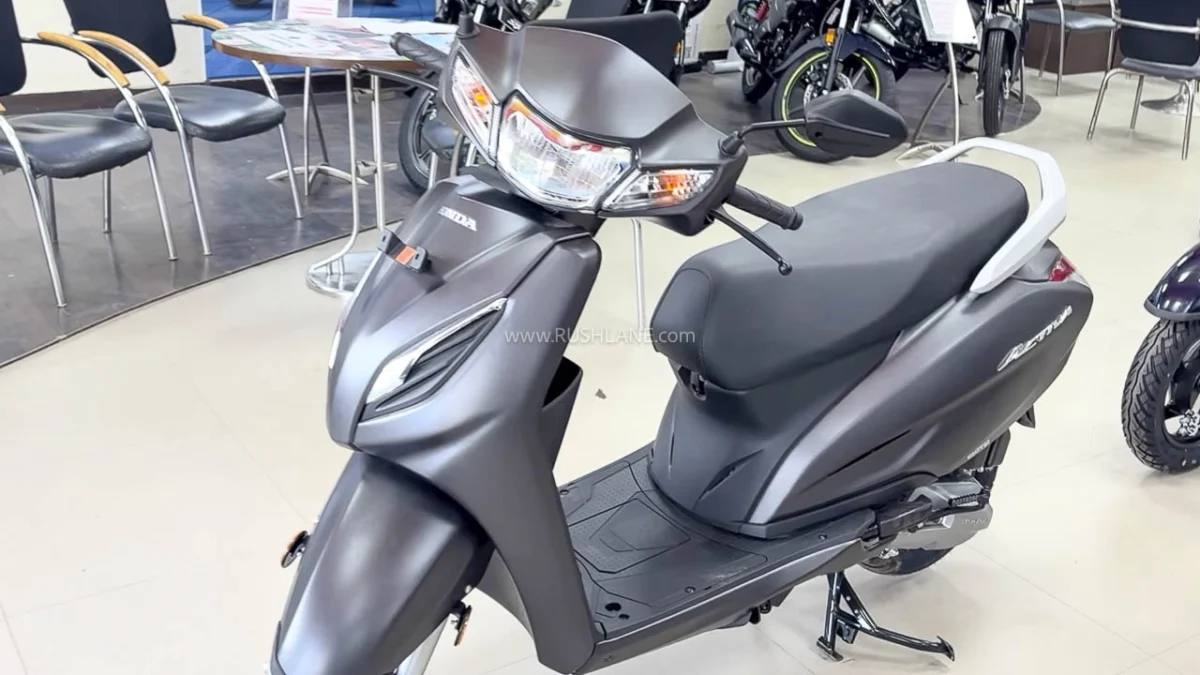
At the summit of the hierarchy, the Honda Activa remains the undisputed sovereign of the Indian scooter market. With 2,55,815 units sold in August 2026, the Activa grew by 4.73% over its August 2025 performance. While its growth percentage was modest compared to some of its electric rivals, its absolute volume is staggering, contributing 35.70% to the total sales of the top ten models. The Activa’s ability to maintain such high numbers year after year speaks to its unparalleled brand equity and the trust it commands across both urban and semi-urban demographics.
Ranking second, the TVS Jupiter continues to be a formidable challenger. Selling 1,47,450 units, the Jupiter saw a 3.54% YoY increase. Together, the Honda Activa and TVS Jupiter accounted for 56.28% of the top ten’s total volume. This duopoly highlights a market preference for reliable, "family-oriented" scooters that offer a balance of fuel efficiency, comfort, and resale value.
The Electric Revolution: Bajaj Chetak’s Meteoric Rise
The most compelling story of August 2026 is the explosive growth of electric scooters. The Bajaj Chetak, once a legacy nameplate revived for the green era, has officially hit its stride. Recording 52,248 units, the Chetak registered a phenomenal 272.83% growth compared to the 14,014 units sold in the same month last year. This represents the highest percentage growth and the largest absolute volume increase (38,234 units) in the entire segment.
Industry analysts attribute this surge to Bajaj’s aggressive network expansion into Tier-2 and Tier-3 cities, coupled with the introduction of more affordable variants and improved battery technology. The Chetak has now firmly secured the fourth position, narrowing the gap with the third-placed Suzuki Access (69,558 units, +14.39%).
Following closely in the EV space is the TVS iQube, which secured the fifth spot. With 42,882 units sold, the iQube grew by 75.50% YoY. The success of the iQube, alongside the Jupiter and the sporty Ntorq (40,256 units, +32.62%), gives TVS Motor Company a dominant footprint, with three of the top six highest-selling scooters in India.

Chronology of Market Performance: August 2025 to August 2026
The trajectory of the scooter market over the last twelve months reveals a steady climb punctuated by a sharp uptick in the second half of 2026.
- August 2025: The market was stabilizing after a period of high inflation. Total sales for the top 10 were just under 6 lakh units. EVs were considered a niche, with the Bajaj Chetak selling fewer than 15,000 units.
- January – May 2026: Several manufacturers launched mid-life refreshes and "long-range" editions of their flagship scooters. The infrastructure for EV charging saw a 30% increase in public accessibility, setting the stage for higher adoption.
- July 2026: Domestic sales reached 7,98,190 units as the market began preparing for the festive season.
- August 2026: The market hit a crescendo. Domestic scooter sales soared to 8,55,715 units, marking a 7.21% month-on-month (MoM) increase from July and a massive 23.76% YoY jump from August 2025.
Supporting Data: A Detailed Breakdown of the Top 10
To understand the market dynamics, one must look at the specific performance of the mid-tier and entry-level premium scooters:
- Honda Activa: 2,55,815 units (+4.73%)
- TVS Jupiter: 1,47,450 units (+3.54%)
- Suzuki Access: 69,558 units (+14.39%)
- Bajaj Chetak (EV): 52,248 units (+272.83%)
- TVS iQube (EV): 42,882 units (+75.50%)
- TVS Ntorq: 40,256 units (+32.62%)
- Hero Destini 125: 29,737 units (+53.42%)
- Honda Dio: 27,670 units (+7.95%)
- Hero Vida (EV): 25,558 units (+108.25%)
- Suzuki Burgman: 25,345 units (+4.77%)
Hero MotoCorp has made significant strides in the scooter segment, which was historically its weaker point compared to motorcycles. The Destini 125’s 53.42% growth indicates that Hero’s focus on "premiumization" of the 125cc segment is paying off. Furthermore, the Hero Vida (EV) more than doubled its sales, crossing the 25,000-unit mark for the first time, signaling that the brand’s electric sub-brand is gaining mainstream traction.
Export Dynamics and Global Footprint
While the domestic story is one of unbridled growth, the export market presents a more nuanced picture. Scooter exports in August 2026 totaled 68,085 units. While this is a 5.05% increase over the previous year, it actually represents a 6.94% decline when compared to July 2026.
This slight sequential dip in exports is largely attributed to geopolitical tensions affecting shipping routes and a temporary slowdown in demand in key Southeast Asian and Latin American markets. However, the combined domestic and export volume reached a staggering 9,23,800 units, up 22.16% annually. The Indian scooter industry is now closer than ever to the milestone of selling one million units in a single month.
Official Responses and Industry Outlook
While official statements from individual manufacturers remain focused on "customer-centric innovation," industry bodies like SIAM (Society of Indian Automobile Manufacturers) have hinted at several factors driving these numbers.
"The growth we are seeing in August is a combination of rural recovery and urban replacement cycles," noted a senior market analyst. "In rural areas, the 110cc and 125cc Internal Combustion Engine (ICE) scooters are benefiting from better cash flows following a good harvest. In urban centers, the narrative has shifted almost entirely to ‘Total Cost of Ownership’ (TCO), which is where EVs like the Chetak and iQube are winning."

Spokespersons from TVS and Bajaj have previously emphasized that the expansion of the charging ecosystem has been the "silent engine" behind the 2026 surge. With more apartment complexes and office parks installing charging points, the "range anxiety" that previously throttled EV sales is dissipating.
Implications for the Future of Indian Mobility
The August 2026 sales data carries several long-term implications for the Indian automotive sector:
1. The Tipping Point for EVs
With three electric models (Chetak, iQube, and Vida) now firmly entrenched in the top ten, the "EV transition" is no longer a future projection—it is the current reality. If the current growth rates of the Chetak (272%) and Vida (108%) continue, the top five list could be dominated by electric vehicles by the end of 2027.
2. The 125cc Consolidation
The growth of the Suzuki Access, Hero Destini, and TVS Ntorq suggests that the Indian consumer is moving away from the basic 110cc segment. Buyers are willing to pay a premium for more power, better features (such as Bluetooth connectivity and turn-by-turn navigation), and superior aesthetics.
3. Honda’s Defensive Strategy
While the Activa remains #1, its growth rate (4.73%) is significantly lower than the market average (19.87%). This suggests that while Honda has a massive loyal base, it is losing "incremental" buyers—first-time owners or those switching brands—to more tech-heavy or electric alternatives. Honda’s rumored "Activa Electric" will be critical to the brand’s ability to defend its market share in 2027 and beyond.
4. Urbanization and Last-Mile Connectivity
The overall 23.76% domestic growth reflects the increasing urbanization of India. As cities expand and traffic congestion worsens, scooters are increasingly preferred over cars for short-to-medium commutes. Furthermore, the rise of gig-economy workers (delivery and courier services) continues to provide a steady floor for scooter demand.
Conclusion
The August 2026 sales figures paint a picture of a vibrant, evolving industry. The traditional giants like the Activa and Jupiter provide the stability, while the electric disruptors like the Chetak and iQube provide the momentum. As the industry heads into the peak festive season (September–October), manufacturers are likely to ramp up production further, eyeing the elusive 1-million-unit monthly mark. For the Indian consumer, this competition is a win, resulting in better technology, more competitive pricing, and a wider array of choices between traditional fuel and clean energy.
