

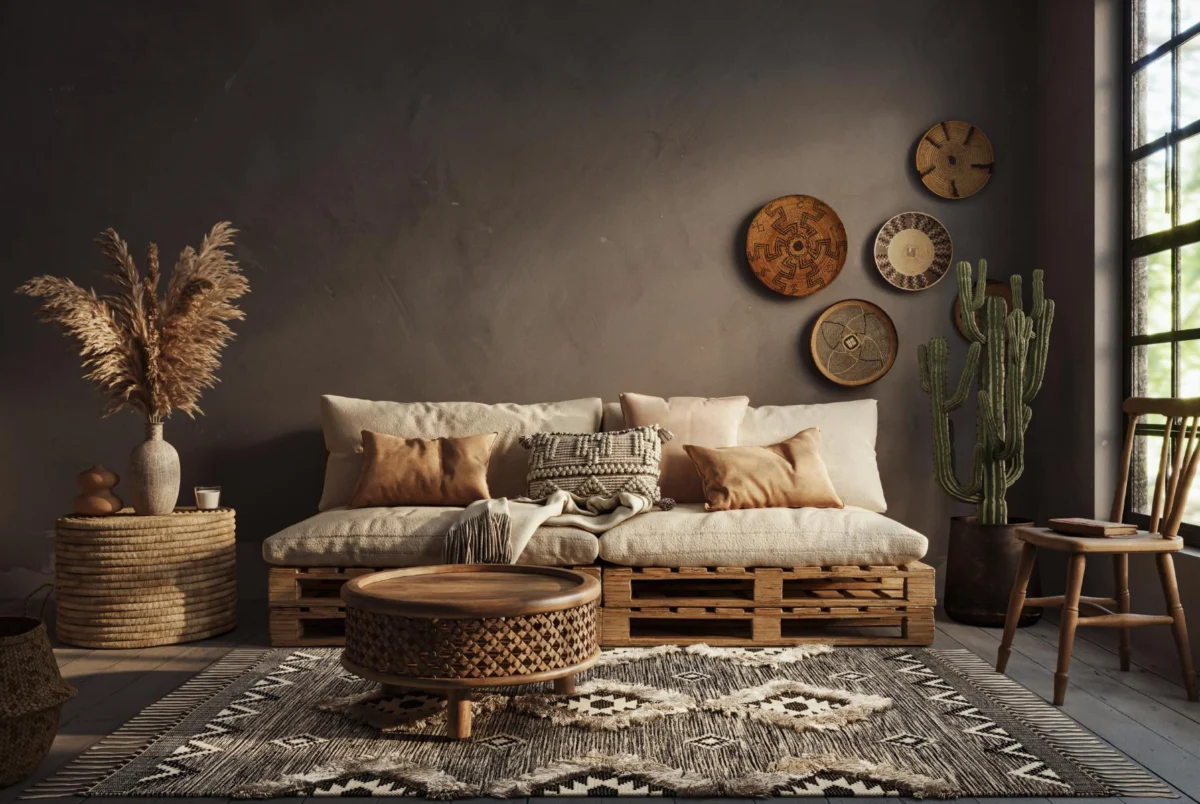
The era of the sterile, monochromatic "builder-grade" white wall is drawing to a close. In its place, a movement toward tactile, sensory-rich environments has taken hold of the global interior design market. As homeowners and architects increasingly reject the plastic-like sheen of standard latex paints, two ancient yet revitalized materials have emerged as the frontrunners of the "textured wall" revolution: microcement and limewash paint.
While both finishes offer a departure from the two-dimensional nature of traditional paint, they represent fundamentally different approaches to materiality, application, and aesthetic philosophy. This report examines the technical specifications, historical evolution, and strategic applications of microcement and limewash, providing a comprehensive guide for those seeking to redefine the boundaries of their living spaces.
I. Main Facts: The Shift Toward Organic Texture
The current surge in popularity for microcement and limewash is driven by the "Quiet Luxury" and "Wabi-Sabi" design movements, which prioritize natural imperfections and artisanal craftsmanship over mass-produced uniformity.
Microcement: The Seamless Skin
Microcement is a polymer-modified, cement-based coating that is typically applied in a thickness of just two to three millimeters. Unlike traditional concrete, which is heavy and prone to cracking, microcement is engineered for high adhesion and flexibility. It can be applied over almost any stable substrate—including existing tiles, drywall, and wood—making it a favorite for renovations where "gutting" the room is undesirable.
Limewash: The Breathable Antique
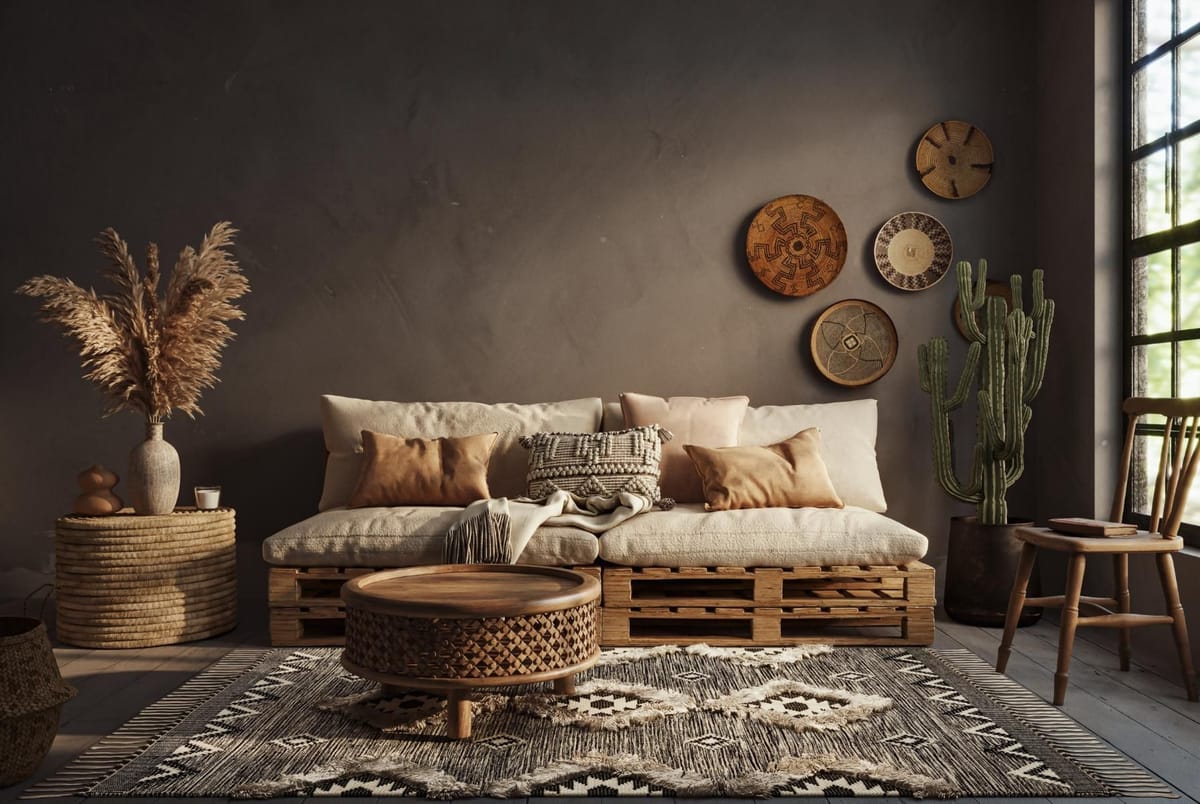
Limewash is a mineral-based finish composed of crushed, slaked lime (calcium hydroxide) mixed with water and natural pigments. Unlike modern paints that sit on top of a surface as a film, limewash undergoes a chemical reaction called carbonation. It penetrates the porous substrate and hardens into a breathable, stone-like layer. The result is a soft, "cloudy" aesthetic that appears to shift in color as the ambient light changes throughout the day.
II. Chronology: From Ancient Fortifications to High-End Living Rooms
Understanding these materials requires looking back at their developmental timelines, as their histories inform their modern-day prestige.
The 4,000-Year History of Lime
Limewash is one of the oldest decorative finishes in human history. Its use dates back to Ancient Egypt and Rome, where it was prized for its antimicrobial properties and availability. Throughout the Middle Ages and the Renaissance, it was the standard finish for European cottages and cathedrals alike.
- The Decline: In the mid-20th century, the rise of synthetic acrylic and latex paints nearly rendered limewash obsolete due to the convenience of "one-coat" coverage.
- The Resurgence: The late 2010s saw a revival as environmental concerns and a desire for historical authenticity led designers back to VOC-free, mineral-based products.
The Evolution of Microcement
Microcement is a much younger innovation, evolving from the industrial flooring technologies of the post-WWII era.
- 1960s–1980s: Industrial concrete floors became popular in factories, but their weight and thickness made them impractical for residential upper floors.
- 1990s: Chemical advancements allowed for the creation of "micro-toppings"—cement mixtures reinforced with polymers that could be applied thinly without losing structural integrity.
- 2020s: Refinements in pigments and sealants transitioned microcement from a purely industrial flooring solution to a high-end wall and furniture finish used in minimalist and "Japandi" (Japanese-Scandinavian) interiors.
III. Supporting Data: A Technical and Financial Comparison
Choosing between these two finishes requires an analysis of their performance metrics and long-term durability.
| Category | Limewash Paint | Microcement Walls |
|---|---|---|
| Composition | Slaked lime, water, natural pigments | Cement, resins, additives, mineral pigments |
| Average Thickness | < 1mm (Liquid application) | 2mm – 3mm (Trowel application) |
| Breathability | High (Vapor permeable) | Low to Moderate (Depends on sealant) |
| VOC Content | Zero to Ultra-Low | Low (Dependent on synthetic resins) |
| Durability | Moderate; susceptible to scuffs | High; impact and scratch-resistant |
| Water Resistance | Low (Naturally porous) | High (When properly sealed) |
| Application Time | 1–2 days | 3–5 days (Includes drying/sealing) |
| Cost Profile | Lower (Material is inexpensive) | Higher (High labor and skill cost) |
Performance Insights
Limewash is naturally alkaline (pH 12+), making it inherently resistant to mold and bacteria. This makes it an excellent choice for older buildings where moisture management is critical. However, because it is a mineral finish, it cannot be easily scrubbed; cleaning usually involves a light damp cloth or re-applying a thin "refresh" coat.
Microcement, conversely, relies on high-performance sealers. When finished with a high-quality polyurethane coat, it becomes nearly as durable as stone. This makes it suitable for high-traffic areas, fireplace surrounds, and even "wet zones" like bathrooms and kitchens where limewash might struggle without specialized (and often expensive) additives.
IV. Professional Responses: The Designer’s Perspective
Architects and interior designers view these materials not just as "paint substitutes," but as tools for manipulating the perceived volume of a room.
The "Continuous Surface" Argument
"Microcement allows us to erase the visual noise of a room," says London-based interior architect Julian Thorne. "By removing grout lines and corner seams, we can make a small living room feel like a singular, carved-out space. It creates a sense of architectural permanence that you simply cannot achieve with drywall and paint."
The "Living Wall" Aesthetic
Regarding limewash, designers emphasize its "living" quality. Unlike flat paint, which remains static, limewash reacts to humidity and light. "It has a depth that feels like a hug," notes color consultant Elena Rossi. "In a living room, limewash provides a soft, matte backdrop that makes furniture—especially organic materials like linen, wood, and wool—pop with much more intensity."
V. Strategic Design Ideas: Implementation in the Living Room
For homeowners looking to integrate these textures, the following applications represent the current "state of the art" in residential design.
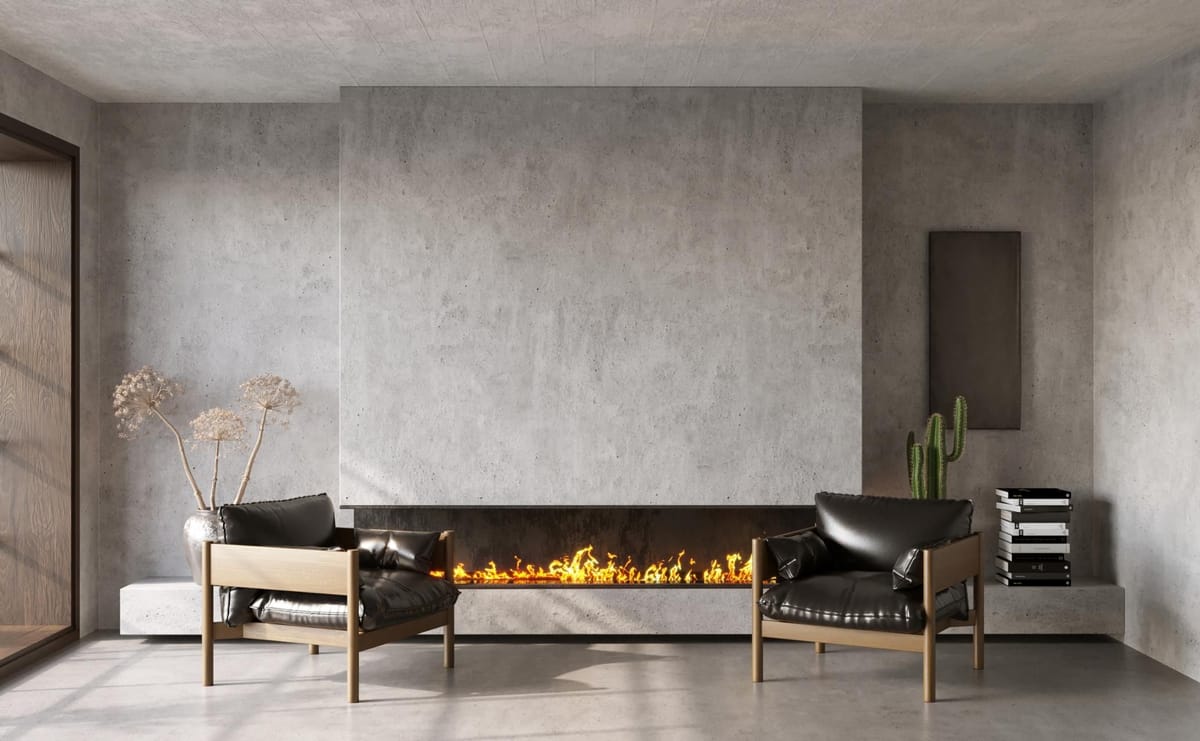
1. The Monolithic Fireplace (Microcement)
The fireplace is often the architectural anchor of the living room. Utilizing microcement here creates a seamless, heat-resistant structure that looks like a single block of stone. This is particularly effective in minimalist or industrial designs where a traditional mantel might feel too cluttered.
2. The Mediterranean "Glow" (Terracotta Limewash)
Applying a warm, earth-toned limewash (sienna, ochre, or terracotta) to a single feature wall behind a sofa can transform the room’s temperature. When applied with a wide masonry brush in "X" strokes, the lime creates a mottled, suede-like effect that mimics the aged villas of Tuscany or the Balearic Islands.
3. The Hybrid Texture Story (Two-Tone Walls)
A rising trend involves using both materials on a single vertical plane. A durable microcement "wainscoting" or lower half-wall can handle the bumps of vacuum cleaners and pets, while the upper half is finished in a complementary limewash to provide a soft, breathable atmosphere at eye level.
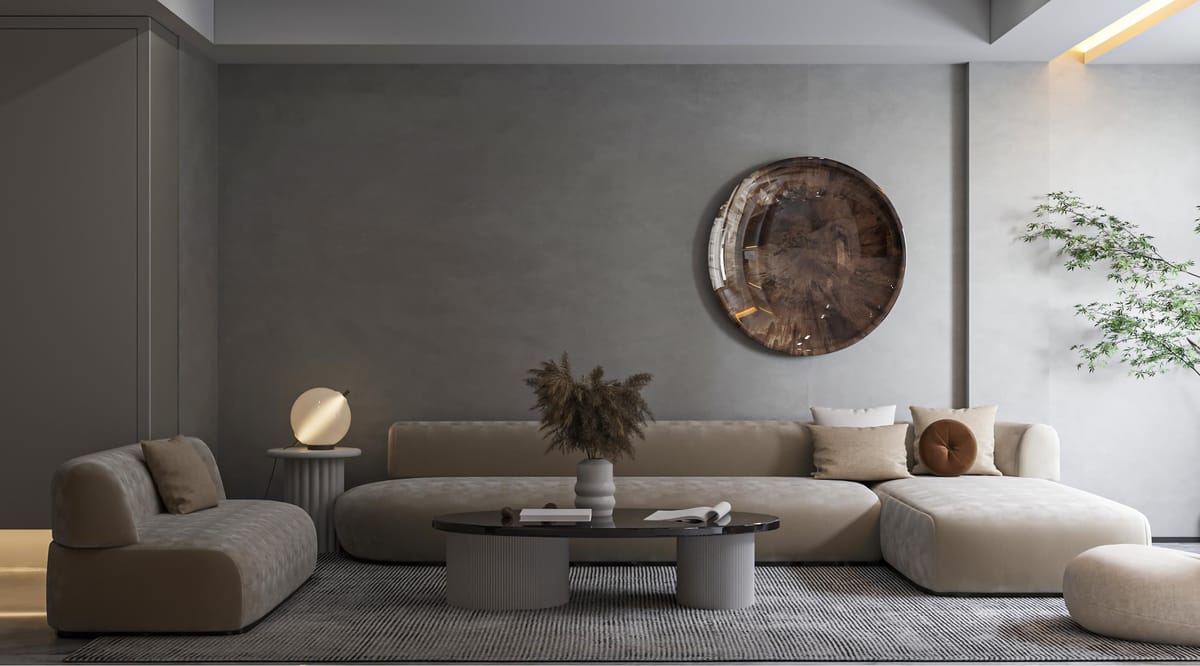
4. The "Japandi" Grey (Neutral Microcement)
For those pursuing the Japanese-meets-Scandinavian aesthetic, a cool, light-grey microcement across all four walls provides a neutral, high-durability canvas. When paired with light oak flooring and black steel accents, the microcement acts as the bridge between organic warmth and industrial precision.
VI. Implications: Sustainability and the Future of the Industry
The move toward these finishes has significant implications for the construction industry and environmental health.
Sustainability and Carbon Footprint
Limewash is widely considered one of the most eco-friendly finishes available. The production of lime involves lower temperatures than the production of cement, and as limewash cures on the wall, it actually absorbs carbon dioxide from the air.
Microcement, while containing cement (which has a high carbon footprint), contributes to sustainability through "waste reduction." Because it can be applied directly over old tiles or flooring, it prevents tons of construction debris from entering landfills during renovations.
The Labor Market
The shift toward these materials is creating a niche demand for "artisan applicators." Unlike standard painting, which can often be a DIY project, microcement requires a high level of trowel skill and an understanding of chemical curing times. This is driving a resurgence in the plastering trade, with specialized training programs emerging to meet the demand of the luxury housing market.
VII. Final Thoughts: Choosing Your Surface
The decision between microcement and limewash ultimately rests on the tension between durability and atmosphere.
- Choose Microcement if your lifestyle demands a "set and forget" surface. It is the choice for the modern minimalist who values sleekness, water resistance, and a finish that can withstand the rigors of a busy household.
- Choose Limewash if you view your home as an evolving, organic space. It is for the homeowner who finds beauty in the "perfectly imperfect," who values air quality and breathability, and who wants their walls to have the depth of a historical artifact.
In both cases, the result is a move away from the superficial and toward the structural. By choosing textures that interact with light and shadow, homeowners are no longer just coloring their walls—they are giving them a pulse.
