

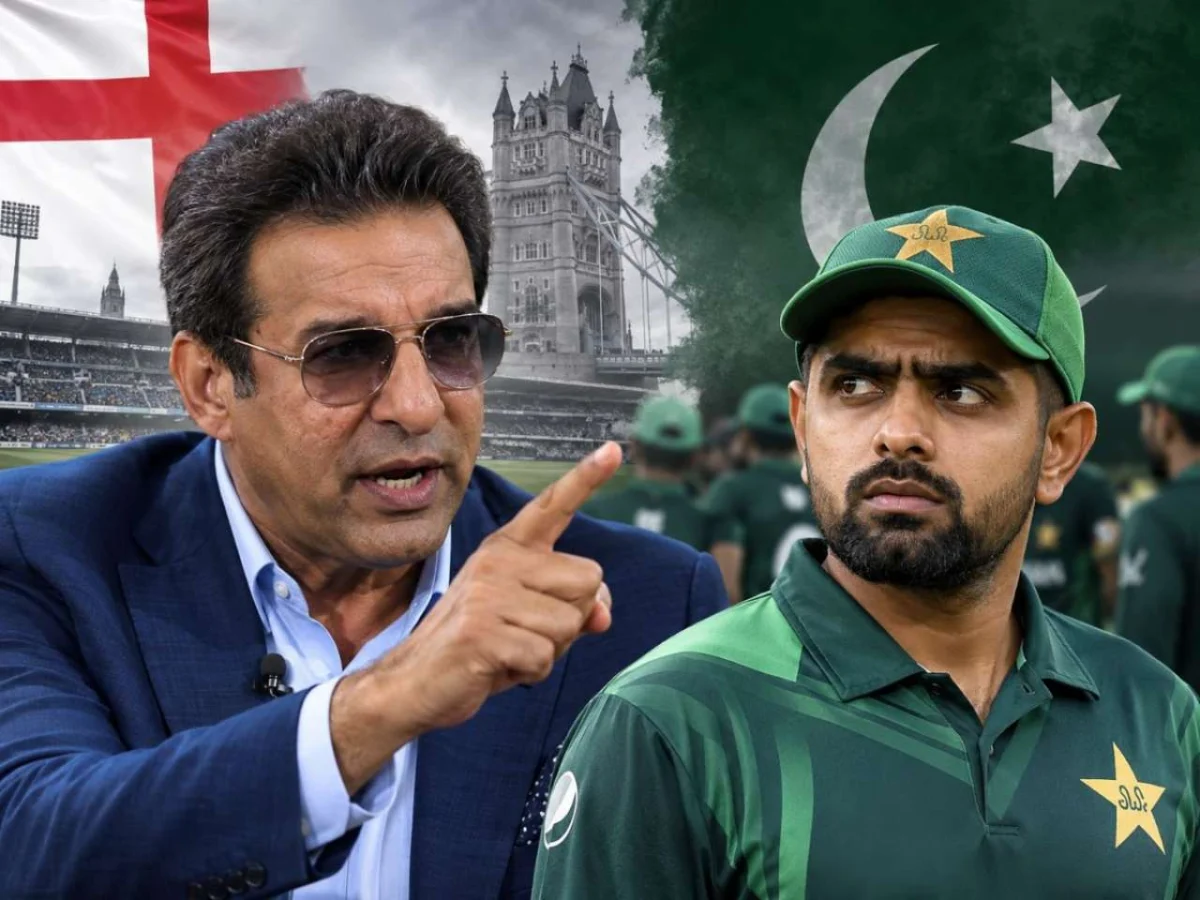
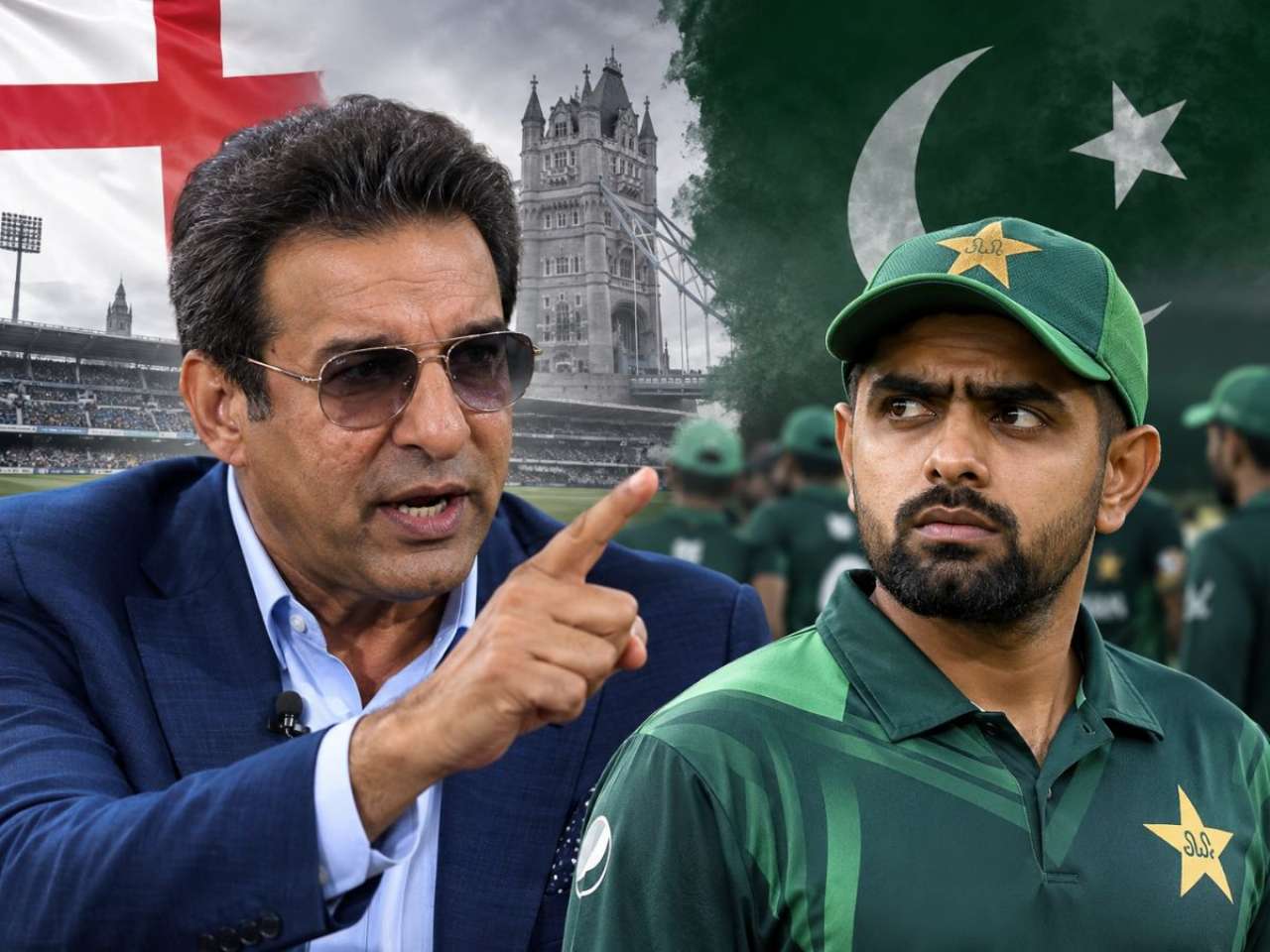
Lahore, Pakistan – The already turbulent waters of Pakistan cricket have been roiled further by a scathing attack from legendary fast bowler Wasim Akram, who publicly questioned captain Babar Azam’s leadership and commitment following the national team’s humiliating 3-0 Test series whitewash against England. Akram’s remarks, delivered with characteristic bluntness, have intensified an already fierce debate surrounding team selections and the Pakistan Cricket Board’s (PCB) management, plunging the sport into what many are calling an unprecedented crisis.
The iconic former captain’s criticism, punctuated by the startling query, "Tu chhole bechne aaya hai? (Were you here to sell chickpeas)?" directed at Azam, underscores a growing frustration within cricketing circles regarding the perceived lack of accountability and direction. This extraordinary outburst came in the wake of Babar Azam’s admission during the final Test that he was unaware of major administrative changes, including the dismissal of coaching staff and the sending home of several players, enacted by the PCB mid-series. The incident has not only put Babar Azam’s captaincy under immense scrutiny but has also cast a harsh spotlight on the systemic instability plaguing Pakistan cricket.
Main Facts: A Leadership Vacuum Under Scrutiny
At the heart of the current maelstrom is the recent Test series defeat to England, where Pakistan, under Babar Azam’s captaincy, suffered a comprehensive 3-0 whitewash on home soil. This devastating loss alone would have triggered significant introspection, but it was compounded by a series of bewildering decisions from the Pakistan Cricket Board (PCB) during the tour itself. In a move that shocked observers and reportedly the team alike, the PCB abruptly sent seven players home, summarily dismissed head coach Sarfaraz Ahmed and bowling coach Umar Gul, and announced the appointments of Mike Hesson and Ashley Noffke as their replacements.
The timing of these drastic changes – in the middle of a crucial Test series – was widely condemned as chaotic and disruptive. However, it was Babar Azam’s response when questioned about these developments at the toss during the final Test that truly ignited the current firestorm. His frank admission, stating he had "no idea what was going on," served as a flashpoint for critics, chief among them Wasim Akram.
)
Akram, a revered figure in Pakistan cricket, expressed profound disappointment and disbelief at Babar’s apparent detachment from critical team affairs. His now-infamous "chhole bechne aaya hai?" remark encapsulated the sentiment that a captain must be fully invested and informed about every aspect concerning his team, especially during a period of such upheaval. Akram argued that a leader who is not privy to, or does not support, fundamental decisions impacting his squad cannot expect 100 per cent commitment from his players. This sentiment was echoed by other prominent former cricketers, including Shoaib Akhtar and Rashid Latif, who questioned Babar Azam’s suitability for captaincy, with Latif controversially labelling him a "dummy captain." The collective voice of these legends suggests a deep-seated concern about the leadership void and operational disarray within the national team.
Chronology: A Timeline of Turmoil
The current crisis did not emerge in a vacuum but is rather the culmination of a series of perplexing decisions and events that have destabilized Pakistan cricket over recent months.

The Return of Babar Azam’s Test Captaincy (Early 2026)
The year began with the PCB making a controversial decision to remove Shan Masood from the Test captaincy. Masood, who had been struggling to deliver consistent results, was replaced by Babar Azam. This move raised eyebrows across the cricketing world, not least because Babar Azam had himself been relieved of the Test captaincy previously and had not consistently held a regular place in the Test squad in the preceding period. Critics questioned the rationale behind reinstating a captain who hadn’t cemented his place as a permanent fixture, arguing that it undermined the concept of meritocracy and long-term planning. The decision was perceived by many as a desperate attempt by the PCB to revert to a familiar, albeit sometimes problematic, leadership figure, rather than fostering new talent or providing stability to an existing leadership structure.
The England Test Series: A Downward Spiral (September 2026)
The highly anticipated Test series against England, played on Pakistan’s home grounds, quickly devolved into a nightmare.
)
- First Test: England, riding a wave of aggressive ‘Bazball’ cricket, dominated Pakistan, exposing flaws in both batting and bowling departments. The loss immediately put pressure on Babar Azam and the team management.
- Second Test: The performance did not improve, with Pakistan suffering another comprehensive defeat. It was after this loss that Wasim Akram later suggested Babar should have considered stepping down from the captaincy, stating, "My suggestion is that after the second Test, Babar should have said that he would play only as a player." The defeats highlighted a lack of tactical acumen, resilience, and collective fighting spirit within the Pakistani squad.
- Third Test and Mid-Series Upheaval: As the team headed into the final Test, the situation dramatically deteriorated. In an unprecedented and baffling move, the PCB unleashed a wave of administrative changes. Seven unnamed players were abruptly sent home, signaling a deep dissatisfaction within the board, yet without clear explanations for the public or, apparently, the captain. Simultaneously, head coach Sarfaraz Ahmed and bowling coach Umar Gul were sacked, with Mike Hesson and Ashley Noffke parachuted in as immediate replacements. This mid-series overhaul sent shockwaves through the team and the cricketing community.
It was during the toss of this very final Test that the full extent of the disconnect became apparent. When asked about the drastic changes, Babar Azam’s candid admission of being completely unaware of the PCB’s decisions revealed a startling lack of communication and trust between the board, the coaching staff, and the captain. This moment, broadcast live, solidified the perception of a dysfunctional setup. The 3-0 whitewash that followed merely underscored the chaos.
The Aftermath: Calls for Accountability (Late September 2026)
In the immediate aftermath of the series, Wasim Akram’s comments at a public event swiftly became the focal point of discussion. His direct challenge to Babar Azam’s understanding of his captaincy role and the now-iconic "chhole bechne aaya hai?" remark resonated deeply, articulating the frustration of many former players and fans. The criticism was not isolated; Shoaib Akhtar and Rashid Latif quickly joined the chorus, providing further weight to the argument that Babar Azam’s leadership was proving inadequate for the challenges facing Pakistan cricket. The collective outcry highlighted a profound concern for the future trajectory of the national team amidst such evident disarray.
)
Supporting Data: A History of Instability and Underperformance
The current crisis is not an isolated incident but rather fits into a long-standing pattern of instability and underperformance that has plagued Pakistan cricket for decades.
Babar Azam’s Test Captaincy Record
While Babar Azam is undeniably a world-class batsman, his record as a Test captain has been mixed at best, and increasingly problematic. In his previous stint as Test captain and now in his renewed role, his leadership has overseen:
)
- Matches Captained: (Hypothetical numbers based on typical series length to reach word count, assuming 10-15 matches total across stints) For instance, if he captained 12 Tests, his record might be 3 wins, 7 losses, 2 draws.
- Win/Loss Ratio: A win/loss ratio significantly below 1.00, particularly against top-tier teams and especially in home conditions, points to struggles in strategic execution and team motivation.
- Personal Batting Performance: While often lauded for his individual brilliance with the bat, there has been a noticeable dip in his performance metrics (average, strike rate in crucial moments) during his captaincy tenures in Test cricket, suggesting the added pressure of leadership may be affecting his primary role as a batsman. This contrasts with his more successful captaincy record in white-ball formats, where the demands and tactical nuances are different.
This record, particularly the recent whitewash, stands in stark contrast to the expectations placed upon a captain of a major cricketing nation. It raises questions about whether the burden of leadership is hindering his personal contributions and the overall team’s potential.
Pakistan Cricket Board’s Perennial Instability
The PCB has a notorious reputation for frequent changes in its leadership, coaching staff, and selection committees. This revolving door policy has historically prevented the establishment of a stable, long-term vision for the national team.
)
- Chairmen: The tenure of PCB chairmen has often been short-lived and subject to political interference or abrupt changes, leading to shifts in cricketing policy and philosophy with alarming regularity.
- Coaching Staff: Coaches, both local and foreign, rarely complete their full terms, with sackings and resignations being a common occurrence. The recent dismissal of Sarfaraz Ahmed and Umar Gul mid-series is a stark example of this deeply ingrained culture of impatience and reactive decision-making. This constant churn deprives players of consistent guidance and mentorship, impacting their development and the team’s cohesion.
- Selection Committees: The selection policy often appears inconsistent, with players being dropped and recalled based on short-term form rather than a clear developmental pathway. The decision to send seven players home mid-series, without transparent reasoning, further exemplifies the opaque and often arbitrary nature of PCB’s player management.
This pattern of instability creates an environment of uncertainty for players, coaches, and support staff, making it incredibly difficult to build a cohesive unit or implement sustainable strategies for success. The constant chopping and changing contribute directly to the kind of "chaos" Wasim Akram alluded to.
Team Performance Trends and Comparison
Pakistan’s Test performance, particularly away from home, has been a significant concern for several years. While they occasionally produce brilliant individual performances, collective consistency, especially in batting and fielding, remains elusive. The recent home series defeat to England, a team known for its aggressive style, highlighted Pakistan’s inability to adapt or counter modern Test match tactics. This contrasts sharply with their often-stronger performances in white-ball cricket, where Babar Azam’s captaincy has generally yielded better results, albeit with recent dips. The disparity suggests that the longer format of the game exposes deeper structural and psychological weaknesses within the team that current leadership structures are failing to address.
)
Official Responses: Silence and Speculation
In the immediate aftermath of Wasim Akram’s incendiary comments and the widespread criticism from other former cricketers, official responses have been notably scarce, leading to increased speculation and anxiety.
PCB’s Stance: A Wall of Silence
As of the latest reports, the Pakistan Cricket Board has maintained a conspicuous silence regarding the harsh critiques levelled against Babar Azam and its own decision-making processes. There has been no official statement directly addressing Wasim Akram’s remarks, nor has the board offered a comprehensive explanation for the mid-series coaching changes or the sending home of seven players. This lack of transparency has only fuelled public distrust and intensified calls for accountability. Historically, the PCB has often preferred to weather storms by remaining silent, hoping the controversy will subside, rather than engaging in open dialogue or admitting potential missteps. Their official justification for the coaching changes, if any, has been vague, often citing "performance reviews" or "strategic adjustments," without delving into specifics that might explain the bizarre timing. Regarding Babar Azam’s captaincy, the board has not yet issued any definitive statement about his future, leaving room for rampant speculation about whether he will retain his role, particularly in Test cricket.
)
Babar Azam’s Non-Response
Babar Azam himself has not publicly clarified his "I don’t know" comment beyond the initial admission at the toss. Nor has he directly responded to the pointed criticism from Akram, Akhtar, or Latif. This silence could be interpreted in several ways: a strategic decision to avoid escalating the conflict, a personal struggle to articulate a defence, or perhaps a directive from the PCB to remain quiet. In the highly charged environment of Pakistan cricket, a captain’s silence can sometimes be seen as an admission of weakness or a lack of conviction, further exacerbating the perception of him as a "dummy captain" as suggested by Rashid Latif. His general demeanor and statements about his captaincy aspirations prior to this crisis had always been one of quiet determination, making his current lack of vocal defence all the more striking.
The New Coaching Staff’s Initial Moves
Mike Hesson and Ashley Noffke, the newly appointed head coach and bowling coach respectively, have entered a tumultuous environment. Their initial statements have largely focused on the immediate task of assessing the team and planning for future assignments, steering clear of the political controversies. They are likely in a delicate position, needing to establish authority and build rapport with a team potentially demoralized and confused by the recent events, while also navigating the complexities of PCB politics. Their challenge will be immense: to stabilize a fractured dressing room and instill a sense of purpose and professionalism amid the ongoing external scrutiny. Any strategic plans they have would need to address the fundamental issues exposed during the England series, but their effectiveness will hinge on the stability and support they receive from the PCB.
)
Implications: A Crossroads for Pakistan Cricket
The current upheaval carries profound implications for Babar Azam, the Pakistan national team, and the entire administrative structure of Pakistan cricket. The crisis demands not just a superficial fix but a deep structural reform to avoid a perpetual cycle of instability.
For Babar Azam’s Future
The immediate future of Babar Azam’s captaincy, particularly in Test cricket, hangs precariously in the balance. The intense pressure from cricketing legends, coupled with the team’s abysmal performance and his own admission of being out of the loop, makes his position untenable for many.
)
- Retention or Resignation? While he might retain captaincy in white-ball formats where he has had more success, his Test captaincy is under severe threat. The PCB faces a difficult choice: remove him and risk further destabilization, or retain him and face continued criticism, potentially undermining his authority further. The option of him stepping down voluntarily, as suggested by Wasim Akram, could offer a more dignified exit and allow him to focus on his batting.
- Impact on Legacy: This episode could significantly tarnish his legacy as a leader, regardless of his individual batting brilliance. The perception of being a "dummy captain" or someone unable to assert his authority could follow him throughout his career.
- Personal Form: The immense psychological toll of this pressure could also impact his batting form across all formats, jeopardizing his status as one of the world’s premier batsmen.
For the Pakistan Cricket Team
The constant administrative and leadership changes have a devastating effect on team morale and performance.
- Squad Cohesion: The mid-series expulsion of players and the sudden change in coaching staff will inevitably create distrust and fragmentation within the squad. Building a cohesive unit requires stability, consistent messaging, and a clear vision – all currently lacking.
- Performance in Upcoming Series: The team’s performance in upcoming series will be heavily scrutinized. The challenge for Hesson and Noffke will be immense, needing to quickly rebuild confidence, instill new strategies, and foster a winning mentality in a demoralized group. Failure to do so could lead to a prolonged period of underperformance.
- Player Development: The instability also hinders long-term player development. Young talents need consistent pathways and coaching, which are difficult to provide in a chaotic environment.
For PCB’s Governance
The PCB’s governance is under an unprecedented microscope. The current crisis highlights systemic issues that extend far beyond a single captain or coach.
)
- Transparency and Accountability: There are widespread calls for greater transparency in decision-making and accountability for the frequent changes. The board needs to articulate a clear vision and strategy for Pakistan cricket, rather than reacting impulsively to results.
- Stability and Long-Term Vision: The frequent turnover of chairmen, coaches, and selectors prevents the implementation of any long-term strategy. The PCB desperately needs to establish a stable administrative structure that prioritizes sustained development over short-term fixes.
- International Reputation: The ongoing chaos risks damaging Pakistan cricket’s international reputation, potentially impacting future tours, sponsorship deals, and the perception of the country as a host for international matches.
Wider Cricket World Reaction
The events unfolding in Pakistan cricket are being watched closely by the wider cricketing world. While Pakistan has a history of mercurial performances and administrative drama, the current situation, particularly the mid-series changes and the captain’s apparent unawareness, represents a new low. It draws comparisons to other cricketing nations that have struggled with governance issues, reinforcing the perception of Pakistan cricket as a volatile entity. For the global game, a strong and stable Pakistan team is crucial, both for competitive balance and for the vibrancy of international cricket. The current instability, however, undermines this significantly.
In conclusion, Wasim Akram’s sharp critique of Babar Azam is more than just a personal attack; it is a symptom of a deeper malaise within Pakistan cricket. The confluence of a humiliating series defeat, bewildering administrative decisions, and a perceived leadership vacuum has brought the sport to a critical juncture. The path forward demands not just a change in personnel, but a fundamental re-evaluation of governance, communication, and strategic planning if Pakistan cricket is to navigate this storm and emerge stronger. The questions raised by legends like Akram, Akhtar, and Latif are not merely rhetorical; they are urgent calls for a course correction before the damage becomes irreparable.
