

By Senior Arts Correspondent
In the contemporary landscape of Indian arts, few figures embody the spirit of a Renaissance man as seamlessly as Manav Kaul. Known to the masses for his nuanced, "slick" performances in high-octane Bollywood dramas such as Badla, Thappad, and Jolly LLB 2, Kaul has quietly carved out a parallel existence as one of the most profound voices in modern Hindi literature. Whether he is commanding the screen with a subtle gaze or commanding the stage with immersive theatrical works like Ilhaam, Park, and Shakkar Ke Paanch Daane, Kaul operates with what many call the "Midas touch."
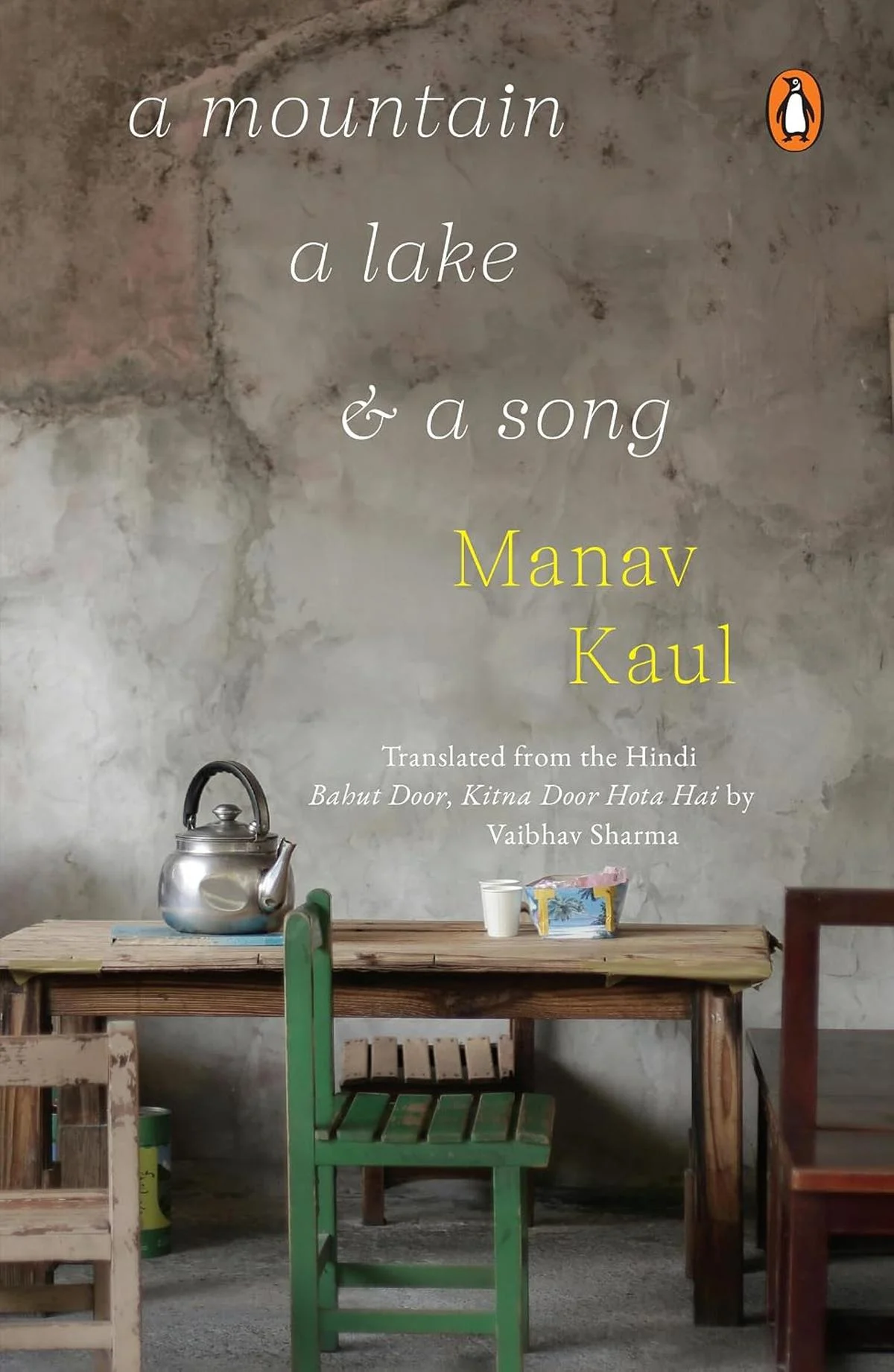
His latest creative endeavor, A Mountain, A Lake and A Song, published by Penguin and translated from Hindi by Vaibhav Sharma, marks a significant milestone in his literary journey. Far from a conventional travel guide, the book is a meditative, deeply personal account of Kaul’s inner world, penned during his solitary ramblings through the small, cobblestoned cities of Europe. In an exclusive interview, Kaul peels back the layers of his creative process, revealing a man who finds more truth in fiction than in reality and who views the act of traveling as a brutal confrontation with the self.
The Genesis of a Meditative Travelogue
The birth of A Mountain, A Lake and A Song was not the result of a calculated literary plan, but rather an organic byproduct of Kaul’s restlessness. During a virtual meeting—Kaul appearing relaxed in a blue T-shirt, sipping tea against a backdrop that suggested a quiet domesticity—he recounted the serendipitous origin of the manuscript.

“I used to dream that one day I’d be writing a novel,” Kaul admitted, his voice reflecting the same calm intensity he brings to his characters. “But I didn’t have the patience for it. I was writing short stories even when traveling from London to Paris, and from Paris to Chamonix.”
What began as a series of fragmented observations and short narratives eventually coalesced into a 40-page draft. When he shared these pages with his publisher, the response was immediate: the work had a soul that demanded completion. This encouragement pushed Kaul to synthesize his experiences into a cohesive travelogue that explores the intersection of geography and psychology. The book serves as a bridge between the physical landscapes of Europe—the majestic Mont Blanc and the quiet lakes—and the internal landscapes of a man seeking to understand his place in the world.
A Chronology of Migration: From Baramulla to Mumbai
To understand Manav Kaul the writer, one must understand Manav Kaul the migrant. His life has been a series of shifts, each leaving an indelible mark on his creative psyche. Born in Baramulla, Kashmir, his early years were shaped by the valley’s ethereal beauty and its underlying tensions. His family later moved to Hoshangabad (now Narmadapuram) in Madhya Pradesh, before he eventually transitioned to the cultural hub of Bhopal and, finally, the cinematic epicenter of Mumbai.
These migrations have stripped away the traditional concept of "home" as a fixed physical location. For Kaul, home is an architectural construct of the mind. “You can always draw from what you don’t have,” he explained. “I remember every detail of my childhood, especially my house. I can place anyone there, and it will be honest and truthful because I have lived that.”

Rather than manifesting as a sense of displacement or "angst," Kaul’s history of movement has enriched him. He views his lack of a singular, static home as a creative asset, allowing him to inhabit different characters and stories with a sense of "honest and truthful" detachment. This background provides the emotional backbone of his writing, where the search for belonging is a recurring motif.
The Duality of the Artist: Balancing Screen and Page
One of the most striking aspects of Kaul’s career is the distinct wall he maintains between his various personas. In an industry where "personal branding" often leads to a blurring of roles, Kaul remains a purist in each field.
“If you see me in a film or on a set, you wouldn’t believe that I have written a book because I’m completely into being an actor at that time,” he noted. This compartmentalization is what allows him to remain prolific. His journey into writing was paved by his deep involvement in theatre. Immersing himself in the works of legendary playwrights sparked a realization: to fully express his artistic vision, he needed to move beyond interpretation and into creation.
This transition began with playwriting, which then evolved into "random stories" written in the margins of his life. By 2016, his first book was released, signaling the arrival of a serious literary talent. Today, Kaul is as likely to be found in a quaint café in Europe, channelling his energies into poetry and fiction, as he is to be found on a Mumbai film set.

The Philosophy of the Unknown and the Honesty of Fiction
A central theme in A Mountain, A Lake and A Song is the allure of the "unknown." Kaul posits that human beings are fundamentally governed by a desire to know themselves by stepping away from the familiar. For him, travel is the ultimate catalyst for this self-discovery.
“I took a step into the unknown when I started travelling without even thinking where I was going,” he said. “On every page, I’m brutally honest about what I was feeling. I want to understand what happens when you have no comfort of language, home, or your own people.”
This "brutal honesty" extends to his views on the nature of truth itself. In a world obsessed with factual accuracy, Kaul makes a compelling case for the power of the imagination. He suggests that fiction often holds "more truth than truth itself." By his own admission, Kaul views his daily life as "very boring," yet through the lens of writing, he is able to transform the mundane into something evocative and universal. His travelogue, therefore, is not just a socio-cultural exploration of Europe, but an excursion into the "inner-self," where the boundaries between what happened and what was felt are intentionally blurred.
Supporting Data: The Literary Landscape of Manav Kaul
Kaul’s literary output is significant not just for its quality, but for its role in bringing contemporary Hindi literature to a wider audience. The translation of his work by Vaibhav Sharma is a testament to the universal appeal of his themes.

Key Works in Kaul’s Portfolio:
- Theatre: Shakkar Ke Paanch Daane (A seminal work in modern Indian theatre), Ilhaam, Park, and Bali aur Shambhu.
- Literature: Theek Tumhare Peeche (Short stories), Tumhare Itne Naam (Novel), and A Mountain, A Lake and A Song (Travelogue).
- Cinema: Critical acclaim for Tumhari Sulu, Kai Po Che!, and the Netflix anthology Ajeeb Daastaans.
His writing style is characterized by a "fragrance of fictionality"—a lyrical quality that elevates his prose. In A Mountain, A Lake and A Song, this is particularly evident in his descriptions of the European landscape, which he treats not as scenery, but as a silent protagonist in his journey.
The Call of the Peaks: A Mountain Person’s Perspective
Nature, particularly the mountains, acts as a spiritual anchor for Kaul. Whether it is the Alps of Europe or the serene ridges of Binsar in Uttarakhand, the mountains offer him a sense of perspective that the city cannot.
“I think if you have a mountain in front of you, you can look at it in the morning, afternoon, evening, and night. Every time, it’s going to give you something different,” Kaul mused. This fascination with the shifting light and shadows of the peaks mirrors his approach to character development and storytelling. For Kaul, the mountain is a metaphor for the human condition—constant yet ever-changing, imposing yet inviting.

Implications: The Future of the Actor-Author
The success of A Mountain, A Lake and A Song carries broader implications for the Indian cultural scene. It challenges the stereotype of the "Bollywood actor" as a singular dimension of celebrity, proving that intellectual and literary depth can coexist with commercial success. Furthermore, as his works continue to be translated into English and other languages, Kaul is helping to bridge the gap between regional Indian literature and the global stage.
As the interview concluded, Kaul’s reflections left a lasting impression of a man who is perpetually in motion, both physically and intellectually. He is an artist who refuses to be moored to a single identity, choosing instead to find his home in the "unknown." For readers and viewers alike, Manav Kaul remains a vital voice—one that reminds us that the most interesting journeys are often the ones we take within ourselves.
Publication Details:
- A Mountain, A Lake and A Song
- Author: Manav Kaul
- Translator: Vaibhav Sharma
- Publisher: Penguin Random House India
- Genre: Travelogue/Memoir
