

In an era defined by the relentless digital pulse of oversharing, the traditional memoir finds itself at a peculiar crossroads. Social media platforms have democratized—or perhaps devalued—the act of personal revelation, bombarding audiences with a constant stream of intimate details that range from the mundane to the tragic. When every life event is broadcast in real-time, the carefully constructed autobiography risks becoming either redundant or performative.
George Orwell famously posited that an autobiography is only to be trusted when it reveals something disgraceful. Yet, in the contemporary literary landscape, the "disgraceful" has become the baseline. The market is saturated with narratives of trauma, family dysfunction, and personal upheaval, leading some critics to wonder if a life without a sensationalist hook is deemed unworthy of the page.
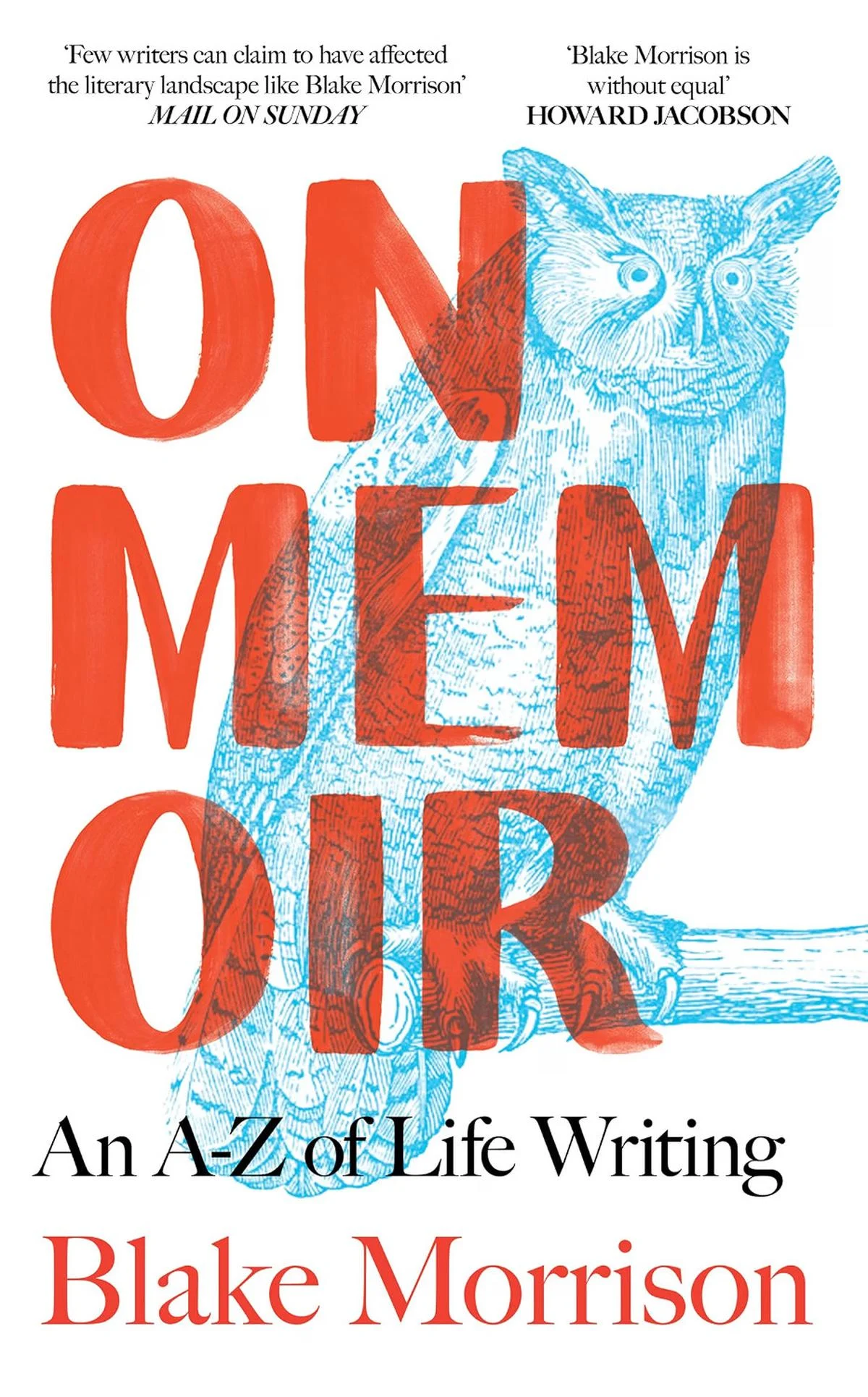
Two new seminal works, however, seek to reclaim the genre from the clutches of the "cringy" and the "boring." Blake Morrison’s On Memoir: An A-Z of Life Writing and Michael Cunningham’s Unsayable: A Life in Writing offer a profound meditation on the necessity of storytelling. These authors, both in their 70s, serve as veteran guides through the treacherous terrain of memory, truth, and the "unsayable."
Main Facts: Two Perspectives on the Self
The literary world has recently seen the release of two distinct yet complementary explorations of life-writing. Blake Morrison, a British poet and author renowned for his own landmark memoirs like And When Did You Last See Your Father?, has produced an encyclopedic guide titled On Memoir: An A-Z of Life Writing. Published by The Borough Press, the book functions as both a craft manual and a philosophical inquiry into why we feel the "duty" to recount our lives.
Simultaneously, Pulitzer Prize-winning novelist Michael Cunningham, best known for The Hours, has released Unsayable: A Life in Writing via Fourth Estate Ltd. While Morrison’s work is structured as a lexicon of the genre, Cunningham’s is a more fluid, elusive hybrid of memoir and literary criticism. He uses his own life as a "petri dish" to examine the mechanics of fiction and the elusive nature of "truth."
Both books grapple with the fundamental paradox of the memoir: the stranger laying out their life for the reader, essentially saying, "This is who I am," or perhaps more honestly, "This is the person I have constructed for your consumption."
Chronology: The Evolution of Life-Writing
To understand the significance of Morrison and Cunningham’s contributions, one must look at the trajectory of the genre. The memoir has evolved from the rigid, chronological "Great Man" autobiographies of the 19th century to the raw, confessional works of the late 20th century.
- The Orwellian Standard: In the mid-20th century, Orwell set the bar for honesty, suggesting that the writer’s primary obligation was to expose their own failings.
- The Confessional Turn: By the 1990s, the memoir exploded in popularity, often focusing on overcoming extreme adversity. This period saw the rise of the "misery memoir," a trend that Morrison and Cunningham both acknowledge and, to some extent, pivot away from by focusing on the craft rather than just the trauma.
- The Era of Autofiction: In the last decade, writers like Karl Ove Knausgård (across six volumes) and Ved Mehta (across twelve) have blurred the lines between fiction and fact, a tradition Cunningham continues by treating facts as "scaffolding" for emotional resonance.
- The Digital Disruption: Today, the "oversharing" culture of the 21st century has forced memoirists to find new ways to be "authentic" in a world where everyone is a publicist for their own life.
Supporting Data: Psychological Truth vs. Literal Fact
A central theme in both works is the distinction between what happened and what it meant. Morrison quotes the English playwright Harold Pinter, who noted, "The real truth is that there is never any such thing as one truth." This sentiment is echoed in Cunningham’s assertion that fiction is often the only tool capable of reaching the truth "when the truth isn’t sufficient for the truth."

The "Petri Dish" Approach
Cunningham’s Unsayable is a masterclass in this nuance. He presents anecdotes—ranging from a childhood story involving Tupperware to his numerous encounters within the gay community—not as definitive historical records, but as specimens for analysis. He suggests that the most reliable source of any past is a combination of the person who lived it and the person who witnessed it. This duality creates a "blurry" overall picture, where the author remains an elusive figure even as his prose is vividly present.
The A-Z of Human Experience
Morrison’s On Memoir emphasizes the importance of "shock" as an integral part of the narrative. He argues that a memoir must do more than just record events; it must provide a "distillation of a lifetime’s work." By organizing his thoughts alphabetically, Morrison allows the reader to dip in and out of topics like "Hindsight," "Honesty," and "Inevitability."
The Hindsight Bias
Both authors warn against the dangers of hindsight. The memoirist knows how the story ends, which can lead to a false sense of inevitability in the narrative. Cunningham and Morrison argue that the best writers are those who maintain the "tension" of the moment, acknowledging the distance between the person who experienced the event and the person writing about it years later. They describe a literary version of the "Butterfly Effect," where a small change in perspective can lead to a massive difference in how a life is interpreted.
Official Responses and Critical Reception
The critical reception of these works highlights a shift in how literature is being evaluated in the 2020s. Reviewers have noted that Cunningham, despite his Pulitzer, remains an "underrated" figure whose ability to render the "unsayable" into language is unparalleled. His work in Unsayable is praised for its lack of embarrassment, particularly in detailing his youth and connecting it to his writerly life.
However, some critics have pointed out that the "electricity and shock" of Cunningham’s narrative leaks out toward the final quarter of the book, where the connections between life and art can sometimes feel forced.
Morrison’s work has been received as a definitive "treasure chest" of experience. Critics have lauded his clarity and joy, noting that his A-Z structure provides a much-needed framework for a genre that can often feel sprawling and self-indulgent. The consensus among literary circles is that these two books together form a vital curriculum for any aspiring writer, emphasizing that "all writing is a matter of choice—what to retain, what to leave out."
Implications: The Last Genre Standing Against AI
Perhaps the most provocative argument raised by Morrison is the resilience of the memoir in the face of artificial intelligence. As Large Language Models (LLMs) become increasingly adept at mimicking human prose, the question of "authenticity" becomes paramount.
The Human Advantage
Morrison asserts that the memoir is safe from AI because the technology "can’t speak authentically, in the first person as an embodied human being." He argues that because AI is not "alive," it cannot truly replicate the "blood and bone" of a lived experience. In this view, the memoir will be the "last genre standing" when AI eventually dominates other forms of literature.

The Role of the "Unsayable"
The title of Cunningham’s book, Unsayable, points to the ultimate limitation of both AI and language itself. There are aspects of human existence—grief, desire, the passage of time—that remain just out of reach of vocabulary. The memoir serves as a record of that struggle. It is a testament to what language cannot do, as much as what it can.
A Guide for the Next Generation
As Morrison and Cunningham enter their eighth decade, their works serve as a bridge between the traditional literary canon and the digital future. They teach that whether a story is "purely, literally autobiographical" is less important than its "emotional resonance."
For the young writer, the lesson is clear: the value of a life-story does not lie in the extremity of the trauma or the celebrity of the subject, but in the honesty of the telling and the awareness of the "unsayable" depths within us all. In an era of oversharing, the true memoirist is not the one who tells everything, but the one who knows exactly what to leave in the shadows.
Bibliographic Information:
-
On Memoir: An A-Z of Life Writing
- Author: Blake Morrison
- Publisher: The Borough Press
- Price: ₹1,927
-
Unsayable: A Life in Writing
- Author: Michael Cunningham
- Publisher: Fourth Estate Ltd
- Price: ₹899
