

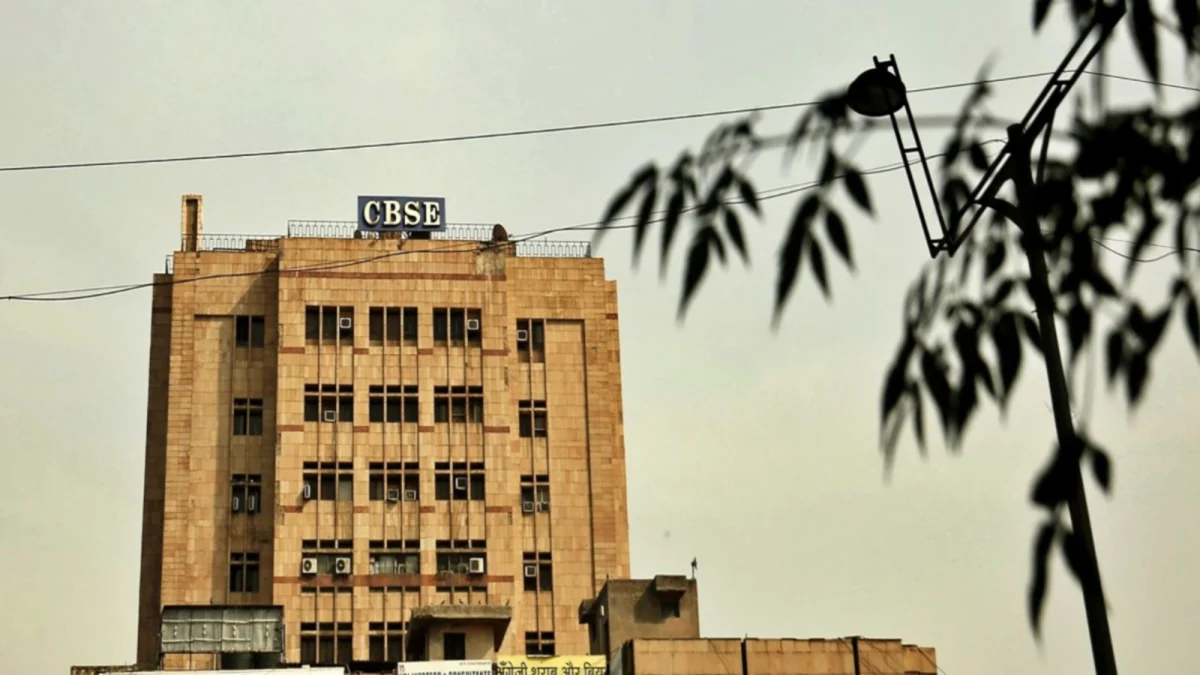
New Delhi – September 22, 2026 – In a significant development impacting students in West Asia, the Central Board of Secondary Education (CBSE) has announced its decision to conduct board examinations for Class 12 candidates who were previously awarded marks under a special assessment scheme. This revised approach comes as a direct consequence of the cancellation of regular board examinations in several Gulf nations due to the prevailing war situation. The move aims to provide affected students with an opportunity to improve their scores and ensure a fair evaluation process.
The decision, officially communicated by CBSE Examination Controller Sanyam Bhardwaj, addresses the concerns of students who expressed dissatisfaction with the marks they received under the special assessment scheme. This scheme was instituted following the unprecedented cancellation of Class 12 board examinations across seven West Asian countries: Bahrain, Iran, Kuwait, Oman, Qatar, Saudi Arabia, and the United Arab Emirates. The cancellations affected a substantial number of students and spanned 40 subjects, including 20 academic papers.
The Genesis of the Special Assessment Scheme and Subsequent Re-evaluation
The geopolitical turmoil in the West Asian region necessitated an extraordinary measure from the CBSE. Recognizing the inability to conduct physical examinations in these conflict-affected areas, the board devised a special assessment scheme. This scheme was formally notified on March 27, 2026, outlining the methodology for preparing the results of the affected candidates.
"The CBSE had notified an assessment scheme on March 27 for result preparation of affected candidates. Accordingly, results for all regular candidates from West Asian countries were declared on May 13 along with other Class 12 candidates in India and abroad," stated Sanyam Bhardwaj, CBSE Examination Controller. He further elaborated that the results for private candidates from these countries were also subsequently declared under the same framework.
A critical clause within the assessment scheme acknowledged the potential for student dissatisfaction. It stipulated that "students dissatisfied with their results may be given an opportunity by conducting examinations in subjects, that could not be held." This provision has now been invoked by the CBSE, leading to the current announcement.
A Chronology of Events: From Cancellation to Re-examination
The situation unfolded in a series of critical steps, marked by the urgency dictated by the ongoing conflict and the academic futures of thousands of students.
- Early 2026: Escalating geopolitical tensions in several West Asian countries created an environment where conducting regular board examinations became untenable due to security concerns and logistical challenges.
- March 2026: The CBSE formally announced the cancellation of Class 12 board examinations for students in Bahrain, Iran, Kuwait, Oman, Qatar, Saudi Arabia, and the UAE. This decision impacted a significant number of academic subjects, with 40 papers being called off.
- March 27, 2026: To mitigate the impact of the cancellations, the CBSE introduced a special assessment scheme. This scheme was designed to evaluate students based on alternative parameters, aiming to provide them with a result despite the inability to hold traditional examinations.
- May 13, 2026: Following the implementation of the special assessment scheme, the CBSE declared the results for Class 12 regular candidates from the affected West Asian countries. These results were announced concurrently with those of students in India and other international locations. Subsequently, the results for private candidates from these regions were also declared under the same scheme.
- September 22, 2026: Faced with feedback and a commitment to the principles of fair assessment, the CBSE announced its decision to conduct fresh examinations for Class 12 candidates in West Asia who received their results under the special assessment scheme. This decision addresses the dissatisfaction expressed by some students and provides them with a chance to improve their academic standing.
Details of the Special Examination for West Asian Candidates
The CBSE has outlined a clear framework for this re-evaluation process, emphasizing flexibility and student choice.
Subjects for Re-examination: The examinations will be conducted for all 40 subjects that were originally cancelled due to the war situation. This ensures that students have the opportunity to be re-evaluated in all the papers they would have otherwise taken.
Candidate Eligibility: The re-examination is specifically for Class 12 candidates from West Asian countries whose results were declared under the special assessment scheme.
Subject Choice: A key feature of this initiative is that candidates will have the freedom to choose the subjects in which they wish to appear for the examination. This allows students to strategically target areas where they feel their assessment under the previous scheme was not reflective of their true potential.
Finality of Results: It is crucial for students to understand that the results obtained from this new examination will be considered final. This means that the marks secured in the upcoming examinations will replace their earlier performance under the special assessment scheme.
Examination Schedule and Form Submission: The exact examination dates and the detailed date sheet will be communicated to the students once the form-filling process is completed. Eligible candidates are required to submit their examination forms directly.
Fee Structure: In a significant move to alleviate any financial burden on the affected students, the CBSE has announced that no examination fee will be charged for this special examination. This underlines the board’s commitment to supporting these students through this challenging period.
Examination Centres: The existing examination centres that were established for previous board exams in these regions will remain unchanged. This will likely streamline logistical arrangements and familiarise students with their examination venues.
Post-Result Facilities: The CBSE has clarified that no post-result declaration facilities, such as re-evaluation or scrutiny, will be made available for the examinations conducted under this special scheme. This emphasizes the finality of the results once declared.
Official Responses and Board’s Commitment
The decision to conduct these special examinations underscores the CBSE’s responsiveness to the needs of its students and its commitment to upholding academic integrity, even in the face of unforeseen circumstances.
Sanyam Bhardwaj, the Examination Controller, articulated the board’s rationale, stating, "The assessment scheme had stated that students dissatisfied with their results may be given an opportunity by conducting examinations in subjects, that could not be held." This reiterates the board’s adherence to its own policies and its willingness to provide recourse to students.
The announcement also implicitly acknowledges the limitations of any assessment scheme that deviates from traditional examination formats. While the special assessment scheme was a necessary stopgap measure, the opportunity for a formal examination provides a more concrete and universally accepted method of evaluating student performance.
The CBSE has also flagged a procedural issue related to the initial implementation of the assessment scheme: "The board also flagged that non-submission of LOC of students and details within the requisite time line." This implies that there might have been administrative challenges in gathering the necessary information for the special assessment in the first place. However, the current decision to conduct examinations suggests that these procedural hurdles are being overcome, and the focus is now squarely on providing a fair evaluation.
Implications for Students and the Educational Landscape
The CBSE’s decision to conduct these special examinations carries several significant implications for the affected students and the broader educational landscape.
Academic Advancement: For students who were unhappy with their marks under the special assessment scheme, this presents a crucial opportunity to secure better scores. This can be vital for their admission into higher education institutions, both in India and abroad, which often have stringent cut-off marks. The ability to choose subjects for re-examination allows them to concentrate their efforts on areas where they believe they can make the most significant improvement.
Psychological Relief and Fairness: The uncertainty and potential dissatisfaction stemming from an assessment scheme can take a toll on students’ mental well-being. The provision of a re-examination offers a sense of closure and fairness, ensuring that their academic futures are not unduly hampered by circumstances beyond their control. It reinforces the principle that every student deserves a fair chance to demonstrate their knowledge and abilities.
Precedent for Future Crises: While the war situation in West Asia is a unique and unfortunate event, the CBSE’s handling of this crisis and its subsequent remedial actions could set a precedent for how educational boards manage similar disruptions in the future. The development and implementation of flexible assessment mechanisms, coupled with a commitment to provide alternative evaluation methods, are crucial lessons learned.
Logistical Challenges and Board’s Capacity: Conducting examinations across multiple West Asian countries, even with unchanged centres, presents significant logistical challenges for the CBSE. This includes exam paper distribution, invigilation, and the secure transportation of answer scripts. The board’s ability to successfully execute these examinations will be a testament to its organizational capacity and its dedication to its students.
Impact on University Admissions: Universities and higher education institutions will need to be aware of this special examination process. The revised marks obtained by these students will need to be considered by admissions committees, potentially leading to a delayed but fair evaluation of their applications.
In conclusion, the Central Board of Secondary Education’s decision to conduct fresh examinations for Class 12 candidates in West Asia signifies a commitment to fairness and student welfare. By providing an avenue for re-evaluation, the board is addressing the fallout from the war-induced cancellation of regular examinations, ensuring that these students have the opportunity to achieve their academic aspirations. This proactive measure is likely to be welcomed by students, parents, and educators alike, reinforcing the CBSE’s role as a responsible and adaptive examination body.
