

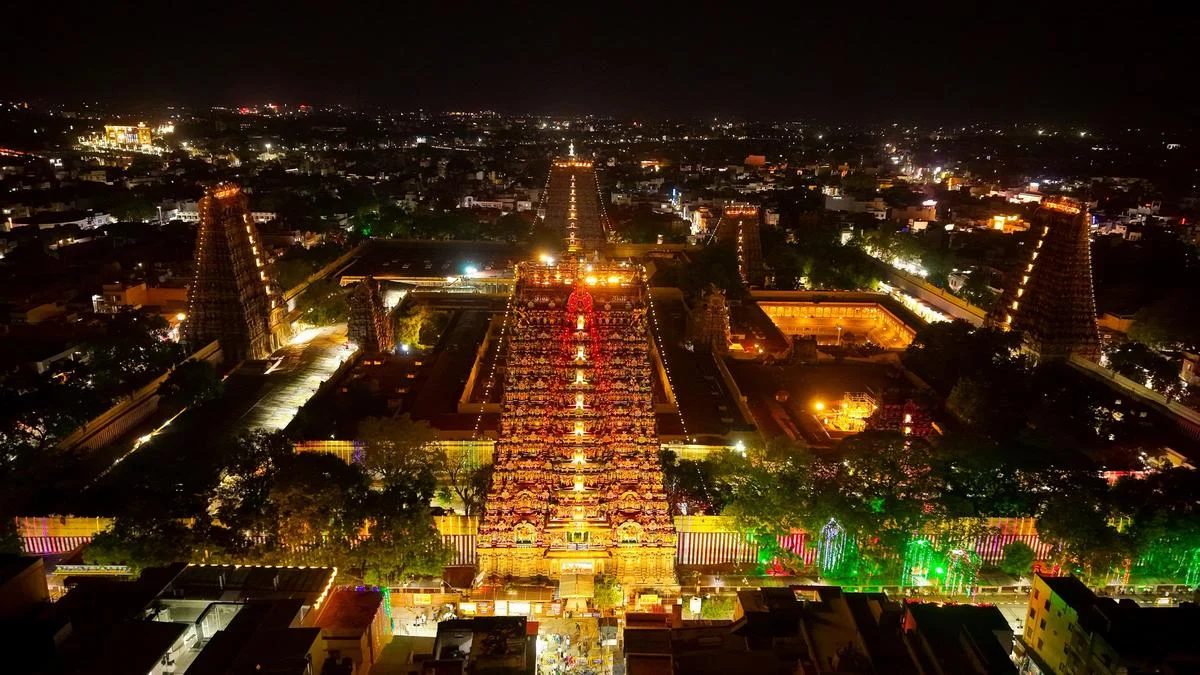
Madurai, often hailed as the "Athens of the East," stands as one of the oldest continuously inhabited cities in the world. Situated on the banks of the River Vaigai, it is a city where the ancient and the modern do not merely coexist but are intricately woven together. From the 2,500-year-old archaeological revelations at Keeladi to the vibrant, GI-tagged jasmine markets and the labor-intensive artistry of Sungudi textiles, Madurai serves as a living museum of South Indian civilization. This report explores the multi-faceted identity of Madurai, tracing its historical lineage, its culinary landmarks, and the ongoing efforts to preserve its unique cultural heritage.
Main Facts: The Pillars of Madurai’s Identity
The cultural and economic fabric of Madurai is defined by several key pillars:

- Archaeological Significance: The Keeladi excavation site, located 12 kilometers from the city, has pushed back the timeline of the Sangam era, proving the existence of an advanced urban civilization in the Vaigai valley as early as the 6th century BCE.
- Textile Heritage: The Sungudi sari, a product of the Saurashtrian migration, represents a 400-year-old tie-and-dye tradition. Despite the rise of machine-printed replicas, handloom Sungudi remains a vital, though endangered, craft.
- Botanical Excellence: Madurai Malli (jasmine) is internationally renowned for its thick petals and intoxicating fragrance. It was granted a Geographical Indication (GI) tag in 2013, facilitating a robust export economy to Southeast Asia and the United States.
- Culinary Innovation: The city is a gastronomic hub, famous for indigenous creations like Jigarthanda (a cooling dessert drink) and Paruthipaal (cottonseed milk), which reflect the city’s adaptation to its tropical climate.
- Architectural Marvels: Beyond the iconic Meenakshi Amman Temple, the city is dotted with Nayak-era ruins, including the Pathu Thoon (Ten Pillars) and the unfinished Raya Gopuram, which serve as functional parts of the modern marketplace.
Chronology: From the Vaigai Valley to the Nayak Dynasty
The history of Madurai is not a linear progression but a series of overlapping cultural layers.
The Ancient Era (6th Century BCE – 3rd Century CE)
Recent excavations at Keeladi have provided empirical evidence of a literate, industrial society. Artifacts dating back to 580 BCE suggest that the Vaigai valley civilization was contemporary to the Gangetic plain’s urban centers. This era established Madurai as a center for trade and literature, hosting the Sangam assemblies of poets.

The Nayak Renaissance (16th – 17th Century)
Much of Madurai’s current physical layout and architectural grandeur can be traced to the Nayak rulers. Under King Thirumalai Nayak, the city saw a massive revival. It was during this period that the Saurashtrian community, fleeing northern invasions, migrated from Gujarat to Madurai. They were welcomed as royal weavers, bringing with them the tie-and-dye techniques that evolved into the Madurai Sungudi.
The Saurashtrian Migration and Sungudi Evolution
By the late 16th century, the Saurashtrian weavers had integrated their northern techniques with local cotton. The name "Sungudi" is derived from the Sanskrit word Sunnam, meaning "round," referring to the circular patterns created by tying tiny knots in the fabric before dyeing.

The Modern Transition (20th Century – Present)
In 1921, Madurai played a pivotal role in India’s freedom struggle when Mahatma Gandhi, moved by the sight of local laborers, decided to discard his traditional attire for the simple loincloth. In the post-independence era, the city has transitioned into a commercial center while struggling to maintain its artisanal roots against the tide of industrialization.
Supporting Data: The Economics of Tradition
The Sungudi Industry
While machine prints have saturated the market, authentic hand-tied Sungudi saris command a premium price, ranging from ₹2,000 to ₹15,000. Organizations like Tharagai Sungudi in BB Kulam are working to sustain this by training local women. Currently, they support approximately 20 female artisans, ensuring that the labor-intensive process—involving starched fabric dried under the intense Madurai sun—remains a viable livelihood.

The Jasmine Trade (Madurai Malli)
Madurai Malli is a significant economic driver for the region. According to the Tamil Nadu Agritech Portal, the flower is cultivated extensively in districts surrounding Madurai.
- Key Markets: Mattuthavani and Villapuram.
- Exports: The GI-tagged flowers are air-freighted daily to Singapore, Malaysia, Sri Lanka, the Middle East, and the USA.
- Characteristics: The round shape and delayed petal opening make it ideal for long-distance transport.
Historical Tourism
The Keeladi Museum and site have become major tourist draws.

- Visiting Hours: 10:00 AM to 6:00 PM (extended to 7:00 PM on weekends).
- Entry Fee: A nominal ₹15 for adults, making history accessible to the masses.
- The Gandhi Memorial Museum: Houses the blood-stained garment worn by Gandhi during his assassination, serving as one of the most significant pilgrimage sites for modern Indian history.
Official Responses and Cultural Guardianship
The preservation of Madurai’s heritage is a collaborative effort between government bodies, NGOs, and private warriors of tradition.
Archaeological Oversight
The Tamil Nadu State Department of Archaeology has been instrumental in the Keeladi excavations. Their reports have shifted the historical narrative of South India, prompting calls for more extensive protection of sites like Samanar Malai (Jain Hill). Located in Keelakuyilkudi village, this site contains 9th-century inscriptions and rock-cut sculptures of Mahavira and Gomateshwara. The government maintains the site, offering free entry to encourage public engagement with Jain vestige history.

Institutional Support for Crafts
The Crafts Council of India frequently highlights Madurai’s textiles in national showcases. However, local artisans express a need for more robust GI-tag enforcement to distinguish hand-tied Sungudi from cheaper screen-printed versions. Retailers like Tharagai Sungudi act as intermediaries, providing both training and a marketplace for authentic goods.
The Culinary Legacy
The "Famous Jigarthanda" establishment, founded by Sheik Meeran in the 1970s, has grown from a single push-cart at Vilakithoon to a franchise with over 20 branches. This success story illustrates the potential for local traditional recipes to scale into significant commercial enterprises while maintaining the integrity of the original ingredients: badam pisin (almond gum), sarsaparilla (nannari) syrup, and slow-cooked basundi.

Implications: The Future of a Heritage City
The case of Madurai presents a critical look at the challenges facing ancient cities in a globalized economy.
The Threat of "Machine Over Man"
The primary threat to the Sungudi tradition is the speed and low cost of machine printing. As younger generations of the Saurashtrian community move toward IT and service sectors, the "warriors of tradition" are becoming fewer. Without significant intervention—such as subsidies for handloom weavers or luxury branding for authentic Sungudi—this 400-year-old craft risks becoming a relic of the past.

Heritage as a Living Space
Madurai’s unique charm lies in its "living monuments." The Pathu Thoon (Ten Pillars) are not cordoned off but are part of a bustling market. While this integrates history into daily life, it also poses conservation challenges. The unfinished Raya Gopuram, surrounded by hawkers, exemplifies the tension between preserving a monument and the needs of a growing urban population.
Environmental and Agricultural Factors
The fragrance of Madurai Malli is attributed to the specific sulfur content of the local soil. Urban expansion and climate change pose risks to these jasmine plantations. Protecting the "jasmine belt" is as much an environmental necessity as it is an economic one.

Conclusion: The Soul of the South
Madurai remains a city that demands to be experienced through the senses: the scent of jasmine, the taste of a chilled Jigarthanda, the sight of a sun-drenched Sungudi sari, and the tactile history of 2,000-year-old stone. As it moves forward, the city’s ability to protect its "warriors of tradition"—from the weavers of Mahal to the flower-stringers of Mattuthavani—will determine whether it remains a vibrant cultural capital or becomes merely a shadow of its former Nayak glory. For the traveler and the historian alike, Madurai is not just a destination; it is a profound lesson in cultural endurance.
