

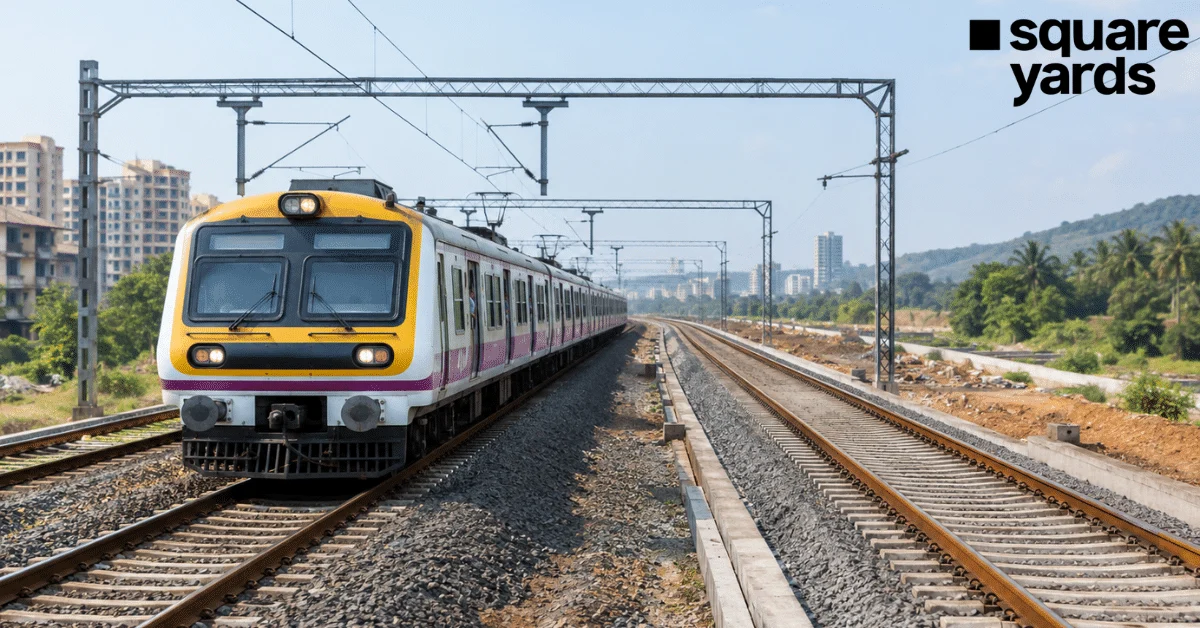
The Mumbai Metropolitan Region (MMR) is witnessing a monumental shift in its suburban rail infrastructure as the Kalyan-Badlapur railway expansion project enters a critical construction phase. Designed to alleviate the chronic congestion on the Central Line, this project is more than just an engineering feat; it is a socio-economic catalyst for the burgeoning "extended suburbs" of Mumbai. With the Mumbai Railway Vikas Corporation (MRVC) inviting fresh bids for essential works, the dream of a seamless, four-track corridor between Kalyan and Badlapur is moving closer to reality.
The Core News: MRVC Accelerates the ₹1,510 Crore Corridor
The Mumbai Railway Vikas Corporation (MRVC) recently marked a significant milestone by inviting bids for a ₹133.18 crore contract package. This package is dedicated to completing the "balance works" on the third and fourth lines of the 14.60-km Kalyan-Badlapur corridor. The scope of this contract includes the construction of critical infrastructure, station improvements, and track-laying activities that will finally bridge the gap in this high-traffic segment.
Execution of this project falls under the ambitious Mumbai Urban Transport Project (MUTP)-IIIA, a multi-thousand-crore initiative aimed at overhauling the city’s rail network. The specific Kalyan-Badlapur expansion carries a total sanctioned cost of ₹1,510 crore. The latest bid carries a strict 365-day completion period, signaling the government’s intent to fast-track the project to meet the needs of a rapidly growing commuter base.
The primary objective of the expansion is the segregation of rail traffic. Currently, the two existing tracks must accommodate a chaotic mix of suburban "local" trains, long-distance Mail/Express trains, and heavy goods (freight) traffic. By adding a third and fourth line, Central Railway intends to provide dedicated paths for suburban services, thereby increasing frequency and significantly reducing delays caused by outstation train movements.
Chronology: From Concept to Construction
The journey of the Kalyan-Badlapur quadrupling project has been one of strategic planning and phased execution.
- The Conceptual Phase (Pre-2019): Recognizing the saturation of the Kalyan-Karjat and Kalyan-Kasara lines, railway authorities proposed the addition of extra tracks under the MUTP-III and IIIA umbrellas. The Kalyan-Badlapur section was identified as a major bottleneck due to the sheer volume of commuters from Ambernath and Badlapur.
- Sanction and Funding (2019-2021): The project was formally sanctioned as part of the MUTP-IIIA. Funding was secured through a 50:50 joint venture between the Ministry of Railways and the Government of Maharashtra, with additional support from multilateral funding agencies like the Asian Infrastructure Investment Bank (AIIB).
- Land Acquisition and Preliminary Works (2021-2023): This period involved the challenging task of acquiring land along the 14.60-km stretch, relocating utilities, and conducting soil testing for the numerous bridges required.
- The Construction Surge (2024-Present): With the recent invitation of bids for the ₹133.18 crore package in late 2024 (and heading into 2025/26), the project has transitioned from preparatory work to active structural construction. The focus is now on the five key stations and the massive bridge infrastructure required to support four tracks.
Supporting Data: The Numbers Behind the Necessity
To understand why this project is a priority, one must look at the operational data provided by Central Railway.
Operational Overload
The current infrastructure is operating well beyond its theoretical limits. The existing two tracks between Kalyan and Badlapur are reported to handle approximately 136 trains daily, despite having a rated carrying capacity of only 120 trains. This 13% over-utilization creates a "cascade effect"—a single five-minute delay for one train can disrupt the schedule of a dozen others.
Commuter Footfall (2023 Data)
The growth of the eastern suburbs is reflected in the staggering daily footfall at these stations:
- Badlapur: 2.08 lakh daily commuters.
- Ambernath: 1.52 lakh daily commuters.
These figures place Badlapur and Ambernath among the busiest stations in the Mumbai suburban network outside of the main city hubs. The lack of a station between these two points meant that residents in the middle—specifically in the Chikhloli area—had to travel 3 to 5 kilometers by road just to reach a railhead, further congesting local road networks.
Infrastructure Scope
The expansion is not merely about laying tracks; it involves a complex array of civil engineering works:
- 2 Major Bridges
- 49 Minor Bridges
- 4 Road Overbridges (ROBs)
- 2 Road Underbridges (RUBs)
- 1 Overhead Pipeline Bridge
These structures are essential to ensure that the new tracks do not disrupt existing road traffic or vital utility services like water pipelines.
Official Responses and Strategic Intent
Officials from the MRVC and Central Railway have emphasized that this project is "critical for the future of the Central Line." According to departmental statements, the segregation of traffic is the "only sustainable solution" to the crowding issues.
"When suburban and outstation trains share the same corridor, the suburban timetable is always at the mercy of the long-distance schedule," a senior railway official noted. "By creating dedicated tracks for the locals, we can potentially introduce more services during peak hours and improve the punctuality of the entire Karjat-bound line."
The Maharashtra state government has also highlighted the project as a key component of its "Housing for All" vision. By improving connectivity to these satellite towns, the government hopes to ease the pressure on South and Central Mumbai’s real estate, encouraging the workforce to settle in the more affordable eastern periphery.
The Chikhloli Factor: A New Station Emerges
The most significant addition for local residents is the construction of Chikhloli Station. Positioned 4.34 km from Ambernath and 3.1 km from Badlapur, this new station serves a dual purpose: it breaks the long gap between the two existing stations and provides a dedicated railhead for a massive residential cluster that has grown exponentially over the last decade.
Chikhloli is being designed with modern commuter amenities from the ground up, including:
- High-capacity platforms and sheds.
- Advanced ticketing counters.
- Escalators and Foot Overbridges (FOBs) for seamless passenger movement.
For the residents of Chikhloli, who previously relied on auto-rickshaws or private vehicles to reach Ambernath or Badlapur, the new station will likely save 20 to 40 minutes of daily travel time.
Real Estate Implications: Transforming Satellite Towns
The railway expansion is already sending ripples through the property markets of Thane district. As connectivity improves, the "commuter distance" to Mumbai shrinks, making these areas more viable for middle-income families.
Price Insights and Market Dynamics
According to data from Square Yards Research, the property prices in this belt reflect a mix of established markets and high-growth zones:
| Locality | Average Property Price (per sq. ft.) |
|---|---|
| Kalyan | ₹7,000 – ₹9,500 |
| Ulhasnagar | ₹5,000 – ₹9,000 |
| Ambernath | ₹5,000 – ₹7,000 |
| Chikhloli | ₹4,800 – ₹12,500 |
| Badlapur | ₹5,000 – ₹7,000 |
Impact Analysis by Area
- Kalyan: As a major interchange hub, Kalyan’s market is already mature. The expansion will primarily benefit Kalyan by decongesting the station yard and allowing for smoother transit to the Karjat side.
- Ulhasnagar: Due to its high density, new large-scale developments are rare. However, the expansion will improve the quality of life for the existing population and potentially lead to the redevelopment of older structures.
- Ambernath: Divided into the industrial West and residential East, Ambernath stands to gain significantly. The improved rail capacity will support the industrial workforce and make the residential East more attractive to Mumbai-bound professionals.
- Chikhloli: This area shows the most dramatic price variance (up to ₹12,500 per sq. ft. for premium projects). The new station is the primary driver here. Investors are betting on Chikhloli becoming the next "premium-affordable" hub, similar to how parts of Dombivli evolved.
- Badlapur: Known as a haven for affordable housing, Badlapur’s market is expected to see a volume surge. With better rail frequency, the "pain point" of the long commute is mitigated, allowing developers to market the town to a wider demographic of Mumbai workers.
Conclusion: A Future-Ready Corridor
The Kalyan-Badlapur railway expansion is a definitive answer to the growing pains of the Mumbai Metropolitan Region. By investing ₹1,510 crore into these four tracks, the MRVC and the state government are not just laying steel and sleepers; they are building the foundation for the next phase of urban expansion.
As the 365-day clock begins on the latest construction package, the focus remains on timely execution. For the 3.6 lakh daily commuters at Ambernath and Badlapur, and the thousands of future residents of Chikhloli, the completion of this project will mean less time on crowded platforms and more time at home. In the grander scheme of Mumbai’s evolution, this project ensures that the eastern suburbs remain a viable, connected, and thriving part of the city’s future.
Disclaimer: Real estate prices and project timelines are based on current market data and official announcements as of late 2024 and are subject to change based on economic conditions and construction progress.
