

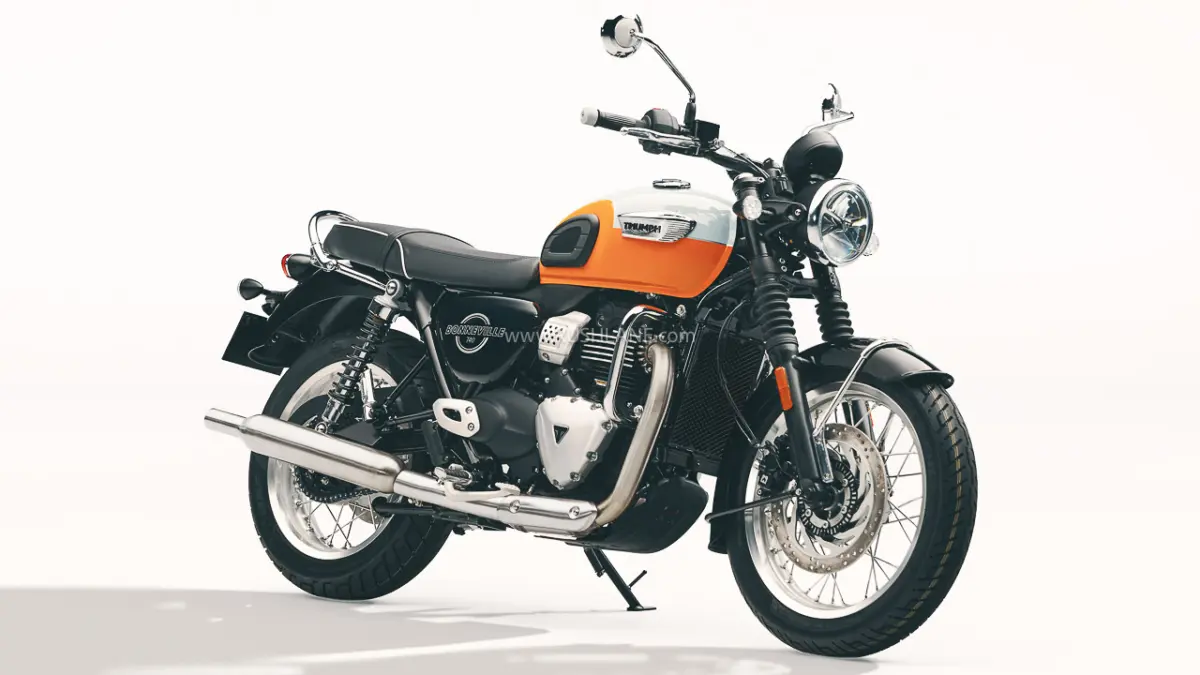
The mid-capacity motorcycle segment in India has witnessed a seismic shift as Triumph Motorcycles, in strategic partnership with Bajaj Auto, officially pulled the wraps off the highly anticipated Bonneville 400 range. This new entry-point into the legendary Bonneville family aims to democratize the British brand’s heritage, offering the iconic "Bonnie" silhouette and character at a price point previously reserved for mainstream roadsters.
The lineup consists of three distinct iterations: the Bonneville T4, the Bonneville T40, and the Bonneville T40 Black. With prices starting at Rs 2,54,999 (ex-showroom, Delhi), the Bonneville 400 series represents a calculated move to challenge the dominance of established players in the 350cc to 500cc retro-classic category.
Main Facts: A New Chapter for the TR-Series Platform
The Bonneville 400 series is built upon the success of the TR-Series engine platform, which first debuted with the Speed 400 and Scrambler 400X. However, for the Bonneville range, Triumph has focused on a "dedicated tune" designed to prioritize low-end tractability and a relaxed riding experience over the high-revving urgency of its siblings.

Pricing and Variant Breakdown
Triumph has positioned the variants to cater to two different types of riders: those seeking pure classic motorcycling and those demanding modern technological sophistication.
- Bonneville T4: The entry-level model, priced at Rs 2,54,999. It focuses on essential classic styling with a simplified electronics suite.
- Bonneville T40: The mid-spec variant, priced at Rs 2,79,999. It introduces a host of rider-assist technologies and premium instrumentation.
- Bonneville T40 Black: Also priced at Rs 2,79,999, this variant offers the same technological package as the T40 but features a "murdered-out" aesthetic with blacked-out components, engine covers, and exhaust.
Core Specifications at a Glance
- Engine: 349cc, liquid-cooled, single-cylinder, DOHC.
- Power: 29 PS @ 7,000 rpm.
- Torque: 31 Nm @ 5,500 rpm.
- Transmission: 6-speed with assist-and-slipper clutch.
- Weight: 195 kg (Kerb).
- Fuel Capacity: 14 Litres.
- Seat Height: 790 mm (Optional low seat at 770 mm).
Chronology: From Teasers to Showroom Floors
The journey of the Bonneville 400 has been one of the most closely watched developments in the Indian automotive sector this year.
- The Teaser Phase (Early October 2026): Triumph released a series of cryptic teasers hinting at "The Next Icon," showcasing glimpses of wire-spoke wheels and the unmistakable teardrop fuel tank.
- The Official Launch (October 6, 2026): Triumph formally unveiled the three variants, confirming the 349cc engine displacement and the aggressive pricing strategy.
- Booking Commencement (October 7, 2026): Online and dealership bookings officially opened at 4:30 pm, seeing an immediate surge in interest across major metropolitan hubs.
- T40 Delivery Window (November 2026): Customers who opted for the higher-spec T40 and T40 Black are scheduled to receive their motorcycles starting from the second week of November.
- T4 Delivery Window (January 2027): The base T4 model will follow shortly after, with deliveries slated to begin in the second week of January 2027.
Supporting Data: Engineering and Design Philosophy
The Bonneville 400 is not merely a downsized version of the T100 or T120; it is a ground-up reinterpretation of the classic British twin aesthetic adapted for a single-cylinder format.

Aesthetics and Build Quality
Triumph has gone to great lengths to ensure the "entry-level" Bonneville feels premium. The motorcycles feature:
- Hand-painted coach lining: A nod to the artisanal heritage of the Hinckley-based manufacturer.
- Aluminum Engine Covers: Classically shaped to mimic the look of the larger twins, finished in high-quality brushed or blacked-out textures.
- Peashooter Exhausts: Designed not just for looks but to provide a signature "thump" that distinguishes the Bonneville from the Speed 400.
- Classic Ergonomics: A relaxed, upright riding triangle with a flat bench seat ensures comfort for both daily commutes and weekend tours.
Technical Differentiators
While both models share the same frame and engine, the Rs 25,000 price gap is justified by a significant leap in electronic hardware found on the T40 variants.
| Feature | Bonneville T4 | Bonneville T40 / T40 Black |
|---|---|---|
| Display | Colour LCD with Navigation | 4-inch Circular TFT |
| Connectivity | Basic Bluetooth | Full Smartphone Integration (Music/Phone) |
| ABS | Dual-Channel | Lean-Sensitive Cornering ABS |
| Traction Control | Standard | Cornering Traction Control |
| Cruise Control | Not Available | Standard |
| Riding Modes | Multiple | 5 Dedicated Modes |
Chassis and Handling
The motorcycles utilize a tubular steel frame designed for stability and ease of use. The suspension setup is traditional: 43 mm conventional telescopic forks at the front and twin rear shock absorbers. The rear shocks offer a 7-step preload adjustment, allowing riders to tune the bike based on pillion load or luggage.

In a move that prioritizes authentic retro styling, Triumph has opted for 18-inch front and 17-inch rear wire-spoke wheels. These wheels require inner tubes, a choice that may divide enthusiasts but undeniably completes the classic look.
Official Positioning: The Bajaj-Triumph Synergy
While official statements from the launch event emphasized "accessible premiumization," the subtext of the Bonneville 400 launch is clear: Triumph is moving for the heart of the Indian motorcycle market.
By collaborating with Bajaj Auto for manufacturing at the world-class Chakan plant, Triumph has achieved a level of cost-efficiency that allows them to compete directly with Royal Enfield. The company’s spokespeople highlighted that the Bonneville 400 is designed to be "the most approachable Bonneville ever made," targeting not just seasoned riders looking for a second bike, but younger enthusiasts graduating from the 150-200cc segments.

The "Bonneville Tune" of the 349cc engine is a key part of this positioning. Unlike the Speed 400, which is marketed as a modern roadster with a sporty edge, the Bonneville 400 is marketed on "character and soul." The torque peaks at a relatively low 5,500 rpm, promising effortless overtaking in city traffic without the need for constant gear changes.
Implications: Disrupting the Retro-Classic Hegemony
The launch of the Bonneville 400 series has profound implications for the Indian and global motorcycle landscapes.
1. Direct Challenge to Royal Enfield
For decades, the Royal Enfield Classic 350 has enjoyed a near-monopoly in the retro-classic segment. While Honda’s CB350 and various Jawa/Yezdi models have attempted to dent its armor, the Triumph Bonneville brand carries a level of global prestige that is difficult to ignore. At Rs 2.55 lakh, the T4 is priced within striking distance of the Classic 350’s top-end variants, offering a more modern liquid-cooled engine and superior brand cachet.

2. The Evolution of the "Small" Triumph
This launch confirms that the Speed 400 and Scrambler 400X were just the beginning. By introducing the Bonneville nameplate to the 400cc platform, Triumph is signaling its intent to build a comprehensive ecosystem of small-capacity motorcycles. We can likely expect further iterations, perhaps a "Thruxton 400" cafe racer, in the coming years.
3. Safety Standards in the Mid-Segment
By offering cornering ABS and lean-sensitive traction control on the T40, Triumph is raising the bar for safety in the sub-500cc category. Historically, these features were reserved for motorcycles costing twice as much. This move will likely force competitors to upgrade their electronics suites to remain relevant.
4. Accessibility for All
With a standard seat height of 790 mm and an optional low seat that drops to 770 mm, Triumph is making a concerted effort to be inclusive. The Bonneville 400 is designed to be unintimidating for shorter riders and beginners, a demographic that is increasingly influential in the Indian market.

Conclusion
The Triumph Bonneville T4, T40, and T40 Black represent more than just new models; they represent a strategic masterstroke. By blending the soul of a 1950s icon with the reliability and efficiency of modern Indian manufacturing, Triumph has created a compelling package that is hard to fault on paper. As deliveries begin in late 2026 and early 2027, the real test will be on the Indian roads, where "character" is measured by more than just spec sheets. However, one thing is certain: the battle for the classic motorcycle crown has just entered its most intense chapter yet.
