

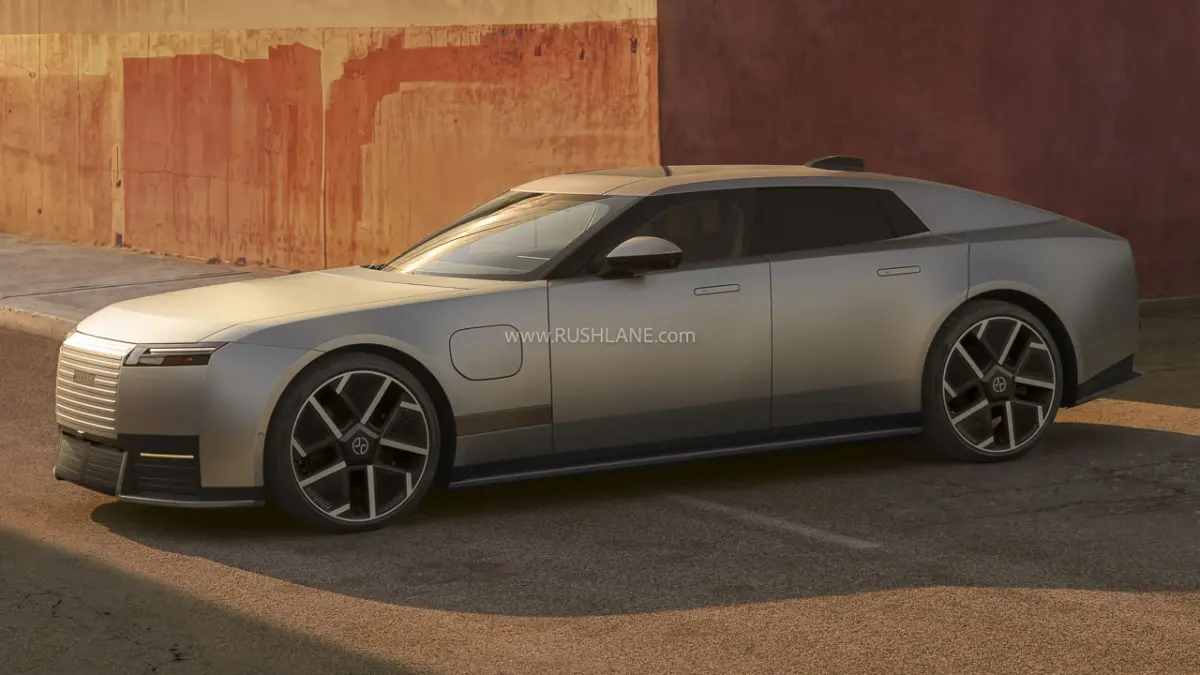
New York City – In a move that signals the most radical transformation in its 90-year history, Jaguar has officially pulled the wraps off the Type 01. Making its global debut in the heart of New York, this all-electric four-door Grand Tourer is not merely a new model; it is the physical manifestation of a brand reborn.
The Type 01 represents the production evolution of the polarizing Type 00 concept revealed in 2024. With a powertrain delivering over 1,000 bhp, a design language that discards decades of retro-futurism, and a strategic pivot into the ultra-luxury segment, the Type 01 is Jaguar’s high-stakes gamble to redefine itself for the electric age.
1. Main Facts: A New Benchmark for British Performance
The Jaguar Type 01 arrives as the most powerful road-going vehicle ever to wear the "Leaper" badge. Built from the ground up on the dedicated Jaguar Electric Architecture (JEA), it breaks away from the brand’s previous design cues to embrace a philosophy of "Exuberant Modernism."
Key Specifications at a Glance:
- Powertrain: Triple-motor electric setup (one front, two rear).
- Power Output: 1,016 bhp (1,030 PS).
- Peak Torque: 1,365 Nm.
- Acceleration: 0–100 km/h in 3.2 seconds.
- Top Speed: Electronically limited to 250 km/h.
- Range: Up to 720 km (WLTP cycle).
- Architecture: 850V Jaguar Electric Architecture (JEA).
- Dimensions: Length exceeds 5.2 meters; Wheelbase of 3.2 meters.
The Type 01 is designed to compete not with traditional executive sedans, but with the upper echelons of the automotive world, targeting rivals from Porsche, Maserati, and even Bentley.

2. Chronology: From Concept to Production Reality
The journey to the Type 01 has been a calculated, multi-year process involving a total "reset" of the Jaguar brand.
- 2021: The Reimagine Strategy: JLR (Jaguar Land Rover) CEO Thierry Bolloré announced the "Reimagine" strategy, declaring that Jaguar would become an all-electric luxury brand by 2025. This involved the controversial decision to scrap several internal combustion projects that were near completion.
- 2024: The Type 00 Concept: Jaguar shocked the automotive world with the Type 00 concept. It introduced the world to the "strikethrough" design language and the brand’s new minimalist logo. The concept was met with both awe and skepticism due to its radical departure from Jaguar’s heritage.
- Late 2024 – 2025: The "Dark Period": Jaguar intentionally ceased sales of new vehicles in several global markets, including the UK, to prepare showrooms and the brand image for the high-end repositioning.
- October 2026 (New York): The World Premiere: The Type 01 is revealed in its production-ready form, proving that the dramatic proportions of the concept were not just for show.
- Early 2027: Global order books are scheduled to open.
- Mid-2027: First customer deliveries are expected in North America and Europe, with an India launch slated for the second half of the year.
3. Supporting Data: Engineering and Technical Deep-Dive
Jaguar’s engineers were tasked with creating a vehicle that offered "effortless performance," a hallmark of the classic E-Type, but translated into the digital era.
The JEA Platform and Powertrain
The Type 01 utilizes the JEA platform, which is exclusive to Jaguar and not shared with Land Rover’s SUV-focused architectures. This allows for a low-slung silhouette and optimized weight distribution.
The triple-motor configuration is the heart of the Type 01’s performance. By placing two motors on the rear axle, Jaguar enables sophisticated torque vectoring, allowing the car to pivot through corners with agility that belies its 5.2-meter length. The mid-range acceleration is particularly striking, with the 100–180 km/h sprint completed in just 4.0 seconds, ensuring the "Grand Tourer" moniker is backed by sustained high-speed capability.

Battery and Charging Infrastructure
To alleviate range anxiety, Jaguar has fitted the Type 01 with a massive 118 kWh (usable) lithium-ion battery pack. The pack features a split-module arrangement, which allows for a lower floor in the cabin, creating deeper footwells for rear passengers—a common struggle in high-performance EVs.
The 850V architecture is a critical component of the car’s usability. When connected to a 350 kW DC fast charger:
- 10% to 80% charge: 22 minutes.
- Range added in 13 minutes: 321 km (200 miles).
Aerodynamics and Chassis
The Type 01 boasts a drag coefficient (Cd) of just 0.23. This is achieved through flush surfaces, a completely flat underbody, and active cooling vanes in the front "grille" that only open when the thermal management system requires airflow. A three-stage deployable rear spoiler manages downforce at high speeds.
The chassis features:

- Double-wishbone front suspension and integral-link rear suspension.
- Adaptive Air Suspension with continuously variable dampers.
- Rear-wheel steering, which reduces the turning circle to a compact 11.5 meters, making the large GT manageable in urban environments.
4. Design Philosophy: "Copy Nothing"
The Type 01 is a visual manifesto of Jaguar’s new "Copy Nothing" ethos, a phrase originally coined by the brand’s founder, Sir William Lyons.
Exterior Innovation
The most discussed feature of the Type 01 is the total absence of a rear windscreen. The roofline slopes back into a solid rear deck, adorned with horizontal "strikethrough" slats that conceal the LED tail lamps. Rearward visibility is handled entirely by a high-definition ClearSight camera system that feeds a digital display at the base of the front windscreen.
The front end replaces the traditional radiator grille with a "strikethrough" graphic that houses the ADAS (Advanced Driver Assistance Systems) sensors and slimline LED matrix headlights. The 23-inch alloy wheels are pushed to the absolute corners of the vehicle, emphasizing a long-hood, cab-rearward proportion reminiscent of the iconic XJS.
The Four-Seat Sanctuary
Inside, the cabin is bisected by a dramatic central spine crafted from sustainable materials. This spine separates the interior into four distinct "zones of luxury."

The dashboard is dominated by a 24-inch panoramic OLED display that spans the driver and passenger sides, providing navigation, performance data, and entertainment. A secondary 7-inch vertical touchscreen handles tactile functions like climate control and seat adjustments.
Jaguar has eschewed traditional leather in favor of high-tech textiles and responsibly sourced wood veneers, aiming to appeal to a younger, more environmentally conscious demographic of ultra-high-net-worth individuals.
5. Official Responses and Brand Positioning
While JLR leadership has remained focused on the future, the response from the company emphasizes that the Type 01 is a "reset" for Jaguar.
According to Jaguar’s design and engineering leads, the Type 01 was never intended to be a volume seller like the F-Pace. Instead, it is a "halo" product meant to elevate the brand’s prestige. "We are returning Jaguar to a place where it belongs—among the most aspirational brands in the world," stated a company spokesperson during the New York event. "To do that, we had to be brave enough to leave the past behind and create something entirely original."

Market analysts suggest that by moving the starting price significantly higher (expected to exceed $150,000 / £120,000), Jaguar is intentionally reducing its volume to focus on higher profit margins and exclusivity. This "Value over Volume" strategy is a direct response to the changing landscape of the luxury automotive market.
6. Implications: What the Type 01 Means for the Industry
The launch of the Jaguar Type 01 has several far-reaching implications for the automotive sector:
A Test for Brand Loyalty
Jaguar is testing the limits of brand equity. By changing the logo, the design language, and the price point simultaneously, they are essentially launching a new brand under a historic name. If successful, it could provide a blueprint for other legacy manufacturers (like Maserati or Aston Martin) struggling to find their footing in the EV era.
The Digital Mirror Paradigm
The decision to remove the rear window is a bold step toward a fully digital driving experience. While other manufacturers have experimented with digital side mirrors, Jaguar’s commitment to a digital-only rear view in a flagship GT is a significant move that could influence future automotive regulations and design trends.

India’s Role in Global Luxury
For the Indian market, the expected 2027 launch of the Type 01 is a landmark event. As JLR is owned by Tata Motors, the Type 01 represents the pinnacle of what the group can achieve in terms of global engineering and luxury. Its arrival in India will likely coincide with the expansion of high-speed charging corridors, positioning the Type 01 as the ultimate long-distance electric cruiser for the subcontinent’s elite.
The GT Renaissance
In an era dominated by SUVs, the Type 01 is a defiant vote of confidence in the Grand Tourer body style. It proves that electric powertrains, with their inherent weight and packaging challenges, can still be packaged into a sleek, low-profile silhouette that prioritizes aesthetics and driving dynamics over utility.
Conclusion
The Jaguar Type 01 is a polarizing, powerful, and undeniably ambitious machine. It represents a clean break from the past and a fierce leap into an electric future. Whether the traditional Jaguar enthusiast will embrace this new direction remains to be seen, but one thing is certain: with 1,016 bhp and a design that looks like nothing else on the road, Jaguar is no longer content with blending in. The Type 01 has ensured that, for better or worse, the world is once again watching the British cat.
