

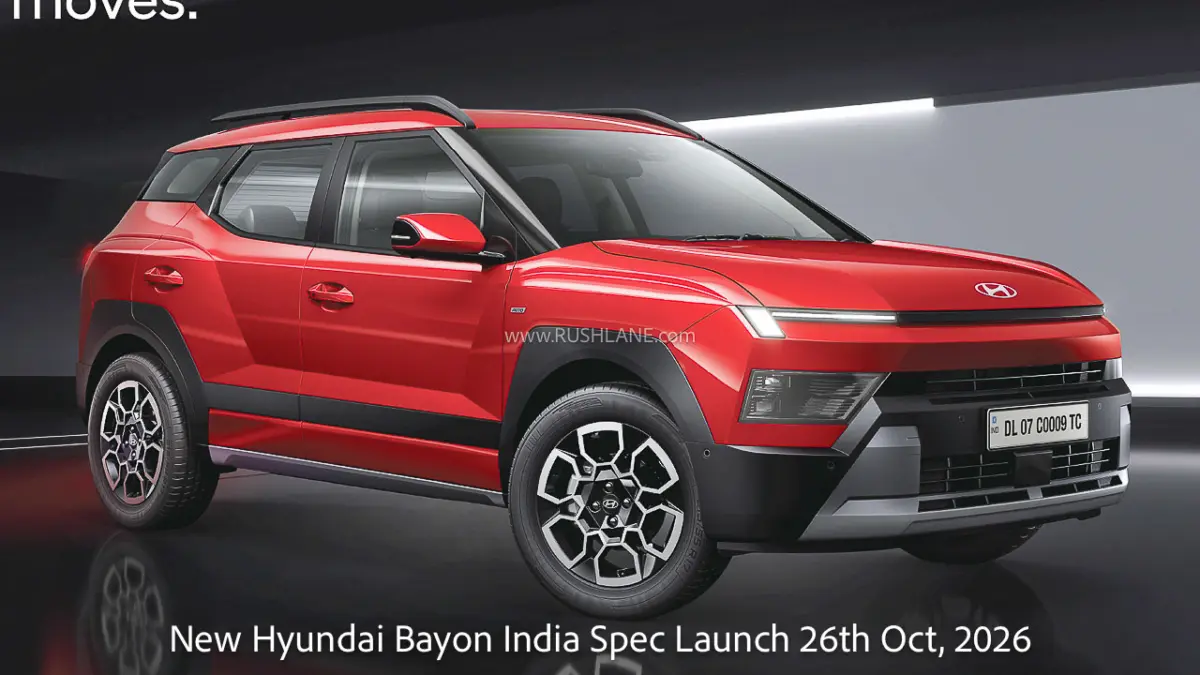
In a strategic move to solidify its dominance in the Indian SUV market, Hyundai Motor India Limited (HMIL) has officially pulled the wraps off the India-spec Bayon. Positioned as a tech-forward "Intelligent Utility Vehicle" (IUV), the Bayon is designed to bridge the gap between the sub-compact Venue and the segment-leading Creta. With a launch date set for October 26, 2026, the Bayon represents Hyundai’s latest attempt to redefine the mid-size SUV landscape through a blend of "Sensuous Sportiness" design and a pioneering suite of generative Artificial Intelligence (AI) features.
As the Indian automotive market continues its aggressive shift toward SUVs and high-tech cabins, the Bayon arrives at a critical juncture. Following Hyundai’s record-breaking sales performance in September 2026, the company is leveraging the festive season momentum to introduce a vehicle that prioritizes software-driven innovation as much as mechanical prowess.
Main Facts: The Bayon at a Glance
The Hyundai Bayon is not merely a downsized Creta or an upscaled Venue; it is a distinct global nameplate tailored specifically for the Indian consumer’s evolving tastes. Measuring 4.2 meters in length, it occupies a "sweet spot" in the market, offering more cabin room and road presence than sub-4-meter crossovers while maintaining an urban-friendly footprint.

Key Specifications:
- Engine: 1.5-litre, four-cylinder MPi Petrol.
- Performance: 115 PS of power and 144 Nm of torque.
- Transmission: 6-speed Manual and Intelligent Variable Transmission (IVT).
- Platform: Hyundai’s Global K Enhanced Platform (targeted for 5-star Bharat NCAP).
- Tech Highlight: India’s first Generative AI Voice Assistant (powered by Perplexity and SoundHound).
- Display: Dual 12.3-inch curved panoramic screens for infotainment and instrumentation.
- Booking: Open at Rs 11,000.
Chronology: The Road to the October 26 Launch
The journey of the Bayon in India has been one of calculated anticipation. While the Bayon nameplate has existed in European markets, the Indian version has undergone significant localization and specification upgrades to meet domestic demands for power and prestige.
- Early 2026 – Strategic Planning: Rumors began to circulate regarding a new mid-size SUV to fill the price and size gap between the Venue and the Creta, as Hyundai identified a growing segment of buyers who found the Venue too small but the Creta’s higher trims beyond their budget.
- September 2026 – Sales Momentum: Hyundai India recorded its highest-ever monthly sales of 77,916 units. This success provided the perfect springboard for a new product announcement.
- Early October 2026 – Teasers and Bookings: Hyundai released the first design sketches, emphasizing the "H-Edge" lighting signature. Official bookings were opened shortly thereafter via the "Click to Buy" platform and physical dealerships for a token amount of Rs 11,000.
- Mid-October 2026 – Feature Reveal: Hyundai officially detailed the "Intelligent Utility Vehicle" philosophy, confirming the inclusion of NVIDIA-accelerated hardware and the Perplexity AI integration.
- October 26, 2026 – Official Launch: The scheduled date for the price announcement and the formal commencement of the festive season delivery cycle.
Supporting Data: Design, Technology, and Engineering
The Bayon is a manifestation of Hyundai’s "Intelligence That Moves" philosophy. To understand why this vehicle is a significant departure from previous offerings, one must look at the specific data points across its design and technological architecture.
Exterior Design: The "H-Edge" Philosophy
The India-spec Bayon features an upright, muscular stance that differentiates it from the sleeker, more hatchback-like profile of the European model. The front fascia is dominated by slim H-Edge LED daytime running lights (DRLs) that sit atop the primary headlamp clusters. This "split-lamp" setup is a Hyundai signature but has been sharpened for the Bayon.

The side profile reveals geometric 16-inch alloy wheels and pronounced body creases that catch the light, emphasizing a sculpted look. The rear is equally distinctive, featuring vertical LED tail lamps connected by a thin horizontal light bar, creating a wide, planted appearance. Functional elements like bridge-type roof rails and a roof-mounted spoiler add to its SUV credentials.
Interior and Infotainment: The Digital Cockpit
Inside, the Bayon mirrors the premium layout seen in the latest international-spec i20 and Creta models. The centerpiece is a curved panoramic panel housing two 12.3-inch high-resolution displays.
- The Infotainment System: Running on Hyundai’s Connected Car Navigation Cockpit (ccNC), the system utilizes NVIDIA-accelerated technology for lag-free performance. It supports split-screen functionality and personalized user profiles.
- Generative AI Integration: In a first for the Indian market, Hyundai has partnered with Perplexity and SoundHound AI. This allows the voice assistant to go beyond simple car controls. Users can ask complex questions—such as "Plan a two-day itinerary for a trip to Jaipur"—and receive real-time, conversational responses.
- Multilingual Support: While the Generative AI is currently English-only, the vehicle features over 500 embedded voice commands that work offline in 10 regional languages, including Hindi, Tamil, Bengali, and Telugu.
Powertrain and Safety
Under the hood, Hyundai has opted for the tried-and-tested 1.5-litre MPi petrol engine. This is a strategic choice; by using the same engine found in the entry-level Creta and the Verna, Hyundai ensures economies of scale and easy availability of spare parts. The engine delivers 115 PS, providing a power-to-weight ratio that is expected to be superior to the Venue but more efficiency-focused than the Creta Turbo variants.

Safety is another pillar of the Bayon’s pitch. Built on the Global K Enhanced Platform, the vehicle has been engineered to meet the stringent 5-star safety standards of Bharat NCAP. It will come equipped with six airbags as standard, along with Electronic Stability Control (ESC), Hill-start Assist, and potentially a suite of Level 2 ADAS (Advanced Driver Assistance Systems) on higher trims.
Official Responses: Leadership Vision
The leadership at Hyundai Motor India Limited has been vocal about the Bayon’s role in their long-term strategy. During the unveiling, Mr. Tarun Garg, Managing Director and CEO of HMIL, emphasized that the Bayon is a response to the "digitally native" Indian consumer.
"With Hyundai BAYON, we are introducing an Intelligent Utility Vehicle that places technology and convenience at the heart of the customer experience," Garg stated. "Guided by the philosophy of ‘Intelligence That Moves,’ BAYON seamlessly integrates Artificial Intelligence, advanced connectivity, and software-driven innovation to create a mobility experience that is intuitive, evolving, and deeply personalized."

Garg further highlighted the importance of the C-OTA (Vehicle Controller Over-the-Air) updates, noting that the Bayon is designed to improve over time. "Through segment-defining technologies… BAYON represents the next generation of intelligent mobility for Indian customers."
Implications: A Shift in Market Dynamics
The introduction of the Bayon carries several implications for the Indian automotive industry and Hyundai’s competitive positioning.
1. The Squeezing of the Mid-Size Segment
By placing the Bayon at 4.2 meters, Hyundai is putting pressure on both the premium hatchback segment (like the Maruti Baleno and Hyundai’s own i20) and the entry-level mid-size SUV segment (like the Maruti Grand Vitara and Kia Seltos). The Bayon offers a "middle path"—SUV styling and high-end tech without the bulky dimensions or higher price tag of a full-sized C-SUV.

2. The AI Arms Race
Hyundai’s decision to integrate Perplexity AI signals a new front in the "features war." Until now, Indian car buyers prioritized sunroofs and ventilated seats. The Bayon shifts the focus toward the "Software Defined Vehicle" (SDV). If the Generative AI voice assistant proves successful, rivals like Tata Motors and Mahindra will likely be forced to upgrade their own infotainment ecosystems to include similar LLM (Large Language Model) capabilities.
3. Strengthening the "SUV-First" Portfolio
Hyundai’s portfolio now boasts a comprehensive SUV lineup: Exter (Micro-SUV), Venue (Sub-compact), Bayon (Mid-size/IUV), Creta (Compact SUV), Alcazar (3-row SUV), and Tucson (Premium SUV). This "ladder" approach ensures that there is a Hyundai SUV for every possible price point between Rs 6 lakh and Rs 35 lakh, making it increasingly difficult for competitors to poach customers.
4. Bharat NCAP and the Safety Narrative
For years, Hyundai faced criticism regarding the structural safety of its mid-range cars in India. By explicitly stating that the Bayon is engineered for a 5-star Bharat NCAP rating, Hyundai is tackling this narrative head-on. This move is essential to compete with Tata and Mahindra, who have built their recent brand success on the foundation of safety ratings.

Conclusion
The Hyundai Bayon is more than just a new model; it is a barometer for the future of the Indian car market. It reflects a shift where the "intelligence" of a vehicle is becoming as important as its horsepower. As bookings continue to climb ahead of the October 26 launch, the industry will be watching closely to see if the Indian consumer is ready to embrace the AI-integrated "Intelligent Utility Vehicle." If the Bayon succeeds, it may well mark the end of the traditional "dumb" car era in the Indian mass market.
