

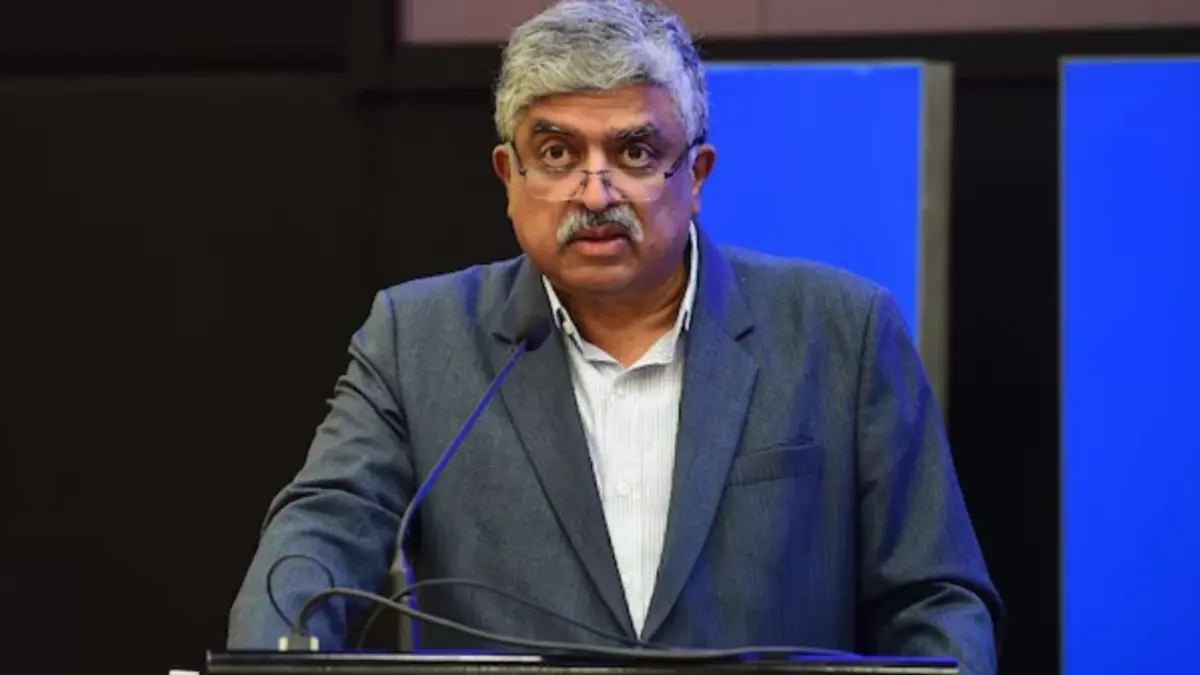
New Delhi, India – In a significant move to combat the persistent scourge of examination paper leaks, Nandan Nilekani, the visionary co-founder of Infosys and a leading figure in India’s digital transformation, has put forth a groundbreaking proposition: leveraging Artificial Intelligence (AI) to generate question papers at the eleventh hour. This radical idea, unveiled at the Bloomberg New Economy Forum 2026, aims to dismantle the very economic incentive that fuels the illicit trade of leaked exam content. Nilekani, who is currently helming a crucial six-member task force on exam reforms constituted by the central government, believes a paradigm shift towards computer-based testing (CBT) is not only desirable but essential for implementing such advanced security measures.
The proposition comes at a time when the integrity of national examinations has come under intense scrutiny, with recurrent paper leaks disrupting the academic and career aspirations of countless students. The central government, acknowledging the gravity of the situation, established the task force in July, tasking it with a comprehensive review of examination processes and the development of robust reform strategies. Nilekani’s recent remarks offer a glimpse into the innovative, albeit challenging, solutions being considered by the committee.
)
The Genesis of the AI-Powered Question Paper
Nandan Nilekani articulated his core idea with stark clarity: "Why do we need to have something called ‘a question paper’? Because that creates an economic incentive for it to be sold. One way to look at how to solve it is to have a massive bank of questions, and only at the last minute generate the question paper for the day." This statement encapsulates the fundamental flaw in the current system, where a pre-determined set of questions, meticulously prepared well in advance, becomes a high-value commodity for leak syndicates.

The proposed AI-driven system envisions a vast repository of meticulously curated questions, covering all syllabi and difficulty levels. This digital "question bank" would serve as the raw material for an AI algorithm. Crucially, the specific permutation and combination of questions that constitute the actual exam paper for a given day would only be generated minutes before the commencement of the test. This dynamic, on-demand generation would render any prior leak virtually impossible, as the "paper" would not exist in a tangible or accessible form until the very moment it is administered.
)
Nilekani acknowledged that this innovative approach is inextricably linked to a transition to computer-based testing. The ability to instantaneously generate and deliver unique question papers to multiple testing centers simultaneously necessitates a robust digital infrastructure. The traditional pen-and-paper format, with its inherent logistical challenges and susceptibility to human intervention, would not be conducive to such a system.
)
While Nilekani did not delve into the specifics of potential vulnerabilities within the AI-generated question bank itself, the implication is that the security protocols surrounding the AI and the question bank would need to be of an unprecedented caliber. The focus, however, remains firmly on eliminating the external leak point – the pre-existing, static question paper.
)
The Imperative of Computer-Based Testing (CBT)
The successful implementation of AI-generated question papers hinges entirely on the widespread adoption of computer-based testing (CBT) for all major examinations. Nilekani emphasized this point, stating that the task force is actively exploring how to transition all significant assessments to the CBT mode.
)
"The committee is looking at how to make sure all exams are done on CBT. That requires a network of locations. We have 1,50,000 locations where young candidates can take a test and that needs to be expanded," he stated, highlighting the scale of infrastructure required. This suggests a vision of a decentralized testing network, leveraging existing educational institutions and possibly public facilities to accommodate the massive student population.
)
The National Testing Agency (NTA), the primary body responsible for conducting many of these national-level examinations, is reportedly collaborating with the All India Council for Technical Education (AICTE) to identify suitable IT infrastructure and government institutions for establishing standardized testing centers. This collaboration aims to build a network of secure and reliable testing venues, with a deliberate avoidance of private centers due to past integrity concerns.
)
However, the transition to CBT is not without its challenges, particularly in a country as vast and diverse as India. The digital divide, the gap in access to technology and reliable internet connectivity between urban and rural areas, remains a significant hurdle. Nilekani’s remarks, while forward-looking, did not explicitly address how the proposed CBT model would accommodate students in regions with limited digital infrastructure or persistent internet connectivity issues. Ensuring equitable access to these new testing modalities will be paramount to prevent the exacerbation of existing inequalities.
)
A Deep Dive into the Task Force’s Mandate and Progress
The establishment of the six-member task force on exam reforms was a direct response to mounting public pressure and widespread protests following a series of high-profile paper leaks, which even led to the resignation of the then Union Education Minister, Dharmendra Pradhan. The task force, mandated to report within three months, has been working assiduously since its inception on July 26th.
)
Led by Nandan Nilekani, the panel comprises an impressive array of expertise. Notable members include S. Somanath, the former Chairman of the Indian Space Research Organisation (ISRO), and Tapan Deka, a former Director of the Intelligence Bureau. This diverse composition suggests a multi-faceted approach to reform, drawing insights from technological innovation, national security, and administrative efficiency.
)
The task force has undertaken an intensive period of deliberation and consultation. It has reportedly conducted 18 internal meetings and engaged in extensive discussions with over 40 stakeholders, including students, parents, academic institutions, and various exam conducting bodies such as the National Recruitment Agency (NRA), the Staff Selection Commission (SSC), and the Railway Recruitment Boards (RRB). This inclusive approach has allowed the committee to gather a substantial volume of feedback, with over 50,000 suggestions reportedly submitted by various stakeholders. This extensive data-gathering exercise is expected to inform the final recommendations and ensure that the proposed reforms are practical, effective, and widely accepted.
)
Potential Implications and Future Outlook
Nandan Nilekani’s proposal to use AI for last-minute question paper generation, coupled with a decisive push for computer-based testing, represents a bold vision for the future of examinations in India. If successfully implemented, this could usher in an era of unprecedented exam integrity, restoring faith in the meritocratic system and ensuring that genuine talent is recognized and rewarded.
)
The implications of such a system are far-reaching:
)
- Eradication of Paper Leak Market: The most immediate and significant impact would be the near-elimination of the black market for leaked exam papers, which has plagued the education sector for years. This would create a level playing field for all aspirants, regardless of their socioeconomic background or geographical location.
- Enhanced Efficiency and Speed: CBT, when coupled with AI-generated papers, could significantly expedite the entire examination process, from question paper setting to result declaration. This would reduce the anxiety and uncertainty faced by students awaiting their results.
- Data-Driven Assessment: A well-designed CBT system, powered by AI, could also offer richer data analytics on student performance, identifying areas of strength and weakness at a granular level. This data could be invaluable for educational institutions and policymakers to refine curricula and teaching methodologies.
- Technological Advancement: The implementation of such a sophisticated system would necessitate significant investment in technology and digital infrastructure, potentially spurring innovation and job creation in the IT and cybersecurity sectors.
However, the path forward is not without its challenges. The digital divide remains a critical concern that needs to be addressed proactively. Investing in digital literacy programs, expanding internet connectivity in rural areas, and providing access to computing devices will be crucial to ensure inclusivity. Furthermore, the security of the AI algorithms and the question bank itself will require constant vigilance and robust cybersecurity measures. The potential for sophisticated cyberattacks targeting these systems cannot be underestimated.
)
The task force’s recommendations, expected in the coming months, will be keenly awaited. The success of Nilekani’s ambitious proposal will depend on a confluence of technological prowess, strategic infrastructure development, and a commitment to equitable access. If India can successfully navigate these complexities, the adoption of AI for exam paper generation could indeed be a transformative step towards a more transparent and equitable examination system. The future of academic assessment in India may well be shaped by the intelligence of machines and the foresight of its digital pioneers.
