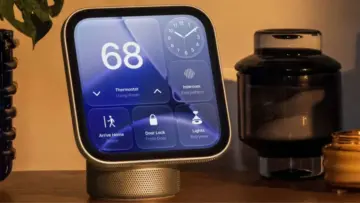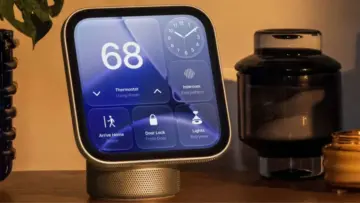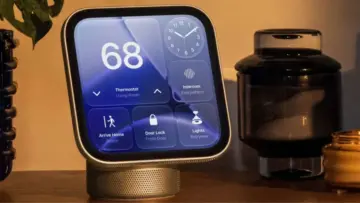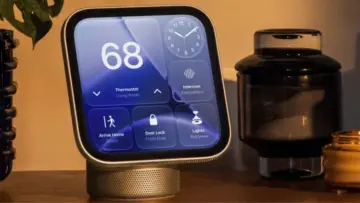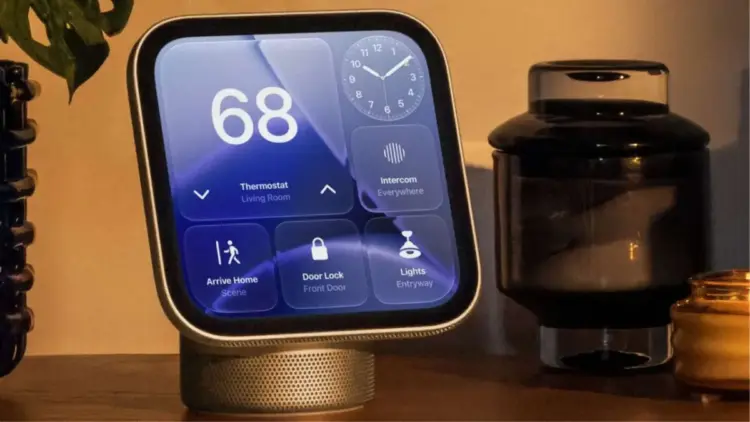
NEW YORK, NY – Apple has officially unveiled its latest foray into the competitive smart home market, the HomeView, a 7-inch smart home screen priced at USD 299. Set to launch in November, this device is positioned not as a revolutionary standalone gadget, but rather as an elegant extension of the iPhone ecosystem, powered by a personalized Siri AI. With HomeView, Apple is making a calculated move to challenge the entrenched dominance of Amazon and Google in a sector where its previous attempt, the HomePod, struggled to gain significant traction.
The HomeView represents Apple’s second significant push into the smart home, following the 2018 introduction of the HomePod smart speaker, which garnered only an estimated 6 percent market share. This time, the strategy appears fundamentally different. Instead of prioritizing high-fidelity audio or groundbreaking AI, Apple is emphasizing simplicity, trustworthiness, and seamless integration with its vast installed base of iPhone users, positioning these attributes as its "secret weapon" against the complexities and privacy concerns often associated with rival smart home devices.
Main Facts: HomeView’s Core Proposition
At its essence, the HomeView is a 7-inch touchscreen device designed for intuitive interaction within the home environment. It can be elegantly placed on an aluminium base or mounted discreetly on a wall, embodying Apple’s signature minimalist design philosophy. Its primary function is to act as a highly personalized smart display, leveraging advanced camera and voice recognition technologies to tailor home screens with relevant apps, calendar appointments, and notifications for individual household members.
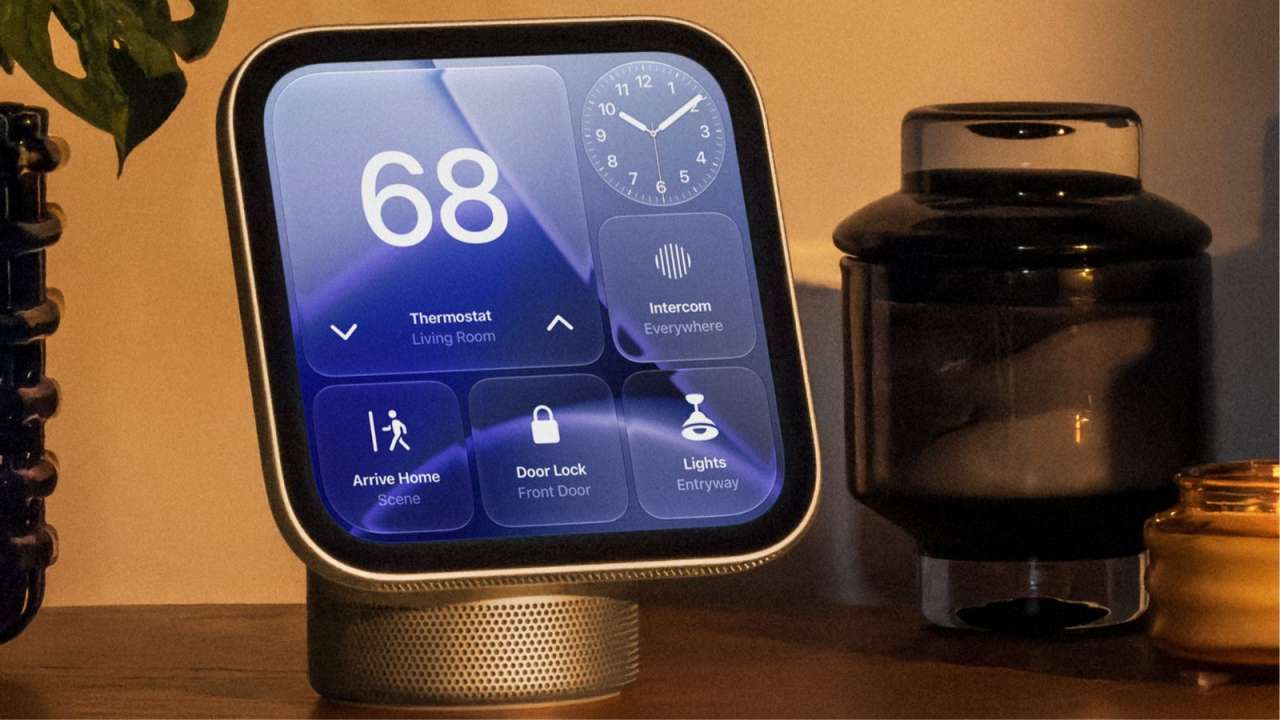
Control is primarily facilitated through an enhanced, personalized Siri AI, which learns user preferences and anticipates needs. Crucially, Apple has underscored that HomeView does not store personal data directly on the device. Instead, it relies on a nearby iPhone for context, processing much of the sensitive information on-device or within the user’s personal Apple ecosystem, a strategic move designed to assuage growing privacy concerns among consumers. While core Apple services like FaceTime and Apple Music are built-in, third-party applications such as Spotify will require support from a paired iPhone, further cementing its role as an extension rather than a complete replacement for the smartphone.
Unveiled at a dedicated event in New York, Apple executives repeatedly highlighted the device’s simplicity and elegant design, framing these characteristics not as limitations but as deliberate strategic choices. The USD 299 price point places it firmly in the premium segment of the smart display market, reflecting Apple’s consistent positioning in the high-end consumer electronics space, a strategy that has proven successful for its flagship iPhone despite often higher prices than competing Android devices.
Chronology: Apple’s Winding Path in the Smart Home
Apple’s journey into the smart home has been characterized by cautious steps and strategic recalibrations, reflecting the inherent challenges of innovating in a space dominated by early movers.
)
Early Forays and HomeKit’s Foundation
The company’s initial foray into home automation began long before dedicated hardware, with the introduction of HomeKit in 2014. HomeKit was conceived as a software framework designed to allow users to securely control smart home accessories using their iOS devices and Siri. It aimed to bring order and security to a fragmented market, setting stringent standards for device manufacturers. However, HomeKit’s early adoption was slow, hampered by a limited ecosystem of compatible devices, complex setup processes for some accessories, and a lack of a central Apple-branded hub to truly unify the experience. While it laid crucial groundwork, HomeKit alone wasn’t enough to establish Apple as a smart home leader.
The HomePod Experiment (2018): High Hopes, Limited Reach
Apple’s first significant hardware play in the smart home came in early 2018 with the launch of the HomePod smart speaker. Positioned as a premium audio device first and a smart assistant second, the HomePod boasted exceptional sound quality, powered by sophisticated audio engineering and spatial awareness technology. Its Siri integration, however, was often criticized for being less capable than Amazon’s Alexa or Google Assistant, particularly in handling complex queries or a broad range of smart home commands.
Priced initially at USD 349, the HomePod was significantly more expensive than rival smart speakers like the Amazon Echo and Google Home. While it found a loyal niche among audiophiles within the Apple ecosystem, its high price, limited third-party app support, and Siri’s perceived shortcomings prevented it from capturing a substantial market share. Analysts consistently reported its market penetration hovering around the 5-7% mark globally, a stark contrast to the dominant positions held by Amazon and Google. The HomePod’s eventual discontinuation in 2021 (though a smaller HomePod mini was introduced) underscored Apple’s need for a revised strategy in the smart home space. The lessons learned were clear: audio quality alone was not enough, and a deeper, more intuitive integration with the broader Apple ecosystem, coupled with a clearer value proposition beyond just sound, was essential.

The Rise of Smart Displays and Growing Privacy Concerns
While Apple navigated its HomePod experiment, the broader smart home market rapidly evolved. Amazon, having launched its Echo speaker in 2014, diversified its lineup with the Echo Show in 2017, introducing the concept of a smart display with a touchscreen interface. Google followed suit with its Nest Hub (originally Google Home Hub) in 2018. These devices quickly gained popularity, offering a visual dimension to smart assistance – displaying recipes, video calls, security camera feeds, and streaming content, transforming the smart speaker into a more versatile home hub.
However, as smart displays became ubiquitous, so too did concerns about privacy. Always-on microphones and cameras, coupled with the cloud-centric nature of many AI assistants, raised questions about data collection, storage, and potential misuse. This growing consumer apprehension around data privacy and the often-overwhelming complexity of managing multiple smart home devices created a strategic opening for Apple, a company that has increasingly positioned itself as a champion of user privacy.
Anticipation and the HomeView Unveiling
Rumors of Apple developing a new smart home device with a screen had circulated for years, often hinting at a combination of an iPad and a HomePod. The official unveiling of HomeView at a dedicated event in New York in October 2026 put an end to speculation. Executives framed the HomeView as a culmination of Apple’s learning, designed to address the unmet needs of consumers seeking a simpler, more private, and deeply integrated smart home experience. The November launch window positions HomeView perfectly for the holiday shopping season, hoping to capitalize on consumer interest.
)
HomeView: Deconstructing Apple’s "Simple" Vision
Apple’s HomeView is a meticulously crafted device designed to embody the company’s philosophy of blending sophisticated technology with effortless user experience. Its features and underlying strategy reveal a clear intent to differentiate itself in a crowded market.
Design and Interface Philosophy
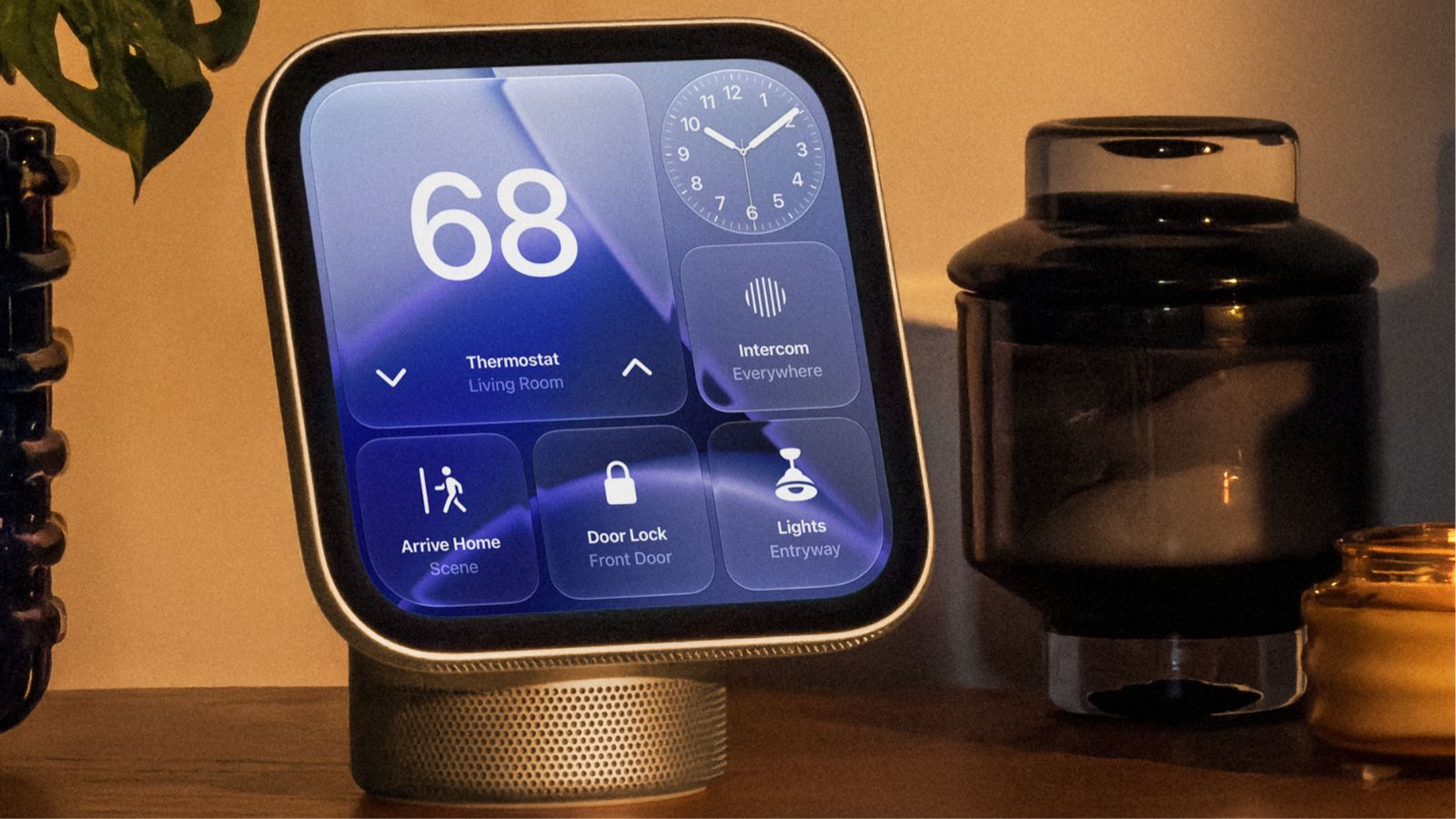
The physical design of HomeView adheres strictly to Apple’s minimalist aesthetic. The 7-inch touchscreen is encased in a premium enclosure, with options for a sturdy aluminium base – allowing for easy placement on kitchen counters, nightstands, or living room tables – or a wall-mounting solution for a more integrated, picture-frame-like appearance. The interface is characterized by Apple’s familiar clean lines, intuitive gestures, and vibrant Retina-quality display, ensuring that information is presented clearly and attractively. The focus is on functionality without visual clutter, making the device feel less like a gadget and more like a natural part of the home environment.
Personalised Intelligence with Siri AI
Central to HomeView’s appeal is its highly personalized Siri AI. Unlike generic smart assistants, HomeView leverages on-device camera and voice recognition to identify individual users. This capability allows it to dynamically adjust the home screen, displaying personalized content such as:
)
- Individualized Calendar Appointments: Showing only the relevant schedule for the person currently interacting.
- Preferred Apps: Surfacing frequently used apps or media controls for that specific user.
- Contextual Information: Offering proactive suggestions based on recognized routines or past interactions, such as traffic updates before a morning commute or recipe suggestions when in the kitchen.
This deep personalization aims to make the HomeView feel truly bespoke, responding to the needs of each household member rather than offering a one-size-fits-all experience. The "AI" aspect here is less about generative AI and more about predictive, context-aware intelligence, designed for utility and convenience.
The iPhone Ecosystem as its Backbone
Perhaps the most defining characteristic of HomeView is its profound reliance on the iPhone ecosystem. It is explicitly designed as an "iPhone extension," meaning its full capabilities are unlocked when paired with a nearby iPhone. This architectural choice serves multiple strategic purposes:
- Data Security and Privacy: By offloading sensitive personal data storage and complex processing to the user’s iPhone, Apple can bolster its privacy claims. The HomeView itself acts more as a secure terminal, displaying information that resides primarily within the user’s trusted personal device.
- Seamless Integration: This connection allows HomeView to instantly access user data, subscriptions, and settings from the iPhone. This means:
- Facetime Calls: Initiated directly from HomeView, leveraging the iPhone’s contact list and Apple ID.
- Apple Music & Podcasts: Full access to personal libraries and streaming services.
- iMessages: Displaying and allowing responses to messages without needing to pick up the iPhone.
- Third-Party Apps: While built-in Apple apps are standalone, third-party services like Spotify will stream content or execute commands by routing through the paired iPhone, ensuring consistent user experience and data handling.
- Reduced On-Device Complexity: By not needing to duplicate all iPhone functionalities, HomeView can remain a simpler, more focused device, optimizing for its specific role in the home.
Technical Specifications (Inferred)
While specific internal components were not fully detailed, one can infer that HomeView is powered by a custom Apple silicon chip, likely an A-series variant optimized for low-power consumption and efficient on-device AI processing. It would feature advanced Wi-Fi (likely Wi-Fi 6 or 7) and Bluetooth connectivity, along with a high-quality speaker system for clear audio output, and a front-facing camera optimized for video calls and user recognition. The display would be a high-resolution, color-accurate panel characteristic of Apple products.
)
Pricing Strategy in a Competitive Landscape
The USD 299 price tag for the HomeView places it squarely in Apple’s premium market segment. This decision is not without risk, as it positions HomeView higher than many popular smart displays from its main competitors:
- Amazon Echo Show Lineup: Amazon offers a range of Echo Show devices, from the 8-inch model typically priced around USD 129-159 to the larger 10-inch (USD 249-279) and even 15-inch (USD 279-299) models. These often include robust Alexa AI, extensive third-party skills, and deep integration with Amazon’s services.
- Google Nest Hub Series: Google’s Nest Hub (2nd Gen) is often available for around USD 99, while the Nest Hub Max, featuring a larger screen and a camera for video calls and security monitoring, typically retails for USD 229-249. These devices boast the powerful Google Assistant and integrate seamlessly with Google’s vast ecosystem of services.
Despite HomeView’s higher entry price compared to many competitor models, Apple has historically demonstrated an ability to command premium pricing due to perceived brand value, design excellence, and a strong ecosystem. The company believes that its focus on privacy, simplicity, and deep integration with the iPhone will justify the cost for its target audience – existing Apple users who prioritize these values.
Market Share Dynamics
Current smart speaker and smart display market data consistently shows Amazon and Google as the dominant players, often collectively holding over 70% of the global market. Companies like Apple, Samsung, and others vie for the remaining share. HomePod’s historical 6% share underscores the uphill battle Apple faces. However, Apple’s strategy with HomeView is not necessarily about capturing the largest volume of the market, but rather securing a significant portion of the premium segment, leveraging its loyal user base and differentiated value proposition.
)
"Boring" as a Strategic Masterstroke: Apple’s Differentiated AI Approach
The most intriguing aspect of Apple’s HomeView strategy is its explicit embrace of "boring" as a core design principle. This seemingly counterintuitive approach is, in fact, a deeply calculated maneuver to carve out a unique niche in the burgeoning, yet often bewildering, world of artificial intelligence and smart home technology.
The Philosophy of Simplicity and Trust
At the New York unveiling, Apple executives articulated that in an era saturated with increasingly complex, sometimes unpredictable, and often data-hungry AI products, there is a profound consumer yearning for technology that is simple, reliable, and trustworthy. "We believe that in a world increasingly filled with complex and often unsettling AI, there is a profound need for technology that is simple, trustworthy, and deeply personal," stated a senior Apple executive during the presentation. "HomeView is our answer to that need. It’s ‘boring’ because it just works, reliably and privately, without demanding constant attention or raising privacy alarms."
This "boring" approach stands in stark contrast to the often-hyped, feature-rich, and sometimes overwhelming nature of generative AI models and complex smart home ecosystems offered by competitors. Apple is betting that consumers are fatigued by feature bloat and are instead seeking a foundational, unobtrusive device that seamlessly integrates into their lives without requiring a steep learning curve or constant vigilance over data privacy.
)
Privacy at the Core
Apple’s long-standing commitment to user privacy is deeply embedded in HomeView’s architecture. By designing the device to rely heavily on a nearby iPhone for context and by emphasizing on-device processing for sensitive data like facial and voice recognition, Apple minimizes the amount of personal information that needs to be sent to the cloud. This approach directly addresses one of the most significant concerns associated with smart home devices – the potential for data breaches, unauthorized surveillance, or the aggregation of personal habits by tech giants.
In a market where many competitors face scrutiny over their data handling practices, Apple’s privacy-first stance serves as a powerful differentiator. It aims to build user confidence that their home environment remains truly private, fostering a sense of security that few rivals can genuinely match. This trust, Apple believes, is its ultimate "secret weapon."
Seamless Ecosystem Integration: The Unsung Hero
Beyond privacy, the "boring" strategy is deeply intertwined with Apple’s unparalleled ecosystem integration. HomeView is not just a smart display; it’s an extension of the iPhone, which for millions of users, is the central hub of their digital lives. This means:
)
- Personalized Accounts: HomeView can recognize individual family members and seamlessly switch to their personalized Spotify accounts, Apple Music libraries, or show their specific iMessages and FaceTime call history.
- Unified Experience: The device feels like a natural extension of the iOS experience, requiring minimal setup for existing iPhone users. This reduces friction and enhances the sense of familiarity and ease of use.
- Leveraging Existing Data: Instead of building a new data profile from scratch, HomeView taps into the rich, existing data and preferences already stored securely on the user’s iPhone, enabling instant personalization.
This deep integration mitigates the need for groundbreaking, standalone features often associated with "exciting" new tech. Instead, HomeView quietly enhances the existing Apple experience, offering convenience and personalization that is hard to replicate outside of a tightly integrated ecosystem.
Industry Reactions and Market Forecasts
Initial reactions from industry analysts and tech commentators have been a mix of cautious optimism and a healthy dose of skepticism, largely centered around the HomeView’s pricing and its "boring" strategy.
Initial Analyst Sentiment
Many analysts acknowledge Apple’s strategic brilliance in leaning into privacy and simplicity, especially given widespread consumer fatigue with complex tech. "Apple is effectively saying, ‘You don’t need another gadget screaming for your attention; you need a trustworthy assistant that just works,’" commented Sarah Jenkins, a principal analyst at Tech Insights Group. "However, the USD 299 price point for a 7-inch display, when competitors offer larger screens and comparable AI for less, will be a significant hurdle. Apple is banking heavily on its brand loyalty and privacy narrative to justify that premium."
)
Others highlight the potential for HomeView to revitalize Apple’s HomeKit ecosystem. "If HomeView becomes the central hub for HomeKit, making it easier for users to control their smart devices and offering a visual interface, it could finally unlock the full potential of Apple’s smart home platform," noted David Lee, an independent tech consultant. "The challenge will be convincing users that this ‘extension’ offers enough new value beyond what their iPhone already provides."
Competitive Landscape: A Shifting Battleground
Amazon and Google, while not issuing direct statements, are undoubtedly observing Apple’s move closely. Both companies have invested heavily in expanding their smart display lineups, integrating new AI features, and even addressing privacy concerns with features like physical camera shutters and clearer data collection policies. HomeView’s launch could compel them to further emphasize their own privacy safeguards, or perhaps accelerate the development of more deeply personalized, on-device AI capabilities to match Apple’s strategy.
The competition is likely to intensify, with a renewed focus on differentiating beyond mere feature counts. Google might lean into its superior search capabilities and broad service integration, while Amazon could double down on its e-commerce integration and vast array of Alexa skills.
)
Consumer Outlook
For consumers, HomeView presents a clear choice. Existing iPhone users who are deeply embedded in the Apple ecosystem and prioritize privacy and seamless integration are the primary target audience. For them, the HomeView could represent the missing piece in their smart home puzzle, offering a unified and trustworthy experience. Non-Apple users, or those with tighter budgets, might find the price prohibitive and the ecosystem lock-in a deterrent, opting for more affordable and broadly compatible alternatives. The success of HomeView will largely hinge on how effectively Apple communicates the tangible benefits of its "boring" and privacy-centric approach to a wider audience.
Implications: Reshaping the Smart Home Paradigm?
The launch of HomeView carries significant implications not just for Apple, but for the entire smart home industry and the millions of consumers navigating this rapidly evolving technological landscape.
For Apple’s Ecosystem
Strengthening the Walled Garden: HomeView is a powerful tool for further entrenching users within the Apple ecosystem. By offering a deeply integrated smart display that leverages existing Apple IDs, subscriptions, and personal data from the iPhone, it creates another compelling reason for users to remain loyal to the brand. This reinforces the "walled garden" effect, making it even more challenging and less appealing for users to switch to competing platforms.
)
HomeKit’s Rejuvenation: The HomePod’s limited success meant HomeKit, Apple’s smart home framework, never truly reached its full potential. HomeView, with its visual interface and central positioning, could finally provide the much-needed hub to make HomeKit a more compelling and user-friendly platform. This could lead to increased adoption of HomeKit-compatible accessories and a more cohesive smart home experience for Apple users.
AI Strategy Evolution: HomeView’s emphasis on personalized, on-device AI rather than a direct plunge into the generative AI arms race signals a potentially broader shift in Apple’s artificial intelligence strategy. It suggests a focus on practical, privacy-respecting intelligence that enhances existing user experiences rather than pursuing a "chat-bot-first" approach. This could set a precedent for future Apple AI products, prioritizing utility and trust over headline-grabbing generative capabilities.
For the Smart Home Market
A New Standard for Privacy?: Apple’s vocal stance on privacy with HomeView could force competitors to re-evaluate and enhance their own data handling practices. If consumers respond positively to Apple’s approach, it might create a new industry standard, compelling Amazon, Google, and others to offer more robust, transparent, and user-centric privacy controls on their smart home devices. This could be a significant win for consumer rights in the digital age.
)
Shifting Consumer Expectations: The "boring is good" philosophy could reshape consumer expectations. Instead of demanding endless features, users might begin to prioritize simplicity, reliability, and privacy in their smart home devices. This shift could lead to a more mature smart home market where fundamental utility and trust are valued over novelty.
Intensified Competition in Smart Displays: While Apple is targeting a premium niche, its entry will undoubtedly intensify competition. Amazon and Google might respond by introducing even more affordable models, bundling services, or accelerating their own innovations in personalized AI and privacy features to counter Apple’s differentiated strategy. This increased competition is ultimately beneficial for consumers, driving innovation and potentially lowering prices across the board.
For the End User
Enhanced Convenience and Personalization: For the existing iPhone user, HomeView promises an unparalleled level of convenience and personalization. The ability to seamlessly access personal information, media, and communications through a dedicated home display, without needing to constantly retrieve their phone, could significantly enhance daily routines.
)
The Cost of Simplicity and Ecosystem Lock-in: The USD 299 price, coupled with the inherent lock-in to the Apple ecosystem, represents a significant investment. Users will need to weigh the benefits of enhanced privacy and seamless integration against the financial outlay and the reduced flexibility that comes with being deeply embedded in a single platform.
Redefining the "Smart" Home: Ultimately, HomeView asks users to reconsider what truly makes a home "smart." Is it the sheer number of features, the dazzling AI capabilities, or is it a system that is simple, trustworthy, and seamlessly integrated into one’s life, enhancing rather than complicating the domestic experience? Apple’s HomeView represents a bold bet that for many, the latter is the true definition of intelligent living. Its success will tell us whether "boring" can indeed be the most exciting innovation in the smart home.