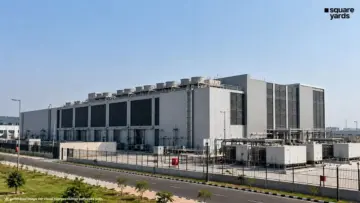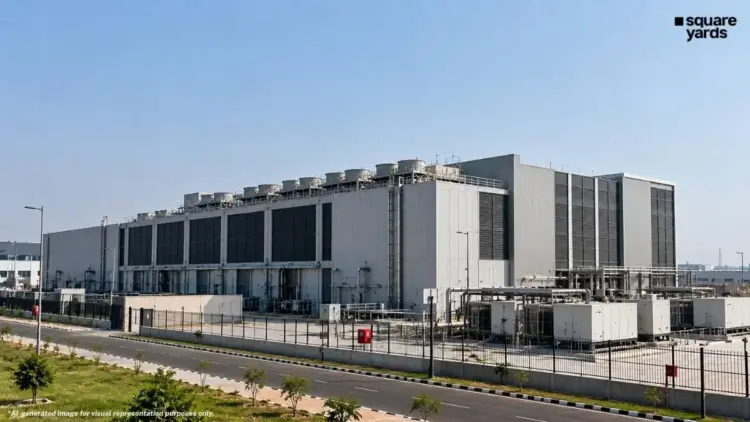
JHANSI — In a move that signals a tectonic shift in the economic geography of North India, the Uttar Pradesh government has officially received the Detailed Project Report (DPR) for a massive 1,000-acre data center and Information Technology (IT) hub in the Bundelkhand region. This ambitious project is the cornerstone of the state’s strategy to transform the historically underserved Bundelkhand into a high-tech industrial powerhouse, often referred to by officials as the "New Noida" of Central India.
The proposed hub is a critical component of the Bundelkhand Industrial Development Authority (BIDA), a mega-industrial township project spanning over 56,000 acres. As the state moves from the planning phase to execution, the submission of the DPR marks a pivotal milestone in Uttar Pradesh’s journey toward becoming a $1 trillion economy.
Main Facts: The Blueprint for a Digital Fortress
The Bundelkhand IT and Data Center hub is not merely a localized development; it is a strategic asset designed to capitalize on India’s growing demand for data storage and digital services.
1. The Scale of Ambition
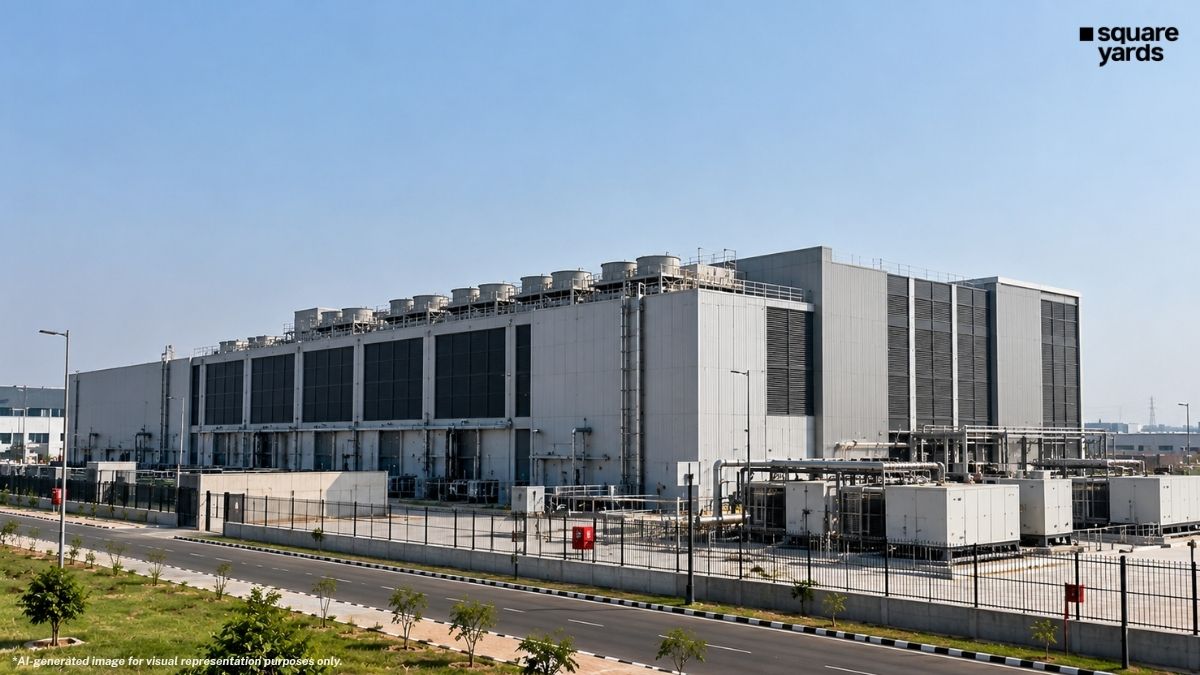
The IT hub will occupy 1,000 acres within the larger BIDA framework. Of this, the state has already successfully acquired 810 acres, ensuring that the project is "ground-ready" for investors. The hub is designed to house Tier-IV data centers, software development parks, and R&D centers.
2. Location and Connectivity
The project is centered around Jhansi, a city that serves as the gateway to Bundelkhand. Its proximity to the Bundelkhand Expressway, the Delhi-Mumbai Industrial Corridor (DMIC) influence zone, and the upcoming Defense Corridor makes it a prime location for logistics-heavy IT infrastructure like data centers.
3. Integrated Industrial Ecosystem
While the IT hub is the flagship, it exists within BIDA—a planned industrial city covering 56,662 acres across 33 villages. This city is modeled after the Noida (New Okhla Industrial Development Authority) framework, featuring dedicated zones for:
- Automotive and Electric Vehicle (EV) manufacturing.
- Defense production (linking with the UP Defense Industrial Corridor).
- Logistics and Warehousing.
- Fast-Moving Consumer Goods (FMCG) and Healthcare.
Chronology: From Concept to Detailed Project Report
The evolution of BIDA and the IT hub reflects a rapid administrative push by the Yogi Adityanath-led government to decentralize industrial growth away from the National Capital Region (NCR).
- September 2023: The Uttar Pradesh cabinet officially approved the creation of the Bundelkhand Industrial Development Authority (BIDA). This was the first major industrial authority created in the state in 47 years.
- Late 2023 – Mid 2024: Land identification and acquisition began in earnest. The state identified 33 villages near Jhansi for the first phase of development.
- Early 2025: The government intensified the land acquisition process, utilizing a massive budget allocation of approximately ₹8,000 crore for land consolidation.
- October 2026: The state announced that it had acquired 28,874 acres, exceeding 80% of its Phase 1 target.
- October 19, 2026: The Detailed Project Report (DPR) for the 1,000-acre IT and Data Center hub was officially submitted to the state government, outlining the technical specifications, investment requirements, and utility needs (power, water, and fiber-optic connectivity).
Supporting Data: By the Numbers
The sheer scale of the BIDA project requires an understanding of the underlying data that drives its feasibility.
Land Acquisition Breakdown
The project is being executed in two distinct phases to manage the massive scale of 56,662 acres:
- Phase 1 Target: 35,298 acres.
- Phase 2 Target: 21,364 acres.
- Current Status (Oct 2026): 28,874 acres acquired (81.8% of Phase 1).
- IT Hub Specifics: 1,000 acres earmarked; 810 acres (81%) already under government possession.
Infrastructure Requirements
Data centers are resource-intensive. The DPR outlines the following projected requirements:
- Power: A dedicated 400 kV substation to ensure uninterrupted power supply, a prerequisite for Tier-IV data centers.
- Connectivity: Integration with the BharatNet project and private high-speed fiber-optic backbones.
- Water: Proximity to local reservoirs with dedicated treatment plants for cooling systems in data centers.
Investment and Employment Potential
The UP government anticipates that the BIDA project will attract investments exceeding ₹1.5 lakh crore over the next decade. The IT hub alone is expected to generate:
- Direct Jobs: 50,000+ in software development, data management, and cybersecurity.
- Indirect Jobs: 150,000+ in facility management, construction, and the service sector.
Official Responses: A Vision for "Purvanchal and Bundelkhand"
Government officials have been vocal about the strategic necessity of this project. Speaking at a recent industrial review meeting, senior officials from the Department of Infrastructure and Industrial Development emphasized that Bundelkhand is no longer a "backward region" but a "frontier of growth."
The Chief Minister’s Office (CMO) issued a statement noting:
"The submission of the IT Hub DPR is a testament to our commitment to making Uttar Pradesh a global data center hub. By leveraging the vast land bank in Bundelkhand and the connectivity provided by our expressway network, we are providing global tech giants with an alternative to saturated markets like Noida and Gurgaon."
BIDA Officials added that the authority is focused on a "plug-and-play" model.
"Our goal is to have the infrastructure—roads, power, and high-speed internet—ready before the land is allotted. This reduces the ‘gestation period’ for companies looking to set up operations in Jhansi," a spokesperson for BIDA stated.
Implications for Real Estate and the Regional Economy
The development of a 1,000-acre IT hub within a 56,000-acre industrial city has profound implications for the real estate market and the socio-economic fabric of the region.
1. Industrial Real Estate: The First Mover
The most immediate impact will be seen in industrial land prices. As the government completes the acquisition and begins developing internal roads and utilities, the value of land adjacent to the BIDA boundary is expected to surge. Speculative interest from logistics firms and ancillary manufacturers is already rising.
2. Residential Real Estate: The "Noida Effect"
If BIDA successfully replicates the Noida model, the housing market in and around Jhansi will undergo a total transformation.
- Worker Housing: Demand for affordable, high-density housing for the industrial workforce.
- Executive Townships: As IT companies bring in high-earning professionals, there will be a need for gated communities, premium apartments, and international schools.
- Rental Market: A significant spike in rental demand is anticipated as construction crews and early-stage operational staff move into the region.
3. Commercial and Retail Expansion
The influx of a large workforce will necessitate a secondary economy. This includes:
- Office Spaces: While the IT hub provides the core infrastructure, satellite offices for consultants, legal firms, and contractors will drive commercial demand in Jhansi city.
- Retail and Hospitality: Malls, multiplexes, and hotels will be required to serve the growing population. The hospitality sector, in particular, will benefit from business travelers visiting the industrial hub.
4. Strategic Infrastructure as a Catalyst
The government’s proposal for an airport in Jhansi and a multimodal logistics park within the BIDA zone are game-changers.
- The Airport: Crucial for the IT sector, where executive travel is frequent. It will connect Bundelkhand directly to IT hubs like Bengaluru, Hyderabad, and Pune.
- The Railway Link: Enhancing the existing Jhansi railway junction (a major North-South, East-West crossing) with dedicated industrial sidings will lower freight costs for manufacturers.
Challenges and the Path Ahead
Despite the optimism, several hurdles remain. The success of the 1,000-acre IT hub depends on:
- Skilled Talent Acquisition: Jhansi will need to evolve from a Tier-2 city into a talent magnet. This requires collaboration with educational institutions to create a pipeline of IT-ready graduates.
- Sustained Power Supply: Data centers cannot afford even a millisecond of downtime. The state must deliver on its promise of a dedicated, redundant power grid.
- Global Economic Sentiment: The pace of investment will be dictated by global tech trends. However, India’s "Data Sovereignty" laws, which require local data storage, provide a structural tailwind for this project.
Conclusion
The submission of the DPR for the Bundelkhand Data Center and IT hub is more than just a bureaucratic step; it is the firing of the starting gun for a new era of development in Uttar Pradesh. By integrating high-tech IT infrastructure with a massive industrial base and world-class connectivity, BIDA is positioned to become the new engine of India’s industrial growth. For investors, developers, and the residents of Jhansi, the project represents a once-in-a-generation opportunity to rewrite the economic destiny of the region.
As land acquisition nears completion and the first plots prepare for allotment, all eyes are on Bundelkhand to see if it can truly become the "Silicon Valley" of the plains.