The Indian automotive landscape is on the cusp of a significant transition, and at the heart of this shift is the country’s largest carmaker, Maruti Suzuki. While the brand has been a late entrant into the Battery Electric Vehicle (BEV) space, its strategy appears to be one of "scale and precision." Recent sightings of a mysterious, heavily camouflaged test mule have sent ripples through the industry. Internally codenamed YMC, this vehicle is widely believed to be Maruti Suzuki’s first-ever all-electric 7-seater MPV.
As the company prepares for the global launch of the eVitara (the production version of the eVX), the YMC represents the next logical step: leveraging a dedicated EV platform to dominate the family-mover segment, a territory Maruti Suzuki has historically ruled with the Ertiga and XL6.
1. Main Facts: Decoding the Latest Spy Shots
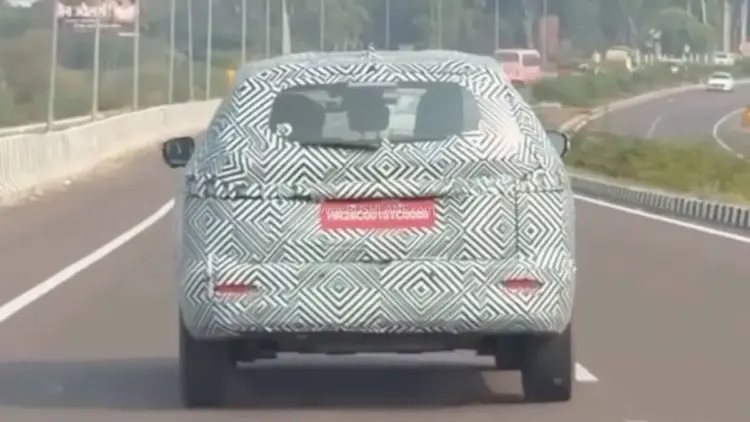
The latest intelligence regarding the Maruti YMC comes from high-clarity spy shots captured by automotive enthusiast Aditya Yadav. These images provide the most detailed look yet at the vehicle’s rear profile and underpinnings, confirming several critical aspects of its development.
The EV Confirmation
The most definitive takeaway from the recent sightings is the absence of a traditional internal combustion engine (ICE) setup. There is no exhaust end-can or tailpipe visible. Furthermore, the photographs reveal a clear view of the vehicle’s underbelly, showing a large, flat battery pack mounted beneath the floor. High-voltage orange cabling—a universal signifier of electric drivetrains—is visible but neatly routed to ensure safety and aerodynamics.
Design and Aesthetics
The YMC appears to follow a "tall-boy" meets "crossover" silhouette. Key visual elements noted include:

- Connected Lighting: A modern, end-to-end connected LED tail-lamp strip is visible under the camo, aligning with current global design trends.
- Rear Architecture: The tailgate features a squarish opening, optimized for a low loading lip—a necessity for an MPV.
- Premium Glass: The test mule was seen with UV-cut glass featuring a distinct green tint. In Maruti’s current lineup, this feature is typically reserved for Nexa-branded premium products, suggesting the YMC might be positioned as a flagship offering.
- Utility Features: Despite the camouflage, a shark-fin antenna, a high-mount stop lamp, a rear defogger, and a rear wiper/washer setup are clearly integrated.
Platform and Dimensions
The YMC is expected to be built on the 27PL/Heartect-e platform, a dedicated skateboard architecture co-developed by Suzuki and Toyota. Unlike the current Ertiga, which uses a modified ICE platform, the 27PL allows for a longer wheelbase and a completely flat floor, maximizing cabin space for three rows of seating.
2. Chronology: The Road to Maruti’s Electric Future
To understand the YMC, one must look at the timeline of Maruti Suzuki’s broader "Mission Green Million" and its EV roadmap.
- January 2023: Maruti Suzuki showcases the eVX Concept at the Delhi Auto Expo, signaling its intent to enter the premium electric SUV space.
- Late 2023 – Early 2024: Multiple sightings of the eVX (now known as the eVitara or Victoris) occur across India and Europe. Rumors of a 7-seater derivative begin to surface.
- May 2024: The first blurry images of a longer, MPV-like electric test mule emerge from the Shimla region, suggesting high-altitude and gradient testing for a larger vehicle.
- October 2024: High-resolution spy shots of the YMC appear in the NCR region (Gurgaon), showing a production-ready rear design and confirming the "HR 26" (Gurgaon North) temporary registration.
- Expected 2025: Launch of the 5-seater eVitara SUV.
- Expected 2027: Official market debut of the YMC 7-seater MPV.
3. Supporting Data: Powertrain and Technical Specifications
While Maruti Suzuki has not officially released the spec sheet for the YMC, its shared DNA with the eVitara allows for highly educated projections regarding its performance.
Battery and Range
The 27PL platform is designed to house two primary battery configurations:
- 49 kWh Battery: Likely for the entry-level variants, offering a range of approximately 400 km (MIDC cycle).
- 61 kWh Battery: The flagship pack, expected to provide a range of nearly 500 km. Given the YMC’s role as a long-distance family hauler, the 61 kWh unit will likely be the preferred choice.
Performance
The electric motor, derived from the Toyota-Suzuki partnership, is expected to produce:

- Power: Approximately 172 bhp (128 kW) for the higher-spec versions.
- Torque: Estimated at 300 Nm, providing the instant thrust required for a vehicle carrying seven passengers.
- Drive Type: While the eVitara may get an AWD (All-Wheel Drive) option, the YMC MPV is likely to remain Front-Wheel Drive (FWD) to maximize efficiency and interior floor space.
Charging Infrastructure
The YMC will support DC fast charging, likely capable of 0-80% charge in under 60 minutes using a 60kW charger. Maruti is also expected to leverage its massive dealership network to install "Maruti Suzuki Green Points" across the country to alleviate range anxiety.
4. Official Responses and Manufacturing Strategy
Maruti Suzuki’s leadership has been vocal about their "wait and watch" approach to EVs, prioritizing localization to ensure competitive pricing.
The "SMC" Vision
Suzuki Motor Corporation (SMC) has committed an investment of approximately INR 10,000 crore for EV and battery manufacturing in Gujarat. The YMC, along with the eVitara, will be manufactured at the Suzuki Motor Gujarat (SMG) plant. This facility will serve as a global hub, with a significant portion of YMC production slated for export to markets like Japan and Europe.
Distribution Strategy
There is internal debate regarding whether the YMC will be sold via the Nexa or Arena channels. While the green-tinted glass and ADAS features suggest a Nexa placement, the MPV’s utility focus could make it a candidate for the Arena showrooms, which handle high-volume family cars like the Ertiga. However, most analysts believe that to justify the premium price of an EV, Nexa will be the chosen home for the YMC.
5. Implications: What the YMC Means for the Indian Market
The arrival of the Maruti YMC in 2027 will be a watershed moment for the Indian automotive industry for several reasons.

First-Mover Advantage in the 7-Seater EV Segment
Currently, the EV market in India is dominated by hatchbacks and compact SUVs (Tata Nexon EV, Punch EV, MG ZS EV). There is a glaring vacuum in the affordable 7-seater electric space. The YMC will likely be the first dedicated EV MPV, beating rivals like the Kia Carens EV to the punch in terms of specialized platform benefits.
The "Maruti Trust" Factor
One of the biggest hurdles for EV adoption in India is the fear of service and long-term reliability. By launching a 7-seater, Maruti Suzuki is targeting the "joint family" demographic—the most conservative car buyers in India. If Maruti can convince this segment to go electric, it will signal the mass-market acceptance of BEVs.
Redefining MPV Ergonomics
Traditional MPVs like the Toyota Innova or Maruti Ertiga have to package an engine, transmission tunnel, and fuel tank, which often compromises third-row legroom. The YMC’s skateboard platform eliminates these constraints. We can expect:
- Superior Legroom: A flat floor from the dashboard to the tailgate.
- Storage Innovation: The possibility of a "frunk" (front trunk) and modular seating that can be folded completely flat for cargo.
- Tech Integration: Level 2 ADAS (Advanced Driver Assistance Systems), a 360-degree camera, and a sophisticated infotainment system with V2L (Vehicle-to-Load) capabilities, allowing the car to power external appliances.
Environmental Impact and Total Cost of Ownership (TCO)
For fleet operators and high-mileage family users, the YMC offers a compelling TCO. With the rising cost of petrol and CNG, an electric MPV with a 500 km range could reduce running costs by nearly 70% compared to an ICE counterpart.
Conclusion
The Maruti Suzuki YMC is more than just a new car; it is a statement of intent. By developing a 7-seater electric vehicle on a dedicated global platform, Maruti Suzuki is moving away from its image as a maker of small, budget cars and positioning itself as a leader in the sustainable mobility era. While the 2027 launch date seems distant, the frequency and detail of the current test mules suggest that the engineering is well underway. When it finally hits the showrooms, the YMC could very well do for the EV segment what the Maruti 800 did for the Indian middle class—make the aspirational accessible.